Article: How to Store a Yoga Mat in Your Car Without Ruining It
How to Store a Yoga Mat in Your Car Without Ruining It
You can keep a yoga mat in your car for a day of errands or a road trip, but not as its permanent home. Clean it, dry it all the way, roll it loosely, put it in a breathable bag or strap, and keep it low in the shade of the cabin. Then bring it inside when you can. Heat is the real risk, and a parked car gets hotter than most people expect.
Below: how hot a car gets, a step-by-step routine, what to do if you already left a mat baking, and how different mat materials react.
TL;DR
- Wipe the mat and let it air-dry completely before it goes in the car. A damp, rolled mat in a warm cabin invites mold and odor.
- Cabins heat fast, and cracked windows barely help. Never count on shade or a cracked window to protect a mat.
- Roll it loosely in a breathable bag or strap, and keep it on the floor or in the trunk, away from the dashboard and seats in direct sun.
- Natural rubber mats need the most care with sun and heat. Check your mat’s care label first.
- If a mat did get cooked, unroll it somewhere cool, let it rest flat, and check it for stickiness, warping and smell before you trust it in class.
Table of Contents
- Why a parked car is hard on a yoga mat
- The pre-car routine: clean, dry, roll
- Where to put the mat in the car
- What to do if your mat was left in a hot car
- Mat materials and heat: what changes
- Special cases
- Perspective: why we think travel mats beat a rolled mat in the trunk
- A mat that travels with you
- A car-ready yoga kit
- FAQ
- Sources
Why a parked car is hard on a yoga mat
Most yoga mats are made of rubber, PVC, TPE, polyurethane or foam blends. Those materials soften, dry out, discolor or warp when they get very hot. A car is one of the quickest ways to get them there.
The numbers are blunt. The National Weather Service says vehicle interiors can reach 120°F within minutes and approach 150°F in an hour, and that cracking the windows gives little relief, if any. A NASA report on vehicle temperatures cites a study where an outdoor temperature of 98.2°F produced 75% of the cabin’s maximum temperature rise within 5 minutes, with a peak of 124 to 153°F within 15 minutes. Cracked windows made minimal difference.

Surfaces in direct sun run hotter than the air. The Florida Solar Energy Center found that unshaded parked-car interiors in a hot climate commonly reach 150°F, with dashboards approaching 200°F. A mat lying on a seat behind a window, or propped on the rear deck, sits in the worst spot in the car.
None of that means a mat can never ride in a car. You drive to class, you drive home, you may stop for coffee. The damage comes from long, repeated heat soaks, so the goal is to shorten them and reduce their intensity.
Cold matters too
Winter is less dramatic, but a mat left in a freezing trunk can turn stiff. Cold rubber and foam are harder to unroll without cracking at the edges. If it has been in a cold car overnight, bring it indoors and let it warm up before you unroll it fully.
The pre-car routine: clean, dry, roll
What you do before the mat enters the car matters more than where in the car you put it.
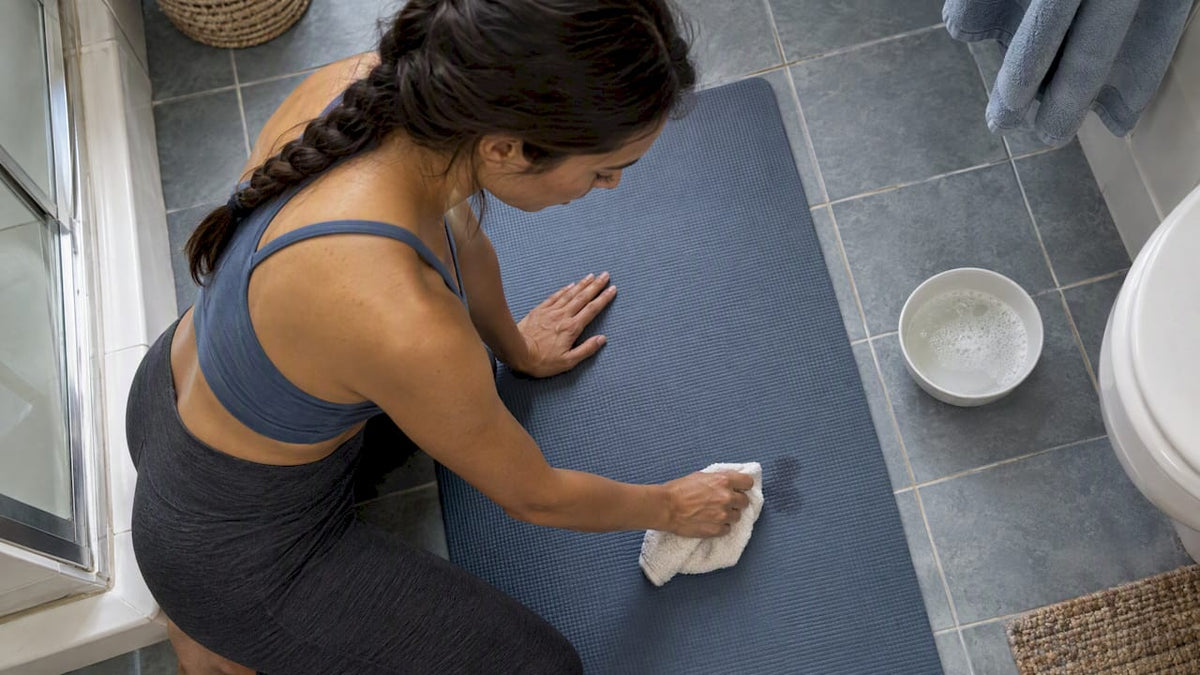
1. Wipe it down
Sweat, skin oils and sunscreen are what turn a rolled mat into a smelly one. Wirecutter’s mat-cleaning guide recommends wiping the mat with a soft cloth. If you want a gentler routine for a natural rubber mat, our guide to cleaning a natural rubber mat without ruining it walks through it, and the five-step germ-free clean covers a deeper wash.
2. Dry it completely
This is the step people skip. Wirecutter advises letting a cleaned mat air-dry completely, flat on the ground, and notes that a damp mat can support mold and bacterial growth. A warm car is the ideal incubator for that. If you are rushing out the door after class, use the towel-roll trick in our piece on how to dry a yoga mat by material, then give the mat a few minutes open to the air before you roll it.
Do not use a clothes dryer or a heater vent to speed things up. Heat is exactly what you are trying to avoid.

3. Roll it loosely
Roll the mat loosely rather than tightly crimped, and make sure it is not folded into sharp creases unless it is designed to fold. A loose roll keeps the surface from compressing and leaves some airflow. Many practitioners roll with the top surface facing outward so the mat lies flat and does not curl at the edges. Try both and see which keeps your mat flatter.
4. Choose a breathable carrier
A strap holds the roll together. A breathable bag adds protection from scuffs and sun without trapping moisture. Skip airtight plastic bags and sealed tubes for anything longer than a short trip: they hold humidity next to the mat. If you are shopping, our rundown of yoga mat bags helps you pick a style that fits your routine.
Where to put the mat in the car
Your car has only a few spots, and they are not equal.
| Spot | Heat risk | Verdict |
|---|---|---|
| Dashboard or rear deck | Highest. Direct sun through glass. | Never |
| Seat in direct sun | High | Avoid |
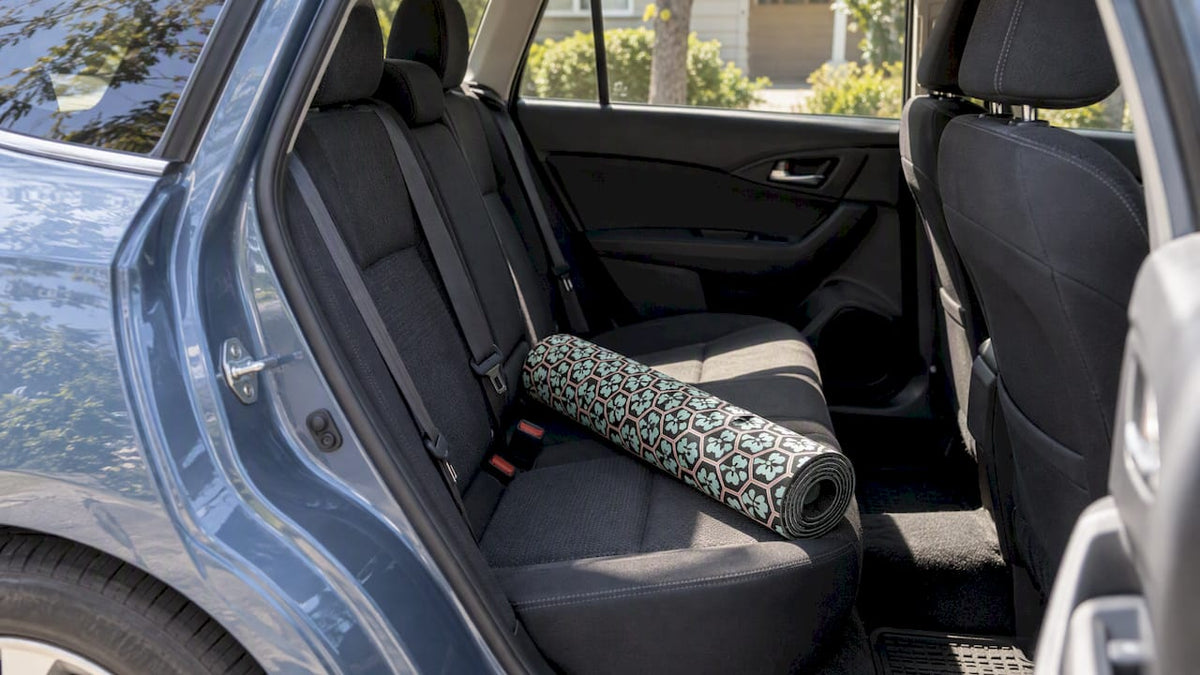
| Back seat floor, covered | Moderate | Fine for short stops |
| Trunk or cargo area | Moderate, heat builds but no direct sun | Good for errands, not for hot days |
| Under a seat or a light blanket | Moderate | A reasonable option if the cabin is the only choice |
The floor of the cabin, tucked behind the front seats and covered with a light-colored towel or jacket, keeps sun off the mat. Do not read that as permission to leave it all day. Shade inside a parked car gets hot too, just more slowly. The National Weather Service guidance cited above is the reason shade or a cracked window should never be your plan. The greenhouse effect heats the cabin quickly, whatever you do with the windows.
One more detail from research: the color of the car matters. Lawrence Berkeley National Laboratory reported that raising a vehicle’s solar reflectance by about 0.5 lowered the cabin’s soak temperature by roughly 5 to 6°C (9 to 11°F) in sunny summer testing. A light car in a shaded garage is a very different environment from a black car in an open lot. Even so, a reduction of that size leaves the cabin very hot on a summer afternoon.
A simple rule of thumb
If you would not leave a bar of chocolate there, do not leave the mat there. In summer, that means the mat comes with you when you leave the car for more than a short stop, or goes into a shaded garage or your home at night.
What to do if your mat was left in a hot car
It happens. You rolled a damp mat and a towel into a bag, and two days later you opened the trunk. Here is a calm way to deal with it.
- Get it out and let it cool. Do not unroll a very hot mat and bend it. Move it to a cool, shaded room and let it return to room temperature.
- Unroll it flat. Lay it on a clean floor, top side up, and let it rest. Some mats that curled in the heat relax within a day or so.
- Open everything. If a towel, bag or damp mat was inside, separate them right away. Moisture trapped in a hot roll is the main mold risk.
- Check it. Look for sticky or tacky patches, a glossy or chalky surface, new warping, bubbles, peeling top layers, and a sour or musty smell.
- Clean gently and dry fully. For a smell or surface film, wipe with water or a damp cloth and air-dry, following the maker’s care label. Skip harsh cleaners until you know what your mat tolerates.
- Test the grip. Do a few poses before class. If it is slippery, sticky, or crumbling at the edges, the material may be altered. Mats that have gone this far are usually not worth fighting with, because grip is a safety matter in a lunge or a downward dog.
If the mat has visible mold, discard it rather than rely on scrubbing a porous surface. If your mat has a warranty, check the maker’s terms: heat exposure is commonly excluded, so do not expect a replacement.
Mat materials and heat: what changes
The safest first step is to read the label. Wirecutter recommends checking the manufacturer’s care instructions, because natural rubber, TPE and PVC mats differ in absorbency and in which cleaners they tolerate. Its summary of the differences is a useful map:
| Material | Typical care | Car notes |
|---|---|---|
| PVC or TPE, closed-cell | Surface wipe, usually not submerged | More forgiving of moisture, still softens and warps in heat |
| Open-cell mats | May tolerate a controlled soak, but dry much slower | Higher mold risk if rolled damp, so dry before the car |
| Natural rubber | Water or a damp cloth, avoid direct sun, never a washer or dryer | Needs the most care with sun, heat, alcohol, essential oils, vinegar and detergents |
Natural rubber deserves a special note. Wirecutter’s guide cites one rubber mat maker whose instructions say to use water or a damp cloth, avoid direct sun, and never use a washer or dryer. Heat and UV are the usual suspects when rubber hardens, discolors or loses its grip. Our care guide for every practitioner goes through these differences in more detail.
Special cases
Hot yoga and sweaty practice
The worst combination is a sweat-soaked mat plus a grip towel rolled inside it, left in a closed car. Take the towel out as soon as class ends and hang or spread everything somewhere with airflow. A mat that is only damp on the surface can be wiped and left open in a room for a while. Put the towel in a separate bag for the wash.
After the beach
Sand and salt are abrasive and sticky. Shake out the mat, wipe it with fresh water on a cloth, and let it dry before it goes back into the car. Our three-step routine for cleaning a mat after the beach is built for this exact day.
Road trips and overnight stops
On a multi-day trip, take the mat into the hotel or rental at night. A mat that spends the night in a cold or hot trunk goes through a large temperature swing each day. If you are on the road often, a mat designed for travel makes the whole question easier, since it folds small enough to live in a bag you carry with you.
Perspective: why we think travel mats beat a rolled mat in the trunk
We make mats for people who practice at home and on the road, so we see the car question constantly. Our honest view is that the problem is rarely the drive. It is the habit of treating the trunk as a closet. A full-size mat rolled behind the seat has to be left somewhere, and “somewhere” is usually the hottest place you own.
A foldable travel mat changes that. It is small enough to carry into a hotel room, a café or an office, so it spends its time with you rather than in a parked car. We designed our travel line around that idea: portable, made with sustainable materials, and easy to pack. Our guide on packing a foldable mat shows how that works for flights, and the same logic applies to car trips.
Our practical advice for any mat: dry it, bag it, keep it low and shaded, and take it inside. Do that and the car stops being a threat.
— Nicholas
A mat that travels with you
If you split your practice between home, the studio and the road, a dedicated travel mat is the simplest answer. Our Trekk travel mats fold down so they can ride in a bag instead of sitting loose in the trunk. You can look at the Crow Trekk, the Sagittarius Trekk and the Skaro Trekk, or browse our full range of yoga mats, towels and straps. A strap and a grip towel from our clothes and accessories collection round out a car-ready kit.

A car-ready yoga kit
Keep a small kit packed so the routine is automatic.
- A strap or a breathable bag for the rolled mat.
- A spare microfiber cloth to wipe the mat after class.
- A grip towel kept in its own bag, never rolled inside a mat while wet.
- A light-colored towel or blanket to shade the mat on the cabin floor.
- A mild, mat-safe cleaner if your mat’s care label allows one. Our homemade cleaner recipes are a starting point, though natural rubber is picky about ingredients such as vinegar and essential oils, so check your label first.
The kit takes a minute to set up and saves you from a ruined mat.
FAQ
Is it safe to leave a yoga mat in the car overnight?
In mild weather, in a garage or in the shade, it is usually fine for a night if the mat is clean and dry. In summer heat or a hard freeze, bring it inside. Cabin temperatures climb quickly in the sun, and cold makes some mats stiff.
Can a yoga mat melt or warp in a hot car?
It can warp, curl, soften or lose grip when exposed to extreme heat, depending on the material. Interiors can reach 120°F within minutes in the sun, and surfaces such as dashboards get much hotter. Natural rubber and foam mats are especially sensitive, so check your care label.
How do I stop my mat from smelling in the car?
Dry it completely before rolling it, since a damp mat supports mold and bacteria. Use a breathable bag rather than a sealed one, and keep sweaty towels separate. If a smell develops, wipe the mat with water or a damp cloth and air-dry it flat.
Should I roll my yoga mat tightly or loosely?
Loosely. A tight roll can leave creases and trap moisture, while a loose roll holds its shape and lets air move. Use a strap or bag to keep it from unrolling.
Is a travel mat better for car trips?
For frequent travelers, yes. A foldable mat fits in a bag you carry, so it does not sit in a hot trunk, and it works in hotels, parks and offices too.
Sources
- How to Clean a Yoga Mat, Wirecutter
- Look Before You Lock!, National Weather Service
- Heat Stress Equation Development and Usage for Dryden, NASA
- FSEC-PF-198-90, Florida Solar Energy Center
- Cool Colors for Cars Could Improve Fuel Economy, Lawrence Berkeley National Laboratory