Yoga Mat Care Guide Explained for Every Practitioner
Yoga mat care is defined as a systematic routine of cleaning, drying, and storing your mat to preserve its grip, hygiene, and structural integrity over time. This yoga mat care guide explained covers everything from daily wipe-downs to material-specific deep cleans, because the wrong method on the wrong material causes more damage than skipping cleaning entirely. Natural rubber, cork, TPE, PVC, and PU surfaces each react differently to moisture, acids, and surfactants. Getting this right is the difference between a mat that lasts years and one that flakes apart within months. Yuneyoga builds its product line around materials that reward consistent, informed care.
What is the best routine for cleaning and maintaining yoga mats?
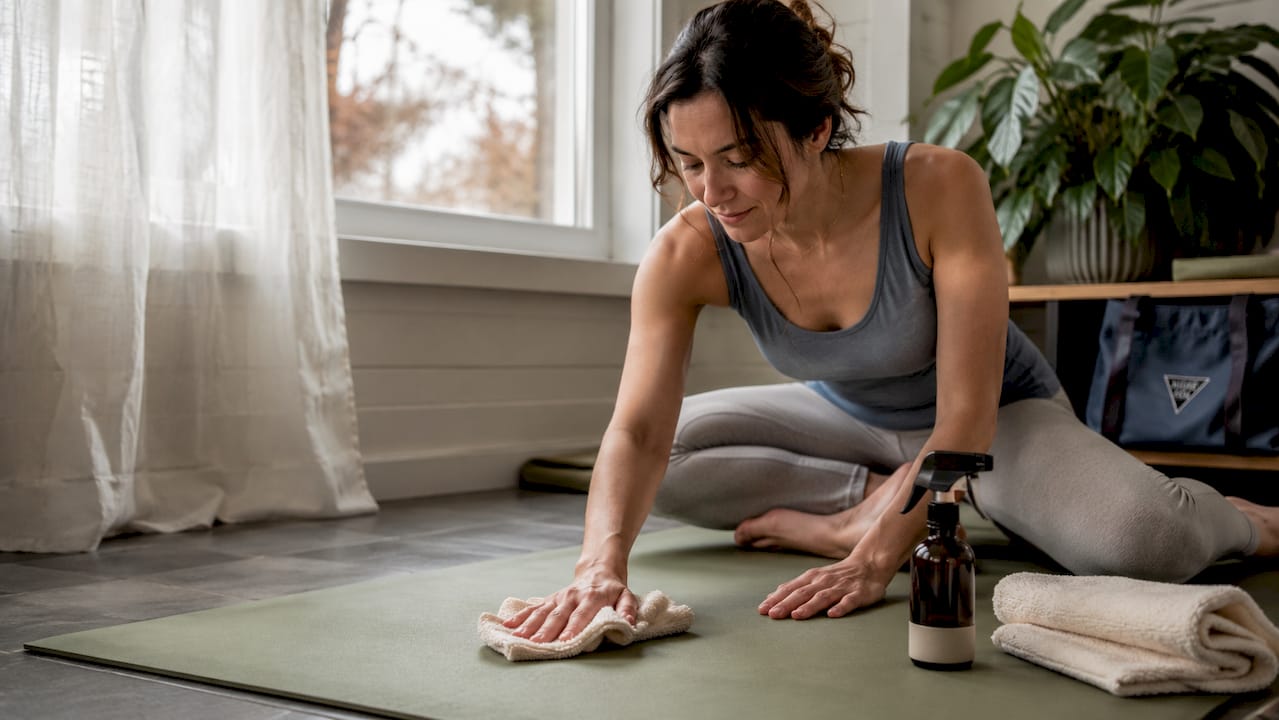
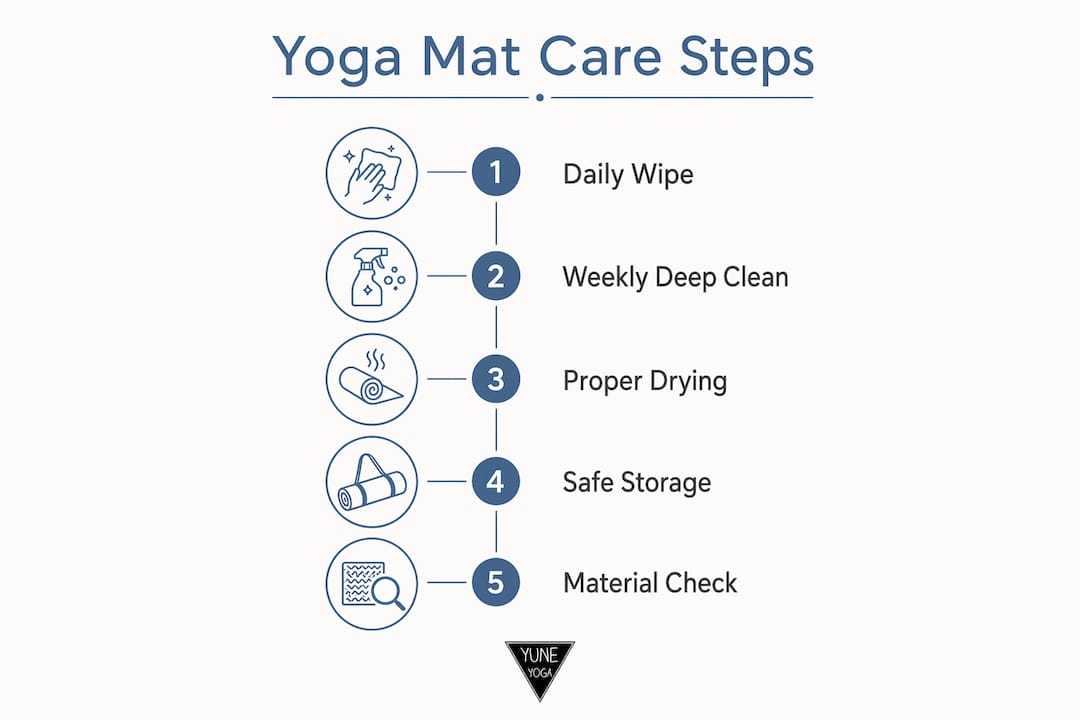
Daily wiping and weekly deep cleaning form the foundation of any effective mat maintenance routine. Skipping either step allows sweat, skin oils, and bacteria to embed into the surface, degrading both grip and hygiene faster than normal wear would.
A practical schedule looks like this:
- After every session: Spray a mild, diluted solution of water and a few drops of dish soap or a dedicated mat cleaner onto the surface. Wipe with a soft, lint-free cloth. Never soak the mat. Let it air dry completely before rolling it up.
- Once a week: Lay the mat flat and scrub both sides gently with a soft brush and a mild aqueous solution. Rinse with a damp cloth, then hang it to dry in a well-ventilated space away from direct sunlight. Daily wiping removes surface residues; weekly cleaning removes the embedded oils and bacteria that wiping misses.
- Once a month: Perform a full restoration clean. Check for odor, surface wear, and grip loss. For mats that tolerate it, a gentle hand wash in a tub with cool water and mild soap works well. Always check the manufacturer’s guidance first.
Drying is not optional. Trapped moisture leads directly to odor, mold growth, and accelerated surface breakdown. A mat rolled up while still damp is a mat that will smell within 48 hours.
Pro Tip: Hang your mat over a towel bar or shower rod after every session, even if you only did a quick wipe. Airflow for 20–30 minutes prevents moisture from trapping between the layers.
How do yoga mat materials affect cleaning methods and care techniques?
Cleaning methods must be tailored to the mat material, because natural rubber, cork, and TPE react differently to moisture and acids. Using vinegar on a natural rubber mat, for example, breaks down its surface structure over time. Using a harsh scrub on a PU-coated mat strips the grip layer permanently.
The table below summarizes the key differences:
| Material | Porosity | Safe cleaning agents | What to avoid |
|---|---|---|---|
| Natural rubber | High | Mild soap, water | Vinegar, alcohol, harsh detergents |
| Cork | Medium | Water, gentle spray | Soaking, acidic cleaners |
| TPE | Low | Mild soap, water | Strong solvents, abrasive pads |
| PVC | Low | Mild soap, diluted disinfectant | Bleach, oil-based cleaners |
| PU (polyurethane) | Very low | Damp cloth, gentle spray | Scrubbing, soaking |
| Foam (EVA) | High | Mild soap, water | Soaking, heat drying |
Porous or open-cell surfaces like natural rubber and foam absorb oils and sweat more deeply. They need gentler agents and more frequent care to avoid deterioration. Closed-cell surfaces like PVC and PU repel moisture better, but they still accumulate residue on top that requires regular removal.
Cork deserves special mention. It has natural antimicrobial properties, which slows bacterial growth between sessions. That does not mean it is self-cleaning. Cork still needs a light wipe after each use and a gentle damp clean weekly to prevent surface buildup.
Pro Tip: Before buying any cleaning spray, check whether it lists the mat material it is safe for. Generic “yoga mat sprays” are often formulated for PVC and can degrade natural rubber or cork over time.
Why do yoga mats discolor and smell, and how can you prevent these issues?
Discoloration results from a combination of sweat, UV exposure, oxidation, and cleaning residues. Not all color change signals structural damage. Cosmetic fading from UV exposure or print wear looks different from the yellowing caused by oxidation or the dark patches left by mold.
Understanding the cause tells you whether to treat it or replace the mat.
- Sweat stains are complex residues containing salt, oils, and leftover cleaning agents. Simple wiping with water alone cannot remove oil-based residue. A mild surfactant or a dedicated mat cleaner is required.
- UV fading affects the print layer first, then the surface material. Storage away from windows and direct sunlight is the single most effective prevention step.
- Oxidation yellowing appears in lighter-colored mats over time, especially in PVC and foam. It is largely cosmetic but signals age-related material breakdown.
- Mold patches appear as dark spots with a musty smell. They result from rolling up a wet mat or storing it in a humid space. Mold penetrates porous surfaces and is very difficult to fully remove once established.
- New mat smell is a separate issue. Most new mats off-gas from manufacturing compounds, particularly PVC mats. Unrolling the mat and leaving it flat in a ventilated room for 48–72 hours before first use reduces the smell significantly. Wiping it down with a damp cloth and mild soap also helps.
Mechanical abrasion from practice accelerates print fading in high-contact zones like the hands and feet. Cleaning methods that add abrasion, such as stiff brushes or rough cloths, speed up this process. Always use soft cloths and gentle pressure.
How can practitioners optimize yoga mat lifespan and know when to replace their mats?
Yoga mat lifespan depends more on use intensity and care quality than on a fixed calendar. High-intensity use accelerates wear up to 200% compared to low-impact home practice. A mat used daily in hot yoga degrades far faster than one used twice a week for gentle flow.
Shift from a fixed replacement schedule to performance-based inspection every 3–6 months, checking grip and cushioning condition. A mat that looks fine but no longer holds your hands in Downward Dog is a safety issue, not just a cosmetic one.
Signs that a mat needs replacement:
- Loss of grip: Your hands or feet slide during poses that were previously stable. This is the most critical warning sign.
- Cracking or flaking: Surface material breaking apart means the mat can no longer provide consistent cushioning or a clean contact surface.
- Persistent odor: If deep cleaning no longer removes the smell, mold or bacteria have penetrated the core material.
- Compressed cushioning: Press your thumb into the mat. If it does not spring back, the foam or rubber has lost its structural integrity.
- Visible thinning: High-contact zones wearing through to a different layer or color indicate the mat is past its useful life.
Proper grip and cushioning are the key indicators for replacement, not visual appearance alone. A mat can look acceptable while failing to protect your joints or prevent slipping. Inspect by feel, not just by sight.
For practitioners who use their yoga practice surface daily, a quality mat with consistent care typically lasts one to three years before performance drops below a safe threshold.
What are the best practices for drying and storing yoga mats?
Drying and storage are where most practitioners make their biggest mistakes. Rolling up a mat before it is fully dry is the fastest route to mold, odor, and premature breakdown.
Best practices for drying and storage:
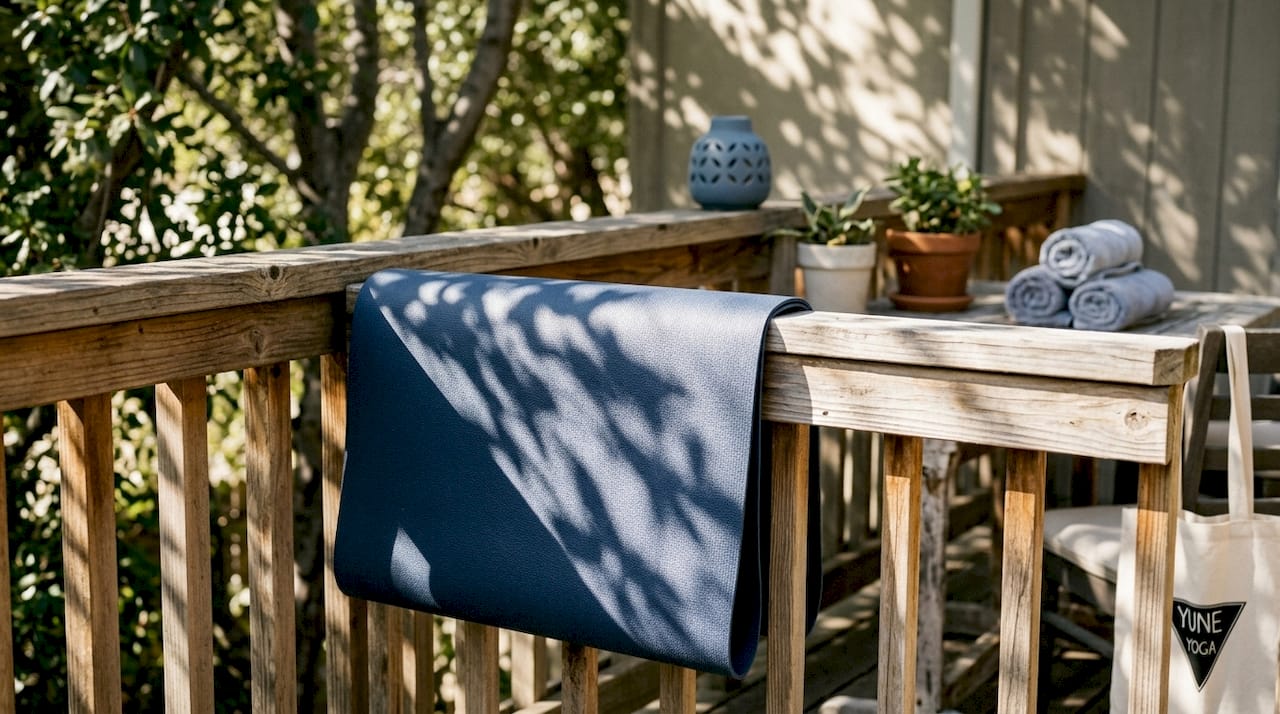
- Always air dry flat or hanging. Lay the mat over a rack, towel bar, or clean floor surface with airflow on both sides. Never fold it while wet.
- Avoid direct sunlight for drying. UV exposure during drying degrades surface materials, especially natural rubber and cork. Dry in shade or indoors with good ventilation.
- Roll, do not fold. Folding creates permanent creases that weaken the mat structure. Roll loosely with the top surface facing outward.
- Store in a cool, dry place. Humidity above 60% promotes mold growth. Avoid storing mats in car trunks, damp gym bags, or bathrooms.
- Use a mat bag with ventilation. Sealed bags trap moisture. A mesh or breathable bag allows airflow during transport and storage.
- Keep away from heat sources. Radiators, heating vents, and direct sunlight all cause rubber and foam to dry out and crack faster.
Controlled drying protocols and well-ventilated storage are not optional extras. They are the single most impactful factor in how long a mat retains its grip and structural integrity between replacements.
Key takeaways
Regular, material-specific cleaning combined with proper drying and storage is the most effective approach to extending yoga mat lifespan and preserving grip performance.
| Point | Details |
|---|---|
| Clean by frequency and material | Wipe daily, deep clean weekly, and tailor your method to the mat’s material type. |
| Avoid harsh agents on porous mats | Natural rubber and cork break down under vinegar, alcohol, and abrasive scrubbing. |
| Dry completely before storing | Rolling up a damp mat causes mold, odor, and accelerated surface wear within days. |
| Inspect performance, not just appearance | Replace a mat when grip or cushioning fails, not on a fixed calendar schedule. |
| Prevent discoloration with storage habits | Keep mats away from direct sunlight and humidity to slow UV fading and oxidation. |
What I have learned from years of watching practitioners ruin perfectly good mats
Most mat damage is not from practice. It is from the 10 minutes after practice. Practitioners finish a session, roll up their mat while it is still damp with sweat, stuff it in a bag, and leave it there until next time. That cycle, repeated over weeks, destroys a mat faster than daily use ever would.
The second most common mistake is using whatever cleaning spray is nearby. Alcohol-based sprays feel like they are doing a thorough job. On a PVC mat, they are fine. On a natural rubber mat, they are slowly dissolving the surface. I have seen practitioners spend real money on quality mats and then unknowingly degrade them with the wrong cleaner within a few months.
The overlooked step that makes the biggest difference is the breaking-in period. New mats, especially natural rubber, have a factory surface that feels slippery until the top layer is worn in slightly. A few sessions combined with proper cleaning actually improve grip on these mats. Practitioners who skip cleaning during the break-in period miss this window and then blame the mat for being slippery.
My honest recommendation for busy practitioners is to keep a spray bottle and a small cloth next to your mat storage spot. The barrier to daily wiping needs to be zero. If you have to search for supplies, you will skip it. Make the routine frictionless and you will actually do it.
— Nicholas
Quality mats that make care easier from day one
Choosing a mat built for durability changes how much maintenance work you actually need to do.

Yuneyoga carries a curated selection of yoga mats and accessories designed with materials that respond well to proper care routines, including natural rubber mats, eco-friendly foldable travel mats, and yoga towels that complement a clean practice. Each product is built to reward the kind of consistent maintenance this guide covers. Whether you practice daily or a few times a week, the right mat makes every cleaning step faster and more effective. Browse the full collection at Yuneyoga to find gear that fits your practice and lasts.
FAQ
How often should I clean my yoga mat?
Wipe your mat after every session and deep clean it at least once a week. Hot yoga or heavy sweating sessions require more frequent deep cleaning to prevent bacterial buildup.
Can I use vinegar to clean a natural rubber yoga mat?
No. Vinegar is acidic and breaks down natural rubber over time. Use a mild soap and water solution instead, and always check the manufacturer’s care instructions.
Why does my new yoga mat smell?
New mats, especially PVC ones, off-gas from manufacturing compounds. Unrolling the mat and leaving it flat in a ventilated room for 48–72 hours before first use reduces the smell significantly.
What are the signs that a yoga mat needs replacing?
Visual cues like cracking, peeling, and persistent odor signal it is time to replace. Loss of grip and compressed cushioning that does not spring back are the most critical performance-based indicators.
Does rolling vs. folding a yoga mat really matter?
Yes. Folding creates permanent creases that weaken the mat structure over time. Always roll your mat loosely with the top surface facing outward to preserve its shape and surface integrity.


