

The ultimate guide to 5 people yoga poses for groups
Key Takeaways
Practicing with a group elevates the energy of your session and allows you to explore new physical dynamics together. These core strategies ensure a smooth, safe, and enjoyable experience for all five participants.
- Align group skill levels to ensure everyone feels comfortable and confident.
- Prioritize clear communication signals to maintain flow and safety during transitions.
- Utilize portable, high-grip gear like Yune Yoga mats to keep your stance secure on various surfaces.
- Focus on steady, synchronized breathing to foster a sense of collective rhythm.
- Always prioritize stability and counterbalance over intensity to prevent unnecessary physical strain.
Fundamentals of group yoga practice
Starting a collective practice requires more than just gathering on mats; it involves aligning the group's intentions and physical readiness. When you bring five people together, the dynamic shifts from solitary focus to a cooperative effort that relies on shared energy and trust. Success here depends on transparency regarding what each person is comfortable doing during the session, ensuring nobody feels pressured or overwhelmed.
Assessing individual skill levels
Before launching into complex sequences, discuss the experience levels of everyone involved. It is helpful to ask specific questions about past injuries, comfort with weight-bearing poses, or familiarity with basic alignments. Creating a supportive environment starts with this initial check, ensuring that the chosen poses are appropriate for the least experienced person in the group to avoid frustration.
Essential safety protocols for physical contact
Safety is non-negotiable when multiple bodies are positioned in close proximity. Establish personal space boundaries immediately and ensure that all participants are aware of how to safely adjust or exit a pose at any time. Using durable Yune Yoga mats that offer excellent grip even when damp helps to minimize slips, allowing each practitioner to feel secure throughout the entire physical interaction.
Establishing communication signals
Non-verbal cues and short, clear verbal instructions are vital for navigating transitions effectively. Since group energy can sometimes lead to confusion, deciding on simple hand gestures or safe-words before you begin helps keep the flow intact. This clarity prevents accidents and helps the group maintain a cohesive, rhythmic pace without constant stopping to ask for directions.
Warm-up routines for group synchronization
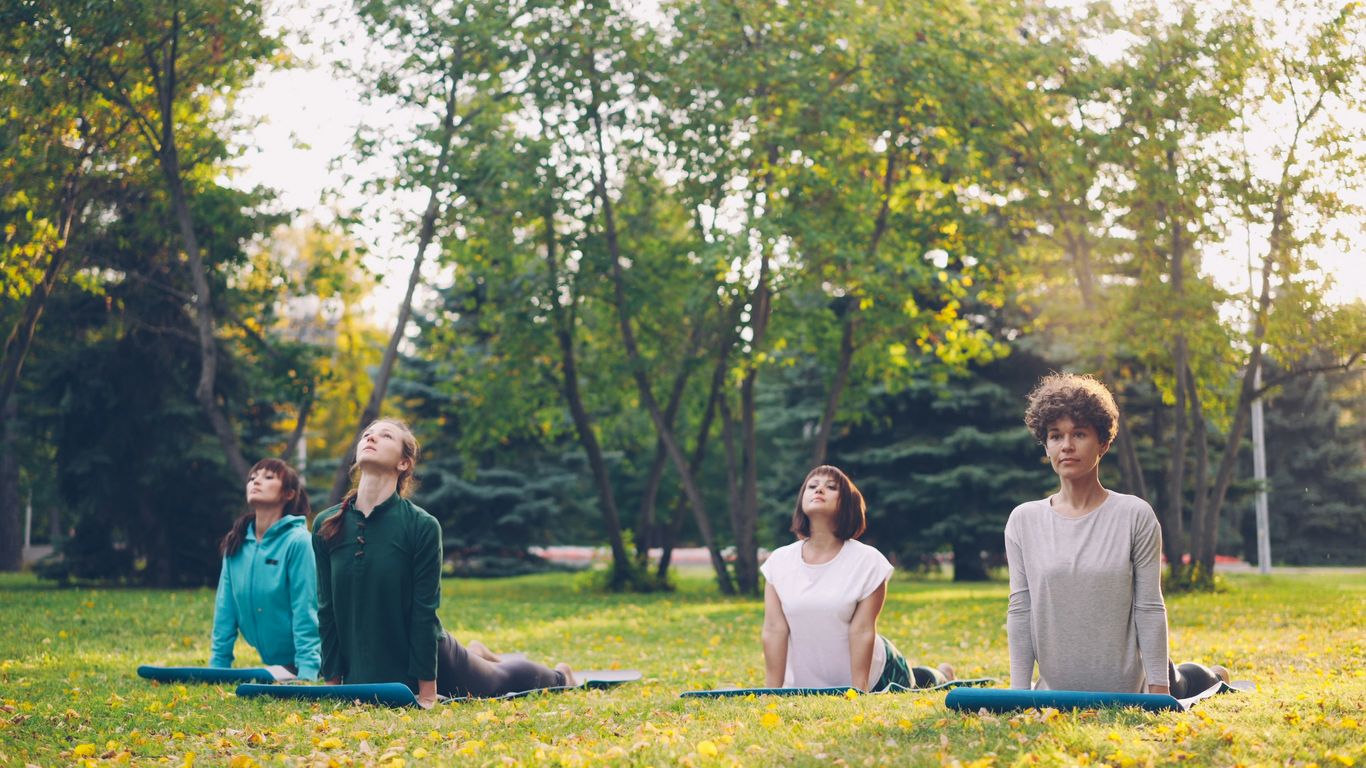
Getting everyone in sync requires a gentle transition from their individual states to a shared group focus. By grounding the group together, you set the stage for more complex collaborative movements later. This phase is about loosening up joints and establishing a baseline for the energy that will sustain you throughout the practice.
Breath synchronization techniques
Start by sitting in a circle and focusing on matching your inhale and exhale cycles. Once the group finds a common cadence, the physical movements feel much more fluid. This shared breath acts as the glue that keeps the group moving as a single unit rather than five separate entities.
Dynamic movement preparations
Incorporate gentle stretches that require movement across the space to build heat and flexibility simultaneously. These preparations should remain light, focusing on spinal mobility and warming the muscles needed for stabilization. You can discover 5 easy yoga poses for groups to begin integrating these warm-up ideas into your flow.
Building spatial awareness among five practitioners
Spatial awareness is the ability to understand your position relative to the others and the shared floor space. Practice moving in and out of tight formations slowly, ensuring everyone understands their anchor point. This intentional movement prevents crowding and keeps the energy organized.
Beginner-friendly 5 person formation poses
Moving into poses with five people requires clear spatial planning and patience as you find your balance. These foundational shapes introduce the concept of relying on others for stability without the high risks of advanced acrobatics. The goal is to keep the energy light and collaborative from the start.
The five-pointed star chain
This pose involves standing in a circle, arms outstretched, and holding hands or wrists to form a ring. It is an excellent way to feel the energy transfer between neighbors. By leaning subtly back, you create a tension that supports the entire structure, grounding everyone into the floor through their feet.
Seated circle collective stretch
In this formation, everyone sits in a tight circle with their legs extended. This configuration allows for gradual, uniform adjustments to achieve a deep stretch. To see how these configurations compare in terms of difficulty, consider the following performance metrics observed during group practice.
| Formation Type | Stability Rating | Skill Level |
|---|---|---|
| Star Chain | High | Beginner |
| Seated Circle | Moderate | Beginner |
| Mountain Series | High | Intermediate |
These ratings indicate that simpler formations are often the most effective for beginners. As the group gains experience, moving from high-stability poses to more dynamic ones becomes significantly easier and more intuitive for everyone involved.
Connected mountain pose series
Stand back-to-back or in a row, pressing palms together to establish a line of contact. This series helps you find your individual alignment while feeling the support of the group. It is the perfect moment to experience the stability provided by reliable equipment like Yune Yoga towels, which prevent slipping when you are sharing a grip.
Advanced collaborative balance poses
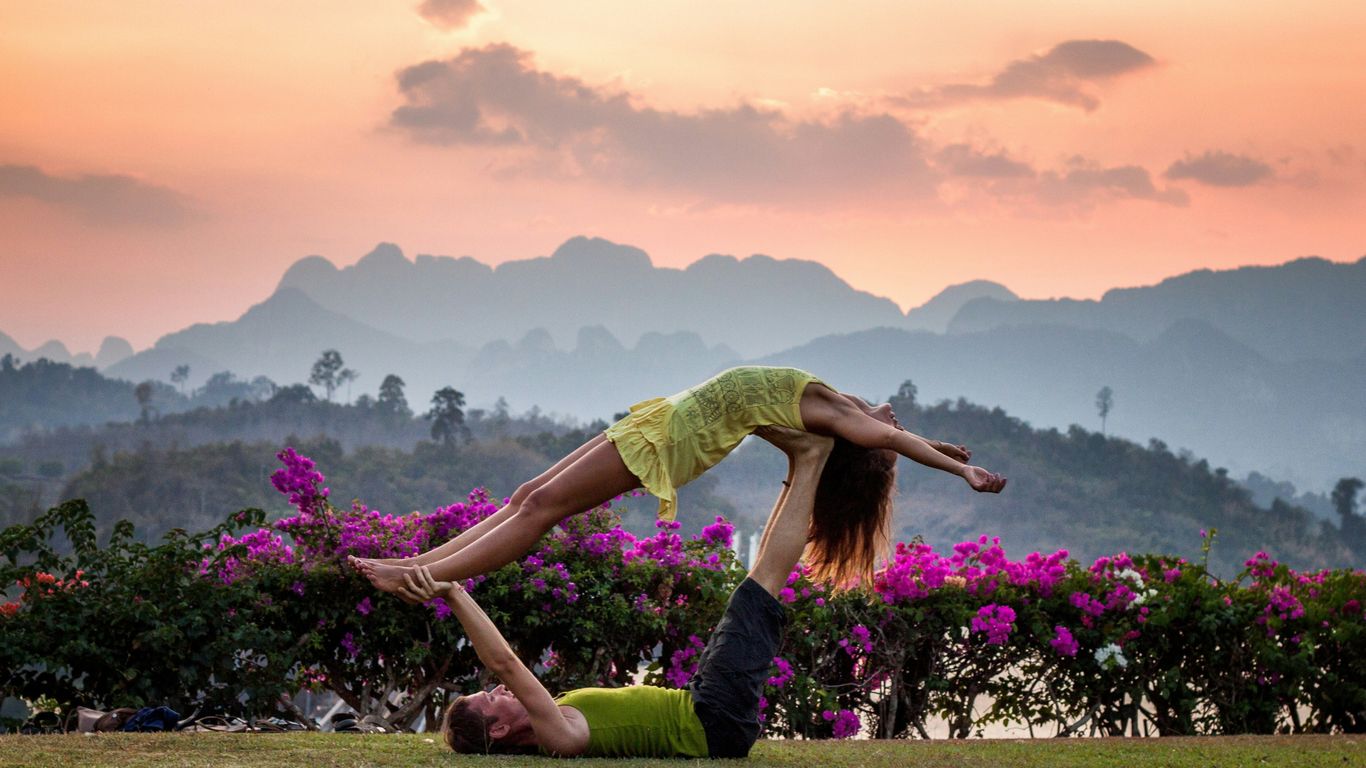
As you advance, you will find that physical connection becomes an essential tool for maintaining balance. Advancing to these poses requires total trust and an acute sense of how your weight shift affects the remaining four people. Maintaining proper form during these poses is often a collective effort that defines success in advanced practice sessions.
Multi-person tripod formations
These formations require a trio of practitioners to hold a stable base while two others move into elevated positions. The weight distribution must be perfectly calculated before lifting begins. Start with a solid base and ensure everyone is locked into their position before adding additional weight to the structure.
Weight distribution mechanics
Understanding how to distribute weight is the core of successful balancing. When one person moves or adjusts their hips, everyone else must compensate. This dance of constant micro-adjustments prevents any single person from carrying all the tension, making the pose sustainable for longer periods.
Counterbalance stability tips
Success in counterbalancing requires maintaining strong core engagement and a clear gaze. Use these following steps to stabilize your formation during training.
- Maintain steady eye contact within the group to anticipate shifts.
- Keep your feet planted firmly on your mat to ensure a consistent anchor point.
- Keep arms extended with a slight bend to absorb and redistribute tension.
- Communicate potential instability immediately to allow for a controlled exit.
Following these steps helps the group recover their balance quickly if a formation begins to wobble, ensuring that everyone stays safe and supported during complex lifts or tilts.
Tips for maintaining group flow and form
Flow is the elusive quality that turns a series of poses into a coherent practice. To maintain this, leaders must be observant and ready to adjust based on the group's energy level. If the group is struggling, it is often better to simplify the sequence and focus on maintaining perfect alignment than to push through a poorly executed pose.
Modifying poses for different body types
Every participant brings a unique geometry, which means that a pose will look and feel different for each person. Use blocks, straps, or simply allow for wider leg positions to accommodate different heights and limb lengths. Flexibility in approach is key to keeping the practice inclusive.
Verbal cueing strategies for leaders
Clear, concise cues are the lifeblood of a smooth class. Instead of long explanations, use active verbs like "reach," "press," or "engage" to guide the group. A good leader speaks directly and calmly, allowing the instruction to be processed without adding unnecessary stress to the group.
Troubleshooting common collapse points
When a formation collapses, it is almost always due to a loss of tension or unclear communication. Look for the "weakest link" which is often simply a misalignment in the base rather than a lack of strength in the top. Once identified, pause, reset, and approach the movement with renewed attention to the foundational support.
Recovery and cool-down for group sessions
After a taxing group session, the cool-down is where the work truly settles into the body. This period allows the group to decompress and transition back to a restful state. Whether you are using props to assist deep stretches or simply sitting in silence, this time is vital for preventing post-practice stiffness.
Collective grounding techniques
Move from active poses to seated or restorative postures that signal to the body that the practice is winding down. This collective stillness helps to regulate the heart rate and calm the breath. It is a moment of shared gratitude after the intensity of collaborative balancing.
Passive stretching for social connection
Use this time to hold deep, long stretches that help release the tension accumulated from supporting others during the practice. These stretches are perfect because they require little effort and allow for quiet conversation or simply being present with one another on your mats.
Debriefing the practice session
Take five minutes to discuss what felt good and what challenges the group encountered. This debriefing process turns a simple workout into a learning experience, helping you grow as a unit over time. Reflecting on both the successes and the missteps builds trust, which is the most important component of any group yoga practice.
Conclusion
Mastering 5 people yoga poses opens up an entire new world of movement and connection that solitary practice simply cannot replicate. By prioritizing communication, safety, and a shared focus, you transform the mat into a space of collective exploration and growth. Embrace the process, listen to each other, and enjoy the unique energy that only a group can create.
Frequently Asked Questions
What is the ideal space requirement for five people doing yoga?
You should plan for a space that allows each person to fully extend their arms and legs in all directions without touching their neighbor, plus additional room for the specific group formations you plan to attempt.
How do we handle different physical abilities in a group?
Focus on variations of each pose that offer different levels of challenge, ensuring that every person can participate safely regardless of their experience level by using props or modified alignments.
Can five people do yoga without prior experience?
Yes, but it is highly recommended to start with basic poses that focus on stability and individual alignment rather than attempting complex acrobatics, which require a foundation of trust and physical strength.
What should we do if someone feels uncomfortable?
Always encourage open communication so that any participant can express their boundaries or desire to stop a movement immediately, ensuring that everyone feels respected and safe during the practice.
How often should we practice these group poses?
Start once or twice a week to build consistency without overwhelming the body, as group yoga often requires a significant amount of focus and energy to coordinate multiple people.
Is specialized gear required for group yoga?
While you can practice on any surface, using mats that provide consistent grip helps prevent slips and accidents, especially when you are balancing and leaning on one another.
How do we know if a move is unsafe?
If you feel pain, extreme strain, or a sudden loss of control in your core or limbs, it is a sign that the group should pause immediately to reassess the pose and try a safer alternative.

