
The Role of Cushioning in Yoga: Joint Support Guide
Cushioning in yoga is defined as the layer of material between your body and the floor that absorbs impact, reduces joint pressure, and supports proper alignment during practice. The role of cushioning in yoga goes far beyond simple comfort. It directly affects how your knees, wrists, and spine handle repeated contact with a hard surface. Whether you practice restorative yin, dynamic vinyasa, or seated meditation, the right cushioning protects your joints and keeps your body in the game long term. Props like bolsters, blankets, and yoga mats each contribute to this support system in distinct ways.
How does cushioning protect joints and posture in yoga?
Cushioning reduces joint impact during the poses that put the most pressure on your body. Kneeling poses like low lunge and child’s pose drive significant force into the knee caps and tibial plateau. Plank and downward dog load the wrists. Without adequate padding, that repeated contact causes cumulative strain. Cushioning reduces joint impact by approximately 42% for knees and wrists. That number means the difference between a sustainable daily practice and one that sidelines you with chronic pain.
Beyond impact absorption, cushioning supports spinal alignment. A well-padded surface lifts the pelvis slightly in seated poses, which tilts the hips forward and allows the lumbar spine to maintain its natural curve. Yoga cushions help maintain an upright spine and prevent discomfort during meditation. Without that lift, practitioners tend to round the lower back, which compresses the lumbar discs over time.
Common poses that benefit most from adequate cushioning include:
- Child’s pose: Knees and shins press directly into the mat. Thin mats on hardwood floors create sharp pressure points at the knee joint.
- Low lunge and crescent: The back knee absorbs bodyweight with little muscular support. Extra padding here prevents bruising and nerve compression.
- Plank and side plank: Wrists bear full upper body load. A grippy, cushioned surface reduces both pressure and the risk of slipping.
- Seated meditation: Hips and sit bones need lift to keep the spine neutral for extended holds.
“Practitioners should not feel restricted by mat cushioning alone but use props to build cushioning height as needed for specific poses.” — Cleveland Clinic
The biomechanical case for cushioning is clear. The question is how to choose the right type for your practice.
Choosing the right yoga mat: thickness, density, and material
Mat thickness is the most visible cushioning variable, but density matters just as much. A thick mat made from low-density foam compresses fully under pressure and provides little real support. A medium-thickness mat made from high-density natural rubber holds its shape and delivers consistent padding throughout a session.
Thicker mats (6–8mm) provide more cushioning ideal for restorative and yin yoga or practitioners with sensitive joints. Thinner mats (3–5mm) offer the stability needed for dynamic flow yoga. The table below maps thickness to use case.
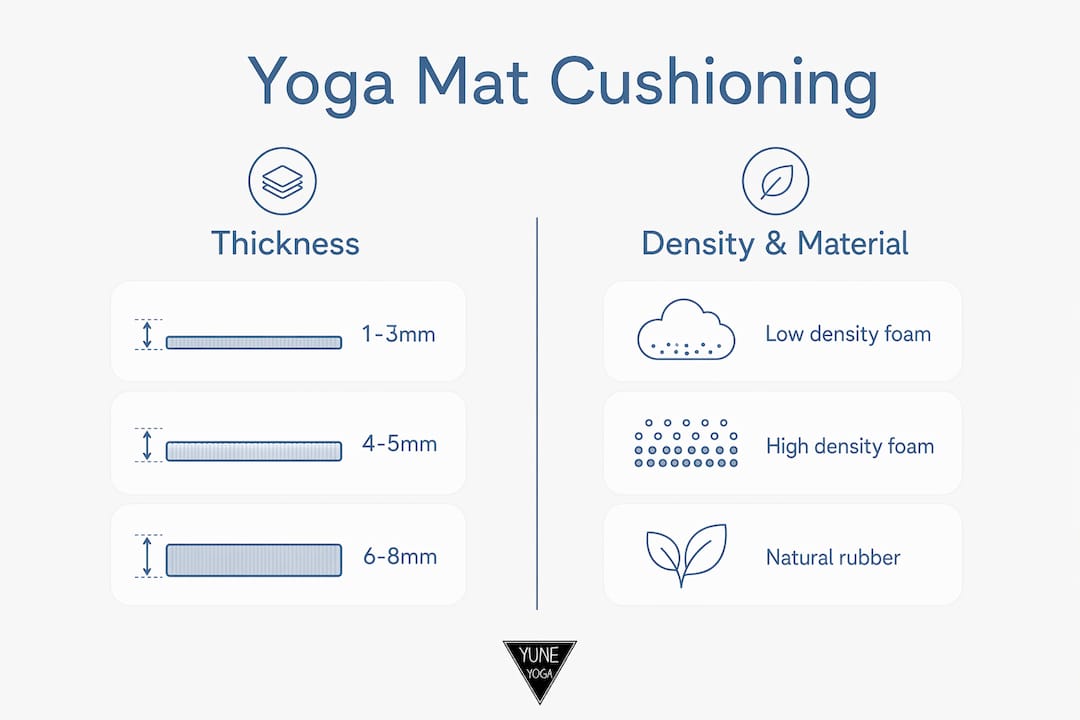
| Thickness | Cushioning level | Best for |
|---|---|---|
| 1–3mm | Minimal | Advanced practitioners, travel, hot yoga |
| 4–5mm | Moderate | Vinyasa, ashtanga, general practice |
| 6–8mm | High | Restorative, yin, injury recovery, sensitive joints |
| 8mm+ | Maximum | Seated meditation, therapeutic use |
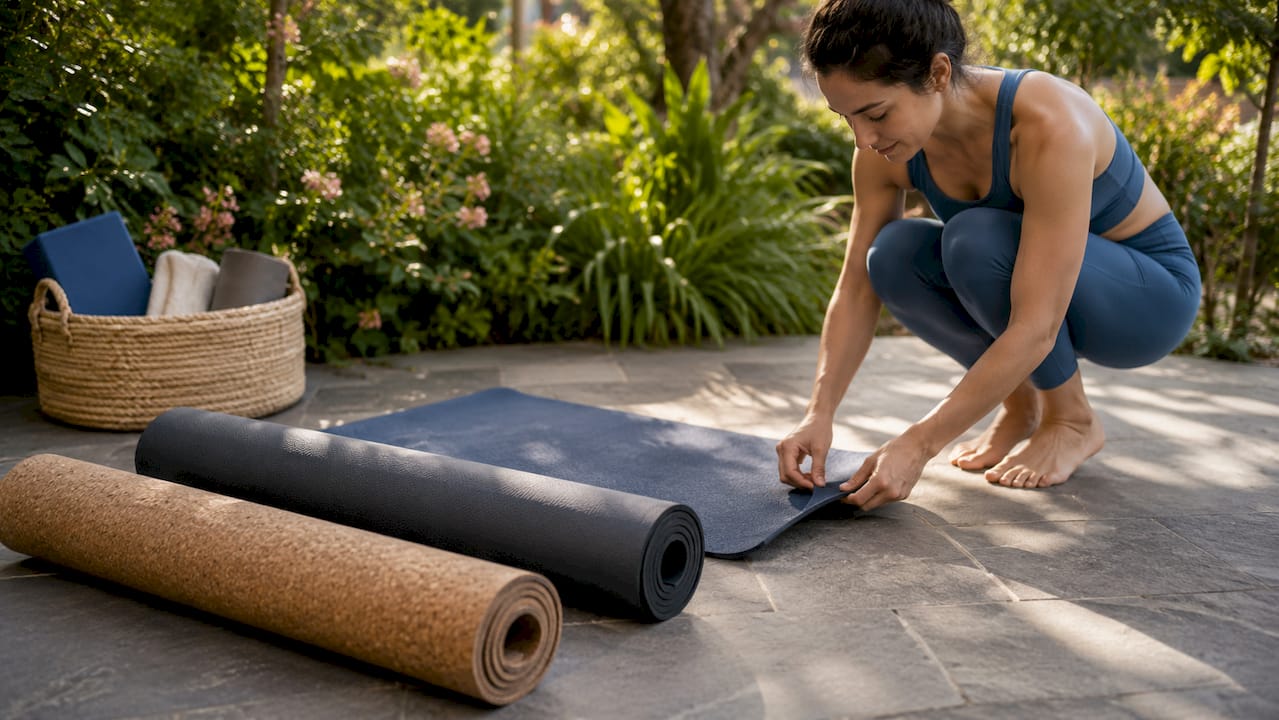
Material shapes both cushioning quality and grip. Natural rubber mats deliver firm, responsive padding with excellent grip. PVC mats are softer but compress more over time. TPE (thermoplastic elastomer) mats sit between the two in firmness and are a popular eco-conscious choice. Quality mats combine cushioning with grip and a stable surface to reduce injury risk and maximize performance. Grip prevents slipping, which is a separate but equally important safety factor.
A common misconception is that beginners need the thickest mat available. High-density mats provide the stability beginners need to develop balance and alignment. A mat that compresses too easily under a new practitioner’s shifting weight actually makes it harder to learn standing poses correctly.
Pro Tip: If you practice multiple yoga styles, choose a 4–5mm high-density mat as your base. Add a folded blanket under specific joints when you need extra padding for restorative sessions.
How can props customize cushioning for specific poses?
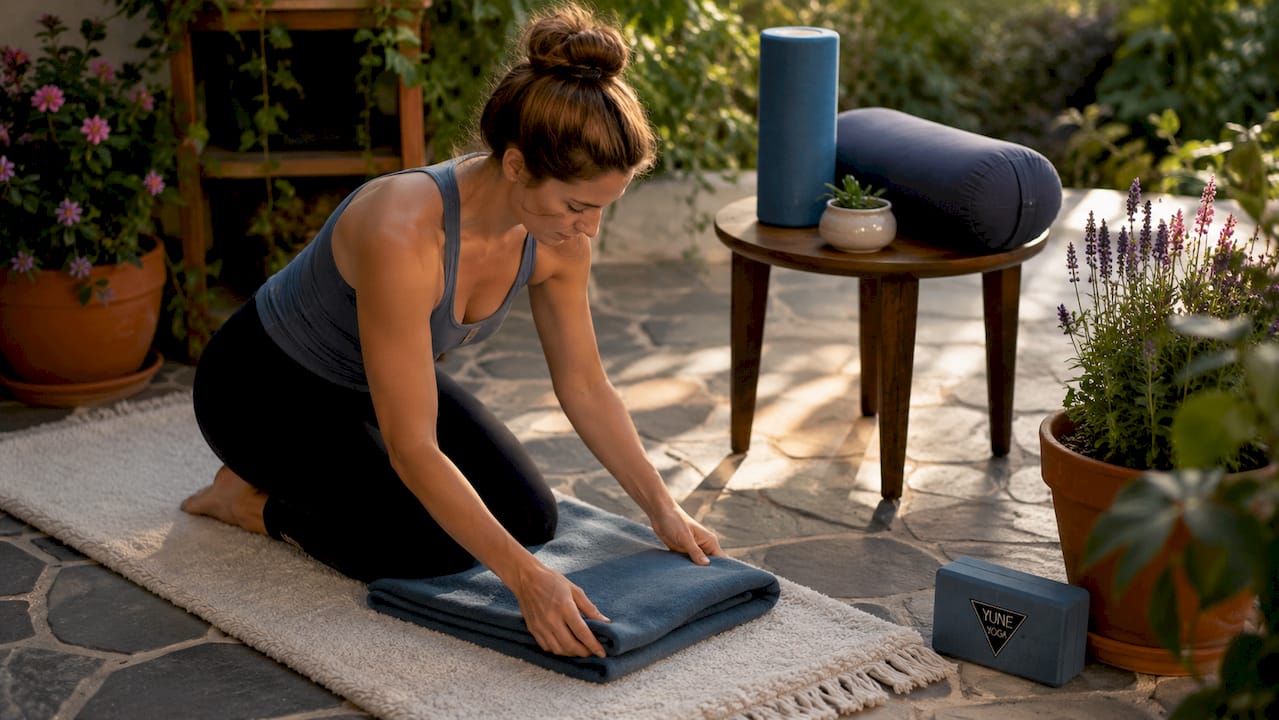
Props solve the problem that no single mat can solve for every pose. A 5mm mat that works perfectly in warrior sequences may feel punishing under your back knee in low lunge. Folded blankets, bolsters, and extra mat sections let you add localized padding exactly where you need it, without changing your mat setup.
Using props allows maintaining a thinner mat for balance with added localized padding in targeted areas like knees or hips. This approach is especially useful for practitioners recovering from injury or managing chronic joint sensitivity. You keep the stability of a firmer mat for standing work and add softness only where the body demands it.
Practical prop applications include:
- Folded blanket under the back knee: Place one or two folds of a firm blanket beneath the back knee in low lunge or crescent pose. This lifts the knee off the mat surface and distributes pressure across a wider area.
- Bolster under the hips in seated poses: A bolster under the sit bones in hero pose or butterfly lifts the pelvis and reduces strain on the hip flexors and inner knees.
- Rolled blanket under the wrists: A thin roll placed under the heel of the hand in tabletop or plank reduces wrist extension angle and relieves carpal tunnel pressure.
- Doubled mat section under the knees: Fold the top third of your mat back on itself before kneeling poses. This doubles the padding without requiring a separate prop.
Blankets can be folded under knees or hips to customize support for stability. Experienced practitioners often combine a thin, high-grip mat with targeted prop cushioning to address specific joint needs without sacrificing stability during dynamic flows.
Pro Tip: Keep a firm cotton blanket at the top of your mat at the start of every practice. Fold it in thirds lengthwise so it is ready to slide under any joint within seconds, without interrupting your flow.
Does cushioning improve yoga performance or hurt balance?
Cushioning improves performance when it matches the demands of the pose. It hurts performance when it exceeds them. This tension is the central trade-off every practitioner needs to understand.
Too much cushion lowers proprioception and makes balance poses more challenging. Proprioception is your body’s ability to sense its own position in space. It depends on pressure feedback from the soles of your feet and palms of your hands. A mat that compresses too much under your standing foot reduces that feedback signal. Tree pose, warrior III, and half moon all become harder because your nervous system receives less information about where your foot is relative to the floor.
The right approach balances protection with ground contact. Here is how to calibrate cushioning by yoga style:
- Vinyasa and ashtanga: Use a 4–5mm mat with firm density. Prioritize grip over padding. Add a blanket only for specific kneeling transitions.
- Restorative and yin: Use a 6–8mm mat or layer a thinner mat over a bolster for floor sequences. Cushioning matters more than proprioception here because poses are held passively.
- Standing balance sequences: Use the thinnest mat you can tolerate comfortably. Bare feet on a 3mm natural rubber mat give the clearest ground feedback.
- Injury recovery practice: Prioritize cushioning at the affected joint using props. Keep the rest of your mat setup firm so your unaffected limbs maintain normal feedback.
- Meditation and pranayama: Use a dedicated meditation cushion or a bolster. Spinal alignment is the priority, not stability.
Mat firmness and grip work alongside cushioning, not against it. A mat that grips well lets you press firmly into the floor, which activates the muscles that stabilize joints. That muscular engagement reduces the load that cushioning needs to absorb. The Yuneyoga blog covers practical techniques for matching mat properties to specific practice styles and poses.
Key takeaways
Proper cushioning protects joints, supports spinal alignment, and must be balanced against proprioceptive feedback to serve both safety and performance in yoga practice.
| Point | Details |
|---|---|
| Cushioning reduces joint impact | Adequate padding cuts pressure on knees and wrists, preventing cumulative strain over time. |
| Thickness and density both matter | A medium-thickness, high-density mat outperforms a thick, low-density mat for most practitioners. |
| Props add targeted support | Folded blankets and bolsters let you customize cushioning by pose without changing your mat. |
| Too much cushion hurts balance | Excess padding reduces proprioceptive feedback, making standing balance poses harder to execute. |
| Match cushioning to your style | Restorative practice needs more padding; dynamic flow and balance work need less. |
What I have learned about cushioning after years on the mat
The biggest mistake I see practitioners make is treating mat thickness as a proxy for comfort. A 10mm foam mat feels luxurious in the store. On the mat, it turns every standing balance into a wobble-fest and every plank into a sinking exercise. Thickness without density is just instability with extra steps.
What actually works is a layered approach. I use a 4mm natural rubber mat as my base for every session. For kneeling poses, I fold a firm cotton blanket and slide it under my back knee without breaking the flow of the sequence. For seated meditation, I sit on a firm bolster. That combination gives me the ground feedback I need for dynamic work and the joint protection I need for sustained holds.
The other thing worth saying plainly: your cushioning needs will change. A practice that felt fine on a 3mm travel mat at 28 may demand a 5mm mat and regular prop use at 45. That is not regression. That is adaptation. The practitioners I respect most are the ones who adjust their setup without ego, because they understand that the goal is a lifetime of practice, not a single impressive session.
If you are unsure where to start, err toward medium thickness and high density. Add props for specific poses. Reassess every few months as your practice evolves.
— Nicholas
Yuneyoga’s mat and prop selection for every cushioning need
Yuneyoga carries a curated range of yoga mats across multiple thickness and density options, from travel-ready foldable mats to natural rubber mats built for daily practice. Every mat in the collection is tested for grip, durability, and consistent cushioning performance.
Complementary props including blankets and bolsters are available alongside the mats, so you can build a complete cushioning setup without sourcing from multiple places. The collection covers practitioners at every level, from beginners building their first setup to experienced yogis refining a joint-specific support system. Browse the full range of yoga mats and accessories at Yuneyoga and find the combination that fits your practice, your body, and your goals.
FAQ
What is the ideal mat thickness for joint protection?
A 6–8mm mat provides the most cushioning for sensitive joints, restorative yoga, and injury recovery. For dynamic styles, a 4–5mm high-density mat balances protection with stability.
Can props replace a thicker yoga mat?
Props like folded blankets and bolsters provide localized cushioning that a thicker mat cannot replicate for specific poses. The best setup combines a firm base mat with targeted props where your joints need extra support.
Does a thicker mat help beginners learn yoga faster?
A thicker mat does not automatically help beginners. High-density mats support beginners better than maximally thick ones because they provide the stability needed to develop balance and proper alignment.
How does cushioning affect balance poses?
Cushioning that compresses too much reduces the pressure feedback your feet send to your nervous system, making balance poses like tree pose and warrior III harder to hold steadily.
What materials provide the best yoga mat cushioning?
Natural rubber mats deliver firm, responsive cushioning with strong grip. TPE mats offer a softer feel with eco-conscious materials. PVC mats cushion well initially but compress over time and lose consistent support with regular use.

