
How to clean a yoga mat: A complete maintenance guide
Key Takeaways
Keeping your practice area pristine helps extend the lifespan of your gear and supports a better experience. Follow these guidelines to maintain your equipment correctly, whether you are using a standard mat or a travel-friendly folding version.
- Perform routine wipe-downs after each session to prevent grime buildup.
- Always check material-specific care instructions before using cleaning agents.
- Use gentle, natural solutions whenever possible to avoid damaging surface integrity.
- Allow adequate airflow and drying time to prevent mold and mildew growth.
- Replace your mat when it loses essential grip or shows significant wear.
Identifying your yoga mat material
Understanding closed-cell versus open-cell surfaces
The way your mat interacts with moisture depends largely on its surface structure. Closed-cell mats repel moisture and bacteria because they do not absorb liquid, whereas open-cell versions tend to soak up sweat like a sponge. Understanding which surface you have is central to effectively cleaning your yoga mat. Regardless of the type, Yune Yoga produces gear that stands up to frequent use, making maintenance straightforward for busy practitioners.
Checking manufacturer care recommendations
Before applying any liquid or spray, take a moment to look at the care label or manufacturer website. Some materials, particularly natural rubber or specialized foams, can degrade when exposed to harsh chemicals like alcohol, bleach, or excessive essential oils. Always prioritize these specific guidelines to ensure you handle the proprietary texture of your mat with care.
Why material composition dictates cleaning frequency
Materials like high-density foam may only need a quick surface wipe, while more porous, absorbent materials often require regular, deeper sanitization to prevent odors from settling in. If you practice frequently in hot environments, the frequency of your cleaning routine should increase accordingly. Establishing a habit of maintenance will preserve the performance of your mat through every travel adventure or home session.
Daily maintenance for long-term freshness
Wiping down the surface after every session
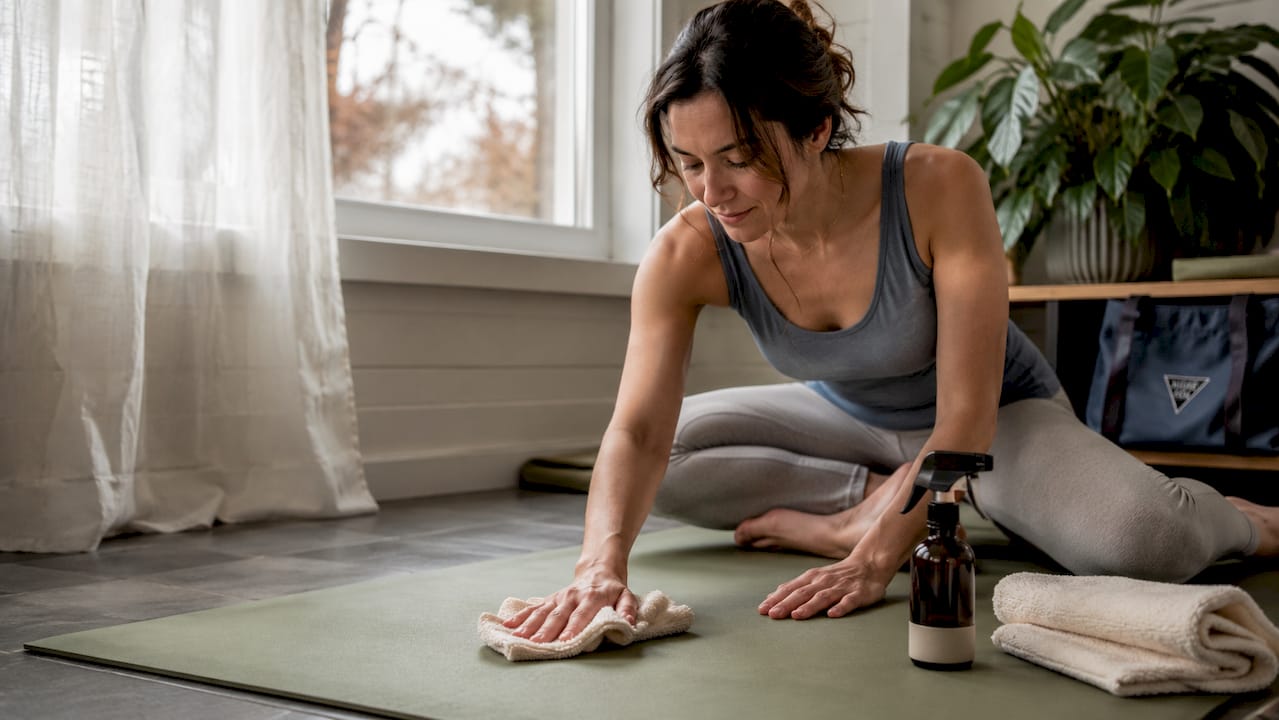
Taking a couple of minutes to clear away surface sweat and body oils after each practice keeps your space inviting. Many practitioners find success simply using a soft, dampened cloth to remove residue before the workout ends. It is a quick habit that Keep your yoga mat fresh and clean without requiring heavy equipment.
Allowing for proper airflow and drying
Never roll up a damp or sweaty mat immediately after finishing your flow, as trapping moisture creates a breeding ground for bacteria. Instead, hang your mat or lay it flat in a shaded, well-ventilated area until it is completely dry. Consistent exposure to fresh air is part of how to clean a yoga mat effectively by preventing mold before it starts.
Spot-treating light sweat marks
Occasionally, specific areas like where your hands and feet land will need extra attention. You can use a mild soap mixture or a gentle spray to target these high-contact zones. Following this routine helps keep things sanitary:
- Mix three drops of mild dish soap with two cups of warm water.
- Use a soft microfiber cloth to apply the solution lightly.
- Gently scrub in a circular motion until the mark fades.
- Wipe the area once more with plain water to remove any soapy residue.
By following these simple steps, you maintain the surface quality and ensure your mat remains ready for your next practice.
Deep cleaning techniques for heavy buildup
Creating a gentle, natural cleansing solution
When light wipes are no longer enough, a deep clean is necessary to restore your mat’s original grip. You can safely and effectively clean your yoga mat with vinegar by mixing a dilute, gentle wash that breaks down oils without damaging the material. Avoid overly abrasive cleaners, as they can wear away the specialized surfaces found on modern portable equipment like a Yune Yoga travel mat, which is designed for convenience.
Using a soft brush for textured surfaces
If your mat has a rugged or non-slip texture, debris may get trapped in small crevices or indentations. Use a soft-bristled brush or a dedicated cleaning cloth to gently dislodge this buildup. Focus your efforts on the areas where you typically place your hands, as these are most prone to absorbing grip-degrading oils.
Rinsing effectively to avoid soap residue
Leaving soap residue behind can make your mat uncomfortably slippery during future sessions, which is why a thorough rinse is essential. Use a clean cloth dampened with only fresh, cool water to wipe away all leftover suds until the surface feels completely neutral. Let the mat air dry completely afterward, keeping it away from sources of heat.
Sanitizing and disinfecting your mat
Guidelines for using diluted vinegar solutions
Vinegar is a popular choice for sanitization due to its natural deodorizing properties and ability to cut through organic accumulation. When using this method, ensure it is heavily diluted with water to prevent the acidity from breaking down the surface of your mat. This approach is highly effective for maintaining a neutral smell on your Gaiam yoga mat after intense sessions.
Knowing when to use commercial mat sprays
If you prefer a pre-made product, choose a commercial mat spray specifically formulated for yoga gear rather than standard household cleaners. These sprays are tested for compatibility with materials like TPE, rubber, and polyurethane. Many Yune Yoga enthusiasts find that utilizing a dedicated mat spray saves time while ensuring the longevity of their foldable travel mats.
Precautions for essential oil sensitivities
While many people love the therapeutic scent of tea tree or lavender mat sprays, be aware that some users may have sensitivities to concentrated essential oils. If you share your practice space or have skin that reacts to fragrances, stick to a fragrance-free version or plain soapy water. Your comfort during your session remains a priority alongside the cleanliness of your equipment.
Proper drying and storage methods
Avoiding direct sunlight to prevent material degradation
Even after a thorough cleaning, the way you dry your mat significantly impacts its lifespan. Ultraviolet rays from direct sunlight can cause materials to become brittle, crack, or lose their specialized grip over time. Always air-dry in a cool, shaded location with good airflow, ensuring both sides are exposed to the air for a complete result.
The importance of a flat-drying surface
For the best results, lay your mat flat or drape it over a shower rod rather than bunching it up or hanging it over a sharp edge. Ensuring the material remains flat prevents permanent creasing and allows moisture to evaporate evenly. Below is a summary of how humidity affects your drying process:
| Weather Condition | Drying Speed | Recommended Location |
|---|---|---|
| High Humidity | Slow | Near a fan or vent |
| Standard Indoor | Moderate | Shaded area in home |
| Dry/Low Humidity | Fast | Anywhere with airflow |
By controlling the environment in which you dry your mat, you prevent the premature hardening of the material and maintain consistent structural performance.
Storage habits to keep your mat bacteria-free
Once your mat is bone-dry, roll it up and store it in a cool, dark space to protect it from dust and debris. If you have an active lifestyle, consider a breathable carrying case that keeps your equipment organized while allowing for airflow between sessions. Always avoid storing your mat in the trunk of a car, where extreme temperature fluctuations can damage the chemical composition of the material.
When to replace your yoga mat
Identifying signs of material breakdown and crumbling
Over time, regular use will inevitably cause even the highest-quality mat to wear down. If you notice small flakes of material coming off or if the mat has developed deep indentations that no longer spring back into place, it is likely time for a replacement. Persistent physical wear and tear is a clear signal that the surface is beyond its useful life.
Assessing loss of grip and specialized texture
When your mat begins to feel slippery despite being clean, it has lost its original structural integrity. A properly functioning mat should provide a stable, grippy base that instills confidence in every pose. If you find yourself sliding frequently, do not compromise your balance; investing in a fresh mat ensures your safety and progress.
Health concerns related to persistent odors
If a mat develops a stubborn, musty smell that refuses to lift even after deep cleaning, it may indicate trapped mildew or bacteria deep within the material. This is especially true for older or highly worn mats that have lost their density. Prioritizing your health means replacing gear when sanitation efforts no longer eliminate deep-seated odors.
Conclusion
Maintaining your gear with simple, consistent habits ensures your practice remains a safe and refreshing journey every day. By understanding the material properties of your equipment and choosing gentle cleaning agents, you significantly extend its life and preserve the performance you need for every pose. Embrace these maintenance steps to keep your mat in top shape and focus entirely on your movement.
Frequently Asked Questions
Can I wash my yoga mat in the washing machine?
Most manufacturers advise against machine washing, as the agitation and heat can destroy the specialized texture and material integrity of the mat. Always opt for hand cleaning to protect your investment.
How often should I perform a deep clean?
If you practice daily, aim for a deep clean every two to four weeks depending on your activity level and the humidity of your practice environment.
Is it okay to use disinfectant wipes on my mat?
Standard cleaning wipes often contain harsh chemicals or alcohol that can dry out and degrade most yoga mat materials. It is better to use a mild soap solution or a dedicated yoga mat spray.
What do I do if my mat smells after cleaning?
Persistent smells often indicate trapped moisture or bacteria, suggesting it may be time to replace the mat. If the mat is still in good physical condition, try a light vinegar solution, ensuring you rinse and air-dry thoroughly.
Does sunlight help kill bacteria on my yoga mat?
While sunlight can provide some disinfecting effects, the tradeoff is the high risk of material damage such as warping or cracking. Keep your mat out of strong, direct sunlight at all times.
Can I use essential oils for a better scent?
Essential oils are a popular way to fragrance your mat, but confirm that they do not irritate your skin. Always dilute them heavily and use only high-quality, natural oils to avoid leaving oily residue.
What is the best way to transport a sweaty mat?
Use a breathable bag or a dedicated strap designed for transport. If you must transport it right after class, carry it outside the bag so it can continue to dry during your commute.