Dry a Yoga Mat by Material: Towel Roll Method for Busy Yogis
Blot your mat with a clean towel to pull off excess water, then air-dry it fully by hanging it over a rail or laying it flat somewhere with good airflow. Never use a clothes dryer or a blast of hot air. Depending on the material and the humidity in your space, full drying can take several hours to a full day or more, and you shouldn’t roll it up until it’s completely dry.
TL;DR:
- Natural rubber mats require longer drying times and should never be fully submerged, unlike TPE and PVC mats that dry more quickly.
- Using heat sources like a clothes dryer or radiators can damage and warp the mat’s surface, so air-drying remains the safest method.
- To speed up drying, use a fan or dehumidifier and avoid stacking or overlapping mats, which can trap moisture and promote mold growth.
- Checking for dampness through pressure, smell, and seam inspection is essential before rolling up a mat to prevent odor and mildew.
- Rinse or spot-treat mold with vinegar or mild soap, but replace the mat if it shows peeling, permanent stickiness, or persistent bad odor.
Table of Contents
- Drying a Yoga Mat Step by Step
- Does Your Mat’s Material Change How You Dry It?
- What’s the Fastest Way to Dry a Yoga Mat?
- How Do You Know Your Mat Is Actually Dry?
- Fixing Mold, Odor, or Uneven Drying
- Yune Yoga’s Take on Mat Care
- Why Most People Rush the Drying Step
- Sources
Drying a Yoga Mat Step by Step
The clock starts the moment you finish cleaning, so don’t let a soaked mat sit around while you decide what to do next.
- Blot first. Lay a clean microfiber towel over the mat and press down firmly, working section by section to soak up standing water.
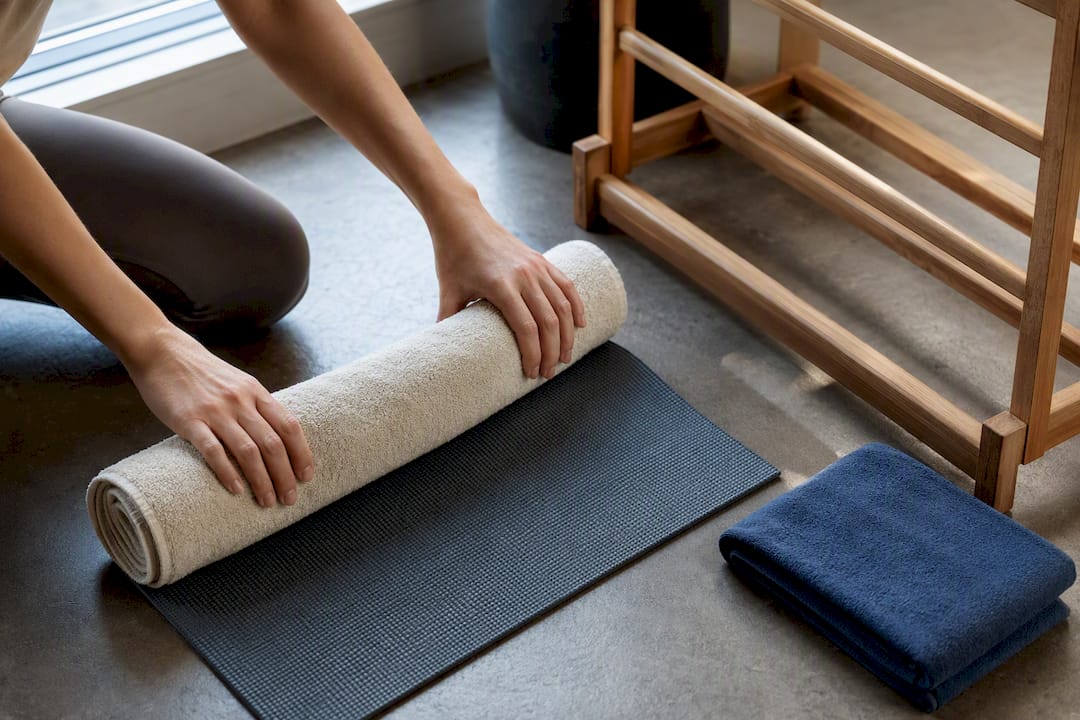
- Try the towel-roll squeeze. Roll the mat together with a dry towel, then press down along the roll and unroll it. This pulls moisture out of the fibers faster than blotting alone, especially on textured surfaces.
- Pick the right drying position. A heavy, waterlogged mat should dry flat first so it doesn’t sag or stretch under its own weight. Once most of the water is gone, hang it over a wide rail, a shower rod, or a drying rack so air reaches both sides.
- Add airflow. A box fan or ceiling fan pointed at the mat cuts drying time significantly. Keep it away from damp walls, bathroom tile, or anything else holding moisture, since that just recirculates humidity back onto the mat.
- Use sunlight sparingly. A short stretch of direct sun helps evaporation, but extended exposure can fade the surface and weaken the material over time. Fifteen to twenty minutes is plenty.
Thin PVC mats can dry quickly under a fan, while thick natural rubber mats can take significantly longer to dry, especially in humid climates. REI’s cleaning guide recommends hanging mats over a chair, porch railing, or drying rack and skipping the dryer entirely, since air-drying stays the safest method regardless of climate.
Pro Tip: If you’re drying two mats at once, don’t stack or overlap them. Trapped moisture between two mats is exactly the environment mold loves.
Does Your Mat’s Material Change How You Dry It?
Yes, and this is where a lot of people damage a perfectly good mat without realizing it. Different rubbers and foams hold water differently, and treating them all the same is the fastest way to shorten a mat’s life.
- Natural rubber (open-cell): Absorbs water into its structure rather than just sitting on the surface, so it needs longer drying time and should never be fully submerged for extended periods.
- TPE (closed-cell): Sheds water quickly since it doesn’t absorb moisture the way open-cell rubber does, making it one of the faster mats to dry.
- PVC: Also closed-cell and generally quick-drying, though it can trap moisture in textured grip patterns, so give those grooves extra towel attention.
- Microfiber towel-topped mats: The towel layer holds water like a sponge and needs a thorough wring and a longer hang time separate from the rubber base underneath.
Alo Moves points out that open-cell rubber can take considerably longer to dry than closed-cell mats and warns against soaking any mat unless the manufacturer specifically says it’s fine. That’s the real rule here: check the care label before you soak anything, because a method that’s harmless for one material can shorten the life of another.
What’s the Fastest Way to Dry a Yoga Mat?
When you’re short on time, the towel-squeeze method is your best friend. Blot with one towel, swap in a second dry towel, and repeat the roll-and-press technique two or three times. Each pass pulls out more residual water than the last.
- Point a fan directly at the mat, or run a dehumidifier in the room if you have one; both speed up evaporation without adding heat.
- Room-temperature airflow is safe. A mat dryer or low, cool setting on a bathroom vent fan is reasonable if you have one, but anything generating real heat is off the table.
- Never use a clothes dryer, a hair dryer on a hot setting, or radiators. REI is blunt about this: heat sources warp the surface and wreck the grip that makes a mat usable.
- Don’t twist or wring the mat like a towel. It stresses seams and can crack rubber. Skip abrasive scrub towels and harsh chemical sprays, too, since they degrade the surface you’re trying to protect.
Damp mats aren’t just unpleasant. The CDC notes that letting cleaned surfaces air dry fully is part of what actually reduces microbial risk, and a mat that stays damp for hours gives bacteria and mold exactly the environment they need to take hold.
How Do You Know Your Mat Is Actually Dry?
Rolling up a mat that looks dry but isn’t is the single most common mistake after cleaning. Moisture trapped inside a tight roll has nowhere to go, and that’s how odor and mildew show up days later.
- Run your hand across the surface and press firmly. If you feel any coolness or dampness, it needs more time.
- Check the seams and edges, where thicker mats hold water longest, by bending the mat slightly and inspecting the fold line.
- Give it a smell test. A faint musty scent means it’s not fully dry yet, even if the surface feels fine.
- Leave it unrolled for another hour once it seems dry, just to be safe, before rolling it loosely for storage.
- Store it somewhere cool, dry, and ventilated. Avoid tight closets or car trunks where humidity builds up. A breathable mat bag or a simple strap works better than an airtight case.
Unroll stored mats every few weeks to air them out, especially if you live somewhere humid.
Fixing Mold, Odor, or Uneven Drying
A little mildew after a missed damp spot doesn’t mean your mat is ruined. Mix mild soap with water, or a diluted vinegar solution, and wipe the affected area directly rather than soaking the whole mat again.
- Spot-treat mold with soap and water or diluted vinegar, then dry that section completely before storing.
- A lingering musty smell usually means water got trapped somewhere during the last dry, not that the material itself has broken down. Repeat the drying process with extra attention to seams and edges.
- Watch for real warning signs: peeling layers, a permanently sticky or tacky surface, or a smell that won’t go away no matter how thoroughly you dry it. Those point to material breakdown, and at that stage it’s time to replace the mat rather than keep fighting it.
Yune Yoga’s Take on Mat Care
Getting the drying step right only works if the cleaning step before it was done well, and that’s where a lot of readers still have questions. The blog has you covered with deeper walkthroughs, including 5 proven steps to effectively clean your yoga mat and a set of homemade yoga mat cleaner recipes if you’d rather skip commercial sprays entirely.
- Always check your specific mat’s care label first. Materials vary enough that a method safe for one mat can shorten the life of another.
- Favor gentle, plant-based cleaners over harsh chemicals. They rinse cleaner and leave less residue behind to slow down drying.
- Pair a light cleaner with full air-drying rather than a heavy soak. Less water in means less time waiting for your mat to dry out.
Why Most People Rush the Drying Step
Most drying advice focuses on the cleaning part and treats drying as an afterthought, a quick “let it air out” line at the end. That’s backward. The research on damp surfaces and microbial growth makes it clear that incomplete drying is where hygiene problems actually start, not during the wash itself.
The conventional wisdom to just “hang it up and forget it” also undersells how much material matters. A closed-cell PVC mat and an open-cell natural rubber mat are not on the same timeline, and treating them the same is how people end up storing a mat that’s still damp in the middle.
If you take one thing from this: budget real time for drying, check the edges and seams before you roll anything up, and match your method to your mat’s material rather than a generic routine. That single habit does more for a mat’s lifespan than any cleaner you’ll ever buy.
— Nicholas


