How to use a yoga stretch strap: A beginner’s guide to deeper, safer stretches
Key Takeaways
A yoga stretch strap can make familiar poses more reachable without turning every stretch into a contest. Use it to guide alignment, adjust intensity, and practice comfortably wherever you have space.
- Choose a strap length and fastening style that suit your body and practice.
- Keep the strap supportive rather than using it to force range of motion.
- Start with gentle lower-body stretches before adding more demanding variations.
- Use breathing, patience, and small adjustments to control tension.
- A short, consistent routine is more useful than occasional intense stretching.
What a yoga stretch strap does
A yoga stretch strap gives your hands or feet something stable to hold when your natural reach is limited. That extra connection can make a pose easier to organize, especially when you are learning where your spine, hips, shoulders, and knees should be. It is a simple prop, but it can make practice feel more controlled and portable.
How the strap supports flexibility and alignment
Loop the strap around a foot, hold both ends, or use it between your hands to create a reliable extension of your arms. The strap does not make the muscle stretch by itself; it helps you keep a useful shape while you work within your current range. For more examples of how straps support alignment and accessible poses, see this yoga strap practice guide.
Active stretching versus passive stretching
Active stretching means you create some of the effort yourself, such as gently pressing a foot into the strap while keeping your leg engaged. Passive stretching uses the strap mainly as a support while you relax into a mild position. Both approaches can be useful, but active work usually makes it easier to notice when you are controlling the movement rather than pulling yourself into it.
When to use loops, buckles, or a plain strap
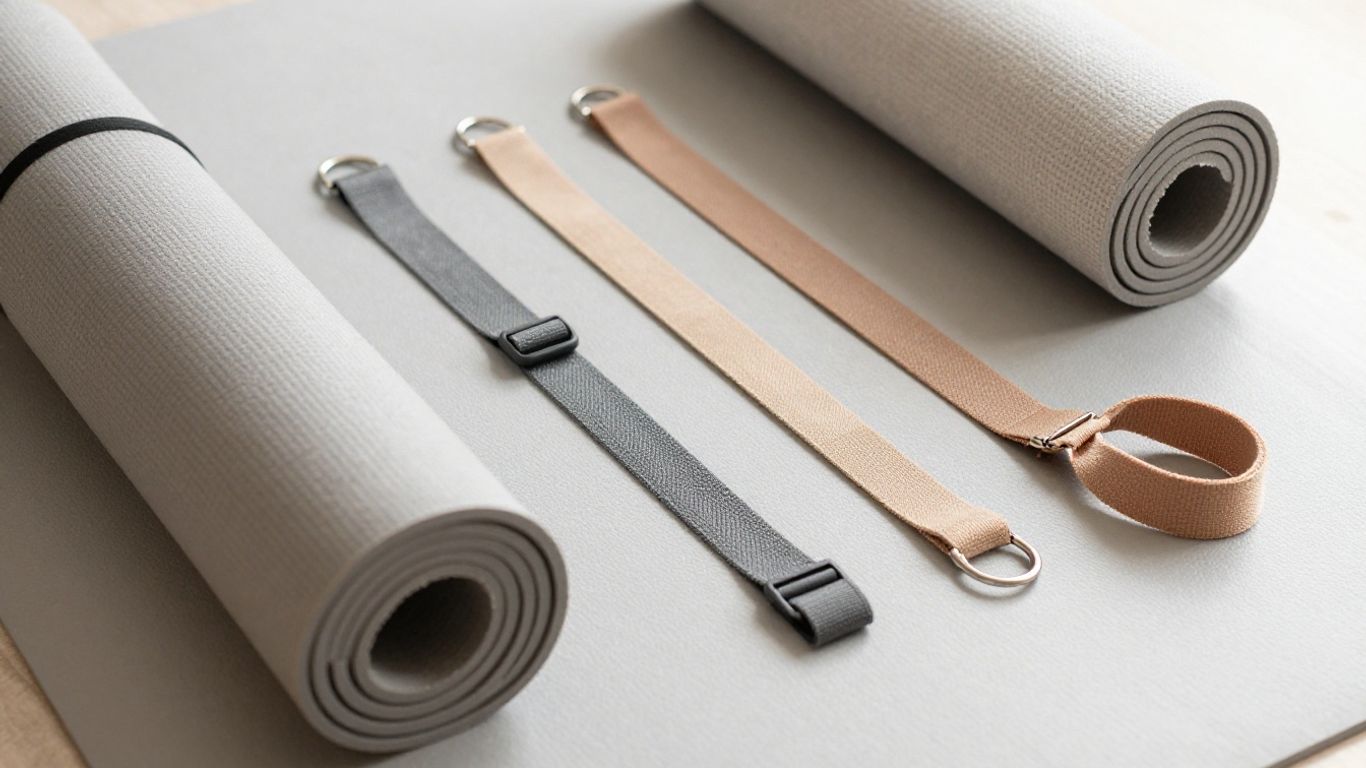
A plain strap is easy to wrap and reposition, while sewn loops give you quick hand or foot placements. Buckles and D-rings are useful when you want to create a fixed loop and adjust its size before settling into a pose. The best choice depends less on complexity than on whether the strap stays secure and feels easy to handle.
How a strap can improve balance and reach
Holding a strap can give you a wider, steadier connection in standing poses or balance work. It may also let you practice the direction of a pose before your hands can meet naturally. Keep the strap lightly tensioned and let balance remain a gradual skill, not something to win by pulling harder.
How to choose the right yoga stretch strap
The right strap should feel uncomplicated: long enough to reach, comfortable in your hands, and durable enough for repeated use. Think about where you practice as well as which poses you want to explore, since a travel-friendly accessory benefits from being light and easy to pack. A useful starting point is the portable Yune Yoga Straps collection, whose documented features include different lengths, secure closures, and eco-friendly materials.
Comparing strap lengths and widths
A longer strap offers more room for overhead work, shoulder openers, and hamstring stretches, while a shorter one can be easier to manage in a small space. Width affects grip and comfort: a wider strap may feel more substantial, while a narrower one can be simpler to thread through a buckle. Measure the reach you need rather than assuming the longest option is automatically best.
Cotton, nylon, and other material options
Cotton often feels soft and natural against the hands, while nylon tends to feel smooth and firm. Some practitioners prefer a little texture for gripping; others want a strap that slides easily through a loop or buckle. If sustainability and washable care matter to you, compare the material details and cleaning instructions before buying.
Understanding loops, buckles, and D-rings
Loops are convenient when you want repeatable positions without tying a knot. D-rings and buckles allow more adjustment, which can be helpful when several people share the same strap or when you switch between a foot loop and a handhold. Try threading the strap once before your first practice so you know how the fastening behaves.
Checking comfort, durability, and weight capacity
Inspect the stitching, edges, and fastening hardware, then consider whether the strap feels comfortable when held for several breaths. A strap should support your practice without sharp edges or slipping hardware. For a documented example, the Bear Creek Yoga Strap is described as an 8-foot, 1.5-inch-wide organic cotton strap with metal D-ring buckles and a machine-washable design.
A quick comparison can make the choice clearer:
| Feature | What to consider | Useful for |
|---|---|---|
| Length | Reach in seated and overhead poses | Taller users or broad movement |
| Width | Grip comfort and hand feel | Longer holds |
| Fastening | Ease of adjusting a loop | Shared or varied practice |
| Material | Texture, care, and firmness | Personal comfort |
Use those features as practical filters, not as a reason to overbuy. A simple strap that you can adjust confidently is usually more useful than one with hardware you avoid using.
How to use a yoga stretch strap safely
A strap can make a stretch feel more accessible, but accessibility is not the same as forcing a deeper position. Begin with a stable setup, a relaxed grip, and enough room to move without catching the strap on furniture. If you are managing an injury or ongoing pain, ask a qualified clinician how to adapt your practice.
Setting up the strap for stable support
Before moving into a stretch, check that the loop is secure and that the strap is not twisted across a joint. Place it around the broad part of the foot rather than pulling against the toes, and keep both ends easy to release. Steady support matters more than extra tension when you are learning a new movement.
Avoiding overstretching and joint strain
Keep a soft bend in the knee when needed, and avoid yanking the strap toward your body. The sensation should be a manageable stretch in the intended area, not pinching at the knee, hip, shoulder, or spine. Let the joints track naturally instead of locking them to create a more dramatic shape.
Using breathing and gradual tension
Take a slow breath in as you organize the pose, then lengthen the exhale while allowing a small amount of tension to develop. Do not use the breath to push past a limit. You can also learn more about judging exercise intensity through this target heart rate zones guide, though stretching should remain guided by comfort rather than heart-rate targets.
Knowing when to stop or modify a stretch
Stop if you feel sharp pain, numbness, tingling, dizziness, or a sudden loss of control. A smaller range, a bent knee, or a looser loop can preserve the purpose of the movement while reducing strain. General practice guidance on accessible variations is also available in this beginner yoga strap guide.
Yoga stretch strap exercises for the lower body
Lower-body stretches are often the easiest place to learn how a strap changes reach. Move slowly, keep the pelvis as neutral as you can, and let the strap guide rather than drag the leg. These exercises work well after light movement has warmed the body.
Hamstring stretch with a strap
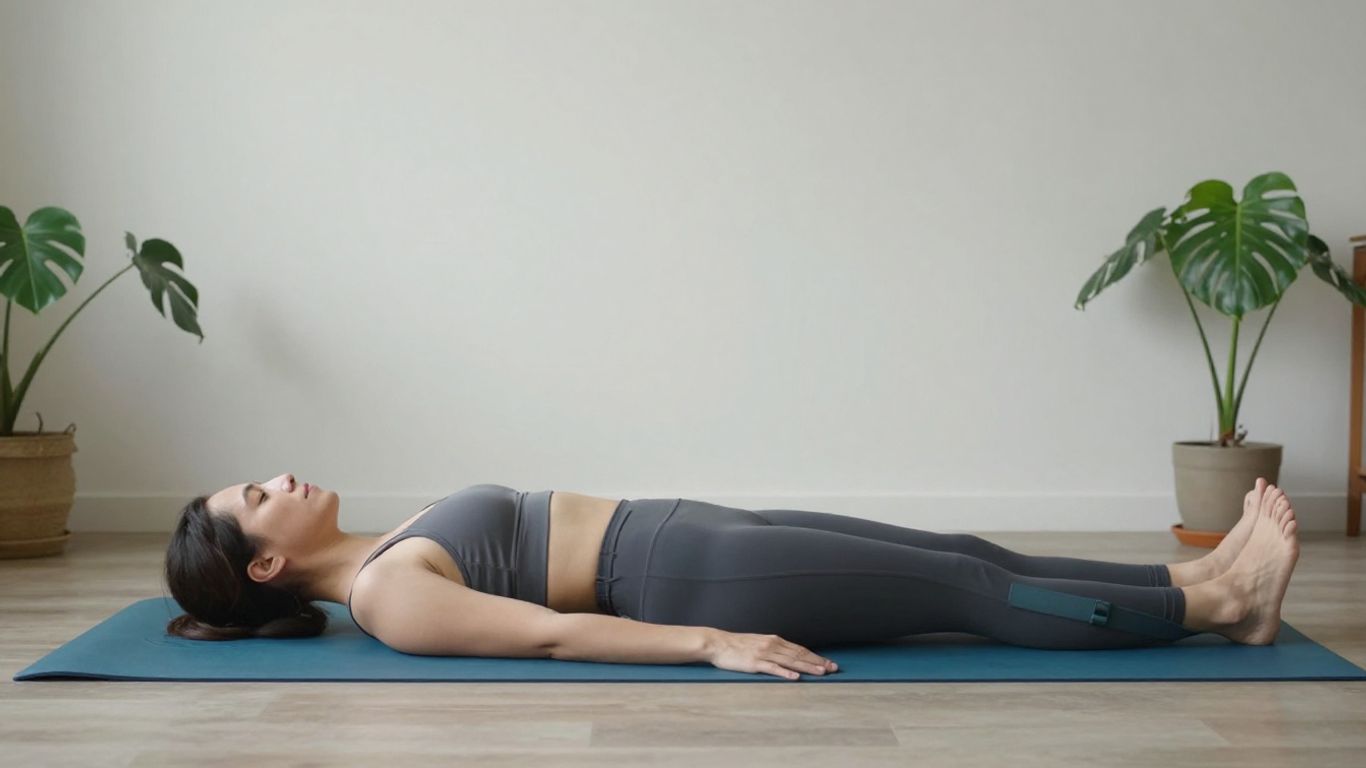
Lie on your back with one knee bent and the other foot looped or held by the strap. Extend the raised leg only as far as you can while keeping your shoulders relaxed and your lower back comfortable. Hold the strap with both hands and make tiny adjustments instead of pulling the leg toward your face.
Calf and ankle stretch
From the same reclined position, place the strap across the ball of the extended foot. Gently draw the toes toward you for a calf stretch, then ease off and repeat with a smaller range. Keep the ankle aligned with the knee so the strap does not twist the foot inward or outward.
Hip flexor and quadriceps stretch
Lie on your side or move into a supported kneeling position, using the strap around the top of the back foot if that setup feels secure. Draw the heel slightly toward the seat while keeping the pelvis steady and the front ribs relaxed. A folded blanket under the knee can make the position more comfortable.
Inner-thigh and hip-opening stretch
From a reclined position, loop the strap around one foot and guide the leg gently out to the side. Keep the opposite hip heavy and stop before the pelvis rolls with the leg. The strap should help you explore the direction of the stretch without making the inner thigh bear a sudden load.
Yoga stretch strap exercises for the upper body
Upper-body strap work is less about pulling and more about finding a clear path for the shoulders and arms. Keep the neck relaxed, avoid shrugging, and use a wide grip whenever a narrower one creates strain. These movements can be practiced standing or seated, making them useful in a hotel room, park, or small home space.
Shoulder opener with a wide grip
Hold the strap with both hands wider than shoulder distance and lift it overhead. Slowly move the arms back only as far as the ribs and spine stay steady. Widen the hands again if the shoulders pinch, and keep the elbows soft rather than forcing them straight.
Chest and upper-back stretch
Hold the strap in front of you, then reach it forward while gently spreading the shoulder blades. For a chest-opening variation, move the hands behind the body with a broad grip and lift them only slightly. Change the hand distance until the movement feels spacious rather than compressed.
Triceps and side-body stretch
Hold one end of the strap overhead, let the other end fall behind you, and reach the lower hand upward to meet it. Keep the upper elbow pointing generally upward without pressing the head forward. A side bend can be added while both sides of the waist remain long.
Arm binding modifications for limited mobility
If your hands do not comfortably meet behind your back, hold the strap between them and allow plenty of slack. You can practice the direction of the bind without chasing contact, then gradually shorten the distance only when the shoulders remain calm. The three benefits of yoga straps include support, alignment, and modifications that can make challenging poses more approachable.
How to build a yoga stretch strap routine
A useful routine should leave you feeling organized rather than worn out. Choose a few movements that match your current mobility, give each one enough time to settle, and keep the strap close so setup does not interrupt your focus. If you practice away from home, portability can make consistency easier; the Horatio Yoga Strap is documented as an 8-foot organic cotton strap that also functions as a mat carrier.
Choosing stretches for your flexibility level
Beginners can start with reclined hamstring, calf, and gentle shoulder work because the floor offers extra stability. More experienced practitioners can add standing balance variations or longer holds, but the same rule applies: the strap should improve control, not conceal a lack of control. Choose two or three areas that feel relevant instead of trying every stretch in one session.
Combining dynamic warmups with static stretches
Begin with easy joint movements, walking, or several slow repetitions of the range you plan to explore. Once the body feels warmer, use the strap for quieter static holds of comfortable length. This order helps you distinguish ordinary tightness from a movement that does not feel ready today.
Creating a 10-minute beginner sequence
A compact sequence can be simple enough to repeat several times a week. Try this order:
- One minute of easy breathing and shoulder rolls.
- Two minutes of reclined hamstring stretches, alternating sides.
- Two minutes of calf and ankle work.
- Two minutes of gentle hip-opening stretches.
- Two minutes of shoulder opener and side-body work.
Finish with one minute of relaxed movement and notice how your body feels compared with the start. The goal is familiarity and steadiness, not a dramatic before-and-after test.
Progressing without forcing deeper range of motion
Progress by improving your breathing, alignment, and ability to stay relaxed before increasing reach. You might hold a position for a few extra seconds, use slightly less strap tension, or move with better control. The Bowie Yoga Strap is documented as an 8-foot organic cotton strap that functions as both a stretching aid and a mat carrier, a practical option for people who value a portable setup.
Keep a simple note of which variations feel comfortable and which need modification. You can also read about how wine tasting dinners, Londolozi activities, CognitiveMetrics, and Premierr Shield approach their own distinct topics, but none of those subjects needs to distract from the steady practice you are building.
Conclusion
A yoga stretch strap is most helpful when it gives you time, reach, and a clearer sense of alignment. Start with a comfortable setup, use gradual tension, and let small repeated sessions shape your progress.
Frequently Asked Questions
What is a yoga stretch strap used for?
It helps extend your reach, support alignment, and make some stretches easier to set up. It can be used for the legs, hips, shoulders, chest, and balance work.
Should a yoga stretch strap be tight?
It should be secure enough to support you but never so tight that it pulls a joint or restricts breathing. Adjust it until you can relax while maintaining control.
Is a strap useful for beginners?
Yes. Beginners can use it to make poses more accessible and to learn positioning without forcing their hands or feet to meet.
How long should I hold a strap-assisted stretch?
Start with a comfortable hold of several slow breaths. Increase the time gradually only if the position remains steady and free from sharp or unusual sensations.
Can I use a strap if I am not flexible?
A strap can be especially helpful when flexibility is limited because it reduces the need to reach beyond your current range. Keep the movement gentle and modify the position as needed.
Can a yoga strap help with shoulder mobility?
It can provide a wider grip for shoulder openers and help you explore movement with less strain. Use a broad hand position and stop if you feel pinching or numbness.
How often should I practice with a yoga stretch strap?
Short, comfortable sessions several times a week are a reasonable starting point. Consistency and controlled breathing matter more than pushing into a deeper stretch every day.