

Standard yoga mat guide: Dimensions, materials, thickness, and how to choose the right one
Key Takeaways
A standard yoga mat is a practical starting point, but the best choice depends on your height, movement, available space, and comfort preferences.
- Most standard mats are about 68–72 inches long and 24 inches wide.
- Length should give you room to lie down without your head or feet reaching the floor.
- Thickness affects cushioning, balance, weight, and portability.
- PVC, natural rubber, TPE, cork, and specialty materials each feel different in use.
- A good mat matches your practice and routine rather than simply following a popular specification.
What defines a standard yoga mat
A standard yoga mat is the familiar rectangular mat designed for everyday floor-based practice. It usually offers enough room for standing poses, seated work, and a full-body resting position without being difficult to carry. Dimensions vary slightly between brands, so “standard” describes a common range rather than one universal measurement. If you want a broader overview of yoga mat dimensions, compare length, width, and thickness together rather than judging size from one number.
Typical length and width
The traditional standard yoga mat is close to 68–72 inches long and around 24 inches wide. Modern mats often sit toward the longer end of that range, giving many practitioners a little extra room during reclining poses. A 24-inch width is compact enough for most studios and home spaces while still providing a defined surface for hands and feet.
Your own proportions matter more than the label. Someone shorter may have plenty of room on a 68-inch mat, while a taller practitioner may find that their heels or head extend beyond it. Width is similarly personal, especially if you have a broad stance or prefer more space during transitions.
Common thickness options
Thickness commonly ranges from very thin travel mats to cushioned mats of 5–6 millimeters or more. A thinner mat keeps you close to the floor and usually weighs less, while a thicker option creates more padding under knees, wrists, and hips. Medium thickness is often the most adaptable choice for a general practice.
Thickness does not tell the whole story. Foam density, surface texture, and the floor beneath the mat can change how supportive a mat feels. A dense 4-millimeter mat may feel steadier than a softer, thicker one.
How standard mats compare with oversized mats
Oversized mats add width, length, or both. They can be useful for larger frames, expansive movement, or home practices where the extra floor coverage is welcome. The tradeoff is straightforward: more surface usually means greater weight, more storage space, and a larger footprint in a shared studio.
A standard yoga mat is easier to place in a designated studio spot and simpler to roll into a closet. An oversized mat may feel luxurious, but it is not automatically better if your practice is compact or you regularly carry your equipment.
When a standard size works best
A standard size works well when you are practicing in a studio, apartment, hotel room, or other space with defined boundaries. It gives enough room for common poses without taking over the floor. Beginners also benefit from the familiarity of a size that fits most classes and mat racks.
Consider the complete routine, not just the pose. If you need to carry the mat on public transport or store it beside other equipment, a conventional footprint is often easier to manage. For broader size comparisons, this standard mat size guide offers another useful reference point.
How to choose the right yoga mat dimensions
Choosing dimensions is mostly an exercise in anticipating how you move. Height affects length, stance affects width, and your practice location affects whether a larger mat is realistic. The right mat leaves enough room for movement without becoming a burden before or after class. A little planning can prevent the common frustration of buying a mat that looks suitable online but feels cramped in use.
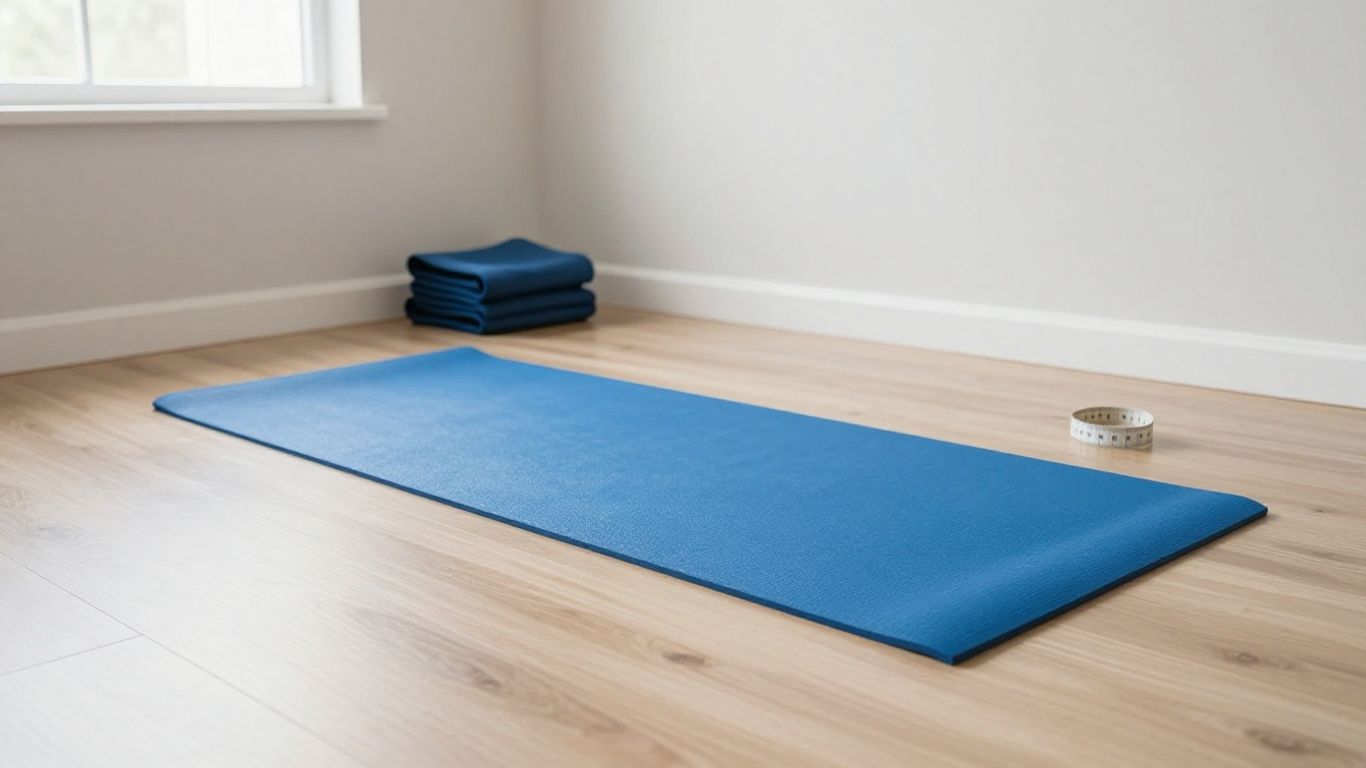
Matching mat length to your height
Start by lying down on the mat with your arms relaxed and legs extended. Your head and feet should remain on the surface, with a little room to spare. Many people use a simple rule of choosing a mat at least several inches longer than their height, but the amount of extra space you need depends on how much you move during practice.
Tall practitioners should look beyond the standard range if their heels regularly reach the floor in Savasana or their hands and feet cannot stay on the mat in long poses. A longer mat can improve comfort without requiring a much wider one. This yoga mat size guidance also discusses how height, width, and thickness work together.
Choosing width for balance and movement
Width becomes noticeable when your hands or feet land near the edges. A 24-inch mat suits many practices, while a 26-inch or wider model can feel more comfortable for broader bodies, wide-legged poses, or movement that travels from side to side. Remember that extra width may matter more than extra length if you often practice lateral transitions.
Before choosing a wide mat, measure the floor where you practice. A mat that overlaps furniture or blocks a walkway can make the room feel crowded. The goal is enough space for your usual movements, not the largest surface available.
Considering available practice space
Measure the area where the mat will normally unfold, including clearance for your hands and feet. Leave room around the mat if you practice near a wall, coffee table, bed, or other furniture. A standard footprint is convenient partly because it fits more easily into multipurpose rooms.
A simple room check can save an inconvenient return:
- Measure the clear floor length and width.
- Mark the proposed mat size with towels or removable tape.
- Try one standing pose and one reclining pose within that outline.
- Check whether you can walk around it safely.
After this test, you will know whether the extra space is genuinely useful or merely attractive in a product listing. This is also where a practical mat dimensions guide can help you compare standard, long, and wide options.
Accounting for travel and storage
Travel changes the priority order. A mat that works beautifully in a home studio may be awkward on a plane, in a small car, or in a hotel room. Look at folded size as well as rolled size, and consider whether you have a closet, luggage compartment, or shelf ready for it.
Yune Yoga offers foldable travel mats for people who want a portable setup across different locations. A travel mat may be thinner than a conventional mat, so pairing it with a towel or using it on a carpeted surface can make the setup more comfortable. The best choice is the one you will actually bring with you.
Understanding yoga mat thickness
Thickness changes the relationship between your body and the floor. It can soften pressure on sensitive areas, but it can also affect balance and make a mat heavier to transport. There is no single ideal thickness for every practice. The useful question is whether the mat gives you enough comfort while preserving the stable contact you need.
The yoga mat thickness guide provides a helpful comparison of thin, standard, and thick options. Use thickness as one part of the decision, alongside density, grip, and the surface where you practice.
Benefits of a thin mat
Thin mats offer a close-to-the-floor feel and are usually easier to fold, carry, and store. They can suit travel, short practices, and movement that depends on a strong sense of floor contact. Some practitioners also prefer their firmer response for standing balance work.
The compromise is less cushioning. Kneeling poses, tabletop positions, and long seated sessions may feel harder on a thin surface, especially on tile or concrete. If you choose a thin mat, the floor beneath it matters more.
When a medium-thickness mat is most versatile
A medium mat, often around 3–5 millimeters, is a sensible middle ground for a general practice. It provides some padding without feeling excessively soft or bulky. For many people, this range works across standing sequences, stretching, and relaxation.
Medium thickness is also easier to recommend when your routine changes from day to day. You can use it for a studio class, pack it for occasional travel, and store it without dedicating a large amount of space. It may be the most practical place to begin if you have no strong preference yet.
Why extra cushioning can help
A thick mat can make floor contact more comfortable for knees, hips, wrists, and elbows. It may be welcome during restorative poses or slower practices that keep one position for several minutes. Extra cushioning can also make a hard floor feel less distracting.
However, more padding can reduce the crispness of your balance and make transitions feel less direct. A very soft surface may compress under one hand or foot, which can feel unstable in standing poses. Comfort is useful only when it supports the way you move.
Balancing comfort and stability
Think of cushioning and stability as two ends of the same decision. If your joints need more padding, look for a dense mat rather than relying only on maximum thickness. If balance is central to your practice, try standing on the mat before committing whenever possible.
The surface underneath matters too. A thick mat on a soft carpet can feel much less stable than the same mat on a hard floor. For additional comparisons of support and portability, see this mat thickness comparison, then judge the options against your own space and routine.
Comparing standard yoga mat materials
Material affects grip, weight, texture, durability, and care. It also changes how a mat responds when you shift from dry hands to damp hands. No material wins in every category, so begin with the conditions in which you practice most often. A home user may prioritize longevity, while a frequent traveler may care more about weight and folding.
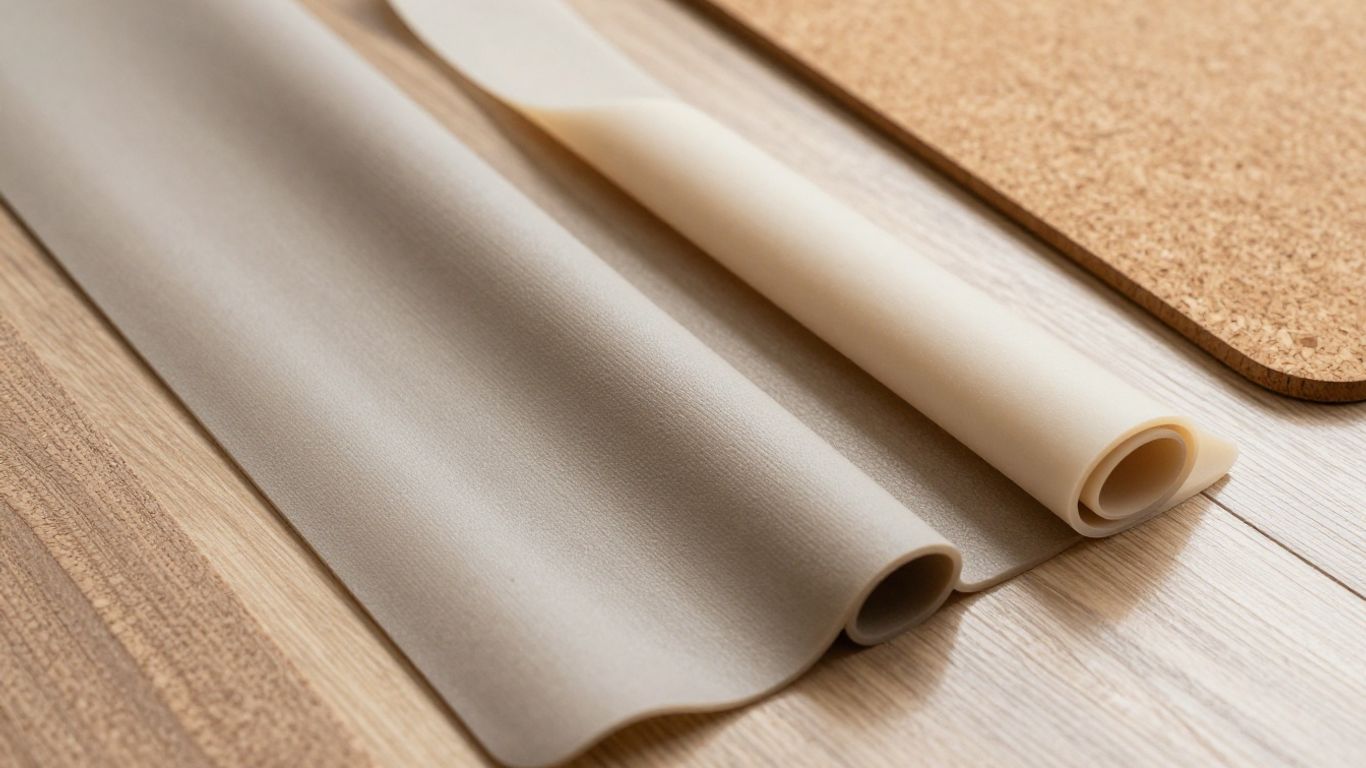
PVC for durability and grip
PVC mats are widely used because they can feel durable and provide a consistent, familiar surface. Depending on the finish, they may have a smooth or textured feel and can be available in a range of thicknesses. Their weight varies, but many are sturdy enough for regular home or studio use.
Care instructions differ by product, so follow the manufacturer’s guidance rather than assuming every PVC mat can be cleaned the same way. Consider how the surface feels under bare hands and whether it remains stable during your most active movements.
Natural rubber for cushioning and traction
Natural rubber often has a grippy, slightly springy feel. It can provide useful traction for dynamic movement and may feel comfortably dense under the body. Some rubber mats have a noticeable natural scent when new, which may fade with ventilation.
Latex sensitivity is a practical consideration. If that applies to you, check the material information carefully before buying. Rubber can also be heavier than some synthetic alternatives, so account for that if you carry your mat regularly.
TPE for lightweight performance
TPE is used in mats that aim to balance light weight, cushioning, and easy handling. The feel varies by construction, but TPE options are often considered for home practice, beginner use, and travel. They can be a reasonable choice when you want something less heavy than a dense rubber mat.
Look closely at the actual surface and thickness rather than choosing by material name alone. Two TPE mats may differ in firmness, texture, and traction. Those details will determine whether the mat feels right under your hands and feet.
Cork and other specialty materials
Cork mats have a distinctive natural surface and are often paired with another material underneath for structure. Some become grippier with moisture, while others feel better when used dry. Jute and other specialty constructions can provide a more textured experience, though the sensation is not for everyone.
Material choice can also reflect your care preferences and values. Before buying, read how the mat should be cleaned, dried, and stored. A useful yoga mat materials guide can help you compare texture, thickness, durability, and environmental considerations without treating one material as universally superior.
Selecting grip, texture, and support
Dimensions and material establish the basic fit, but the surface determines how the mat behaves in motion. Grip should feel dependable without forcing you to press unnaturally through your hands. Texture, moisture, and cushioning all influence that experience. If possible, test a mat with the same type of practice you normally do rather than judging it from a quick touch.
Dry grip versus moisture-activated grip
Some mats feel grippy immediately when dry, while others develop more traction as hands and feet become damp. Dry grip can be convenient for gentle sessions or cooler rooms. Moisture-activated surfaces may suit warmer, more vigorous practice, but they can feel different at the beginning of class.
Think about your usual conditions. If you travel between climates, a surface that remains predictable across temperatures and humidity may be more useful than one optimized for a single setting. A towel can also help manage moisture without changing the mat itself.
Smooth and textured surface designs
Smooth surfaces allow easy movement and may feel comfortable during transitions. Textured surfaces can offer a stronger sense of contact, especially when you hold a pose. The right choice depends on whether you prefer to glide slightly or feel firmly anchored.
Texture should not be so aggressive that it distracts you. Run your palm across the surface, then imagine repeating that contact during a long tabletop or plank. Small differences become more noticeable as practice time increases.
Cushioning for sensitive joints
If your knees, wrists, or hips dislike hard floors, prioritize supportive cushioning and sufficient density. A folded towel under a particular joint can also be a flexible solution when you do not want a very thick mat everywhere. This allows the rest of the mat to remain stable for standing work.
A mat cannot diagnose or solve pain, so persistent discomfort deserves appropriate professional attention. For ordinary comfort decisions, compare how the material compresses under pressure and whether the cushioning stays even across the surface.
Stability for standing poses and transitions
Stability comes from the interaction of grip, density, thickness, and the floor beneath you. A mat that stays flat and does not bunch at the edges can make transitions feel more controlled. Check whether the corners curl after unpacking and whether the surface shifts when you step forward or back.
For a portable setup, Yune Yoga offers absorbent yoga towels that can add a practical layer when moisture is part of your routine. Use accessories to address a specific need, but keep the main mat’s traction and flatness as the foundation.
Finding the best standard yoga mat for your practice
The best standard yoga mat is not necessarily the thickest, widest, or most expensive. It is the one that fits your body, practice, room, and habits well enough that setup feels easy. Beginners may need simplicity, frequent travelers may need low weight, and experienced practitioners may have precise preferences about texture and firmness. Start with your routine, then narrow the specifications.
Choosing a mat for beginners
Beginners often do well with a medium-thickness mat in a standard length and width. This combination gives a clear practice area, moderate cushioning, and enough stability for learning basic positions. A familiar size also makes it easier to follow studio spacing and online instruction.
Avoid choosing solely on appearance or price. Check the dimensions, material, cleaning instructions, and return policy. This beginner yoga mat guide can provide a useful checklist while you decide what matters most in your first purchase.
Selecting a mat for yoga styles
Gentle and restorative practices may make cushioning and comfort more noticeable. Dynamic practices may place greater emphasis on grip, edge stability, and a surface that stays dependable through repeated transitions. Travel practice often prioritizes thinness and packability over maximum padding.
Your practice may not fit one category. If you alternate between styles, a medium, moderately grippy mat is often more flexible than a highly specialized one. Choose the feature you rely on most, then make sure the remaining tradeoffs are acceptable.
Evaluating home and studio use
For home use, you can choose a larger or heavier mat if it remains laid out or stored nearby. In a studio, weight and roll size matter more because you may carry the mat with other belongings. Shared spaces also make standard dimensions convenient, since they fit common floor plans and storage racks.
Travelers may need a different answer altogether. Yune Yoga offers durable yoga straps as part of its portable yoga accessories, which can make it easier to organize and carry a compact setup. Small practical details often determine whether a routine survives a busy week away from home.
Planning extends beyond the gear itself. Someone arranging a group trip may appreciate a large group dining checklist, while a safari traveler may need a Sabi Sands travel guide; both are reminders that equipment choices work best when they fit the larger plan rather than creating extra friction.
Checking care, durability, and value
Read the care instructions before buying. Some mats need airing out, gentle wiping, or protection from prolonged sunlight, while others tolerate frequent cleaning more easily. Store the mat dry and avoid leaving it compressed or folded in a way the material does not support.
Value is the relationship between price, use, and lifespan. A cheaper mat that must be replaced quickly may cost more in the long run, while an expensive mat is not worthwhile if its weight keeps you from using it. Check construction, warranty terms, comfort, and portability together before making the final choice.
A quick final checklist can keep the decision grounded:
- Does the length suit your height and reclining poses?
- Does the width fit both your body and your practice space?
- Does the thickness balance cushioning with stable contact?
- Does the material suit your grip, cleaning, and travel needs?
- Will you genuinely carry, store, and use it regularly?
If the answers are mostly yes, you have probably found a practical fit rather than simply a mat with impressive specifications. For general online research, even an unrelated IQ testing FAQ, privacy policy guide, or greeting card ideas is a reminder to read the details carefully; product pages deserve the same attention to definitions, policies, and limitations.
Conclusion
Choosing a standard yoga mat becomes easier when you consider the whole routine: your height, movement, floor, storage, preferred grip, and willingness to carry the mat. Start with familiar dimensions, then adjust thickness and material to suit comfort and practice style. The right mat should make getting started feel simple, whether you practice at home, in a studio, or somewhere new.
Frequently Asked Questions
What are standard yoga mat dimensions?
Most standard yoga mats are approximately 68–72 inches long and about 24 inches wide, although exact dimensions vary by manufacturer.
Is a standard yoga mat long enough for tall people?
It depends on your height and how much extra room you prefer. Taller practitioners may feel more comfortable on a long mat that keeps their head and feet fully supported while lying down.
What thickness is best for a standard yoga mat?
A medium thickness of roughly 3–5 millimeters suits many general practices because it balances cushioning, stability, and portability.
Are thicker yoga mats better for sensitive knees?
Thicker mats can provide more cushioning, but density and firmness matter too. A softer, very thick mat may feel less stable during standing poses.
Which yoga mat material has the best grip?
Grip depends on the specific surface, texture, moisture level, and floor beneath the mat. Natural rubber, PVC, TPE, cork, and specialty materials can all perform well in different conditions.
Should I choose a wide yoga mat?
A wider mat may help if you have a broad stance, prefer more lateral space, or frequently move from side to side. Measure your practice area first so the mat does not make the room difficult to use.
Can I use a standard yoga mat for travel?
Yes, if its weight and packed size suit your travel plans. Foldable or thin mats are easier to carry, though you may want an additional towel or softer surface when practicing on hard floors.

