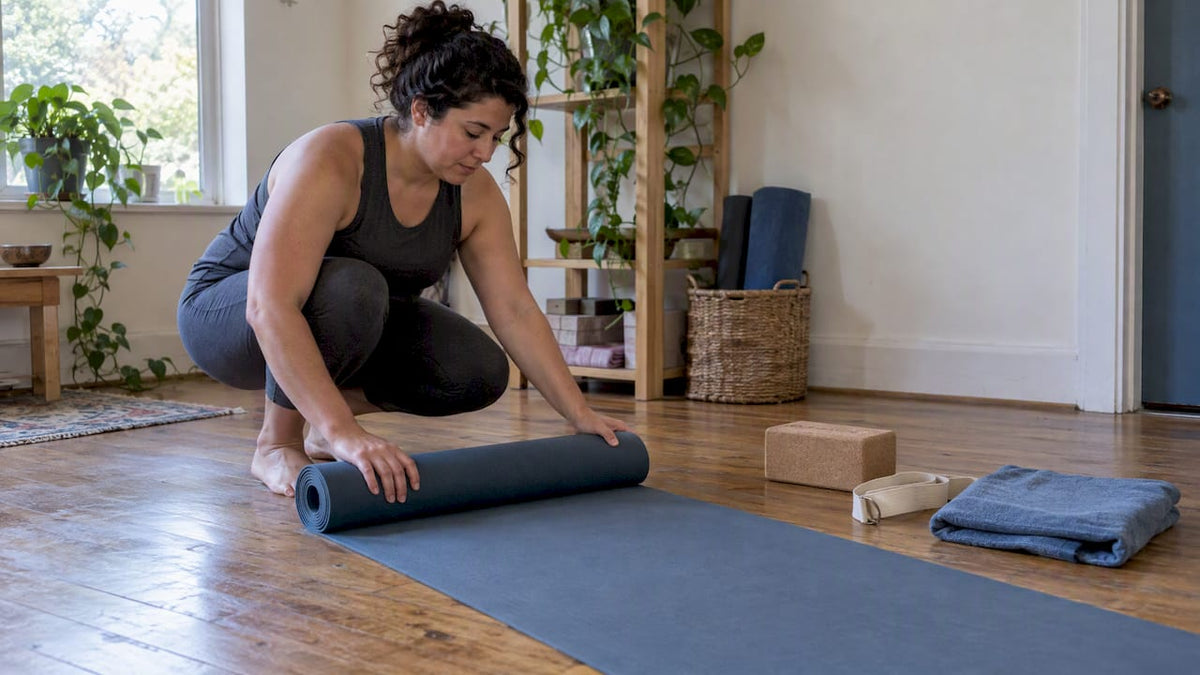
Article: How to Clean a Natural Rubber Yoga Mat Without Ruining It
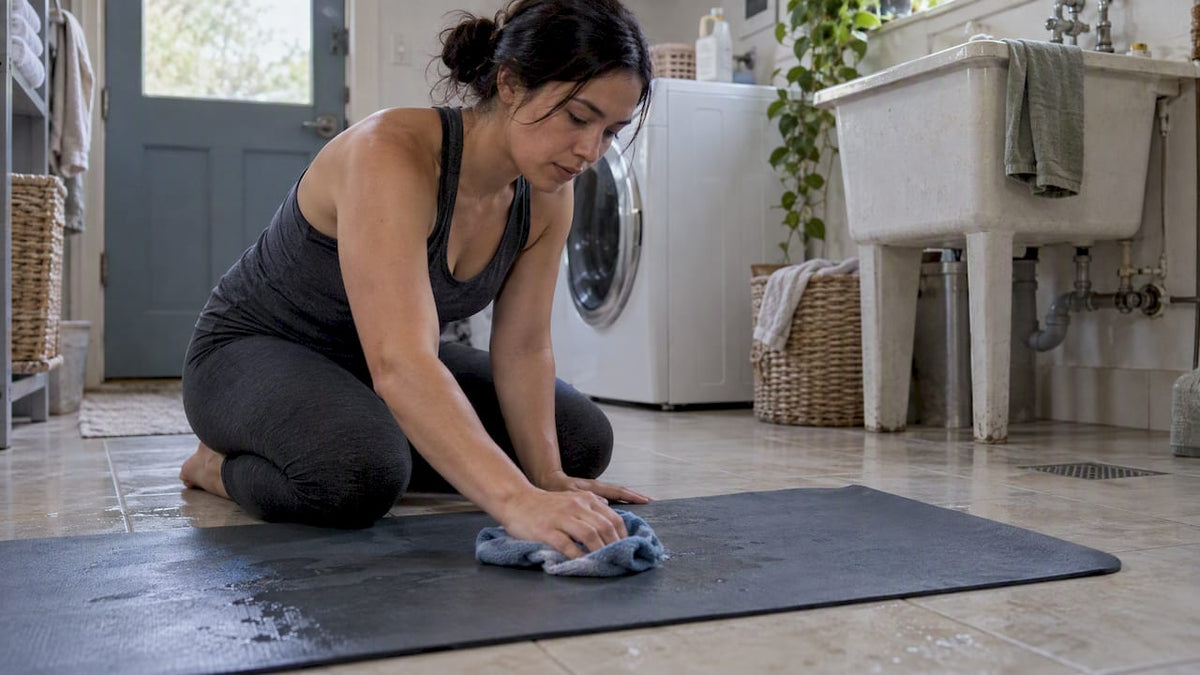
How to Clean a Natural Rubber Yoga Mat Without Ruining It
To clean a natural rubber mat, wipe both sides with a damp cloth after practice, use a very mild soap solution or a rubber-safe spray when it needs more, then dry it flat away from direct sun. Skip strong disinfectants, soaking and undiluted oils. Natural rubber is a plant-based material, and the wrong cleaner dries it out or breaks it down faster than any amount of sweat will.
This guide covers the routine, the deep clean, the ingredients to avoid, the smell question and one safety point about latex allergy that matters more than any cleaning tip.
TL;DR
- Wipe both sides with a damp cloth after each practice, then let the mat air dry completely before rolling it.
- For a deeper clean, use a few drops of gentle, unscented soap in lukewarm water on a well-wrung cloth, then rinse with a second damp cloth.
- Avoid soaking, machine washing, harsh disinfectants, direct sun and strong or undiluted essential oils.
- Cleaning cannot make a latex mat safe for someone with a natural rubber latex allergy. Choose a non-latex mat instead.
- Consistent wiping and drying beats occasional aggressive scrubbing.
Table of Contents
- What makes natural rubber different from other mats
- The goal: reduce grime, not sterilize
- Your routine after each practice
- A deeper clean when the mat needs it
- What to use and what to avoid
- If your mat smells
- Latex allergy: cleaning is not a fix
- Storing and caring for the mat over the long term
- Our perspective: gentle and consistent wins
- Choosing a mat that is easy to keep clean
- Quick schedule you can follow
- FAQ
- Sources
What makes natural rubber different from other mats
Most cleaning advice online is written for PVC or other synthetic mats. Those tolerate a vinegar spray, a stronger soap and a fairly rough wipe. Natural rubber does not. It is a tapped plant material, and it reacts to heat, light, solvents and oils. Wirecutter’s mat-cleaning guide makes the same basic point: your cleaning strategy depends on where and how often you practice and on what the mat is made of.
That is why the best routine for rubber is gentle and frequent, not harsh and rare. If you want a refresher on why people choose this material in the first place, our practitioner’s guide to natural rubber mat benefits covers grip, cushioning and durability.
The goal: reduce grime, not sterilize
Many people assume a yoga mat needs a disinfectant after every session. Experts quoted in Wirecutter’s guide frame the goal differently: the aim is to reduce pathogens, not to sterilize, and the habit that matters most is physically removing sweat and oils with water or a mild cleaner, then drying the mat thoroughly so bacteria have nowhere to thrive.
Research backs the physical part. A 2025 preprint benchmarking household surface decontamination found that scrubbing and soap achieved a Log10 reduction of 1.9 to 2.7 in environmental microbes. Tea tree oil at 2% did somewhat better (2.5 to 3.6), and 0.5% hypochlorite did best (above 3.8). The study is a preprint, so treat it as early evidence, and it tested hard household surfaces, not rubber. The takeaway for your mat is still practical: soap and wiping do real work, and the strongest chemicals cost you the material for a gain you do not need at home.

Your routine after each practice
This takes about two minutes.
- Wipe the top. Use a clean, damp microfiber cloth. Plain water is enough for most sessions.
- Wipe the bottom. Yoga Journal quotes Manduka’s Craig Stiff on this: both sides should be cleaned because microbes can migrate from the dirty side to the top. If you practice on a studio floor or carpet, the underside matters.
- Air dry flat or hung. Lay the mat on a clean floor or drape it over a rail or shower rod, away from direct sun and heaters.
- Roll only when dry. A mat rolled up damp traps moisture, which is the usual cause of a sour smell.
If you sweat heavily, a mat towel on top of the mat takes most of the moisture before it reaches the rubber. Our Jagger Yoga Towel is a non-slip, quick-dry microfiber towel made for hot yoga, and it keeps the mat itself cleaner between washes.
A deeper clean when the mat needs it
Signs it is time: the surface feels slick or tacky in the wrong way, you see dark patches where hands and feet land, or there is a lingering odor that water does not fix. For most people that means every few weeks, or more often with daily hot yoga.
A simple method that suits rubber:
- Fill a bowl with lukewarm water and add a very small amount of gentle, unscented soap. A common manufacturer-style ratio is about 1 part dish soap to 20 parts water, which is barely sudsy.
- Dip a soft cloth and wring it out until it is just damp, not dripping.
- Wipe the whole surface, both sides, in even strokes.
- Wipe again with a second cloth dampened with plain water to remove soap residue. Leftover soap is a common cause of a slippery mat.
- Dry flat, out of the sun, for several hours or overnight.
A few drops of lemon juice in warm water is another mild option some care guides suggest, though soap is the safer default. Always test any new cleaner on a small corner first and let it dry, so you can check for stickiness, color change or a changed texture before you treat the whole mat.
For more recipes and step-by-step visuals, see our guides on five steps to clean your yoga mat and DIY yoga mat cleaners.
What to use and what to avoid
| Option | Safe for natural rubber? | Notes |
|---|---|---|
| Damp microfiber cloth, plain water | Yes | The everyday default |
| Mild, unscented soap, heavily diluted | Yes | Rinse well with a second damp cloth |
| Rubber-specific mat spray | Yes, if the label says natural rubber | Check ingredients and follow the directions |
| Diluted vinegar | Use caution | Fine on synthetics, often avoided on rubber for regular use; spot test first |
| Tea tree or other essential oils | Use caution | Only highly diluted; strong doses can irritate skin and harm the rubber |
| Bleach, alcohol wipes, hypochlorite | No | Dries and degrades the rubber |
| Soaking, machine washing, dryer | No | Can bloat, warp or break down the mat |
| Direct sun or radiator drying | No | Heat and UV age natural rubber |
A word on tea tree oil
Tea tree oil is popular in homemade sprays because it has real antimicrobial activity. But concentration is the catch. Yoga Journal’s cleaning guide notes that strong tea tree oil can irritate skin, and high concentrations can dissolve the natural oils that keep the mat elastic and grippy. If you use it at all, keep it highly diluted and use it occasionally, not after every class. A plain damp wipe and thorough drying will do more for you than a daily oil spray.
What about vinegar?
Vinegar shows up in nearly every DIY recipe because it is cheap and cuts odor. On rubber, many care guides recommend it only for occasional, heavily diluted use, if at all. If you try it, dilute it well, spot test, and rinse. If your mat has been wiped and dried properly, you will rarely need it.
If your mat smells
Natural rubber has its own earthy scent when new, and it fades over the first weeks. That is different from a sour or musty smell, which almost always means moisture got trapped or sweat built up.
- Do a soap-and-water deep clean, then rinse thoroughly.
- Dry the mat fully, in open air with good airflow, for longer than you think you need.
- Unroll the mat for a few hours after each use before storing it.
- Keep it out of a closed car, gym bag or humid bathroom.
One search-trending question is why some blue mats give off a plastic smell. That is usually a sign of a synthetic material, not natural rubber, and it is a good reminder to check what your mat is made of before choosing a cleaner.
Latex allergy: cleaning is not a fix
This is the one place where care advice stops and medical advice starts. If you or someone who uses your mat has a natural rubber latex allergy, a latex mat is not made safe by washing it. A 2021 review of latex allergy describes how direct contact can trigger reactions ranging from skin irritation to severe systemic responses, and that avoiding contact with latex proteins is the reliable approach. Cleaning cannot guarantee that every allergen is removed.
If you have a known or suspected latex allergy, or you notice rashes, itching, swelling or breathing trouble after practice, stop using the mat and see an allergist or your doctor before trying another one. Our article on non-allergenic yoga mats explains what to look for in an alternative.
Storing and caring for the mat over the long term
Cleaning is half of care. The other half is how you treat the mat between sessions.
- Light: Keep it out of direct sun. UV exposure speeds up the breakdown of natural rubber.
- Heat: Avoid hot cars, radiators and heating vents.
- Rolling: Roll loosely with the top surface facing out or in, whichever your mat prefers, and avoid tight folds on mats not designed to fold.
- Surfaces: Wear clean feet and avoid lotions and oils on your hands and feet before practice. They transfer to the surface and make the mat slippery.
- Rotation: If you practice outdoors, wipe off grass, sand and dust before you roll up.
If you also want to freshen up the foam pad or sleeping mattress you roll your mat out beside, this step-by-step Greek-language guide to cleaning a mattress shows the stages of vacuuming, spot treating and airing out foam, and the photos are easy to follow even without the text.
Our perspective: gentle and consistent wins
We see the same mistake again and again. Someone buys a natural rubber mat because they want a more sustainable, better-gripping surface. Then, worried about germs, they spray it with a heavy disinfectant or an undiluted essential oil blend, and a few months later the mat feels dry, sticky or crumbly. The cleaning did more damage than the practice ever could.

Our approach is simpler. Treat a rubber mat like a good pair of leather shoes or a wooden cutting board: wipe it when it is dirty, dry it properly, keep it out of the sun and do not use anything on it you would not put on your skin. Frequency matters more than strength. A two-minute wipe after class beats a scrubbing session once a month.
We also think it is worth being honest about trade-offs. Natural rubber gives you excellent grip and a grounded feel, and it asks for a little more care than a plastic mat. It is also not for everyone, because of latex allergy. If that applies to you, the right answer is a different material, not a better cleaning routine. For travel, a towel over the mat and a quick wipe-down at the end of the day keep things fresh without carrying a bottle of cleaner.
— Nicholas
Choosing a mat that is easy to keep clean
If your current mat is worn, slick or past saving, it may be time for a fresh start with a surface you can care for properly. Our natural rubber mats, such as the 3mm natural rubber mat for daily use, are made as eco-friendly, non-slip options for home practice. If you travel, browse the foldable Trekk travel mats, or see the full range on the Yune Yoga home page, including towels and straps. If you want help choosing a cleaner as well, our guide to the best yoga mat cleaners compares types.
Quick schedule you can follow
| When | What to do |
|---|---|
| After every practice | Wipe both sides with a damp cloth, air dry, roll when dry |
| After very sweaty sessions | Use a towel on top, then wipe and dry thoroughly |
| Every few weeks | Mild soap-and-water clean, rinse, dry flat |
| When smelly or slick | Deep clean, extra drying time, check for residue |
| Always | Keep out of direct sun and heat |
FAQ
Are you supposed to wash your yoga mat?
Yes, but gently. Wipe it after practice and do a mild soap clean every few weeks, depending on how much you sweat. Washing a natural rubber mat in a machine or soaking it is not recommended, since it can damage the material.
What can I use to clean a rubber mat?
Start with a damp microfiber cloth and plain water. For a deeper clean, use lukewarm water with a small amount of gentle, unscented soap, then rinse with a clean damp cloth. A spray made for natural rubber is also fine if you follow its label.
Can tea tree oil be used to clean a yoga mat?
Only in a highly diluted form, and not as a daily habit. Tea tree oil does have antimicrobial effects, but strong concentrations can irritate skin and damage the rubber. Soap, water and thorough drying are a safer routine.
Can I disinfect a natural rubber mat with bleach or alcohol?
We do not recommend it. Strong chemicals can dry out and degrade rubber, and a home mat rarely needs hospital-level disinfection. If you share a mat or practice after an illness, wash it with soap, rinse it and dry it well.
How do I know if I should avoid natural rubber altogether?
If you have a diagnosed latex allergy, or you develop itching, a rash, swelling or breathing symptoms on contact with a rubber mat, stop using it and talk to an allergist or doctor. Cleaning does not reliably remove the proteins that cause the reaction.
Sources
- How to Clean a Yoga Mat, Wirecutter
- How to Clean a Yoga Mat, Yoga Journal
- Quantitative Benchmarking of Household Surface Decontamination, 2025 preprint
- Update on latex allergy: New insights into an old problem, PMC