
Non-Allergenic Yoga Mat: What It Is and Why It Matters
A non-allergenic yoga mat is a mat made from materials that do not trigger allergic reactions or release harmful chemicals during use. The term is informal. The recognized industry equivalent is “hypoallergenic yoga mat,” meaning a mat with a low or negligible risk of causing an allergic response. No standardized industry definition exists for either phrase, so verifying material specifics is the only reliable way to confirm a mat is genuinely safe. Certifications like OEKO-TEX Standard 100 and GOTS provide the most credible assurance, screening for phthalates, heavy metals, formaldehyde, and other chemical allergens. If you have sensitive skin, a latex allergy, or chemical sensitivity, understanding what your mat is actually made of is not optional.
What is a non-allergenic yoga mat made of?
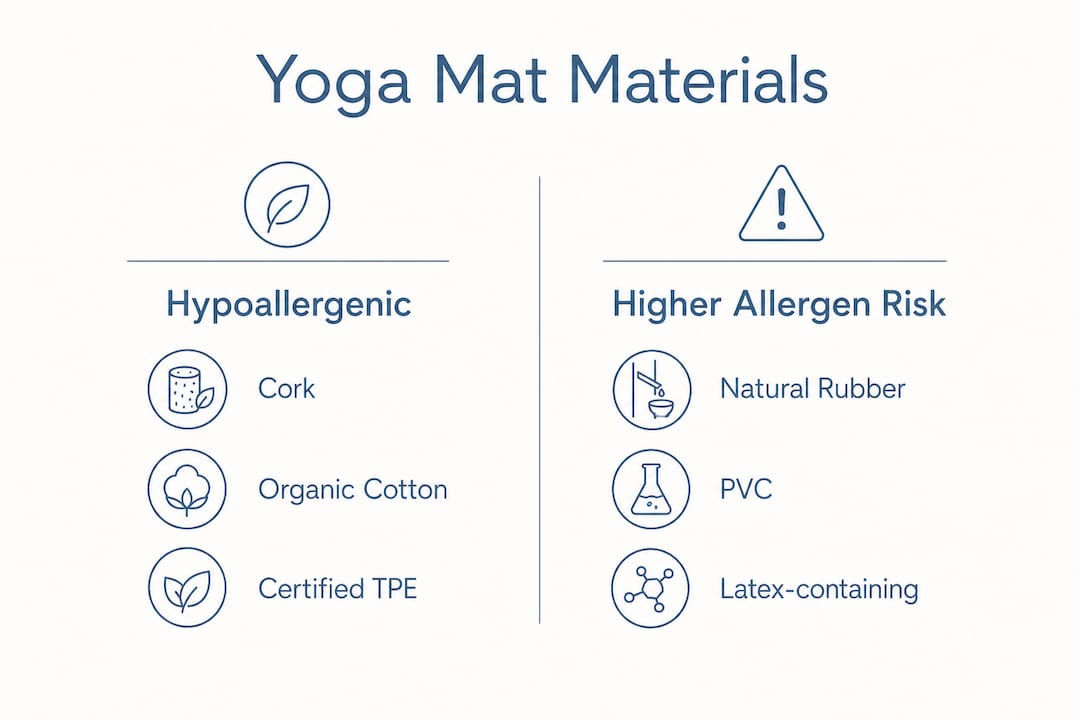
The safest materials for a hypoallergenic yoga mat share one trait: minimal chemical processing. Cork, organic cotton, and jute are the top choices for allergy-sensitive practitioners. These natural materials emit very low VOCs and require few additives during manufacturing.
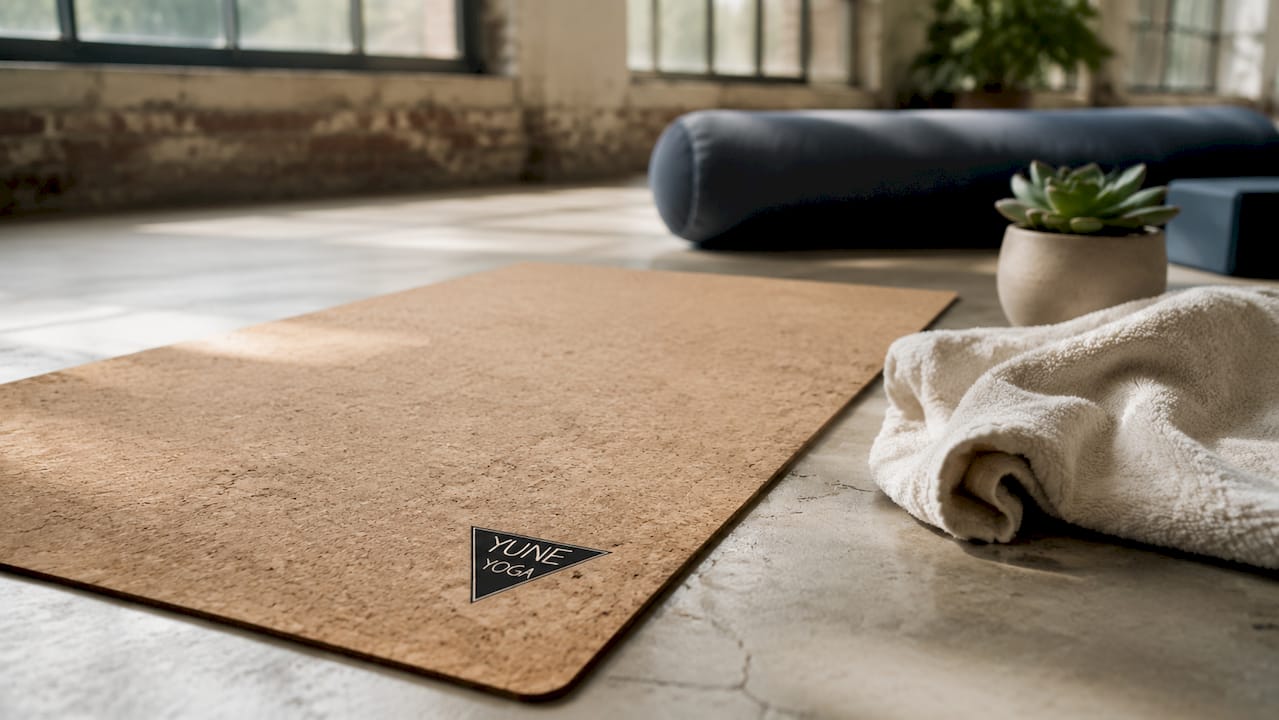
Cork deserves special attention. It offers a naturally hypoallergenic, pH-neutral surface that maintains grip in moisture and withstands heat without emitting harmful compounds. That makes it one of the strongest choices for hot yoga or any practice involving heavy sweating. Yuneyoga covers the benefits of cork in depth for practitioners who want to understand why it performs so well.
Natural rubber is more complicated. It delivers excellent grip and cushioning, but it contains inherent latex proteins. Those proteins can cause IgE-mediated allergic responses in latex-sensitive individuals, even from skin contact alone. A mat marketed as “natural rubber” is not a latex-free yoga mat unless the manufacturer provides documented testing that confirms latex protein removal.
TPE (thermoplastic elastomer) is a synthetic option that avoids latex entirely. It is a common latex-free yoga mat material, but quality varies widely across manufacturers. Some TPE mats carry OEKO-TEX certification; others do not. Always check for third-party verification before assuming TPE is safe.
PVC is the material to avoid most. PVC mats commonly contain phthalates that off-gas during use, with risk amplified by heat and sweat. Phthalates are endocrine disruptors, meaning they interfere with hormone function. A PVC mat is the opposite of body-safe yoga equipment.
| Material | Allergen risk | Latex-free | Certification available |
|---|---|---|---|
| Cork | Very low | Yes | OEKO-TEX |
| Organic cotton | Very low | Yes | GOTS, OEKO-TEX |
| Jute | Low | Yes | OEKO-TEX |
| Natural rubber | Moderate to high (latex) | No | OEKO-TEX (chemical only) |
| TPE | Low to moderate | Yes | OEKO-TEX (varies) |
| PVC | High (phthalates, VOCs) | Yes | Rarely certified |
Pro Tip: Air out any new mat outdoors for 24–72 hours before first use. A strong “new mat smell” signals VOC off-gassing, which is most intense in the first days after unboxing.
How do certifications verify a mat is truly safe?
Third-party certifications are the only objective way to confirm a mat’s safety claims. OEKO-TEX Standard 100 tests for over 100 harmful substances, including phthalates, heavy metals, and formaldehyde. A mat carrying this label has been tested at an accredited laboratory, not just assessed by the brand itself.
GOTS (Global Organic Textile Standard) applies specifically to organic cotton and other natural fiber mats. It covers the entire supply chain, from raw fiber to finished product, and prohibits a long list of toxic dyes and processing chemicals. For practitioners seeking a phthalate-free yoga mat made from plant fibers, GOTS is the gold standard.
REACH (Registration, Evaluation, Authorisation and Restriction of Chemicals) is a European Union regulatory framework that restricts hazardous substances in consumer products, including yoga mats sold in EU markets. RoHS (Restriction of Hazardous Substances) applies primarily to electronics but overlaps with some mat component materials. Neither replaces OEKO-TEX or GOTS for yoga mat buyers, but their presence in a product’s documentation signals a higher level of chemical scrutiny.
Marketing claims require skepticism. A “6P-free” label on a PVC mat means only six specific phthalates were excluded. It does not mean the mat is fully phthalate-free. Similarly, a “phthalate-free” label without a lab report is unverifiable. The test report must specify the product SKU, testing date, chemical scope, and detection methods to be meaningful.
Pro Tip: Ask the seller directly for the test report PDF. A legitimate certification will include the product name, the certifying body’s name, and a certificate number you can verify online. If a seller cannot provide this, treat the claim as unverified.
- OEKO-TEX Standard 100: covers 100+ chemicals, applies to all mat materials
- GOTS: covers organic textiles, full supply chain, prohibits toxic dyes
- REACH: EU regulatory framework, restricts hazardous substances
- RoHS: restricts specific hazardous substances, limited yoga mat relevance
- “6P-free”: excludes only six phthalates, not a comprehensive safety claim
- “Phthalate-free” without a lab report: unverifiable marketing language
Can yoga mats cause allergic reactions?
Yoga mats cause two distinct types of allergic reactions. The first is a latex allergy, which is an immune system response to proteins found in natural rubber. Symptoms range from skin redness and hives to, in severe cases, anaphylaxis. Natural rubber mats require documented latex-free testing for anyone with a confirmed latex sensitivity.
The second type is allergic contact dermatitis, caused by chemical additives rather than the base material. Adhesives, dyes, accelerators used in rubber vulcanization, and plasticizers in synthetic mats can all trigger skin reactions on contact. These reactions typically appear as a rash or itching at the points of skin contact, often the hands, feet, and knees.
Identifying your risk involves four steps:
- Know your allergy history. A confirmed latex allergy means avoiding all natural rubber mats without documented latex-free certification.
- Request full material disclosure. Ask the seller for a complete ingredient list, not just the primary material. Adhesives and backing layers often contain different chemicals than the top surface.
- Check for third-party certification. OEKO-TEX or GOTS certification significantly reduces the risk of chemical contact dermatitis.
- Patch test before full use. Place a small section of the mat against your inner forearm for 30 minutes. Any redness or itching warrants further investigation before committing to full-body contact.
Practitioners who want to identify safe yoga materials before purchasing should prioritize sellers who publish full material disclosures alongside their certifications.
Practical tips for choosing and maintaining a safe mat
Selecting a genuinely safe mat starts before you buy. Verify that any non-toxic yoga mat claim is backed by a named certification, not just a marketing phrase. Transparent material composition and third-party certification are the two non-negotiable criteria for practitioners with chemical sensitivity.
Different practice types create different exposure conditions. Hot yoga raises mat temperature significantly, which accelerates VOC off-gassing from synthetic materials. For hot yoga, cork or certified organic cotton are the safest choices because neither releases harmful compounds under heat. Travel mats often use thinner TPE or foldable materials. Check that any travel mat carries OEKO-TEX certification before purchasing, since thinner mats mean closer skin contact per unit area.
Cleaning routines matter for long-term safety. Harsh chemical cleaners can degrade mat surfaces and introduce new allergens. A DIY mat cleaner made from diluted white vinegar and water cleans effectively without adding chemical residue. Avoid bleach-based products on any mat, especially natural rubber or cork, as they break down the surface and can increase skin exposure to underlying materials.
- Choose mats that list every material, including backing layers and adhesives
- Prioritize OEKO-TEX or GOTS certification over brand safety claims
- Air new mats outdoors for at least 24 hours before first use
- Use gentle, fragrance-free cleaners to avoid introducing contact allergens
- For hot yoga, select cork or certified organic cotton over TPE or PVC
- For travel, confirm OEKO-TEX certification on any foldable or thin mat
Pro Tip: Store your mat rolled loosely in a breathable bag rather than a sealed case. Sealed storage traps any residual VOCs and slows off-gassing between sessions.
Key Takeaways
A non-allergenic yoga mat requires verified material composition and third-party certification. Marketing claims alone are not sufficient proof of safety.
| Point | Details |
|---|---|
| No standard definition exists | Verify actual materials and certifications rather than relying on “non-allergenic” label claims. |
| Safest materials are cork, cotton, jute | These emit very low VOCs and carry OEKO-TEX or GOTS certification options. |
| Natural rubber carries latex risk | Latex-sensitive practitioners must confirm documented latex-free testing before use. |
| Certifications beat marketing claims | OEKO-TEX Standard 100 tests 100+ chemicals; “6P-free” or “phthalate-free” labels require lab report backup. |
| Maintenance affects ongoing safety | Use fragrance-free cleaners and air mats regularly to minimize allergen and VOC buildup. |
Why I think most buyers are asking the wrong question
Most practitioners searching for a hypoallergenic yoga mat focus on the surface material. That is the right instinct, but it misses half the picture. The backing layer, the adhesive bonding layers together, and the dyes used for color all contribute to your total chemical exposure. I have seen mats marketed as “natural rubber” with synthetic foam backing bonded by adhesives that contain known sensitizers. The top layer was fine. The rest was not.
The other mistake I see constantly is trusting brand transparency without verification. A brand can publish a full ingredient list and still omit the processing chemicals used during manufacturing. Those chemicals do not always appear in the final product at high concentrations, but for someone with genuine chemical sensitivity, trace amounts matter. OEKO-TEX certification closes that gap because it tests the finished product, not just the raw materials.
My honest recommendation: treat any mat without a named, verifiable certification as unverified. That is not pessimism. It is the only position that holds up when you look at how marketing “non-toxic” claims are made and how rarely they are backed by actual lab data. The good news is that certified options exist across every price point and practice type. You do not have to compromise performance for safety.
— Nicholas
Yuneyoga’s resources for safer yoga mat choices
Yuneyoga has built a library of content specifically for practitioners who want to make informed decisions about non-toxic yoga mats and material safety. The blog covers certifications, material comparisons, and cleaning routines in practical detail.

If you are ready to move from research to purchase, Yuneyoga’s curated mat selection includes options with clear material disclosures and verified certifications. Each product description is written to give you the information you actually need, not just the marketing highlights. Visit Yuneyoga to browse mats by material, certification, and practice type, and find the right fit for your specific needs.
FAQ
What does “non-allergenic yoga mat” actually mean?
The term has no standardized industry definition. It refers informally to mats made from materials with low allergen risk, verified through certifications like OEKO-TEX Standard 100 or GOTS.
Which yoga mat materials are safest for latex allergy sufferers?
Cork, organic cotton, jute, and certified TPE are the safest choices. Natural rubber contains latex proteins and requires documented latex-free testing before use by anyone with a latex allergy.
Is a “phthalate-free” yoga mat label reliable?
Not without a lab report. A phthalate-free claim is only verifiable when backed by a test report specifying the product SKU, testing date, chemical scope, and detection methods.
How do I know if my yoga mat is causing a skin reaction?
Redness, itching, or a rash at contact points (hands, feet, knees) after practice suggests allergic contact dermatitis. Perform a patch test on your inner forearm and consult a dermatologist to identify the specific trigger.
Does OEKO-TEX certification guarantee a mat is fully hypoallergenic?
OEKO-TEX Standard 100 tests for over 100 harmful substances and significantly reduces chemical risk. It does not test for latex proteins, so latex-allergic practitioners still need separate latex-free documentation for natural rubber mats.


