
Yoga mat dimensions: How to choose the right size for your practice
Key Takeaways
Choosing the right size and style for your practice space ensures you have the freedom to move gracefully without constantly readjusting.
- A standard American yoga mat measures 68 inches in length by 24 inches in width, while longer options reach 72 inches or more.
- Height and reach determine your ideal mat size; your entire body should fit on the mat during restorative poses like savasana.
- Mat thickness typically ranges from wafer-thin 1/16-inch travel mats up to supportive 1/4-inch (6mm) options.
- Material choices like natural rubber and PER directly influence a mat's weight, cushioning, and effortless rollability.
- Checking room dimensions, alignment markers, and accessory compatibility will help you choose the ultimate setup for your flow.
Standard yoga mat dimensions explained
Finding the perfect footing begins with understanding standard measurements. Many people accept the size of their first mat without realizing that equipment dimensions significantly impact posture and comfort. Selecting the right foundation ensures you do not feel limited when transitioning between poses.
The industry standard length and width
The most common off-the-shelf option you will encounter measures 68 inches long by 24 inches wide. This size became the baseline decades ago because it was efficient to manufacture and fit easily onto standard studio floors. For many individuals of average height, these dimensions provide just enough room for basic routines, but they can quickly feel restrictive during dynamic or lateral movements.
How thickness impacts your support and stability
Thickness is a crucial variable in how a mat performs. Standard options usually hover around 1/8 inch, providing a moderate compromise between comfort and floor connection. A thinner profile keeps you close to the subfloor, which helps with balance, whereas a thicker surface protects sensitive joints from hard wood or concrete floors.
Weight considerations for portability vs. durability
Heavy-duty materials make a mat extremely durable, but they also add noticeable weight. If you frequently commute to local studios or travel across the country, carrying a dense, five-pound mat can become a chore. Finding a balance between a manageable weight and a supportive thickness is key to maintaining a consistent practice.
Finding the right size for your height
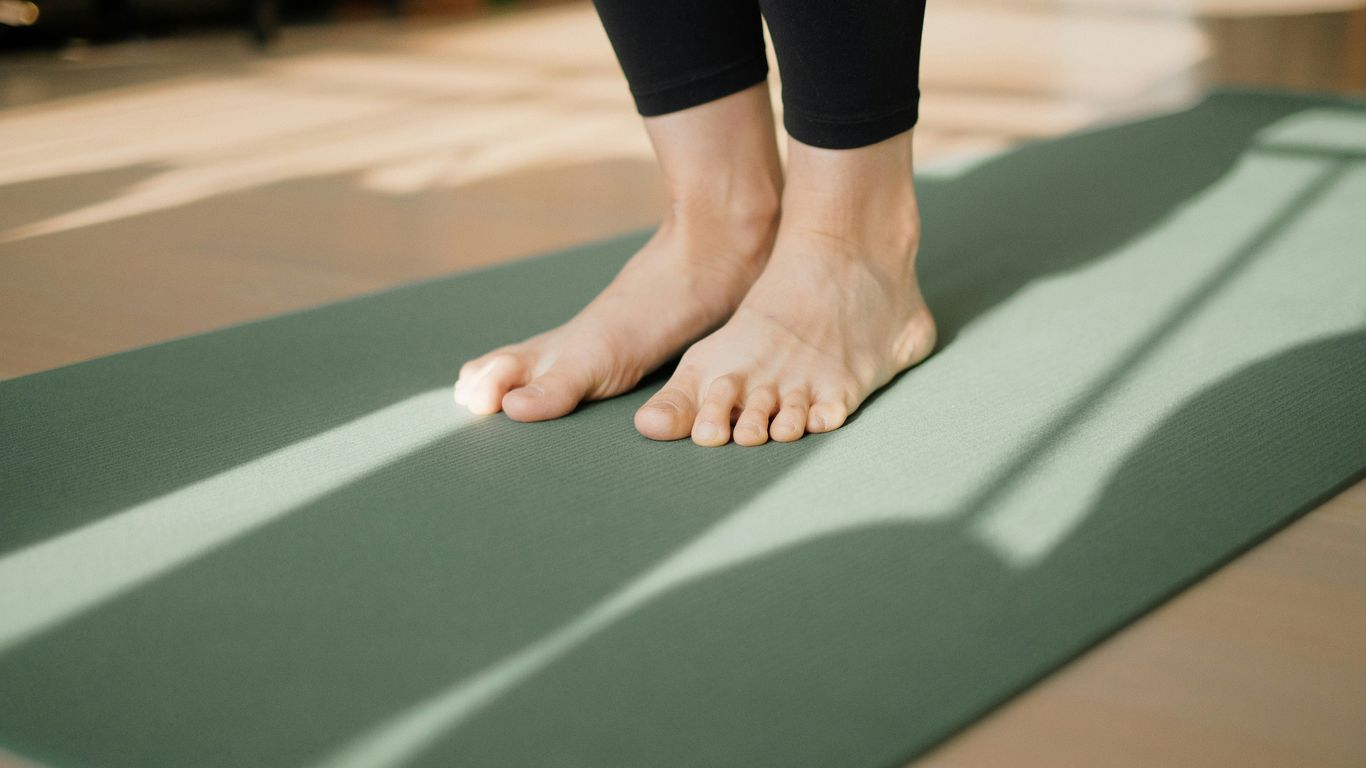
Choosing a mat according to your height prevents you from having to choose between leaving your head or your feet on the cold floor. If your limbs regularly spill over the edges, it disrupts your focus and alignment. Ensuring you have a few extra inches of clearance allows you to practice with confidence.
Why taller yogis need longer mats
Taller individuals often struggle on standard 68-inch mats because their natural stride and stance are much wider. When doing a split-legged warrior pose, a taller yogi's feet can slip off the ends, leading to unstable footing. Opting for a 72-inch mat, or even an extra-long version, gives taller practitioners the physical space needed to stretch comfortably.
Measuring your reach for savasana and full extensions
To ensure your mat accommodates your full frame, pay attention to your height during resting postures. During savasana, your heels and head should rest fully on the mat surface rather than on the bare floor. You can easily find your minimum length requirement by adding a few inches to your standing height.
How to test your current mat length in standing poses
If you want to test whether your current setup is holding you back, pay attention to where your hands and feet land during a downward-facing dog. If you find yourself holding back or shortening your stance to stay on the mat, it is a clear sign you need a larger size.
Before updating your setup, it is helpful to explore how different dimensions behave in real-world spaces. The following comparisons show how common sizing options match up with height categories:
| Mat Category | Standard Dimensions (Inches) | Best Suited For | Key Benefit |
|---|---|---|---|
| Standard | 68" x 24" | Individuals under 5'8" | Lightweight and easy to find |
| Long | 72" x 24" | Individuals up to 6'2" | Improved full-body stretch room |
| Extra-Large / Wide | 72"+ x 26"+ | Tall or dynamic practitioners | Premium lateral movement space |
| Travel | 72" x 24" (Compact) | Nomadic practitioners | Lightweight and easy to pack |
For those who prefer a premium, stylized option that offers extra room, the cosmic imagery of the Galactic Knight Yoga Mat provides the perfect 72-inch long canvas to support your daily transitions.
Assessing mat thickness for your practice style
Your preferred style of movement should dictate how much cushioning you place between yourself and the floor. A gentle, restorative routine requires a soft, pillowy barrier, while an active, balance-heavy vinyasa sequence demands a firmer surface. Matching thickness to your routine helps prevent fatigue.
Thin mats for hot yoga and ground-level stability
Wafer-thin mats measuring around 1/16 inch are excellent for hot yoga or practices where stability is paramount. The thin material keeps your feet firmly connected to the earth, eliminating the squishiness that can cause ankles to wobble. They also work wonderfully as a clean topper over studio-owned rental mats.
Thick mats for joint sensitivity and restorative work
Plush 1/4-inch (6mm) options provide maximum joint cushion and support, making them the ideal choice for floor-oriented routines. If you spend significant time kneeling, standard mats can leave your knees bruised and sore. Upgrading to a thicker model, such as the colorful Yune Yoga Tofino Yoga Mat, delivers exceptional cushioning that protects sensitive spots during deep, restorative holds.
The hidden trade-off between cushion and balance
While extra padding feels wonderful on the knees and elbows, it does come with a trade-off. Thick master-grade foam can make standing balance postures significantly more difficult. Finding the sweet spot between cushion and balance is essential; many yogis find that a high-quality 6mm mat offers the perfect middle ground for overall versatility.
Specialized dimensions for different yoga types
As movement culture evolves, specialized shapes and sizes have emerged to cater to unique styles of practice. While traditional rectangular mats remain the default, alternative dimensions can make specific movement patterns much more comfortable. Choosing a specialized format lets you tailor your practice to your personal flow.
Extra-wide mats for restorative flows and alignment
Restorative sessions and slow yin sequences often involve broad, twisting shapes where standard 24-inch mats feel too narrow. Extra-wide variations, ranging from 26 to 30 inches, offer side-to-side room that keeps your hands and arms off the floor during wide-reaching chest openers. This added width makes it much easier to stay relaxed and focused.
Travel mats and their ultra-light compact dimensions
Designed with the active lifestyle in mind, portable mats prioritize minimal bulk and rapid packability. Traditional mats are often bulky and difficult to carry on a flight, but dedicated travel mats fold down flat like a piece of clothing. For example, the eco-friendly Yune Yoga Juliet Trekk Travel Mat weighs just 2.5 pounds and packs down easily, allowing you to establish a secure, hygienic foundation wherever you go.
Round yoga mats for free-form flow and movement
Round mats allow for 360-degree movement, letting you flow seamlessly in any direction without having to pivot your mat. These circular options are perfect for creative flows, meditative movement, or home studios with open floor space. They eliminate the linear restriction of standard rectangular layouts entirely.
Materials and their influence on mat size
The materials used to make your mat have a massive impact on how it rolls, feels, and lasts. Two mats with the exact same dimensions can feel completely different depending on whether they are made of natural rubber, TPE, or eco-friendly polymers. Understanding these physics helps you choose a mat that is easy to manage.
Natural Rubber vs. TPE density requirements
Natural rubber mats are highly slip-resistant and durable, but their high density makes them incredibly heavy. If you choose a large-format natural rubber mat, moving it around can be surprisingly physically demanding. Thermoplastic Elastomeric (TPE) mats, on the other hand, offer a much lighter alternative while still maintaining generous thickness and supportive compression.
How material thickness affects rollability and storage
Thick, dense materials do not roll tightly, resulting in a bulky bundle that is difficult to fit into standard carrying bags or storage closets. Conversely, modern eco-friendly materials like Polymer Environmental Resin (PER) roll up compactly without sacrificing their cushioned feel. If you want a plush mat that is still highly portable, looking at lightweight PER alternatives is a smart choice.
Durability factors for high-traffic or professional-grade mats
Professional-grade mats are engineered to withstand hours of daily use without flaking or tearing. If you practice daily, investing in a high-density mat ensures the textured surface won't wear down under your feet. This structural integrity guarantees that the mat maintains its grip and supportive feel over years of high-traffic use.
Tips for choosing the perfect mat configuration
Before buying your next mat, take a moment to evaluate your physical practice space and personal style requirements. A little bit of planning helps you avoid common purchasing mistakes. By tailoring your selection to your home setup, you ensure your practice space remains welcoming and uncluttered.
Assessing your home or studio space limitations
If you primarily practice in crowded studio classes, showing up with an oversized mat can crowd your neighbors and disrupt the room’s flow. Conversely, practicing at home gives you the freedom to choose any size that fits your room. Be sure to measure your dedicated floor area to ensure your new gear has plenty of space to unroll completely.
Checking compatibility with alignment markers
Many modern mats feature printed alignment lines to help you keep your hands and feet in the correct position. These visual markers are highly effective, but they must align with your body's proportions to be useful. Make sure the mat's print scale matches your natural stance so you aren't forced into uncomfortable positions.
When to invest in a custom-sized mat or oversized pad
If standard options do not fit your home space or your unique physical frame, it might be time to look for specialty alternatives. Just like researching standard dimensions for home furnishings—such as comparing layouts in a Beverly Hills Bed sizing guide—understanding the proportions of your personal fitness gear is vital. Here are a few signs that you might benefit from a non-traditional setup:
- Your hands and feet consistently touch the cold floor during lunges.
- You want to design a permanent, multi-person home movement studio.
- You practice dynamic, multi-directional martial arts or floor exercises.
- You struggle with balance on standard, highly compressible foam.
If you find yourself agreeing with these points, look for specialized, extra-large, or custom configurations to give yourself the freedom to move truly without limits.
Conclusion
Finding the right yoga mat dimensions is not just about matching your height; it is about selecting a reliable foundation that complements your practice style, travel habits, and physical space. By balancing length, width, and thickness with the right lightweight materials, you can create a comfortable and supportive sanctuary for your mindful movement.
Frequently Asked Questions
What are standard yoga mat dimensions?
The standard yoga mat in the US measures 68 inches long by 24 inches wide, with a thickness of about 1/8 inch. This size fits most average-sized adults comfortably for basic linear sequences.
How do I know if my yoga mat is too small?
If your hands or feet slip off the edges during common poses like downward dog, or if your head or heels rest on the cold floor during savasana, your mat is too small.
Can taller people use standard-sized yoga mats?
While they can, taller individuals often find standard mats highly restrictive. Anyone taller than 5'8" will generally benefit from upgrading to a longer 72-inch mat.
Does yoga mat thickness affect balance?
Yes, a thicker, squishier mat can make standing balance poses more difficult. A thickness of 6mm (1/4 inch) is generally considered the maximum for maintaining a secure connection to the floor.
What thickness is best for people with sensitive knees?
If you have sensitive joints or practice restorative yoga, a thicker 1/4-inch (6mm) mat is highly recommended to provide necessary cushioning for your knees, wrists, and elbows.
Are travel yoga mats comfortable for daily home use?
Travel mats are typically very thin (about 1/16 inch) to ensure portability. While excellent for packing, they might not offer enough daily cushion on hard floors unless layered over another mat.
How does the material of a mat affect its storage size?
Dense natural rubber mats are heavier and bulkier when rolled up, whereas modern lightweight materials like TPE and PER roll up tightly and compact easily for convenient storage.

