
Article: Sustainable Yoga Accessories: Start With a Mat, Add Props as Needed
Sustainable Yoga Accessories: Start With a Mat, Add Props as Needed
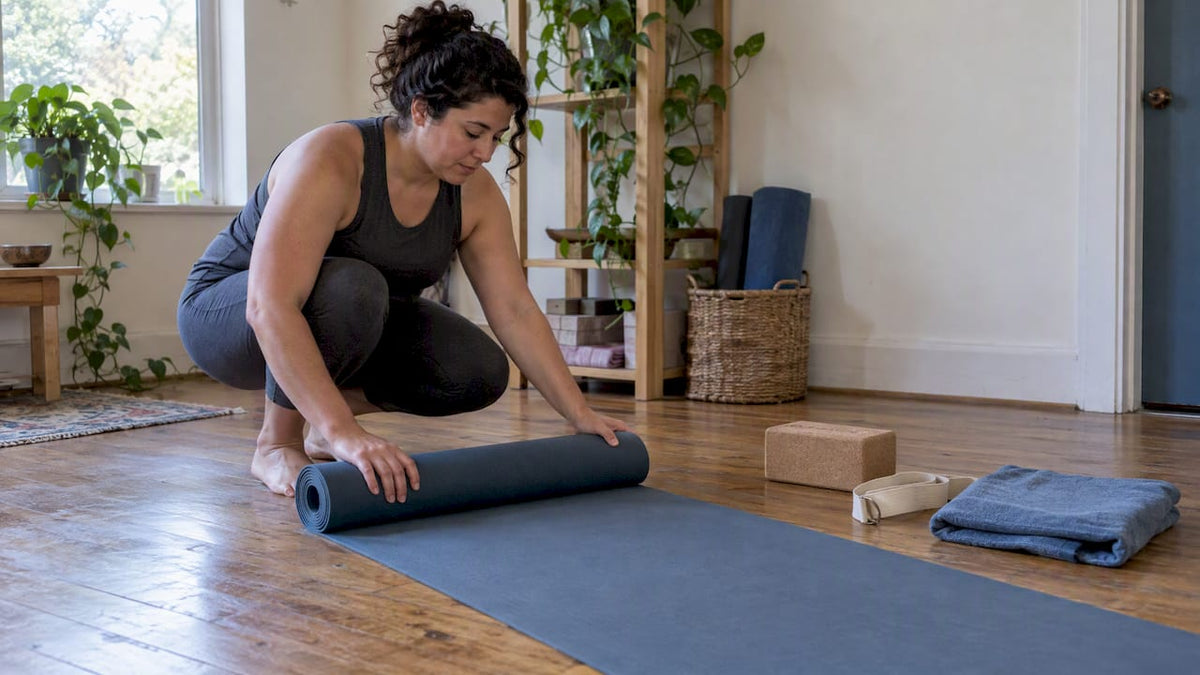
Start with a mat made from natural rubber or cork, then add a towel, a strap and a cork block as your practice demands. Those materials are common choices for sustainable mats, and can offer grip and durability. We carry natural rubber mats, foldable travel mats, towels and straps at Yune Yoga, all built around these priorities.
TL;DR:
- Check natural rubber details if you have a latex sensitivity, prioritize wet grip for hot yoga, and expect rubber or cork to improve with use.
- For fabric accessories, verify GOTS or REACH information, compare towel absorbency and drying time, and choose removable bolster covers for easier washing.
- Choose a travel mat for frequent trips or outdoor practice, but compare grip, drying time, carry options, and cushioning before accepting less padding.
- Keep a usable mat rather than replacing it, then verify material and certification claims directly and prioritize repair, donation, or recycling at end of use.
Table of Contents
- 1. Which sustainable yoga mat should you choose?
- 2. What are the best eco-friendly blocks and bolsters?
- 3. Which fabrics work best for straps, towels, and small accessories?
- 4. Are travel and foldable eco mats worth it?
- 5. How do you choose sustainable yoga accessories?
- 6. How do you care for sustainable gear and recycle it?
- 7. How do price ranges compare for sustainable yoga accessories?
- 8. How can you verify sustainable claims and certifications?
- 9. What are the latest trends in sustainable yoga materials?
- 10. Why sustainability is an ongoing choice
- 11. Where can you find sustainable mats, towels, and straps?
- FAQ
- Sources
1. Which sustainable yoga mat should you choose?
The mat is the accessory you touch most, so it deserves the most scrutiny. A 2025 industry roundup highlighted natural rubber and cork among the materials used in sustainable mats, noting that some top picks pair natural rubber with an eco-polyurethane surface or use recycled neoprene made from old wetsuits.
Here is how the main materials compare:
- Natural rubber: A commonly used mat material. Check product details if you have a latex sensitivity.
- Cork: A commonly used mat material that some sustainable mats pair with natural rubber.
- Recycled neoprene or recycled PET overlays: Some mats use recycled neoprene made from wetsuits. Compare each product’s weight and durability with other materials.
Grip, cushioning, thickness and weight all trade off against each other. Mat thickness involves trade-offs between cushioning, stability and ease of packing. If you practice hot yoga, prioritize grip when wet over softness.
Be patient with a new natural mat. Testing-based guidance reports that natural rubber and cork mats have a break-in period, with grip and texture typically improving with consistent use.
Sustainable mats lean on natural rubber and cork: the 2025 roundup also points to low-carbon packaging as a sustainability practice worth looking for.
Look at packaging and brand programs too. Packaging and sustainability initiatives can offer additional information about a brand’s approach. Our natural rubber mats are a good place to start, and our guide to eco-friendly yoga mats walks through more options.
2. What are the best eco-friendly blocks and bolsters?
Props take a lot of pressure, so material quality shows up quickly. Cork is one material to consider for blocks. Compare how each option feels and performs in your practice.
For bolsters, the cover and the filling both matter:
- Covers: Check the fabric and look for relevant textile certifications.
- Fillings: Compare the filling and firmness to find a bolster that feels supportive for your practice.
- Cleaning: Choose a removable cover so you can wash it without dismantling the whole prop.
When you shop, check size against your body and your practice. A taller practitioner may want a larger block. Firmness should match the pose: restorative work favors a softer bolster, while supported inversions need a firmer one. Repairability counts as well, since a bolster with a replaceable cover lasts years longer than a sealed one.
3. Which fabrics work best for straps, towels, and small accessories?
Textiles sound simple, but fabric choice changes both performance and footprint. Organic cotton and recycled PET are options for fabric accessories. Compare their feel, durability and care requirements.
For straps and mat bags:
- Organic cotton: Consider its feel and care requirements.
- Recycled PET: Consider its durability and recycled content.
- Hardware and stitching: Check the hardware and stitching when assessing a product’s construction.
Towels depend on how you sweat. Compare towels for absorbency, drying time and grip. Our yoga towels are part of our range.
Because “eco-friendly” is not a regulated term, experts recommend checking textile certifications like GOTS and REACH for fabric accessories. These can help shoppers check information about dyes and materials. Prefer REACH-compliant or non-azo dyes for anything touching your skin.
4. Are travel and foldable eco mats worth it?
A travel mat can be useful when you want to practice away from home without carrying a full-size mat. Compare travel mats for packability and grip, since performance varies by model and surface.
Weigh these criteria:
- Weight: Lighter mats are easier to carry, but very thin ones sacrifice cushioning.
- Fold or roll: Foldable mats fit in a suitcase or backpack; rolled ones need a strap or bag.
- Drying time: Quick-dry surfaces matter when you pack a mat after a sweaty session.
- Carry options: Look for a strap or sleeve so you are not carrying it loose.
Choose a travel mat when you are on the move often or practice outdoors. Stick with a full-size sustainable mat for daily home practice, where thickness and stability matter more. Our guide to travel yoga mats covers the options, and models like the Fir Trekk Travel Mat are built for compact carry.
5. How do you choose sustainable yoga accessories?
Use a short checklist before you buy, and you will filter out most greenwashing.
- Material: Is it natural rubber, cork, organic cotton or recycled content, and does the brand say so plainly?
- Durability: A durable product may be a better choice than one that wears out quickly.
- End of life: Can it be recycled, composted or donated?
- Packaging: Packaging and shipping practices can offer additional information about a product’s sustainability.
- Transparency: Brands should name their sourcing and programs.
Certifications help you verify claims. Check the relevant certification or regulatory information for the specific material and product. Some mats are described as FSC-certified rubber or made with responsibly sourced materials. Some mats are even FSC-certified rubber or made with responsibly sourced materials, according to long-term product testing.
Do not forget performance. Grip, thickness, weight and upkeep decide whether you actually use the item. Expect natural materials to need a break-in period before they feel their best.
Pro Tip: If your current mat is still serviceable, keeping it is often the most sustainable choice.
6. How do you care for sustainable gear and recycle it?
Good care is the cheapest sustainability move you can make. Follow these steps:
- Clean gently. Wipe natural rubber and cork with mild soap and water, then air-dry. Avoid harsh solvents. Our guide on cleaning and maintaining your yoga mat has the full routine.
- Store it cool. Keep gear out of prolonged heat and direct sunlight, which dry out and crack natural materials.
- Repair or reuse first. Patch a strap, replace a bolster cover or cut an old mat into pads for gardening or kneeling.
- Donate or recycle. Check for manufacturer take-back programs or local recycling, and give usable gear to a studio or community group.
Keeping usable gear longer can help avoid unnecessary replacement.
7. How do price ranges compare for sustainable yoga accessories?
Sustainable gear often costs more up front than basic PVC equipment, but the gap narrows once you count lifespan. A mat that lasts longer may cost less per practice than one you replace sooner.
Think about value in tiers rather than exact figures, since prices shift by brand and season:
- Entry level: Straps, small towels and cork blocks are the most affordable way to start replacing conventional gear.
- Mid range: Natural rubber mats and organic cotton bolsters sit here, and this is where durability and grip pay off most.
- Premium: Cork-and-rubber hybrids, specialty travel mats and heavily certified gear cost the most, and they make sense if you practice daily or travel often.
Match your spending to how you practice. A casual yogi may get good value from a natural rubber mat and a cork block. A hot yoga practitioner may want to compare towels and mats for grip when wet. A frequent traveler gets more from a quality foldable mat than from extra props.
A useful rule: spend on the item you use most, and save on the rest. Because we sell our mats, towels and straps directly, you can compare product types in one place, and our accessories collection makes it easy to build a set without overbuying.
8. How can you verify sustainable claims and certifications?
“Eco-friendly” is not a legally regulated term, so a green label alone proves nothing. Treat claims as a starting point for questions.
Start with the certification itself. Check certification details with the relevant certifier, and ask the brand for more information if you cannot verify a claim. Experts recommend checking certifications like GOTS and REACH because they verify low-impact dyes and materials.
Next, check the scope of each certification and read what the certifier says it covers.
Then look for specifics. Credible brands name the material, say where it comes from and describe the end-of-life path. Vague words like “natural,” “green” or “planet-friendly” with no detail are a red flag.
Finally, compare against independent testing. Third-party reviews that test grip, durability and materials over time, like long-term product testing, help separate marketing from performance. If a brand cannot answer a simple question about its sourcing, that tells you something too.
9. What are the latest trends in sustainable yoga materials?
The most visible shift is toward recycled and upcycled content. Some top mats now use recycled neoprene made from wetsuits, turning a hard-to-recycle waste stream into a usable surface.
Hybrid construction is another trend. Some mats pair a natural rubber base with another surface, and some combine cork and rubber.
Textiles are changing too. When comparing straps, bags, towels, covers and bolsters, check the materials and performance claims for each product.
Packaging is getting attention as well. Low-carbon shipping and recyclable boxes are now cited alongside material choices as part of a product’s sustainability story.
Finally, consider a product’s repairability and maintenance alongside its materials and performance. When you see a new “innovative” fiber, ask the same questions you would of any claim: what is it made from, who certified it, and how long will it last?

10. Why sustainability is an ongoing choice
I treat sustainable practice as a habit, not a purchase. The best accessory is usually the one you keep using for years, so favor durable, multi-use pieces over novelty. You do not need a perfect product, only a thoughtful balance between how the gear performs and what it costs the planet. Our blog content on mats and care reflects the same idea.
— Nicholas
11. Where can you find sustainable mats, towels, and straps?
Everything above comes down to a short list, and we built our range around it. When you are ready to shop, here is what we offer:

- Natural rubber mats: Mats made with natural rubber for daily practice.
- Foldable travel mats: Compact options like the Sycamore Trekk Travel Mat for practice on the road.
- Yoga towels: Options to consider for hot yoga.
- Yoga straps: Durable construction to help your gear last.
Browse the full range at Yune Yoga and build a set that fits how you practice.
FAQ
What is the most sustainable yoga mat material?
Natural rubber and cork are common choices in sustainable mats. A 2025 roundup of eco-friendly mats also identified mats using recycled neoprene.
Do natural rubber yoga mats get better with use?
Yes, usually. Natural rubber and cork mats often have a break-in period, and grip and texture typically improve with consistent use.
Which certifications should I look for on yoga accessories?
For fabric items, look for GOTS and OEKO-TEX, and check for REACH compliance. FSC applies to responsibly managed forest products such as rubber. Always confirm the certificate number on the certifier’s own site.
Is it better to replace my old mat with a sustainable one?
Not always. If your current mat still works well, keeping it is often the most sustainable choice. Replace it when it wears out, then choose a durable natural material.