

Compostable Yoga Accessories Guide for Eco Practitioners
Compostable yoga accessories are defined as gear made from natural materials that fully break down into non-toxic organic matter under composting conditions, leaving no synthetic residue. This distinction matters because the yoga gear market is flooded with products labeled “eco-friendly” that are neither biodegradable nor compostable. True compostable accessories use materials like cork, organic cotton, hemp, jute, and natural rubber, often certified under standards like GOTS, OEKO-TEX, or Home Compostable. Choosing certified gear reduces your carbon footprint across the full product lifecycle, from raw material sourcing through end-of-life disposal.
What materials are genuinely compostable for yoga accessories?
Not every natural material composts equally. Understanding the differences protects you from greenwashing and helps you choose gear that actually returns to the earth.
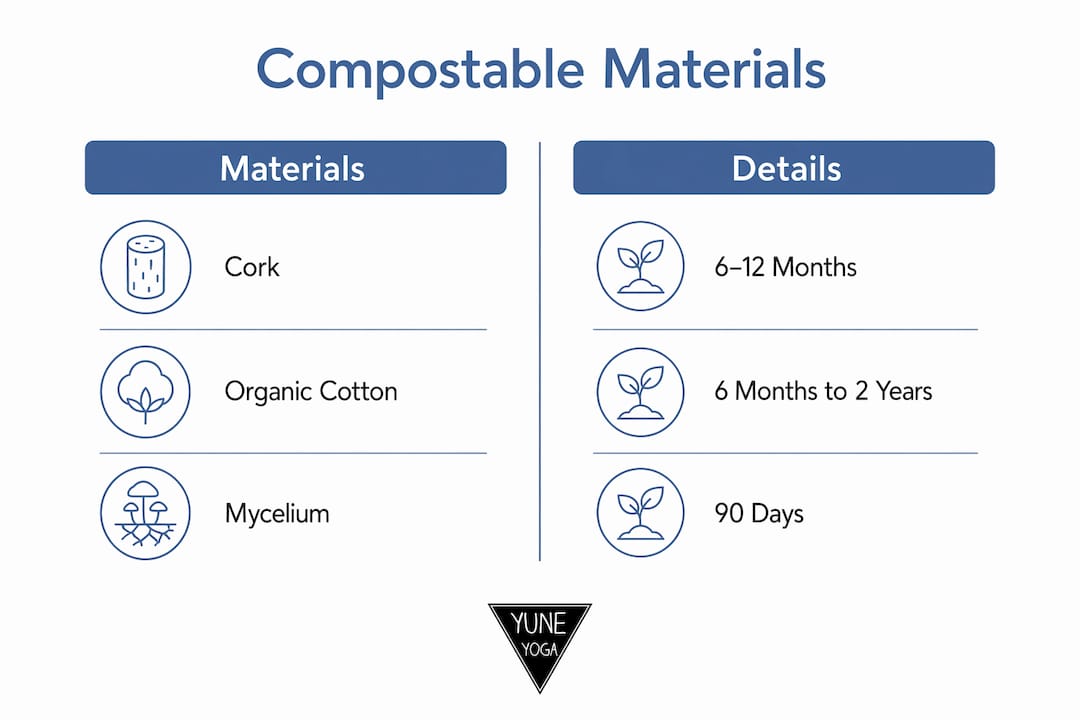
Cork is one of the most reliable compostable materials in yoga gear. It decomposes in 6–12 months in a home compost setup and offers natural antimicrobial properties without chemical treatment. Cork yoga mats and blocks are harvested without cutting the tree, making the sourcing process regenerative.
Organic cotton and hemp are strong choices for straps, blankets, and towels. Organic cotton decomposes in 6 months to 2 years in home compost, while hemp breaks down at a similar rate and requires far less water to grow. Both materials perform well under GOTS certification, which verifies organic fiber content and ethical production.
Natural rubber is more complex. It decomposes in 1–5 years under industrial composting conditions, making it technically biodegradable but not always home compostable. Many natural rubber mats include vulcanization additives and synthetic bonding agents that prevent backyard breakdown. Always verify a Home Compostable certification before assuming a rubber mat will compost in your bin.
Mycelium is the most exciting material in 2026. Mycelium-based mats grown from mushroom roots compost fully within 90 days in home setups. That speed is unmatched by any other yoga mat material currently available.
| Material | Decomposition time | Composting conditions | Key certification |
|---|---|---|---|
| Cork | 6–12 months | Home compost | FSC, Home Compostable |
| Organic cotton | 6 months – 2 years | Home compost | GOTS, OEKO-TEX |
| Hemp | 6 months – 2 years | Home compost | GOTS |
| Natural rubber | 1–5 years | Industrial composting | Home Compostable (verify) |
| Mycelium | 90 days | Home compost | Emerging standards |
Pro Tip: Look for the Home Compostable certification logo, not just the word “biodegradable.” Biodegradable has no legal standard in the US, while Home Compostable certification requires verified lab testing.
How to care for and compost your yoga accessories properly
Proper care extends the life of your gear and makes composting easier when the time comes. A mat that lasts three years instead of one year has a significantly lower carbon footprint, regardless of material.
-
Clean cork mats and blocks gently. Wipe with a damp cloth and a soft brush. Avoid soaking cork in water, as prolonged moisture weakens its structure. Cork care requires no harsh chemical sprays, which also keeps it compost-ready at end of life.
-
Wash organic cotton straps and blankets in cold water. Hot water degrades natural fibers faster. Air dry rather than machine dry to preserve fiber integrity. A well-maintained organic cotton strap can last five or more years before composting.
-
Prepare natural rubber mats before composting. Cut the mat into smaller pieces, roughly 6-inch squares, to speed decomposition. Remove any metal D-rings, buckles, or synthetic labels before adding to your compost bin.
-
Set your home compost correctly. Maintain a temperature between 130°F and 160°F for active decomposition. Turn the pile every 1–2 weeks to add oxygen. Keep moisture levels similar to a wrung-out sponge. Dry or compacted piles slow breakdown dramatically.
-
Avoid these common mistakes. Do not add synthetic-coated materials to your home compost, even if the mat claims to be natural. Do not compost items with metal hardware still attached. Do not skip the cutting step for thick mats, as whole mats take significantly longer to break down.
Pro Tip: Check your mat’s certification documentation before composting. If the label says “biodegradable” without a certification body listed, treat it as non-compostable and contact the manufacturer directly.
For more on keeping your mat in top condition, the yoga mat care guide from Yuneyoga covers maintenance routines that extend product life across all material types.
How do you choose sustainable yoga accessories without getting greenwashed?
The carbon footprint of yoga gear extends far beyond the material itself. Manufacturing, shipping, and disposal all contribute to the total environmental cost. A cork mat shipped from overseas in plastic packaging can have a higher footprint than a locally made cotton mat shipped in recycled kraft paper.
Locally sourced mats reduce transportation emissions by over 60% compared to internationally shipped alternatives. That single factor can outweigh the material advantage of an otherwise excellent product. Ask brands directly about their shipping practices and whether they offer carbon-neutral delivery.
Durability is the most underrated sustainability factor. Products with 3-year or longer warranties dramatically reduce replacement frequency and the emissions tied to manufacturing new gear. A mat that lasts three years produces far less total waste than three cheap mats replaced annually.
Certifications cut through marketing noise. Products with GOTS and OEKO-TEX certifications shed 92% fewer chemicals after washing than uncertified alternatives. That matters both for your health and for what enters your compost or waterways at end of life.
Red flags to watch for:
- “Eco-friendly” or “natural” claims with no third-party certification listed
- No information about manufacturing location or energy source
- Warranty shorter than one year on a mat marketed as durable
- Packaging made from virgin plastic on a product claiming sustainability
- 14% of eco-labeled products failed fiber-content audits in 2025, meaning the label did not match the actual material
Selection criteria that signal genuine sustainability:
- GOTS, OEKO-TEX, FSC, or Climate Active Carbon Neutral certification
- Carbon-neutral or low-emission shipping disclosed on the product page
- Recycled or compostable packaging
- Transparent supply chain information
- Warranty of 3 years or more
The principle of Ahimsa, or non-harming, applies directly to gear selection. Choosing investment products with long warranties prevents frequent plastic-heavy replacements and reduces harm to ecosystems over time. This is not just philosophy. It is a measurable environmental outcome.
What compostable yoga accessories exist beyond mats?
Mats get most of the attention, but a full eco-friendly yoga practice includes blocks, straps, blankets, towels, and bags. Each accessory type has compostable options worth knowing.
Blocks made from cork are the gold standard. They are firm, naturally grippy, and fully compostable at end of life. Foam blocks, even those labeled “eco foam,” are typically EVA or recycled EVA and do not compost. Stick with cork for genuine end-of-life compostability.
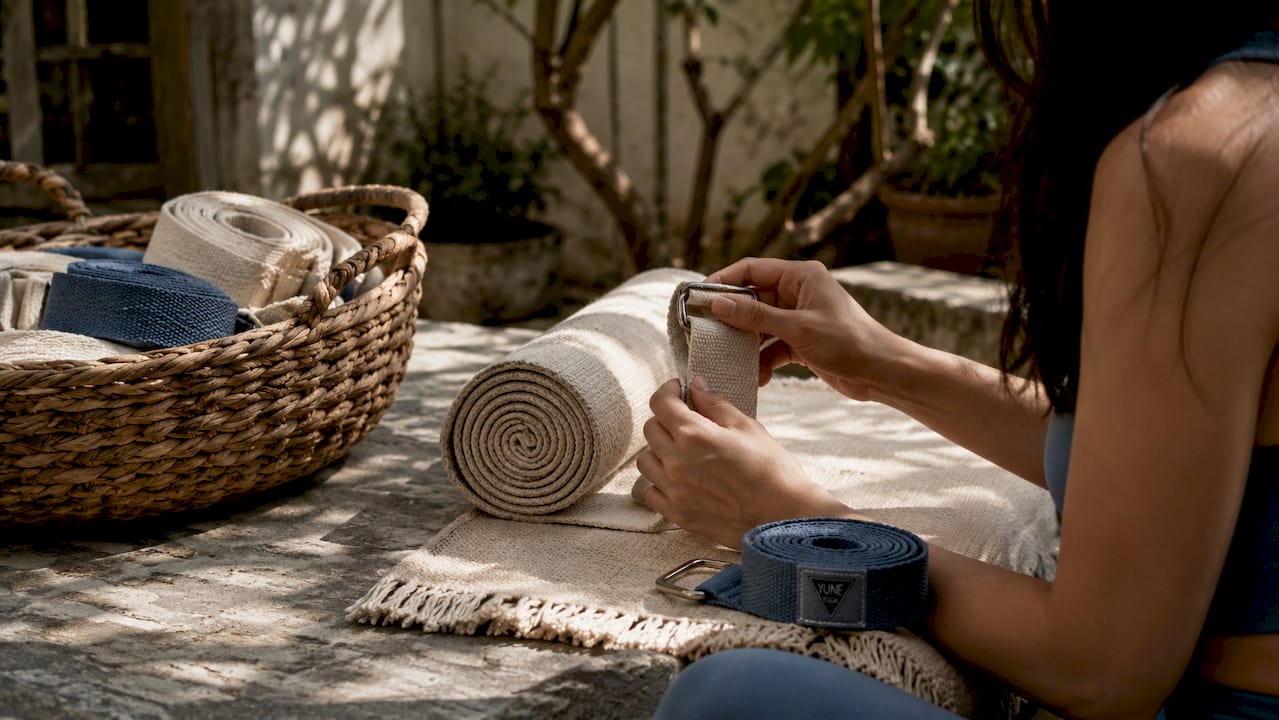
Straps made from GOTS-certified organic cotton or hemp are the best choices. Metal D-rings must be removed before composting the strap itself, but the fabric portion breaks down cleanly. Compact organic cotton straps also work well for travel, reducing the need to buy disposable alternatives on the road.
Blankets and towels made from organic cotton or hemp are fully compostable and perform well in practice. Organic cotton rugs and towels provide better grip when damp, making them a practical choice for hot yoga styles where synthetic microfiber towels would otherwise be the default.
Bags made from hemp canvas or organic cotton are compostable and durable. Avoid bags with synthetic linings or plastic zippers if end-of-life composting is your goal.
| Accessory | Best compostable material | Composting note |
|---|---|---|
| Block | Cork | Remove any adhesive labels first |
| Strap | Organic cotton, hemp | Remove metal D-rings before composting |
| Blanket | Organic cotton, hemp | Fully compostable, no prep needed |
| Towel | Organic cotton | Fully compostable, wash-free composting |
| Bag | Hemp canvas | Remove zippers and synthetic closures |
Pairing your yoga studio setup with intentional, compostable accessories creates a practice space that reflects your values from the floor up.
Key Takeaways
Compostable yoga accessories require verified certifications, durable construction, and proper end-of-life preparation to deliver genuine environmental benefit.
| Point | Details |
|---|---|
| Certification over claims | Only Home Compostable, GOTS, or OEKO-TEX certification confirms genuine sustainability. |
| Material matters by use | Cork suits blocks and mats; organic cotton and hemp suit straps, towels, and blankets. |
| Durability reduces footprint | Gear lasting 3+ years lowers total carbon impact more than material choice alone. |
| Prepare before composting | Remove metal hardware and cut mats into small pieces before adding to your compost bin. |
| Shipping counts | Locally sourced gear cuts transportation emissions by over 60% versus overseas alternatives. |
What I’ve learned from years of choosing eco yoga gear
The hardest lesson I’ve learned is that the most sustainable purchase is often the one you delay. When I first started prioritizing eco gear, I replaced products frequently because I was chasing the newest certified material or the most impressive label. That behavior produced more waste than a single well-chosen mat used for five years ever would.
The Ahimsa principle reshaped how I think about this. Non-harming applies to the planet as much as to your body on the mat. Buying a product with a three-year warranty and using it fully is a more ethical act than cycling through three “compostable” products in the same period.
I’ve also become skeptical of brands that lead with aesthetics and bury certification details in fine print. Genuine sustainability brands publish their supply chain information, list their certification bodies by name, and tell you exactly what to do with the product at end of life. If a brand cannot answer those questions clearly, the eco claim is probably marketing.
My practical advice: start with your mat and one accessory. Master caring for those two items before expanding. A cork block cleaned properly and composted correctly teaches you more about sustainable gear than reading a dozen product pages. The knowledge compounds, and so does the impact.
— Nicholas
Yuneyoga’s compostable yoga essentials
Yuneyoga carries a curated range of yoga mats, towels, and straps built from natural rubber, organic cotton, and other materials that meet durability and eco-sourcing standards.

Every product in the Yuneyoga lineup is selected with longevity and transparency in mind, so you spend less time replacing gear and more time on the mat. The store also provides detailed material and care information on each product page, making it straightforward to verify what you are buying before you commit. Browse the full selection of yoga essentials and accessories to find gear that matches your practice style and your environmental values.
FAQ
What is the difference between compostable and biodegradable yoga gear?
Compostable gear breaks down into non-toxic organic matter within a defined timeframe under specific conditions, verified by certification. Biodegradable has no legal standard in the US and offers no guarantee of safe or timely breakdown.
Which yoga mat material composts fastest at home?
Mycelium-based mats compost fully within 90 days in a home setup. Cork follows at 6–12 months, and organic cotton decomposes in 6 months to 2 years under similar conditions.
How do I know if my yoga gear is genuinely eco-friendly?
Look for third-party certifications like GOTS, OEKO-TEX, FSC, or Home Compostable on the product label. Brands that list their certification body by name and publish supply chain details are significantly more trustworthy than those using unverified “natural” or “eco” claims.
Can I compost a natural rubber yoga mat in my backyard?
Not always. Many natural rubber mats contain vulcanization additives that prevent home composting. Verify the mat carries a Home Compostable certification before adding it to your backyard bin, and always cut it into small pieces and remove any synthetic components first.
What are the best eco-friendly yoga gift ideas for a sustainable practitioner?
Cork blocks, GOTS-certified organic cotton straps, and hemp canvas bags are the most reliably compostable gift options. Each is functional, durable, and fully compostable at end of life with minimal preparation.


