
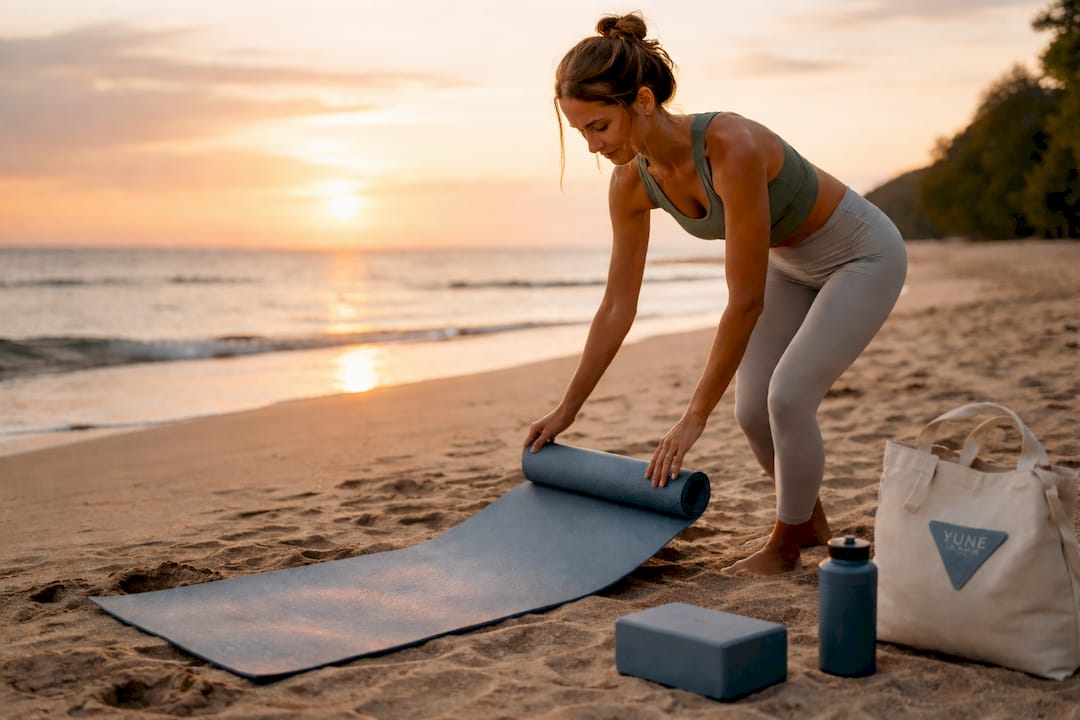
The Role of Portability in Yoga Gear for Travelers
Portable yoga gear is defined as lightweight, compact equipment designed to maintain a consistent practice regardless of location. The role of portability in yoga gear goes beyond convenience. It removes the logistical barriers that cause practitioners to skip sessions when traveling, commuting, or working in unfamiliar spaces. A curated system in one bag removes excuses, cuts prep time, and supports environment-agnostic practice. Travel mats, collapsible blocks, and quick-dry towels are the core tools that make yoga genuinely portable. When your gear fits in a carry-on, your practice has no fixed address.
What makes yoga gear portable and why does it matter?
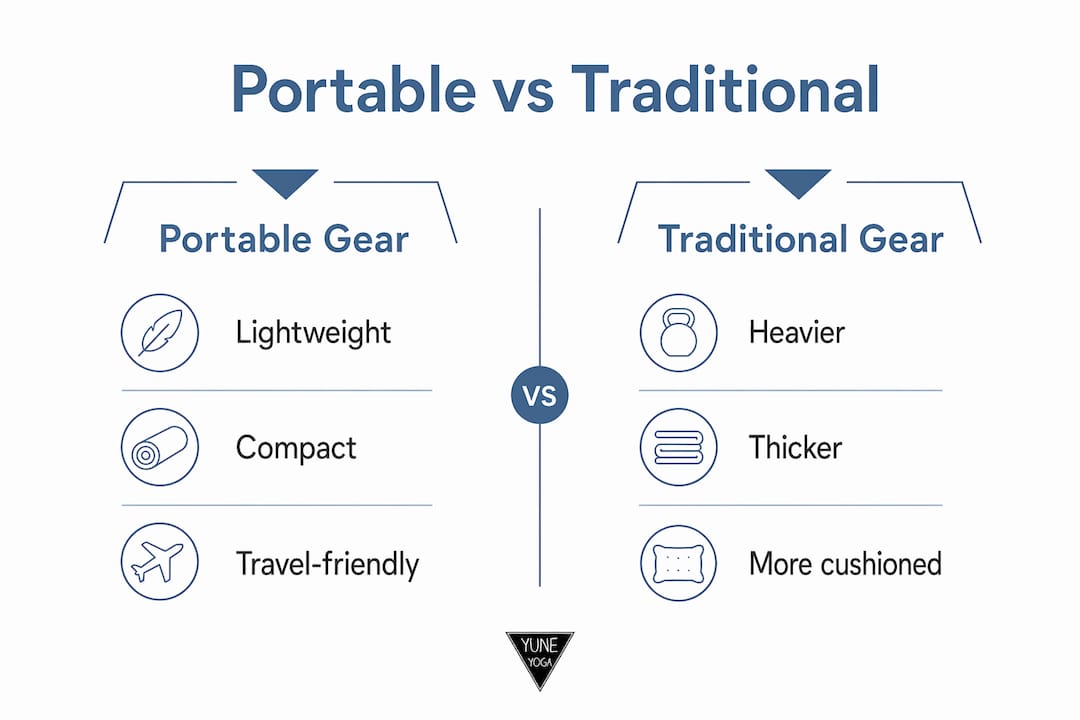
Portability in yoga gear comes down to three measurable attributes: weight, thickness, and pack size. Travel yoga mats typically weigh 1–3 lb and measure 1–3 mm thick, compared to standard mats at 4–7 lb and 4–6 mm thick. That weight difference matters when you are carrying gear through airports or fitting it into a backpack alongside clothes and a laptop.
The trade-off is cushioning. Thinner mats offer less joint protection, which matters most for practitioners with sensitive knees or wrists. The right choice depends on your yoga style. Yin and restorative practitioners need more padding. Vinyasa and Ashtanga practitioners can work comfortably on a 1.5 mm mat. Knowing your practice style before buying is the single most useful filter.
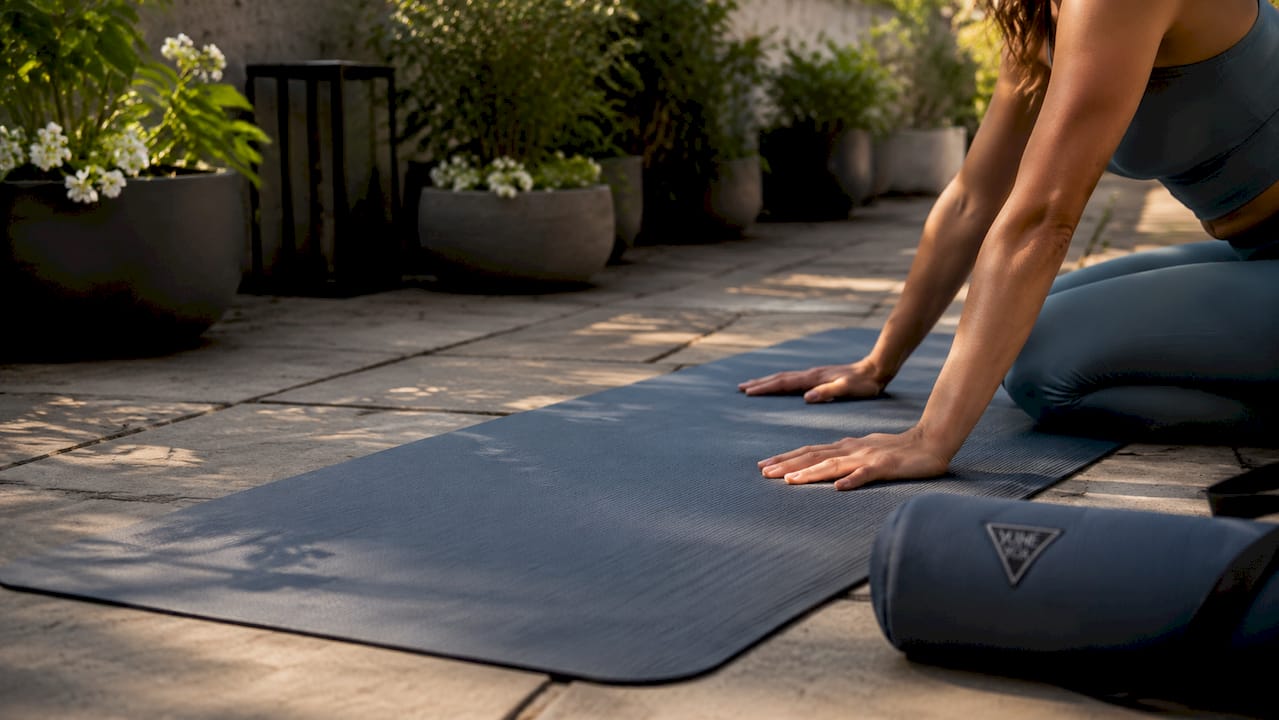
Design innovation has narrowed the gap between portability and comfort. Foldable mats fold flat in luggage but create fold lines some practitioners feel underfoot. Rollable mats avoid fold lines but require cylindrical storage space. Neither option is universally better. The choice depends on your bag shape and how much you notice texture underfoot during practice.
Pro Tip: Pack your travel mat in the same outer pocket every time. That single habit removes the “where did I put it” friction that kills momentum before a session even starts.
Portable accessories extend beyond mats. Collapsible travel yoga blocks fold to less than one-third their height while still providing sturdy support for poses. Quick-dry travel towels like those from Nomadix address grip and hygiene without adding bulk. A compact yoga strap rounds out the kit for flexibility work. Each item serves a specific function, and together they replicate a studio setup in a fraction of the space.
| Gear | Travel Version | Standard Version |
|---|---|---|
| Yoga mat | 1–3 lb, 1–3 mm thick | 4–7 lb, 4–6 mm thick |
| Yoga block | Folds to under one-third height | Full foam or cork, fixed size |
| Towel | Dries 4x faster than cotton, 16 oz | Cotton terry, heavy and slow-drying |
| Strap | Lightweight nylon or cotton, compact | Standard length, minimal difference |
How does portable gear support consistent practice anywhere?
Preparation overhead is a bigger barrier to practice than most practitioners realize. Portable yoga setups create behavioral momentum by reducing setup decisions and turning travel practice from optional to routine. When your gear is already packed and ready, the mental cost of starting a session drops to near zero.
This behavioral effect is well understood in habit design. A cue, like seeing your mat bag by the hotel room door, triggers the routine. The easier the setup, the more likely you follow through. Lightweight yoga equipment acts as a physical habit cue in the same way a coffee maker on the counter prompts a morning ritual.
Portable gear enables micro-practices in unpredictable spaces like parking lots, rest stops, and airport gates. A 10-minute session or a single pose sequence is enough to maintain momentum on travel days. These short sessions compound over weeks. A practitioner who does 10 minutes daily while traveling maintains far more continuity than one who waits for a full studio session.
“The mat goes where I go. That one rule changed everything about how consistently I practice.” — common reflection among traveling yoga practitioners
Compact props also solve the alignment problem that unfamiliar floors create. Hotel carpet, hardwood, and outdoor surfaces all behave differently underfoot. A collapsible block provides the same structural support on a hotel floor as it does in a studio. A grippy travel mat compensates for slippery surfaces. These tools protect alignment and reduce injury risk in non-studio environments.
- A foldable mat fits inside a standard carry-on without displacing other items
- Collapsible blocks pack flat and weigh a fraction of standard foam blocks
- Quick-dry towels replace both a mat towel and a post-practice shower towel
- A compact strap supports hip openers and forward folds without requiring floor space
Portable vs. traditional yoga gear: a practical comparison
Choosing between portable and traditional gear requires honest self-assessment about how and where you practice. The Yoga In a Bag system is a purposeful approach that includes core gear, comfort essentials, and accessories in one organized kit. It removes barriers like missing straps or last-minute packing decisions. That organizational discipline is what separates practitioners who travel well from those who abandon practice on the road.
Mat materials and grip
Natural rubber travel mats offer strong grip and eco-friendly credentials but weigh slightly more than PVC alternatives. Microfiber-topped mats provide excellent grip when wet, making them well-suited for hot yoga or outdoor practice in humid conditions. For practitioners who add yoga to a fitness routine alongside running or strength training, a dual-purpose mat that handles sweat well is worth the slight weight increase.
Towels and hygiene on the go
Quick-drying towels that absorb multiple times their weight but dry fast solve a real hygiene problem for traveling practitioners. Nomadix’s Aloha Sunset towel, for example, dries 4x faster than cotton terry and absorbs 4x its weight. That performance means you can wash it in a hotel sink and have it dry by morning. Cotton towels cannot match that turnaround, which creates a hygiene gap on multi-day trips.
Straps and blocks for travel
A compact yoga strap adds almost no weight or bulk to a kit. The benefits of a compact yoga strap for travel include supporting hamstring stretches, shoulder openers, and restorative poses that would otherwise require a partner or wall. Collapsible blocks are the more significant innovation. They provide the same support as full-size blocks while folding flat enough to slip between clothes in a suitcase.
Pro Tip: Roll your travel mat inside your towel before packing. The towel cushions the mat, protects both items, and saves space compared to packing them separately.
How to integrate portable yoga gear into travel and daily life
Building a portable yoga practice starts with selecting gear matched to your actual travel patterns. A practitioner who takes weekend road trips needs different gear than one who flies internationally every week. The right practice surface for a hotel room differs from what works on a beach or a grass field.
- Audit your travel style. Identify whether you travel by plane, car, or train, and how much bag space you typically have. This determines whether a foldable or rollable mat makes more sense.
- Build a fixed kit. Assign specific gear to a dedicated bag that stays packed between trips. A fixed kit removes the packing decision entirely.
- Set a minimum viable practice. Decide in advance what counts as a session on a travel day. Ten minutes of sun salutations counts. One pose counts. Lowering the threshold keeps the streak alive.
- Prioritize quick-dry materials. Choose towels and mat surfaces that dry fast. Wet gear in a closed bag develops odor quickly, which becomes a reason to leave the kit at home.
- Use your gear as a cue. Place your mat bag where you will see it in a hotel room or at home. Visibility triggers the habit.
Surfers and other athletes who cross-train with yoga face the same portability challenge. Portable yoga equipment for cross-training athletes supports flexibility and recovery work in locations where a studio is not available. A compact kit that fits in a surf bag or gym backpack removes the “I don’t have my gear” excuse entirely.
Key Takeaways
Portable yoga gear works because it removes preparation friction, creates behavioral momentum, and makes consistent practice possible in any environment.
| Point | Details |
|---|---|
| Weight and thickness matter | Travel mats weigh 1–3 lb versus 4–7 lb for standard mats, making carry-on packing practical. |
| Behavioral momentum is real | A ready-packed kit reduces setup decisions and turns travel practice into a reliable habit cue. |
| Collapsible props maintain alignment | Foldable blocks and compact straps replicate studio support on hotel floors and outdoor surfaces. |
| Quick-dry towels solve hygiene | Towels that dry 4x faster than cotton allow daily washing and reuse on multi-day trips. |
| Match gear to your travel style | Foldable mats suit luggage; rollable mats suit cylindrical bags. Choose based on your actual bag. |
Why portability changed my practice more than any new technique
I used to treat travel as a break from yoga. My mat stayed home, my blocks stayed home, and I told myself I would get back to it when I returned. The gap between trips and regular practice grew until I barely recognized my own consistency. The shift came when I stopped treating portable gear as a compromise and started treating it as a system.
The first time I unrolled a 2 lb travel mat on a hotel balcony in a city I had never visited, something clicked. The mat was the cue. The familiar texture underfoot told my nervous system it was time to practice, regardless of the view behind me. That behavioral anchor is something no amount of motivation or discipline produces on its own.
What I have found after years of traveling with a compact kit is that the gear selection matters less than the commitment to keeping it packed. A foldable mat with fold lines is infinitely better than a perfect mat sitting at home. A quick-dry towel that is slightly smaller than ideal still handles sweat and dries overnight. The practitioners I see abandon travel practice are almost always chasing perfect conditions rather than working with what fits in their bag.
The one thing I would tell any practitioner building a travel kit: choose gear you will actually bring, not gear you wish you could bring. Portability is a behavioral design problem as much as a product problem. Solve the behavior first.
— Nicholas
Portable yoga gear worth bringing on every trip
Yuneyoga curates travel-friendly yoga accessories built for practitioners who refuse to leave their practice behind.
The Yuneyoga collection includes eco-friendly foldable travel mats, natural rubber options for grip-focused practice, quick-dry towels, and compact accessories that pack into carry-on luggage without compromise. Every product is selected for durability, function, and the kind of quality that holds up across hundreds of sessions in dozens of locations. Browse the full range of yoga essentials and accessories to build a kit that travels as well as you do. Whether you practice daily or squeeze in sessions between flights, the right gear makes the difference between a practice that survives travel and one that thrives because of it.
FAQ
What is the role of portability in yoga gear?
Portability in yoga gear removes logistical barriers that prevent consistent practice during travel or daily life. Lightweight, compact gear like travel mats and collapsible blocks makes it possible to practice in any environment without a studio.
How light should a travel yoga mat be?
Travel yoga mats weigh 1–3 lb, compared to 4–7 lb for standard mats. A mat under 2 lb is practical for carrying in luggage without strain.
Are foldable yoga mats as good as rollable mats?
Foldable mats fit flat in luggage but create fold lines some practitioners feel underfoot. Rollable mats avoid fold lines but require cylindrical storage space. The better choice depends on your bag type and sensitivity to texture.
What portable yoga accessories are worth packing?
A compact strap, collapsible block, and quick-dry towel cover the core needs for travel practice. Together they replicate studio support in a kit that fits alongside clothes in a carry-on.
How do quick-dry towels improve portable yoga practice?
Quick-dry travel towels absorb moisture efficiently and dry significantly faster than cotton terry, allowing daily washing and reuse on multi-day trips. This maintains grip and hygiene without adding bulk to your kit.


