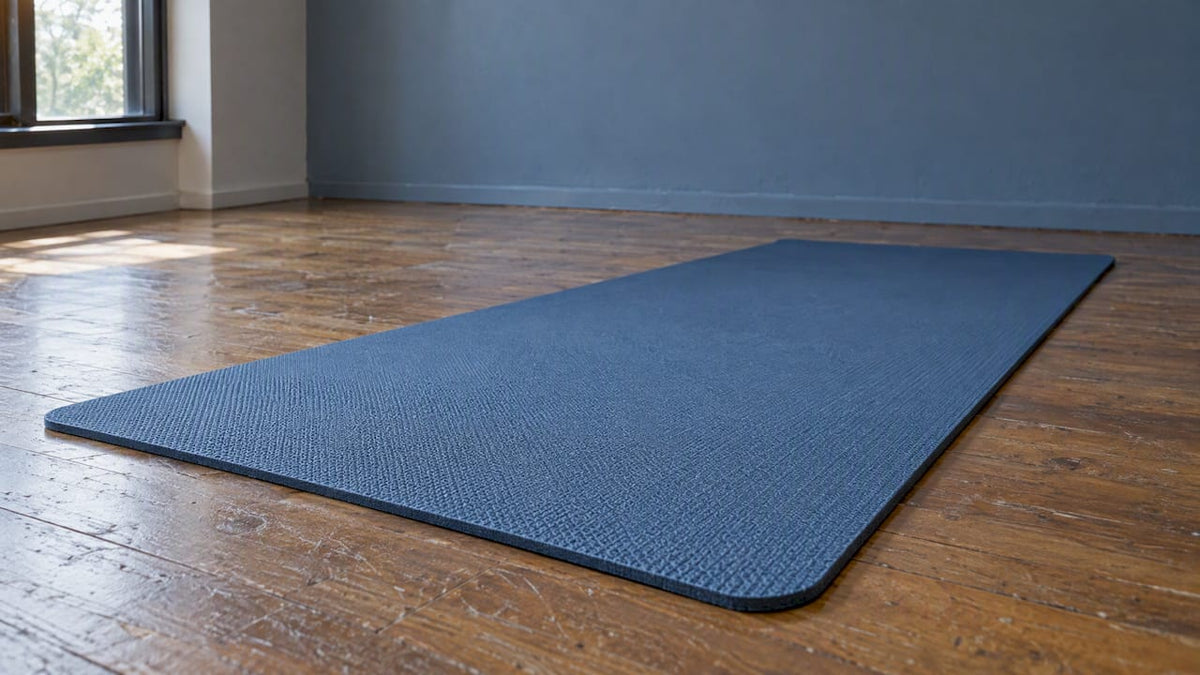
Article: Carry Your Yoga Mat by Bike to Class Without Spoke Snags
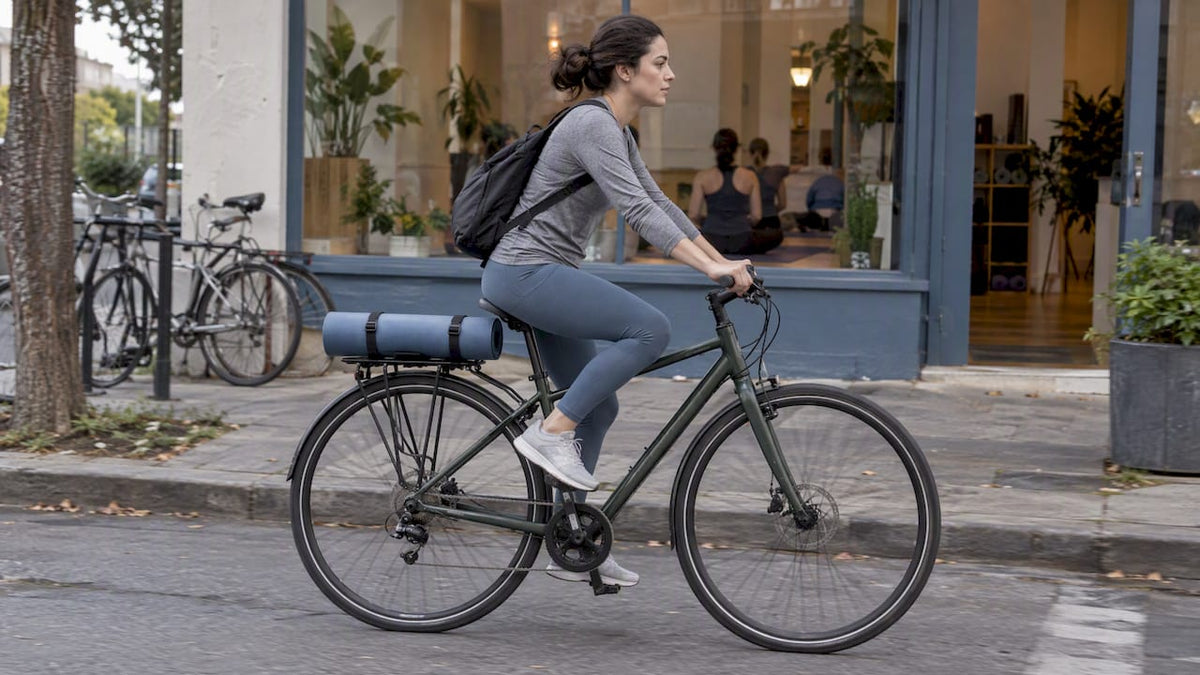
Carry Your Yoga Mat by Bike to Class Without Spoke Snags
Practical ways to carry a yoga mat on a bike include a crossbody yoga bag or a secure rear-rack attachment. Both keep the mat away from your wheel and steering, and both leave your hands free. Test any setup with a shake before you ride, and if your trip includes trains or flights, a foldable travel mat is easier to manage (see the travel notes below).
TL;DR:
- For rides under a few miles, a snug crossbody bag is simplest; longer trips or extra gear favor a rear rack that spares your shoulders.
- On a rack, lay the mat parallel to the frame, cross two straps over it, and tuck every loose end away from the wheel.
- Saddle straps suit short hops only; keep the mat clear of the rear tire, and switch to a rack or bag if it sags.
- Travel mats fold smaller and weigh less but provide less cushioning; airlines set their own baggage limits, so check the carrier’s rules before flying.
- Cargo changes handling and braking distance; practice on a quiet street with the load, then brake earlier and more gently before riding in traffic.
Table of Contents
- Which methods work best for carrying a yoga mat by bike?
- How do you set up each way of carrying your mat?
- What should you check for safety, balance, and the spoke hazard?
- How do you choose the right carrier or bag for your commute?
- What should you pack and prepare before riding to class?
- Does a travel mat make sense for multimodal trips?
- What I’d tell a friend who bikes to class
- Which Yune Yoga mats are easiest to carry on a bike?
- FAQ
- Sources
Which methods work best for carrying a yoga mat by bike?
Here is the short list. Pick by trip length, how much else you carry, and how your bike is built.
- Crossbody yoga bag or yoga-specific backpack: hands-free and stable for most commutes, and the mat stays clear of the wheels.
- Rear rack with straps or bungee cords: very stable for longer rides and errands, and it pairs well with panniers.
- Regular backpack or messenger bag with the mat strapped outside: a good fit for multi-stop days when you already carry a bag.
- Under-seat or saddle strap: fine for short hops on quiet streets, not for long rides.
- Cargo or long-tail bike: a useful option for heavier loads or when the mat travels with other gear, if you already own one.
Not sure which fits you? If you ride fewer than a few miles to class, a crossbody bag is usually the simplest start. If you ride farther, or you tend to arrive with a towel, water, and a change of clothes, a rack gives your shoulders a break. Guides from bike brands, including Liv Cycling, point to rack attachments with bungee cords or straps and to yoga bags as quick, comfortable ways to carry a rolled mat.
How do you set up each way of carrying your mat?
Each method has its own setup. Follow the steps for yours, then run the test routine in the Pro Tip.
-
Crossbody yoga bag or yoga-specific backpack. Wear the strap across your chest so the mat sits diagonally along your back, not swinging at your hip. Shorten the strap until the bag stays snug when you lean forward into the handlebars, since a loose bag slides around when you turn your head to check traffic. Put your towel, keys, and phone inside the bag so the weight rides close to your spine. A bag with a full zipper holds a rolled mat better than a simple drawstring sleeve, because the mat can’t slip out on bumps.
-
Rear rack with straps or bungee cords. Lay the rolled mat flat along the top of the rack, parallel to the bike’s frame, with the ends sticking out equally on both sides. Cross two straps over it in an X pattern and hook them to the rack’s frame rails, not to the wheel side. Pull each strap tight, then tuck every loose tail under the strap or into the mat roll so nothing dangles. If you use panniers, leave the mat on top of the rack and keep the pannier clasps closed so the strap tails can’t swing into the wheel. A rolled mat that rocks side to side needs a third strap or a tighter roll.
-
Regular backpack or messenger bag with the mat strapped outside. A vertical mat along the back panel keeps your center of gravity steady and clears your handlebars. A horizontal mat across the bottom of the bag works too, but it can catch on your seat when you swing a leg over. Add a layer of padding, such as a folded towel, between the mat and the bag where the straps pull, so the buckles don’t dig in. Check that the mat doesn’t poke up behind your helmet, because it can bump the back of your head when you lean forward.
-
Under-seat or saddle-mounted strap. This setup suits short hops. The mat sits beneath the saddle and above the rear wheel, which is exactly why it needs care. Use a strap with a firm buckle, leave a gap between the mat and the tire, and secure the loose ends against the frame. If the mat sags toward the wheel, move to a rack or bag.
-
DIY strap solutions. Everyday straps, such as a belt, a bike strap, or a hook-and-loop tie, are acceptable when you secure them well. Use two loops instead of one, cinch each tight, and tuck the ends under the loop. A single loop that slips when you hit a pothole can let a mat end up in a spoke or on the road.
-
Cargo or long-tail bikes. These are built to carry heavier or bulkier items and can be accessorized for specific loads, but they change how the bike handles and take practice, according to REI’s cargo bike guidance. For most commuters they are overkill for one rolled mat. If you already have one, a mat fits easily in a rear basket or on a deck with a strap, and you can bring your block, bolster, and bag too.
Pro Tip: Before you leave, grab the secured mat and shake it hard, front to back and side to side. If it shifts, rock, or loosens, re-tighten. Then ride a short loop on a quiet street and brake twice before heading into traffic.
What should you check for safety, balance, and the spoke hazard?
The spoke hazard is simple: a loose strap end or a sagging mat edge can drift into the spokes and stop the wheel suddenly. The fix is just as simple. Tuck every strap tail away from the wheel, fasten ends to the frame side, and never let a strap hang below the rack or saddle.
Oregon’s bicycle manual gives the rule behind all of this: cargo should never obstruct steering, pedaling, or any moving parts, and a balanced, secured load improves handling.
Carrying anything changes how your bike behaves. Cargo bike makers note that a load raises your braking distance and reduces your ability to maneuver, so practice with the load and brake earlier and more gently. Try it in a quiet lot or empty street before you ride with traffic.
Run this checklist before every ride:
- Every strap is tight, and no loose ends flap near the wheel.
- The mat doesn’t touch the tire, fender, or brake cables.
- The mat doesn’t block your view or your lights.
- Your front and rear lights and reflectors are visible and unobstructed.
- You’ve done the shake test and one short loop.
Safe loads keep steering, pedaling, and wheels completely clear. That is the standard in Oregon’s guidance, and it is a good test for any mat setup.
How do you choose the right carrier or bag for your commute?
A good carrier fits your mat and your riding habits. Look at these features:
- Fit: compare the bag’s internal length with your rolled mat, and prefer a full zipper, roll-top, or flap closure that keeps the mat from sliding out on bumps.
- Weather protection: look for water-resistant fabric and a wipe-clean lining, since a rain shower or a sweaty mat will test both.
- Comfort: wide, padded straps spread the load across your shoulder and chest on longer rides, and a crossbody width that stays flat prevents chafing.
- Capacity and organization: pockets for a towel, phone, and keys keep small items from rattling, and extra room helps if you carry a thicker studio mat instead of a travel mat.
- Sustainability: if it matters to you, choose recycled or natural materials and a design that lasts for years.
For deeper comparisons, our guides cover mat bag designs, carrier options, and backpack styles.
What should you pack and prepare before riding to class?
A calm arrival starts at home. Run through this quick list:
- Roll the mat tightly and secure it with a sleeve or strap, then wipe off dust if needed.
- Pack your helmet, lock, water bottle, towel, and a small change of clothes or toiletries.
- Switch on lights if you ride early or late, add reflective accents, and tuck every strap end.
- On arrival, stash any wet items in a bag and air out the mat if it got sweaty.
If you’re new to class routines, this beginner yoga checklist in Portuguese from a Lisbon yoga school adds more ideas for what to bring.
Does a travel mat make sense for multimodal trips?
A travel mat folds or rolls smaller and weighs less than a studio mat, but it is thinner, so you trade some cushioning for portability, as REI’s mat guide explains. If part of your trip is a flight, the TSA says a yoga mat is allowed in carry-on or checked bags, though airlines may apply their own size limits. The FAA notes that carriers set their own limits and may gate-check oversized items, so check your airline’s policy first. If your mat is bulky, packing it inside your luggage may be a practical option.

What I’d tell a friend who bikes to class
In mixed city commutes, the setups that kept working were a snug crossbody bag and a rack with two crossed straps. Anything that left a loose end near the wheel eventually caused trouble, so I stopped using those. Always do the shake test and ride one short loop before you enter traffic. And if portability is your top priority, take a look at the travel mats from Yune Yoga.
— Nicholas
Which Yune Yoga mats are easiest to carry on a bike?
We make mats and accessories for riders who move between places. For a ride that includes trains, buses, or flights, we suggest a travel mat such as our Fir Trekk Travel Mat or Sycamore Trekk Travel Mat, which fold small and use eco-friendly materials. For short rides where cushioning matters most, a full studio mat from our mat collection is the better pick. Browse our accessories for the extras you pack along.
FAQ
How do you carry a yoga mat on a bike?
The simplest ways are a crossbody yoga bag or a rack with two crossed straps. Both keep the mat away from the wheel and leave your hands free. Always tuck loose strap ends and shake-test the setup before riding.
What is the easiest way to carry a yoga mat?
A yoga bag worn across your body is the easiest for most people, since it needs no gear on the bike. Choose one with a full zipper or secure closure so the mat can’t slip out.
Does a yoga mat count as a carry-on?
The TSA says a yoga mat is allowed as a carry-on or checked item, but airlines may enforce their own size limits. Check your carrier’s policy before you fly, and consider packing a bulky mat inside your luggage.
Sources
- Yoga Mat | Transportation Security Administration
- Oregon Department of Transportation : Section 2 - Getting Started : Oregon Driver & Motor Vehicle Services : State of Oregon
- Carry-On Baggage Tips | Federal Aviation Administration
- How to Use a Cargo Bike | REI Expert Advice