
Natural Rubber Yoga Mat Benefits: A Practitioner's Guide
Natural rubber yoga mats are made from the sap of Hevea brasiliensis trees and deliver superior grip, durability, and eco-conscious performance that synthetic alternatives simply cannot match. The material, formally called natural rubber latex (NRL), has been used in high-performance yoga mats by brands like Manduka and Liforme precisely because of its unique physical properties. If you practice hot yoga, power vinyasa, or any style where sweat is a factor, understanding the natural rubber yoga mat benefits before you buy is the difference between a mat that supports your practice and one that lets you down mid-pose.
What are the primary natural rubber yoga mat benefits for grip and performance?
Natural rubber outperforms TPE and PVC in both dry and wet grip conditions. The reason is structural. Open-cell natural rubber pores absorb sweat and increase tack as conditions get wetter. That means the harder you work, the better the mat grips. PVC mats become slippery when wet. TPE mats are lighter and latex-free, but they lose traction faster under sustained sweat.
The performance gap matters most in dynamic practices. In a hot yoga class or a long vinyasa flow, your hands and feet generate real moisture. A natural rubber mat responds by gripping harder. A PVC mat responds by sliding. That single difference affects your balance, your safety, and your confidence in every standing pose and inversion.
Durability is the other major performance advantage. A natural rubber mat lasts 5–10+ years with normal home use. Studio mats under heavy daily traffic typically reach 4–6 years. TPE mats rarely survive that long under equivalent conditions. The longer lifespan means fewer replacements, which is both a financial and environmental win.
Key grip and performance advantages at a glance:
- Open-cell structure absorbs moisture and increases tack during sweaty sessions
- Dry grip is firm and consistent from the first use, with no break-in period required
- Durability outlasts TPE and PVC under equivalent use conditions
- Cushioning at 4–5mm thickness absorbs joint impact without sacrificing floor connection
- Weight is higher than TPE, which signals density and material quality
Pro Tip: Drop a few drops of water on your mat before a heated session. If the surface gets tackier, you have an open-cell construction that performs well in sweat. If it stays slippery, the mat has a closed-cell or coated surface that may need a yoga towel.
How do natural rubber mats compare to synthetic mats environmentally?
Natural rubber comes from a renewable biological source. PVC and TPE come from fossil fuels. That distinction shapes the entire lifecycle of each mat, from production to disposal.
| Material | Source | Biodegradability | Recyclability |
|---|---|---|---|
| Natural rubber | Hevea brasiliensis sap | 1–5 years in ideal compost (pure NR) | Limited; manufacturer guidance required |
| TPE | Synthetic polymer blend | Minimal | Some programs accept it |
| PVC | Petrochemical | Negligible | Rarely accepted |
| Cork/rubber hybrid | Cork bark + NR base | Partial | Varies by construction |
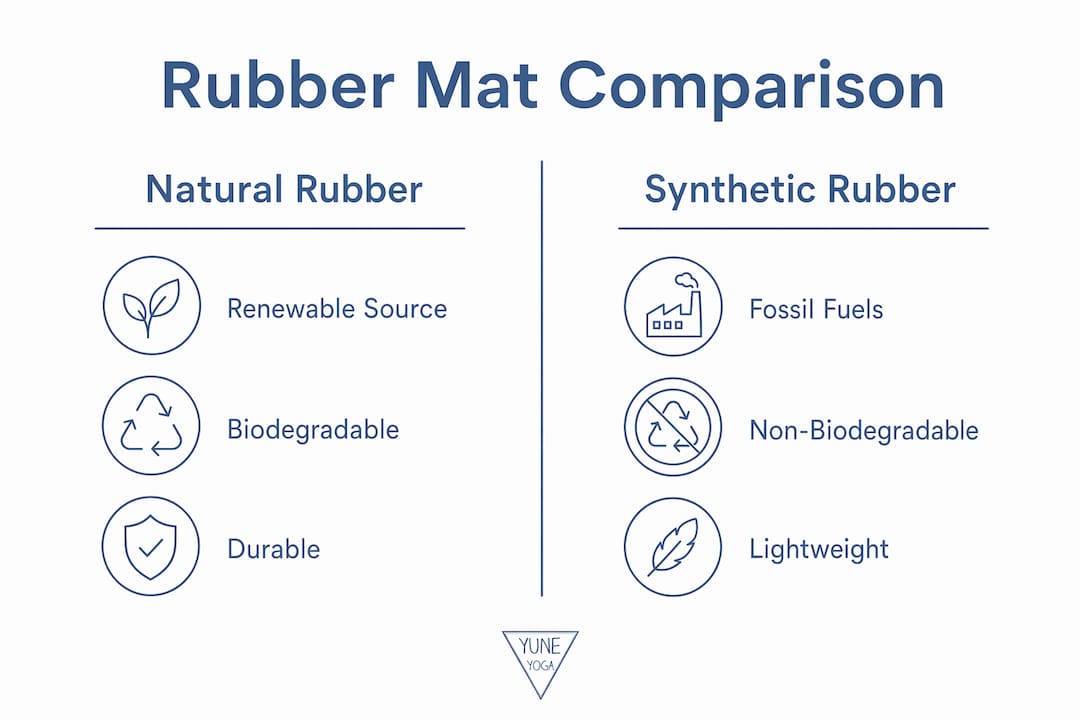
The biodegradability picture for natural rubber is more complicated than most eco-friendly marketing suggests. Pure NR can biodegrade in 1–5 years under ideal composting conditions. However, most yoga mats are blends. In NR/PHBV blend studies, the PHBV fraction degraded while the natural rubber fraction remained largely resistant. That means “biodegradable” on a mat label requires scrutiny. Ask the manufacturer what percentage of the mat is pure NR and what the recommended end-of-life disposal method is.
Extending mat lifespan through proper care has a larger environmental benefit than relying on biodegradability alone. A mat that lasts 10 years instead of 3 years eliminates multiple replacement cycles. Each replacement cycle carries its own production and shipping footprint. The most eco-friendly yoga mat is often the one you already own, maintained well.
Pro Tip: When your natural rubber mat reaches end of life, contact the manufacturer before discarding it. Some brands offer take-back programs or can direct you to appropriate recycling channels. Landfill disposal negates most of the mat’s environmental advantages.
Are there allergy or health concerns with natural rubber yoga mats?
Natural rubber contains allergenic proteins that can cause immune reactions in sensitized people. The specific proteins responsible are Hev b 1, Hev b 3, Hev b 5, and Hev b 6, all derived from Hevea brasiliensis. Latex allergy develops when the immune system recognizes these proteins as threats. Reactions range from skin irritation to, in rare cases, systemic responses.
The allergy risk is real and underreported in yoga mat marketing. Most brands emphasize eco-credentials without clearly disclosing latex protein content. If you have a known latex allergy or have reacted to latex gloves, balloons, or medical equipment, a natural rubber mat poses a genuine risk.
Practical steps for allergy-aware mat selection:
- Check for latex disclosure. Reputable brands list whether the mat contains natural rubber latex proteins.
- Look for latex-free certifications. Some mats labeled “natural” use synthetic rubber or processed NR with reduced protein content.
- Consider TPE or cork alternatives. TPE is lighter and latex-free and works well for practitioners with latex sensitivity.
- Test before extended contact. If you are unsure, place a small section of the mat against your inner forearm for 30 minutes before a full session.
- Consult an allergist. A skin prick test for latex allergy gives definitive guidance before you invest in a natural rubber mat.
Latex allergy develops from repeated immune recognition of rubber proteins. Limiting exposure is the primary prevention strategy. For practitioners without known sensitivity, natural rubber mats are generally safe. For those with any history of latex reactions, latex-free options are the correct choice.
How to choose the best natural rubber yoga mat for your practice
The right natural rubber mat depends on your practice style, body weight, and sweat level. A 5mm thickness is the standard recommendation for most practitioners. It provides enough cushioning for knees and hips in floor poses while keeping you close enough to the ground for stability in standing poses and balances.
Open-cell vs. closed-cell construction
Open-cell mats absorb moisture and grip harder as you sweat. They require more frequent cleaning because they absorb bacteria and odor along with sweat. Closed-cell mats resist absorption, stay cleaner longer, but may feel slippery in very wet conditions. For hot yoga or power vinyasa, open-cell construction is the better choice. For gentle or restorative practice, closed-cell works fine.
Hybrid mat options
PU-top natural rubber mats combine a polyurethane surface with a natural rubber base. The PU layer grips exceptionally well in hot conditions where pure rubber might saturate. Brands like Manduka offer this construction in their PRO and PRO Lite lines. The tradeoff is a slightly less natural material profile and a higher price point.
Choosing a mat in five steps:
- Identify your practice style. Hot yoga and power vinyasa demand open-cell or PU-top construction. Gentle yoga tolerates closed-cell.
- Check your latex sensitivity. If any history of latex reaction exists, choose a latex-free alternative before anything else.
- Select thickness. 5mm suits most practitioners. Go thicker (6mm) for joint sensitivity, thinner (3–4mm) for travel or balance-focused practice.
- Test grip with moisture. Use the water-drop test at home before your first heated session.
- Read care instructions. Proper cleaning and storage extend mat lifespan significantly. Most natural rubber mats should be wiped with a damp cloth and mild soap, never machine washed.
Pro Tip: Natural rubber mats are heavier than TPE alternatives. If you commute to a studio, weigh the mat before buying. A mat that stays home can be heavier. A mat you carry daily should be as light as your practice allows.
What are the common misconceptions about natural rubber yoga mats?
The biggest misconception is that “natural” means hypoallergenic. Natural rubber is one of the most common contact allergens in fitness equipment. The word natural describes the source, not the allergy profile.
A second widespread myth is that natural rubber mats are maintenance-free because they are biodegradable. The opposite is true. Open-cell mats absorb sweat, bacteria, and oils with every session. Without regular cleaning, they develop odor and degrade faster. The mat’s eco-friendly origins do not reduce the need for care.
Common myths worth correcting:
- “Natural rubber is always eco-friendly.” Biodegradation depends on formulation and disposal environment. Blended mats may not biodegrade as claimed.
- “All natural rubber mats smell the same.” Odor varies significantly by manufacturer and processing method. Some mats off-gas a strong rubber smell for weeks. Airing the mat outdoors before first use reduces this.
- “Natural rubber mats are non-toxic.” Most are low-toxicity, but processing chemicals vary. Look for OEKO-TEX or similar certifications if chemical exposure is a concern.
- “Two natural rubber mats perform the same.” Surface texture, coating, and construction mean two mats labeled “natural rubber” can behave completely differently under sweat. Always test before committing.
Understanding these distinctions helps you read product claims critically and choose a mat that actually fits your practice and health profile. The yoga practice surface you choose shapes every session, so the details matter.
Key Takeaways
Natural rubber yoga mats deliver superior grip, long lifespan, and genuine eco-credentials, but they require informed selection, regular care, and allergy awareness to deliver their full value.
| Point | Details |
|---|---|
| Grip improves with sweat | Open-cell natural rubber absorbs moisture and increases tack, outperforming PVC and TPE in wet conditions. |
| Lifespan exceeds alternatives | Natural rubber mats last 5–10+ years at home, making them a durable long-term investment. |
| Biodegradability needs scrutiny | Pure NR degrades in 1–5 years in ideal compost; blended mats degrade slower and require manufacturer disposal guidance. |
| Latex allergy is a real risk | Natural rubber contains Hev b proteins that trigger reactions in sensitized practitioners; latex-free alternatives exist. |
| Care extends eco-benefits | Regular cleaning and proper storage extend mat life more effectively than relying on biodegradability alone. |
What I have learned from years on a natural rubber mat
The grip argument for natural rubber is real, but it took me a full season of hot yoga to appreciate how much construction variation exists within the category. My first natural rubber mat felt tacky in dry conditions and turned into a slip hazard the moment I started sweating. My second, an open-cell construction from a different manufacturer, gripped harder as the session intensified. Same label, completely different experience.
The weight issue is also underestimated. Natural rubber mats are noticeably heavier than TPE options. If you practice at home, that weight is irrelevant. If you carry your mat to a studio three times a week, it adds up fast. I switched to a hybrid PU-top mat for studio sessions and kept my heavier open-cell mat at home. That split approach solved both the grip and the carry problem.
On the environmental side, I have become skeptical of biodegradability claims without specifics. A mat that lasts a decade and gets properly disposed of at end of life is more sustainable than a “biodegradable” mat that ends up in a landfill after three years. The most responsible choice is to buy well, care for it consistently, and ask the manufacturer about disposal before the mat reaches end of life. If you are adding yoga to your fitness routine and considering your first natural rubber mat, start with a mid-range open-cell option, test it with moisture before your first heated session, and give it a few weeks before judging the grip.
— Nicholas
Natural rubber yoga mats at Yuneyoga
Yuneyoga carries a curated selection of natural rubber and eco-friendly yoga mats built for practitioners who want performance and sustainability in the same product.

Whether you practice hot yoga, power vinyasa, or a slower restorative style, the right mat changes how every session feels. Yuneyoga’s collection includes natural rubber options alongside yoga towels, straps, and accessories that complement your practice. Every product is selected for material quality, durability, and environmental responsibility. Browse the full yoga mat collection at Yuneyoga and find the mat that fits your practice, your body, and your values.
FAQ
What makes natural rubber yoga mats better for grip?
Natural rubber’s open-cell structure absorbs sweat and increases surface tack as conditions get wetter. This means grip improves during intense sessions rather than deteriorating, unlike PVC or TPE mats.
How long does a natural rubber yoga mat last?
A natural rubber mat lasts 5–10+ years with normal home use. Studio mats under heavy daily traffic typically last 4–6 years with proper care.
Can I use a natural rubber mat if I have a latex allergy?
No. Natural rubber contains Hev b latex proteins that trigger allergic reactions in sensitized people. Choose a TPE or synthetic rubber mat labeled latex-free if you have any history of latex sensitivity.
Are natural rubber yoga mats truly biodegradable?
Pure natural rubber can biodegrade in 1–5 years under ideal composting conditions. Most yoga mats are blended materials, and blended formulations degrade more slowly. Always check with the manufacturer for disposal guidance.
Do natural rubber yoga mats require special care?
Yes. Open-cell natural rubber absorbs sweat and bacteria, so regular cleaning with a damp cloth and mild soap after each session is necessary. Avoid machine washing and direct sunlight storage, both of which degrade the rubber faster.


