
Yoga Warm Up Exercises: A Beginner's 2026 Guide
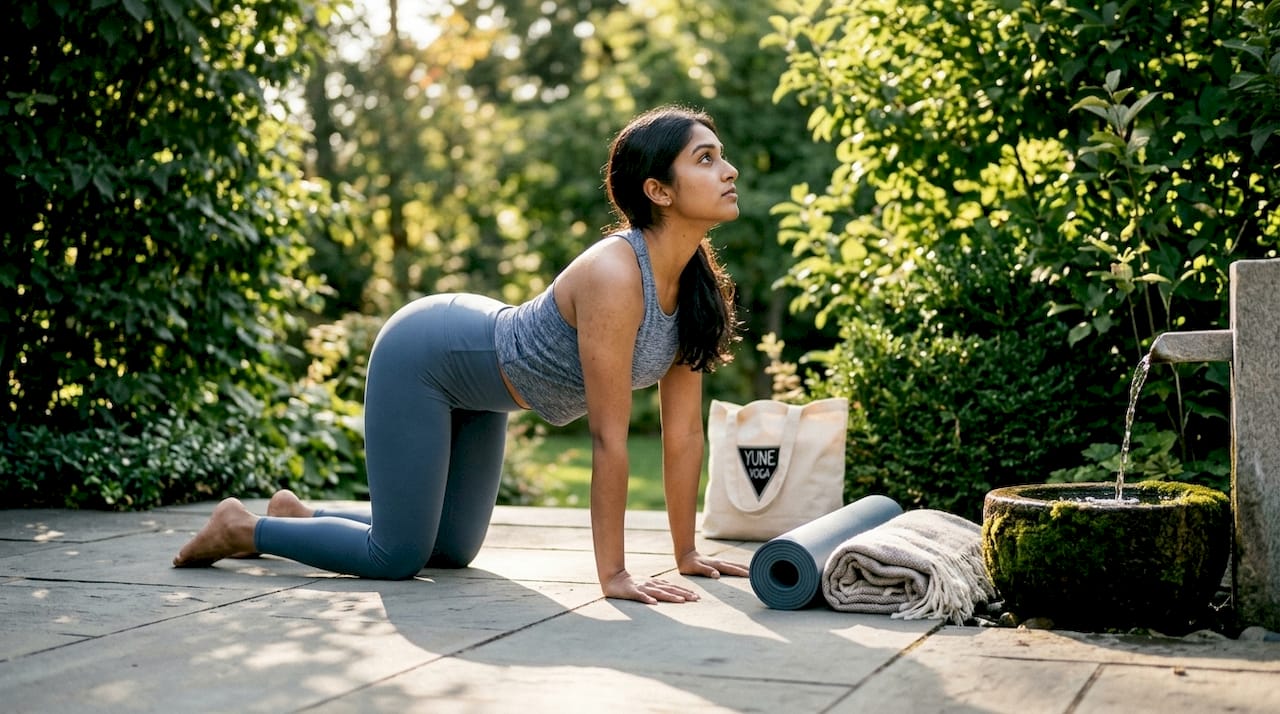
Yoga warm up exercises are movements designed to prepare the body and mind by increasing circulation, lubricating joints, and activating muscles before a yoga practice. Skipping this step is the most common mistake beginners make. Research confirms that yoga-based warm-ups improve muscle activation and cognitive-motor responsiveness significantly more than conventional dynamic warm-ups. That means your body moves better and your mind focuses faster when you warm up the right way. A proper pre-yoga warm up also reduces the risk of micro-tears in cold connective tissue, which is the kind of injury that sidelines practitioners for weeks.
What are the essential components of an effective yoga warm up?
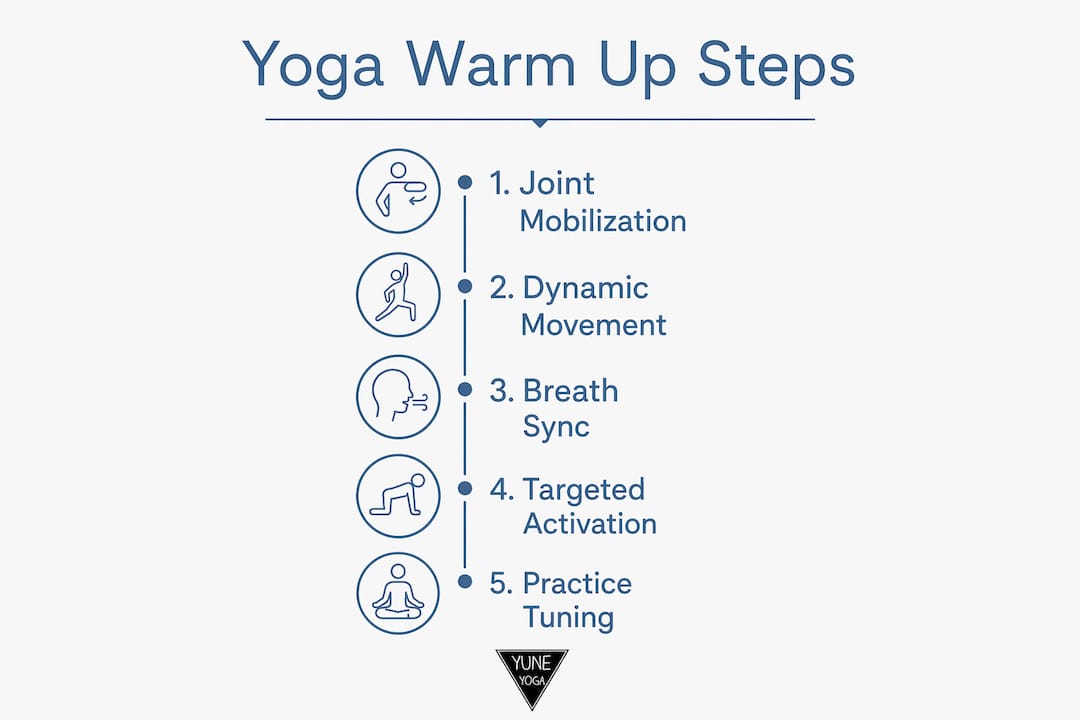
An effective yoga warm up has three core components: joint mobilization, dynamic movement, and breath synchronization. Each one serves a distinct purpose, and all three work together to prepare your body from the inside out.
Joint mobilization comes first. Gentle, circular movements coat joint surfaces with synovial fluid, the body’s natural lubricant. Without this step, cartilage stays dry and stiff, which increases friction during deeper postures. Ankle circles, shoulder rolls, and wrist rotations are the go-to moves here. They require no strength, no flexibility, and no equipment.
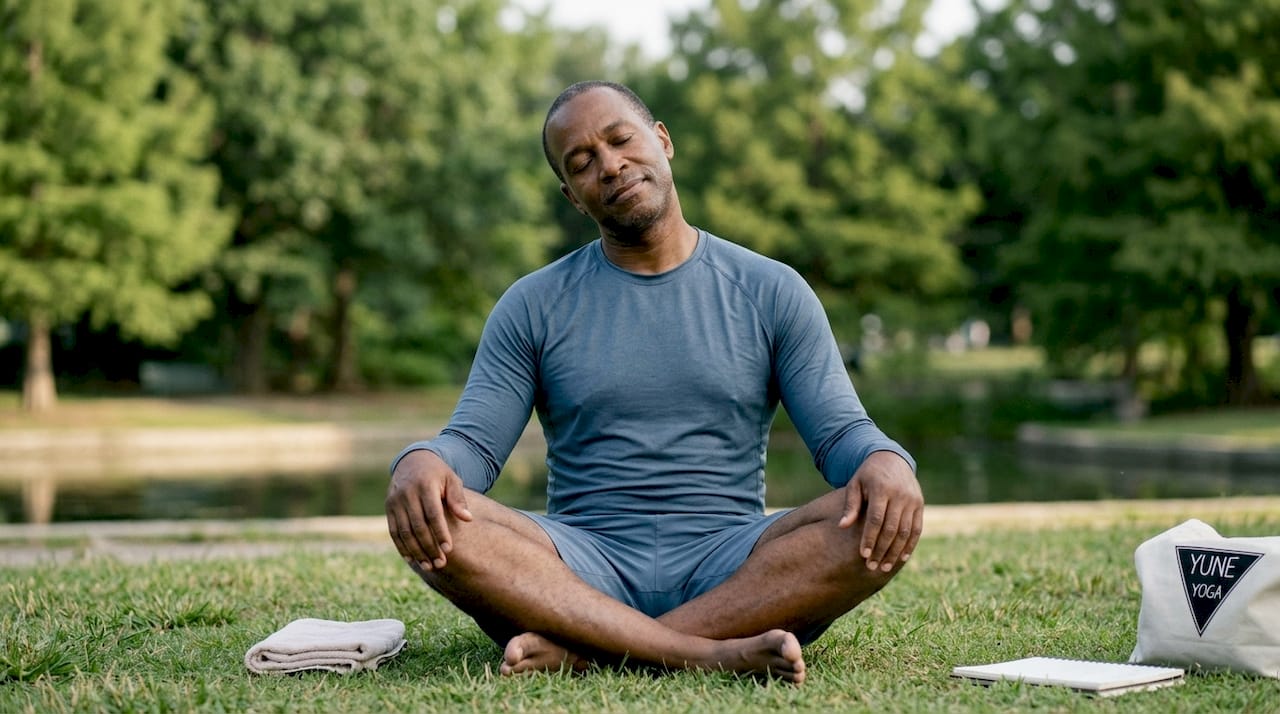
Dynamic movement follows joint mobilization. Fluid, dynamic transitions lubricate joints and build muscle elasticity far more effectively than holding a static stretch on cold tissue. Cat-Cow is the gold standard: 5–10 repetitions move the entire spine through flexion and extension, warming the paraspinal muscles and releasing tension in the lower back. Hip circles in a tabletop position add rotation to the mix, which most practitioners neglect entirely.
Breath synchronization ties everything together. Coordinated inhales and exhales optimize muscle tension and relaxation during each movement. An inhale on the extension phase of Cat-Cow, for example, naturally lifts the chest and engages the back muscles. An exhale on the flexion phase releases the spine. This is not just technique. It trains your nervous system to link breath with movement, which carries over into every pose you practice afterward.
- Ankle circles and wrist rotations: 8–10 reps each direction
- Shoulder rolls: 5 forward, 5 backward
- Cat-Cow: 5–10 slow, breath-led repetitions
- Hip circles in tabletop: 5 each direction
- Modified Sun Salutations: 3–5 rounds to close the warm-up phase
Pro Tip: Slow your exhale to twice the length of your inhale during joint circles. This activates the parasympathetic nervous system, which reduces muscle guarding and lets you move deeper without forcing.
How to structure a progressive warm up sequence for beginners
A progressive sequence prevents the nervous system from being overwhelmed by starting with simple movements and building toward complexity. Experts recommend beginning with non-weight-bearing poses before advancing to standing flows. This is the single most important structural principle for beginners.
Follow this sequence:
- Lie on your back (2 minutes). Start with supine knee-to-chest hugs and gentle spinal twists. These decompress the lumbar spine and signal the nervous system to shift from rest into readiness. No balance required, no strength demanded.
- Move to tabletop (3 minutes). Cat-Cow, hip circles, and thread-the-needle shoulder stretches all happen here. Tabletop distributes weight evenly across four points of contact, which is far less demanding than standing.
- Transition to low lunge (2 minutes). A low lunge with the back knee down opens the hip flexors, which are chronically tight in most adults who sit for work. Add a gentle arm reach overhead to engage the thoracic spine.
- Add Downward Dog with pedaling feet (2 minutes). Pedaling alternates heel presses to the floor, which dynamically stretches the calves and hamstrings without any static hold. This is the bridge between floor work and standing postures.
- Finish with 3–5 rounds of modified Sun Salutation A (3–4 minutes). Sun Salutations combine mobility, coordination, breath control, and light strength in one continuous flow. For beginners, keep the knees down in Chaturanga and step forward instead of jumping.
Pro Tip: Set a timer for each phase rather than counting reps. Beginners tend to rush through movements. A timer keeps you honest and prevents the most common mistake: treating the warm-up like a chore to finish.
Avoid these errors:
- Holding static stretches before the body is warm. Deep static holds on cold muscles increase micro-tear risk in connective tissue.
- Skipping the floor phase and jumping straight to standing poses.
- Holding your breath during any movement in the sequence.
- Rushing through repetitions to get to the “real” practice faster.
Which yoga warm up exercises most effectively activate muscles and prepare joints?
The most effective warm-up exercises target the spine, hips, shoulders, and ankles. These are the four areas most commonly involved in yoga injuries and the four areas most practitioners neglect before practice.
| Exercise | Primary target | Key benefit |
|---|---|---|
| Cat-Cow | Spine, core | Full spinal mobilization, breath coordination |
| Shoulder rolls | Shoulder girdle | Joint lubrication, upper back release |
| Hip circles (tabletop) | Hip joint, glutes | Rotational mobility, synovial fluid production |
| Low lunge with arm reach | Hip flexors, thoracic spine | Hip flexor activation, spinal extension |
| Downward Dog with pedaling feet | Hamstrings, calves, Achilles | Dynamic stretch without static hold |
| Sun Salutation A | Full body | Coordination, breath pacing, light strength |
Each exercise in this list serves a specific mechanical purpose. Cat-Cow, for instance, is not just a gentle stretch. It actively pumps fluid through the intervertebral discs, which receive no direct blood supply and depend entirely on movement for hydration. Skipping it before a practice that includes forward folds and backbends is a real risk.
Low Lunges deserve more attention than they typically get. Most beginners treat them as a hip flexor stretch and nothing more. Adding an overhead arm reach turns the pose into a thoracic extension exercise, which counteracts the forward rounding that builds up from desk work and driving. For practitioners with yoga-related injury concerns, this combination is particularly valuable.
Downward Dog with pedaling feet is the most underrated warm-up move in yoga. Static Downward Dog asks the hamstrings and calves to hold a lengthened position immediately. Pedaling alternates the stretch dynamically, which matches the principle that dynamic warm-ups facilitate joint lubrication more effectively than static holds. It also builds heat faster.
Pro Tip: In Sun Salutation, let breath pace dictate movement speed. One breath per movement is the standard. If you run out of breath mid-transition, slow down. Speed is never the goal in a warm-up flow.
How do you tailor your warm up to your practice goals?
The right warm-up depends on what you are about to do. A restorative session and a power vinyasa class require completely different preparation. Warm-ups can be adjusted in intensity and exercise selection based on session demands, and getting this right makes a measurable difference in how your body responds.
For a dynamic or vinyasa practice, prioritize activation over relaxation. Use faster breath pacing in Cat-Cow, add more Sun Salutation rounds (4–5), and include standing hip circles to prepare for Warriors and lunges. Your warm-up should raise your heart rate slightly before the main practice begins.
For a restorative or yin session, slow everything down. Spend more time in supine joint mobilization. Use longer, slower exhales throughout. The goal is not activation but a gradual shift from the sympathetic (fight-or-flight) state to the parasympathetic (rest-and-digest) state. Three rounds of slow Cat-Cow with a 4-count exhale accomplish this better than any passive stretch.
For runners and athletes using yoga as cross-training, the warm-up should address sport-specific tightness. Runners need extra attention on hip flexors, calves, and IT bands. A yoga routine for runners that includes Low Lunges, Downward Dog pedaling, and lateral hip circles directly addresses the movement patterns that running compresses.
Adjust based on these conditions:
- Morning practice: add 2–3 extra minutes of floor work. Joints are stiffer after sleep.
- Post-work practice: spend more time on shoulder and neck mobilization. Desk posture compresses the cervical spine.
- Short on time: a 5-minute sequence of Cat-Cow, hip circles, and 3 Sun Salutations covers the minimum. Do not skip it entirely.
- Managing an injury: prioritize yoga for injury rehabilitation principles and avoid loading the affected area in the warm-up.
The breath is your best real-time feedback tool. If you cannot breathe smoothly through a warm-up movement, the movement is too intense for that moment. Back off, slow down, and let the breath lead.
Key Takeaways
A well-structured yoga warm up, built on joint mobilization, dynamic movement, and breath synchronization, is the most effective way to prevent injury and improve performance in every session.
| Point | Details |
|---|---|
| Start non-weight-bearing | Begin on your back or in tabletop before moving to standing postures. |
| Avoid static holds when cold | Use dynamic movements like Cat-Cow and pedaling Downward Dog to warm tissue safely. |
| Sync breath with movement | Coordinated breathing improves muscle engagement and mental focus throughout the sequence. |
| Match warm-up to session type | Vinyasa needs activation; restorative needs a slow parasympathetic shift. |
| 10–12 minutes is enough | A focused sequence of joint circles, Cat-Cow, and Sun Salutations covers all key areas. |
Why I think most people get warm-ups completely wrong
Most practitioners treat the warm-up as a formality. They do a few neck rolls, maybe a forward fold, and call it done. That approach misses the entire point.
The warm-up is not about loosening up. It is about priming the neuromuscular system. When you move through Cat-Cow with deliberate breath, you are not just stretching your spine. You are training your nervous system to coordinate breath and movement before the demands of the main practice arrive. That coordination is what prevents the compensations that lead to injury.
What I have found, after years of practice and working with beginners, is that consistency matters far more than duration. A 10-minute warm-up done every single session produces better long-term results than a 30-minute warm-up done occasionally. The nervous system learns through repetition. Give it the same cues before every practice and it will respond faster and more efficiently over time.
The other thing most beginners get wrong is skipping the warm-up when they feel “already warm,” like after a walk or a gym session. Physical warmth and neuromuscular readiness are not the same thing. Your muscles may be warm, but your breath-movement coordination still needs calibration before yoga-specific demands. Even a 5-minute sequence of Cat-Cow and Sun Salutations does the job. Yuneyoga’s blog covers dynamic yoga practice in depth if you want to understand the mechanics behind this.
The warm-up is where your practice actually begins. Treat it that way.
— Nicholas
Yuneyoga’s resources for your warm-up practice
Knowing the right exercises is one thing. Having a structured place to practice them is another.

Yuneyoga’s blog offers guided yoga content built for every level, from first-time practitioners to experienced yogis refining their pre-practice routines. The morning yoga routines are a practical starting point, with sequences that integrate the joint mobilization and breath work covered here. For practitioners building a longer-term plan, the yoga mobility workout plan provides progressive structure that takes warm-ups from a daily habit into a full flexibility and strength program. Yuneyoga also carries eco-conscious mats and props designed to support every phase of your practice, from the first Cat-Cow to the final Savasana.
FAQ
What are yoga warm up exercises?
Yoga warm up exercises are preparatory movements that increase circulation, lubricate joints, and activate muscles before a yoga session. They typically include joint circles, Cat-Cow, and modified Sun Salutations performed in a progressive sequence.
How long should a yoga warm up be?
A warm-up of 10–12 minutes covers all key areas for most practitioners. Beginners and morning practitioners benefit from adding 2–3 extra minutes of floor-based joint mobilization.
Should you do static stretches before yoga?
Static stretches on cold muscles increase the risk of micro-tears in connective tissue. Use dynamic movements like Cat-Cow and pedaling Downward Dog first, and save deep static holds for the cool-down phase.
What is the best warm up exercise for yoga beginners?
Cat-Cow is the single best starting exercise for beginners. It mobilizes the entire spine, coordinates breath with movement, and requires no strength, balance, or flexibility to perform safely.
Can yoga warm ups improve athletic performance?
Yes. Yoga-based warm-ups produce statistically significant improvements in muscle activation and reaction time compared to conventional dynamic warm-ups, making them effective for athletes across sports.


