Article: Yoga Mat on Rough Surfaces: What Works and What Wears
Yoga Mat on Rough Surfaces: What Works and What Wears
Yes, you can roll a yoga mat out on concrete, a wooden deck, a patio or grass, but rough ground wears the underside, changes how balance poses feel and fills the top with grit. A dense, grippy rubber mat, a flat layer underneath and a quick clean afterward keep the mat safe to stand on for longer. Below is how to set up, what to watch for and when to retire the mat.
TL;DR
- Rough ground mostly attacks the bottom and edges of a mat. Rough ground, dirt, heat and sunlight are the main wear factors outdoors.
- Choose grip that holds when you sweat. Rubber and cork outperform PVC and TPE when moisture is involved.
- Put a flat blanket or towel under the mat on hard ground, and make sure it cannot slide.
- Shake off grit, wipe both sides, dry in the shade and roll up the mat only when it is dry.
- Retire the mat when it stops giving dependable traction or stable support, not on a calendar date.
Table of Contents
- What a rough surface does to a yoga mat
- Which surfaces are fine and which need care
- Choose grip that survives sweat and grit
- How to set up a mat on hard or uneven ground
- Clean the mat after every rough-surface session
- When to replace a mat that has seen rough ground
- Our perspective on mats for rough ground
- A mat built for the floor you actually practice on
- Frequently asked questions
- Sources
What a rough surface does to a yoga mat
A yoga mat is a thin layer of foam or rubber meant to sit on a floor that is flat and clean. Take it onto concrete, brick pavers, a splintery deck or gravel, and three things change.

The underside abrades. Every time you shift your weight, the base rubs against the surface. Over a season this shows up as scuffing, thinning and frayed edges. HTS Yoga’s lifespan guide says regular outdoor use usually shortens a mat’s life compared with indoor use, and that rough or textured flooring speeds up base and edge wear.
The surface gets contaminated. Dust, grass, pollen and sand collect on the top. A gritty film makes even a good mat slippery, and it is the most common reason a mat that grips well indoors feels unreliable outside.
Support becomes uneven. On a hard floor, a thin mat gives little cushioning for knees, wrists and the spine in poses like cat-cow or bridge. On grass or sand the ground itself moves under you. The Still Stride outdoor guide notes that standing balances wobble more on grass or sand, and suggests widening your stance and keeping your hardest balances for flat ground.
None of this is a reason to stay indoors. It is a reason to pick the right mat, set it up well and treat it afterward.
Which surfaces are fine and which need care
Not every rough surface is equal. Here is a practical way to sort them.
| Surface | What to expect | What helps |
|---|---|---|
| Smooth concrete (garage, patio slab) | Hard on joints, moderate abrasion on the base | Extra layer underneath, a mat with real cushioning |
| Textured concrete or brick pavers | Faster base wear, uneven pressure points | Flat blanket or towel under the mat, a dense mat that will not dig in |
| Wooden deck | Splinters, gaps between boards, heat in sun | Check the boards first, keep the mat out of direct midday sun |
| Grass | Soft but uneven, damp, balance poses feel unstable | A longer or wider layer, a stable stance |
| Sand | Shifts under weight, grit gets into everything | Shake the mat well, wipe both sides, avoid it for deep balance work |
| Gravel or sharp stone | Can puncture or gouge the base | Clear a patch first or choose another spot |
Before you unroll, walk the area. Sweep away twigs, stones and glass, and feel the surface with your hand. If it is hot or damp, wait or move. A two-minute check protects both your skin and your mat.
Choose grip that survives sweat and grit
Grip is the first thing you feel and the first thing you can lose on a mat. The Los Angeles Times yoga mat guide says poor traction can raise injury risk and break your focus, and that rubber and cork do better than PVC and TPE when sweat is involved. That matters outdoors, where heat, humidity and sun all add moisture.
Two more things to look for:
- A base that stays put on the ground. Consumer Reports tested 17 mats priced from $20 to $130 and scored each on floor grip as well as hand and foot grip. Hand grip keeps you steady in the pose. Floor grip keeps the whole mat from skating on concrete or a deck. You need both.
- Cushioning matched to the surface. Standard mats run 3 to 6 mm thick, and many yogis settle on 4 to 5 mm as a compromise between comfort and a solid connection with the floor. Very soft, thick mats can feel wobbly in balance poses, so on uneven ground, dense usually beats plush.
Consumer Reports’ lead tester Bernie Deitrick makes a point worth remembering: there is no single best mat, because the right one depends on whether you carry it to the gym, practice on carpet or roll it out on a hard surface. That is why the magazine reports separate scores instead of one ranking. For rough ground, the scores that matter most are floor grip, wet grip and how the mat holds up.
For outdoor practice specifically, our guide to choosing a yoga mat for outdoor use goes through the choice in more detail.
How to set up a mat on hard or uneven ground
- Pick the flattest spot. Even a slight slope turns every forward fold into a slide. Shade is better than full sun, because heat makes the ground and the mat uncomfortable.
- Clear the surface. Sweep or brush off grit. Anything left will press into the base and rub through it.
- Add a layer if the ground is hard. The Still Stride guide says a thin blanket, tarp or towel under the mat adds cushioning and keeps the underside cleaner. The catch: it has to lie completely flat and not move, because a sliding base can be more dangerous than bare ground. Smooth the layer out and step on the corners before you unroll the mat.
- Unroll and press down. Run your hands over the mat to flatten it and check that the corners are not curling.
- Test the footing before you flow. Press into a low lunge or downward dog. If the mat creeps, fix the base before you go further.
- Adjust the practice, not just the gear. Use a wall, fence or tree trunk to steady balance poses, widen your stance and move the hardest balances to a flat indoor spot.
A towel works well on top of the mat too. A grippy yoga towel on the mat’s surface gives you extra hold when your hands are damp, and it keeps sunscreen and sweat off the mat itself.
Clean the mat after every rough-surface session
Outdoor grime is not just cosmetic. Grit works into the surface and reduces grip, and a damp mat packed away can pick up odors and mildew. The routine is short.
- Shake it out. Get rid of loose dirt, grass and sand first so you do not rub it in.
- Wipe both sides. The Still Stride guide recommends a damp cloth, or a cleaner suited to the mat’s material. For a deeper clean, the Cleveland Clinic suggests a few drops of dish soap in warm water, a gentle scrub with a rag, a rinse and air drying. It adds that a mat only needs this when it is visibly dirty.
- Dry in the shade. Direct hot sun is hard on mats, so lay it flat or hang it in a shaded, airy place.
- Roll only when fully dry. Storing a damp mat is how mildew starts.
If you want step-by-step cleaning for rubber, our guides on cleaning and maintaining your mat and drying a mat by material cover it. If sunscreen has left a slick film on the surface, see how to clean sunscreen off a yoga mat.
When to replace a mat that has seen rough ground
Mat life depends on material and use. HTS Yoga says lightweight TPE mats generally last one to two years under regular use, with compressed areas, edge damage and curl as common end-of-life signs. Outdoor mats wear faster, so go by function rather than the calendar. The same guide says a mat’s usable life ends when it can no longer offer dependable traction, even support, stable footing or a surface you can clean.
Check these signs after rough-surface sessions:
- The base is shiny, thin or shredding at the edges.
- The mat slides on the floor even when the floor is clean.
- Hands or feet slip on a surface you have just cleaned.
- There are dents or hollows where your knees and hands usually go.
- Corners curl and will not lie flat.
Any one of these is a safety issue, not a cosmetic one. A mat that slips is a risk in every pose.
Our perspective on mats for rough ground
We think the best way to protect your outdoor practice is to stop asking one mat to do every job. Rough ground is demanding, and a mat that is dense, grippy and made from natural materials is a better starting point than a soft sheet that was never meant to leave the studio.
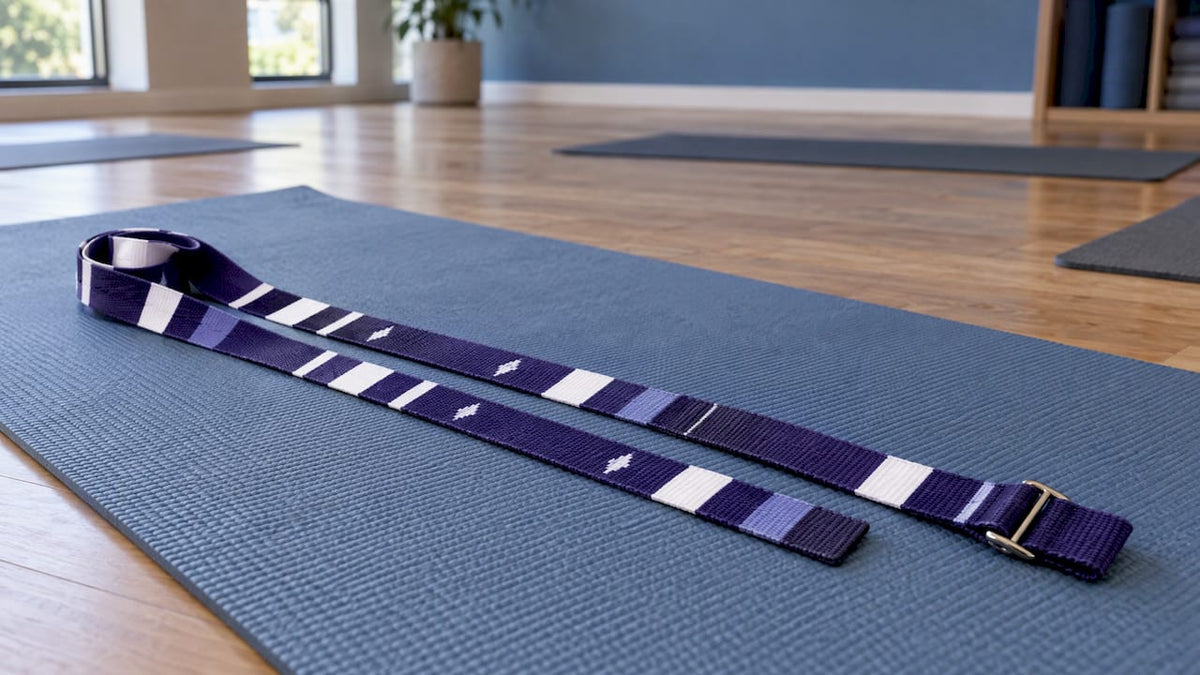
That is why our range centers on natural rubber and eco-conscious materials. Rubber is known for gripping well when you start to sweat, and we design our mats and accessories to work together: a non-slip rubber mat for the base, a towel for damp hands and a strap for stretching in the shade of a tree.
For travelers, we also make foldable mats, because the mat you can pack is the mat you will actually use at the park, the beach or a hotel patio. Wherever you practice, set it on a clear, flat spot and look after it, and it will keep supporting you.
Nicholas
A mat built for the floor you actually practice on
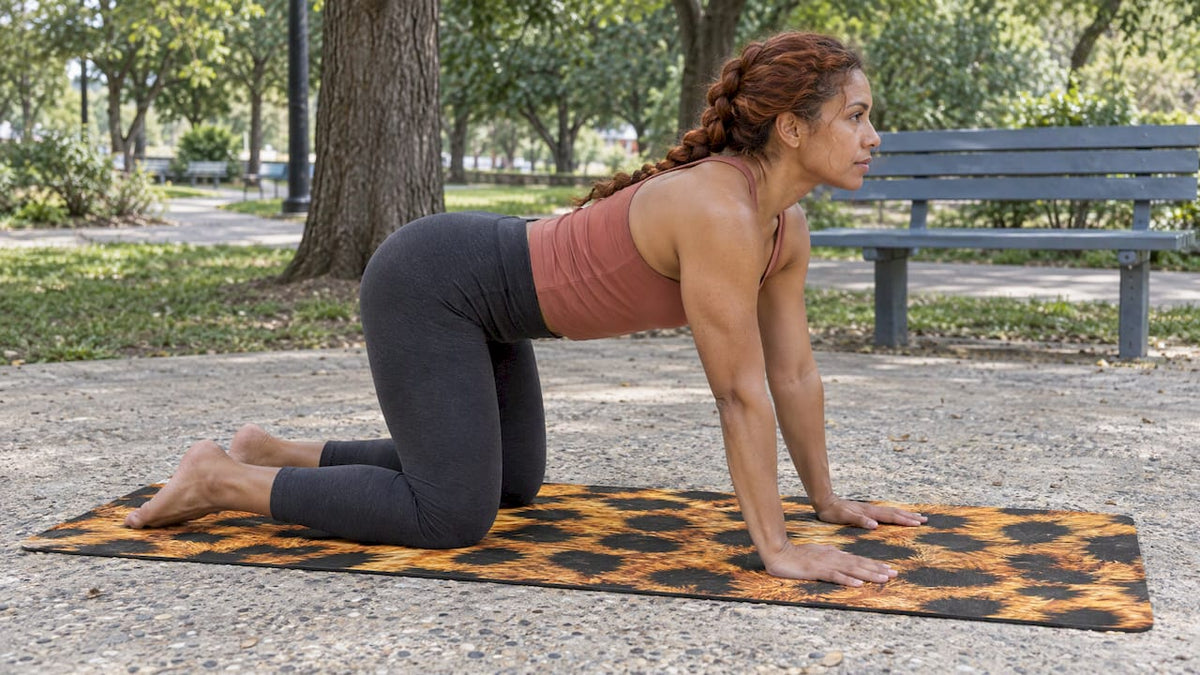
If your practice moves between the living room, the deck and the park, start with a mat that grips on both the floor and your hands. Our non-slip rubber yoga mat is made of rubber, and it also comes in black camo and grey camo. We also carry natural rubber, eco, foldable and foundational mats, plus yoga towels and straps, so you can build a full outdoor kit in one place.

Browse the full range on the Yune Yoga homepage, or look at yoga clothes and accessories to finish the set.
Frequently asked questions
Can I use a yoga mat on concrete?
Yes. Sweep the area first, put a flat blanket or towel underneath for cushioning and keep the layer from sliding. Concrete will wear the base faster than a wood or carpeted floor, so check the underside regularly and replace the mat when traction or support fades.
How do I make my yoga mat grippier outdoors?
Start with a clean mat, since dirt and body oils are the usual cause of slipping. Shake off grit and wipe both sides after each session, and choose rubber when you expect to sweat. A yoga towel on top gives your hands extra hold when they get damp.
Is a thicker mat better for rough surfaces?
Not necessarily. Standard mats are 3 to 6 mm thick, and many yogis find 4 to 5 mm a good balance between comfort and feeling the floor. Very soft mats can make balance poses wobbly, so a dense mat with a flat layer underneath is usually steadier.
How do I clean a mat after practicing outside?
Shake it out, wipe both sides with a damp cloth, or use a few drops of dish soap in warm water for a deeper clean. Rinse, then dry it fully in the shade before rolling it up. Storing it damp can cause odors and mildew.
Sources
- Best Yoga Mats, Consumer Reports
- Yoga Mat Guide: Choosing the Right Thickness, Grip, and More, Los Angeles Times
- How Long Do Yoga Mats Last? Lifespan and Replacement Signs, HTS Yoga
- Practicing yoga outdoors with your mat, Still Stride
- How (and Why) You Should Clean Your Yoga Mat, Cleveland Clinic