Yoga Rug vs Mat: Which Surface Actually Fits Your Practice?
Pick a rug or a rug-over-mat setup if you sweat heavily or practice hot vinyasa and Ashtanga; pick a mat with 4 to 6 millimeters of cushioning if you need joint support or you’re new to balancing poses; pick a thin travel mat or a foldable rug if packing light matters most. The real trade-off comes down to grip behavior, cushioning, and how easily you can wash the thing. Yune Yoga carries eco-friendly mats and towels built around exactly these trade-offs.
TL;DR:
- Choosing between a rug or a mat depends on sweat level, with rugs offering better moisture-activated grip for hot practices and mats providing joint support.
- Cotton rugs are lightweight, biodegradable, and machine-washable but lack cushioning, requiring layering for joint comfort on harder floors.
- Grip performance varies with moisture; cotton rugs improve grip when damp, while synthetic mats tend to get slick when wet, requiring additional grip aids.
- Thicker mats (6mm or more) support joint pain, but do not prevent slipping, so layering with towels or rugs remains essential during heavy sweating.
- Prioritize material and layering strategies over price, testing grip with simple home assessments and aligning gear choices with your specific practice needs.
Table of Contents
- Material and Construction: Cotton Rugs vs. PVC, TPE, Rubber, and Cork Mats
- Do Rugs or Mats Grip Better When You Sweat?
- How Do Thickness and Density Affect Balance and Joint Comfort?
- Washing a Rug vs. Wiping Down a Mat
- Who Should Use a Rug, Who Should Use a Mat?
- Setting Up a Rug, a Mat, or Both Together
- A Six-Question Checklist Before You Buy
- What Actually Matters When You’re Choosing Between the Two
- Building Your Setup Around What You Actually Need
- Sources
Material and Construction: Cotton Rugs vs. PVC, TPE, Rubber, and Cork Mats
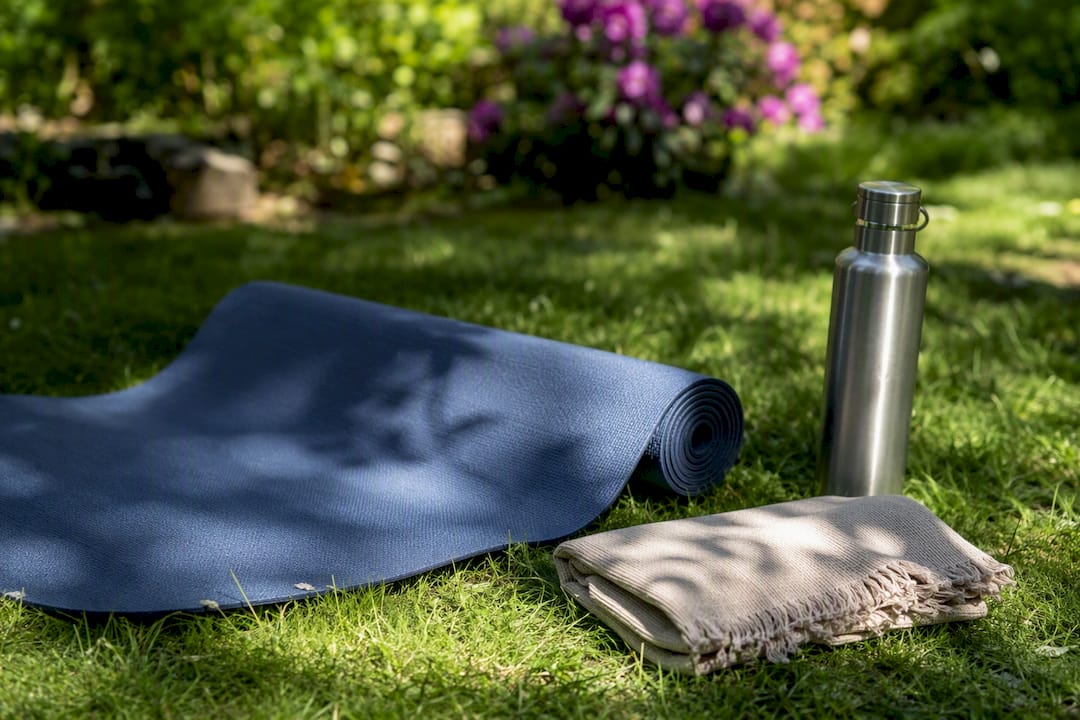
A yoga rug is a woven cotton textile, often handloomed, with no built-in cushioning. A yoga mat is a molded slab of foam or rubber, ranging from PVC and TPE to natural rubber and cork-topped composites. That structural difference explains almost everything else about how they perform.
Rug weave density affects how much moisture the fabric can absorb before it starts sliding around on the floor beneath it. Denser weaves last longer and behave more predictably once damp. Mats split into two camps: closed-cell foams (PVC, TPE) that resist water absorption but can turn slick when wet, and open-cell rubber or cork tops that soak in moisture and actually grip better because of it.
Practical fallout from these choices:
- Weight and packability: a folded cotton rug typically weighs less than a rubber mat of comparable size, which matters for travel.
- Smell and off-gassing: PVC mats can carry a chemical odor when new; natural rubber and cork are largely odor-free but heavier.
- Sensitivities: natural rubber contains latex, a problem for anyone with a latex allergy; cotton rugs sidestep that issue entirely.
- End of life: a 100% cotton rug is biodegradable, while most synthetic mats are not.
For a deeper look at how mat composition changes over time, Yune Yoga’s guide to different yoga mat materials breaks down each option by density and longevity.
Do Rugs or Mats Grip Better When You Sweat?
Dry grip and wet traction are two separate problems, and confusing them is why so many people buy the wrong surface. Dry grip is what keeps your hands from sliding during the first five minutes of class. Wet traction is what keeps you upright once you’re twenty minutes into a heated flow and your palms are slick.
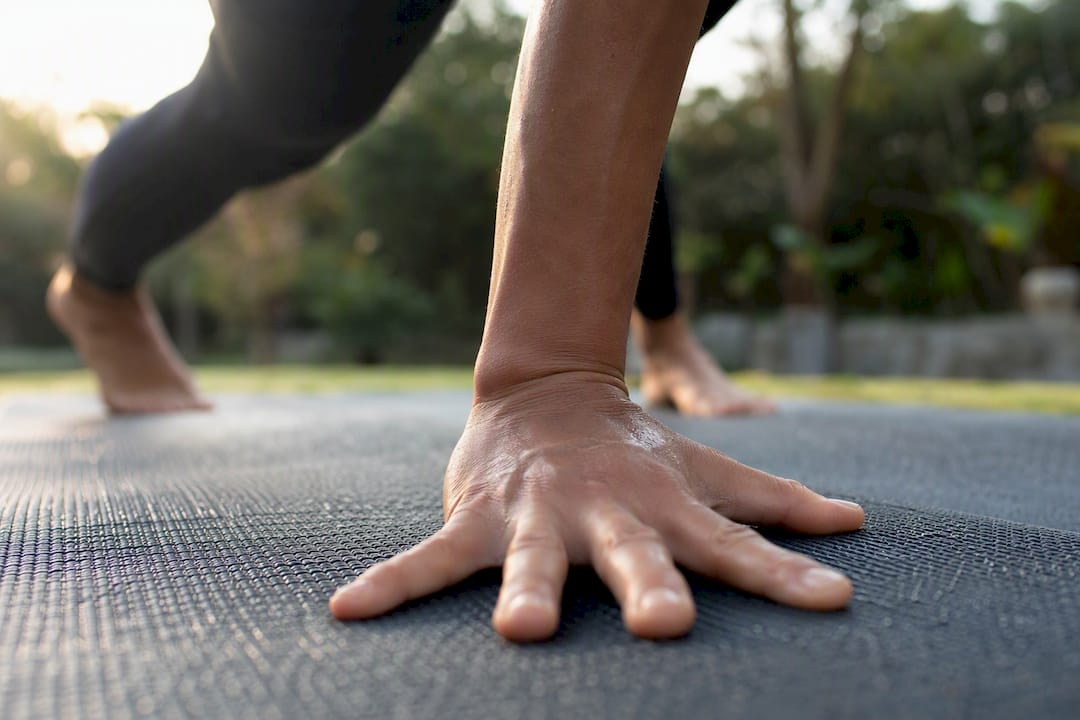
Cotton rugs behave almost backward from what beginners expect. A rug that feels slightly slippery when dry gains grip as it absorbs sweat, which makes it well suited to hot or dynamic practice once your body starts producing moisture. Most closed-cell synthetic mats do the opposite: they hold a confident dry grip but can get slick once sweat pools on the surface. Open-cell rubber and cork tops split the difference, since cork actually becomes grippier with moisture and carries natural antimicrobial properties.
Two quick home tests tell you what you’re actually dealing with before you get to class:
- Palm-press test: drop into down-dog and lean your weight forward onto your palms; if they slide even slightly, that surface will fail you in a heated room.
- Toe-roll test: place your toes near the front edge and shift your weight to check for sliding at the mat’s edge.
If either test fails, a towel underneath, a light misting of the surface, or a rug layered over your existing mat fixes it fast.
Pro Tip: If you sweat through class regularly, prioritize wet traction over everything else, including thickness and weight. A cushioned mat that turns into a slip hazard at minute twenty isn’t doing you any favors.
How Do Thickness and Density Affect Balance and Joint Comfort?
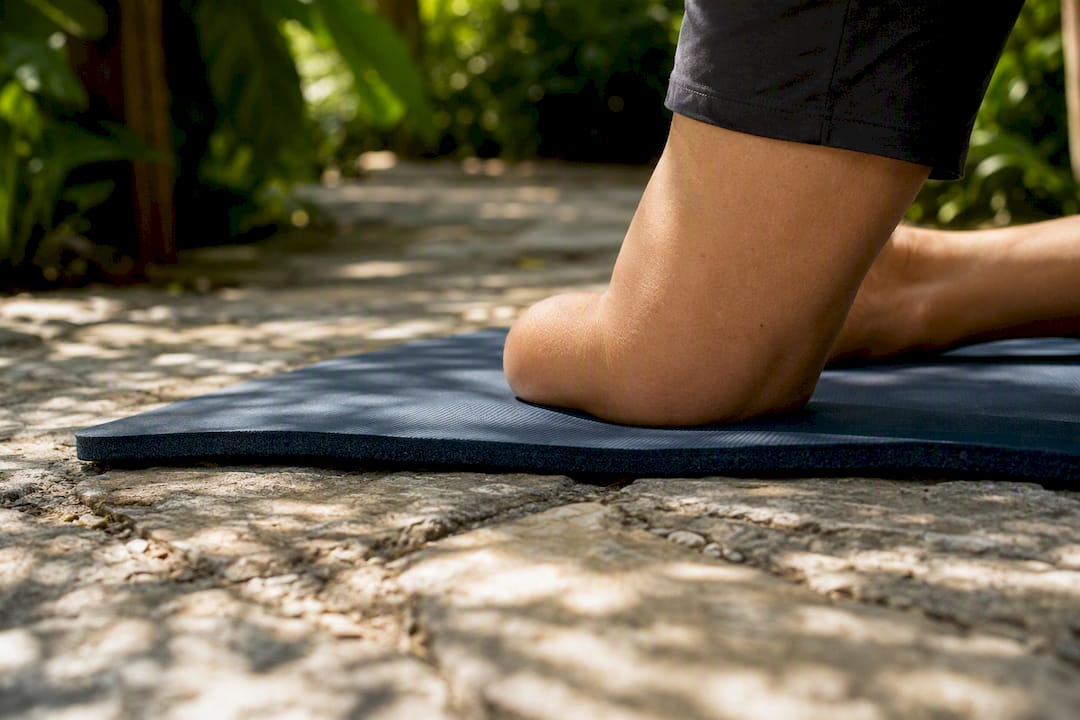
Thickness and stability pull in opposite directions, and most buyers don’t realize that until they’re wobbling through tree pose on a mat that’s too soft. Around 4 to 5 millimeters works as an all-rounder, balancing cushioning against a stable base. Thinner mats favor travel and standing balance. Thicker mats help sore knees and wrists but can make single-leg poses feel unsteady.
Rugs skip this trade-off entirely because they offer almost no cushioning on their own. That’s fine on carpet, less fine on hardwood or tile during long holds. A few fixes:
- Double-fold the rug under your knees for kneeling poses like camel or cat-cow.
- Add a folded blanket under seated poses if your hips or tailbone need relief.
- Layer the rug over a thin mat rather than buying a second cushioned surface separately.
Taller practitioners should also check length before thickness. Yune Yoga’s guide to extra-long mats covers sizing if a standard 68-inch mat leaves your heels hanging off the edge.
Washing a Rug vs. Wiping Down a Mat
Cotton rugs tolerate a washing machine because the material is a woven textile, not a bonded foam. That’s the single biggest hygiene advantage a rug has over a mat.
- Wash rugs weekly if you sweat heavily, monthly if your practice runs cooler and gentler, and always air-dry flat to avoid shrinkage.
- Wipe mats down after every use with a damp cloth and mild soap; soaking or machine-washing most foam and rubber mats degrades the material over time.
- Store both flat or loosely rolled, away from direct sun, since UV exposure dries out rubber and fades cotton.
Skip either routine and you’re looking at odor buildup or, worse, mildew creeping into the fibers. Yune Yoga’s mat care guide walks through drying times by material if you want the specifics for a rubber or cork surface.
Who Should Use a Rug, Who Should Use a Mat?
Match the surface to your actual practice, not to what looks good in a studio photo.
- Hot yoga, Ashtanga, dynamic vinyasa: a rug, or a rug layered over a thin mat, handles heavy sweat without sacrificing hygiene.
- Beginners and balance-heavy styles: a mat with moderate thickness gives the stable, predictable surface new practitioners need while they’re still learning alignment.
- Anyone with joint pain in knees, wrists, or hips: a thicker mat, in the 6 millimeter-plus range, absorbs impact a rug simply can’t.
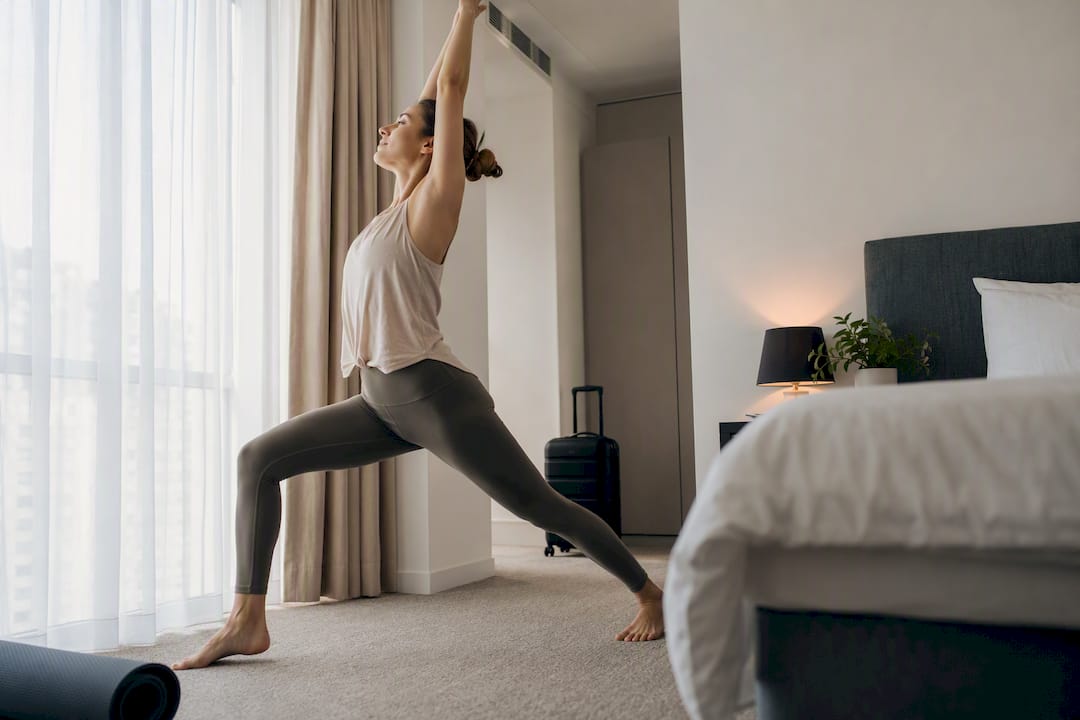
- Frequent travelers: a foldable rug packs smaller and lighter than almost any mat, though a dedicated travel mat closes that gap if you still want cushioning on the road.
- Latex-sensitive practitioners: cotton rugs and TPE mats avoid the allergy risk that comes with natural rubber.
Hot yoga studios specifically benefit from slip-resistant, hygienic surfaces, which is exactly what Yune Yoga’s hot yoga mat picks are built around.
Setting Up a Rug, a Mat, or Both Together
Layering is the practical answer for most people who don’t want to choose one surface forever.
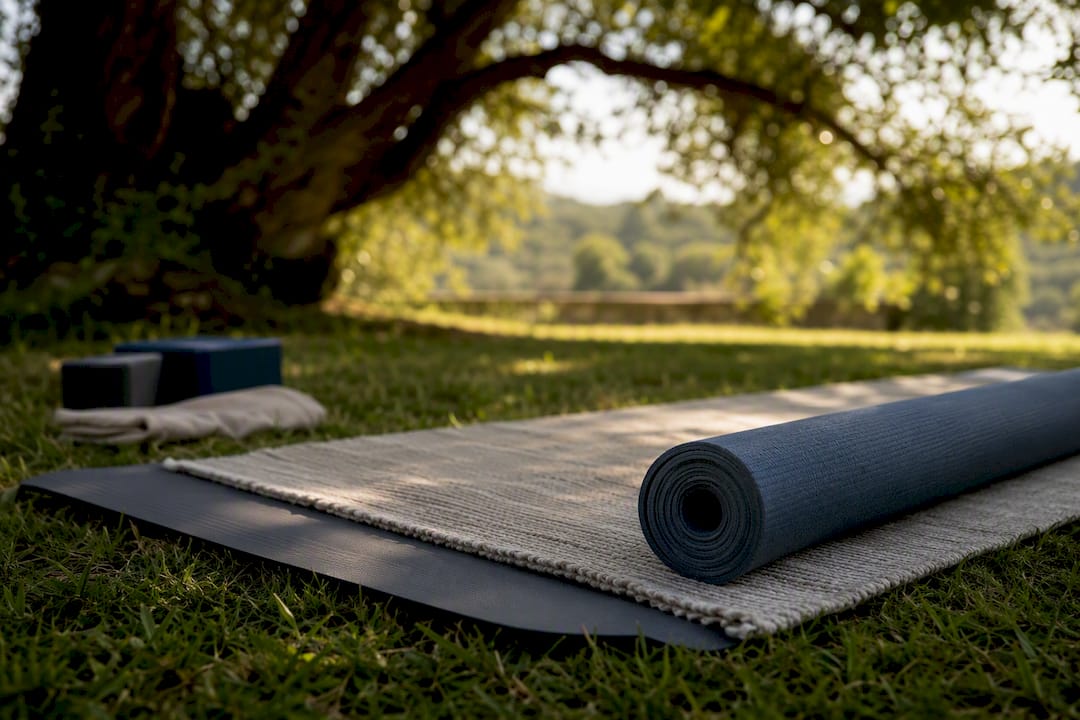
- Lay your mat down first for cushioning, then unroll the rug on top for a washable, sweat-ready surface.
- On hardwood or tile, add a thin rubber underlay or choose a rug with a rubberized backing so it doesn’t creep during transitions.
- For hot classes without a rug, keep a quick-dry microfiber towel on hand and wring it out between sets rather than letting it saturate.
- Fold rugs in thirds, not tight rolls, before packing them for travel, since tight rolls create permanent creases.
Pro Tip: Keep a second towel folded at the top of your mat specifically for wiping your hands during standing balance sequences. It takes five seconds and prevents most mid-flow slips. Yune Yoga’s towel guide for slip-free practice covers which fabrics absorb fastest.
A Six-Question Checklist Before You Buy
Run through these six questions in order, and the answer tends to fall out on its own:
- Do you sweat heavily or take hot classes? Choose a rug or a rug-over-mat setup for washable, moisture-activated grip.
- Do you have knee, wrist, or hip pain? Choose a mat with thick cushioning for more joint protection.
- Do you travel often? Choose a foldable rug or a dedicated thin travel mat.
- Are you sensitive to latex or synthetic smells? Choose cotton or TPE over natural rubber.
- What’s your floor type at home? Hardwood and tile need a rug with backing or an underlay; carpet is more forgiving either way.
- Do you want to machine-wash your surface? Only rugs offer that option outright.
| Priority | Best surface | Key spec |
|---|---|---|
| Sweaty, hot, dynamic practice | Rug or rug + mat | Cotton, machine-washable |
| Joint support | Mat | 6mm+ thickness |
| Travel and packing light | Foldable rug or travel mat | Under 3mm or foldable cotton |
| Latex sensitivity | Rug or TPE mat | No natural rubber |
Before you commit to a purchase, match support, grip, and portability to your primary use case rather than shopping by price first. Try the palm-press test on whatever surface you currently own, then pick one small experiment this week: borrow a rug from a studio friend, or order a quick-dry towel and see how your existing mat performs once it actually gets tested under sweat.
What Actually Matters When You’re Choosing Between the Two
Most yoga gear guides treat this as a binary choice, rug or mat, when the more honest answer is that the binary itself is the problem. The practitioners who get the most out of their gear are the ones who stop trying to find one perfect surface and start thinking in layers instead.
Here’s what gets underestimated: cushioning and grip are not the same axis, and treating them as one leads people to buy a thick, plush mat expecting it to also solve their sweat problem. It won’t. A 6 millimeter mat with beautiful joint support can still turn into a slip hazard the moment sweat hits closed-cell foam. The fix isn’t a thicker mat. It’s a towel, a rug, or a material change entirely.
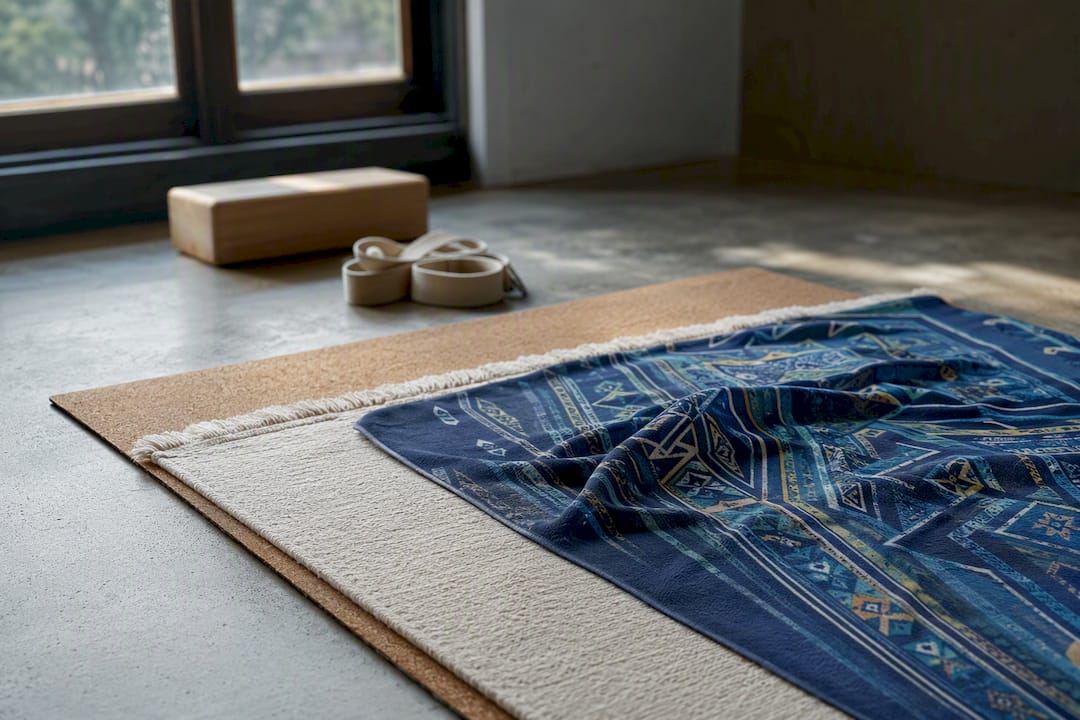
The sustainability angle also deserves more weight than it usually gets. A handloomed cotton rug is genuinely one of the lower-impact options on the market, biodegradable and machine-washable in a way no PVC mat will ever be. But that only holds if you’re honest about the trade-off: you’re giving up cushioning to get there, and most people quietly reintroduce a mat underneath within a month anyway.
If there’s one piece of conventional wisdom worth pushing back on, it’s the idea that grip is a fixed property of a material. It isn’t. It’s a relationship between that material and moisture, and the practitioners who understand that relationship stop guessing and start matching gear to the specific class they’re walking into.
— Nicholas
Building Your Setup Around What You Actually Need
Once you know whether wet traction or joint cushioning matters more to you, shopping gets a lot simpler. Yune Yoga’s eco-friendly rubber and cork mats are built for practitioners who want grip that improves under sweat rather than fails under it, and the microfiber towel lineup covers the layering strategy this article walks through for hot or dynamic classes.

If travel is the deciding factor, the foldable travel mats pack down small without giving up the cushioning a rug alone can’t provide. Every product on the site is chosen with the same standard used throughout this comparison: real material trade-offs, not marketing claims. Browse the current lineup at Yune Yoga and match your next purchase to whichever question on the checklist mattered most to you.
Sources
- 4 Yoga Rugs That Might Make You Ditch Your Mat—For Good — Yoga Journal
- How to choose a yoga mat by thickness, material, grip, size, and weight — Kit Authority
- How to Choose a Yoga Mat (2026): What to Look For — HTS Yoga
- Yoga Rug vs. Yoga Mat: Grip, Care, and How to Choose — International Yoga Conference