What a Yoga Mat Really Costs in 2026
Expect to pay $20 to $35 for a basic budget mat, $35 to $80 for a reliable everyday mat that will actually hold up, and $88 or more for a premium natural rubber or specialty build. If you practice twice a week or more, spend in that middle “sweet spot” range. Casual, occasional practitioners can stay in the budget tier without regret. Daily practitioners and anyone doing hot yoga should push toward premium, because grip and durability start mattering more than the sticker price.
The real test isn’t the price tag. It’s cost-per-use: divide what you paid by how many times you’ll actually roll it out. A $90 mat that lasts three years often costs the same per session as a $30 mat that dies in one.
- Budget ($20–$35): basic PVC or TPE, fine for occasional practice
- Sweet spot ($35–$80): better materials, noticeably better grip and lifespan
- Premium ($88+): natural rubber, cork, or hybrid builds for daily use
- Studio/bulk: as low as $7–$18 per mat when buying in volume
Yuneyoga’s natural rubber and eco-friendly mats sit in that mid-to-premium range for a reason: the materials cost more upfront and save money over years of practice.
TL;DR:
- Spending in the $35 to $80 range offers the best balance of durability, grip, and lifespan for regular yoga practitioners practicing two or more times weekly.
- Natural rubber, cork, or hybrid mats in the premium tier provide the best long-term value for daily use and hot yoga due to their superior grip and durability.
- The main factor influencing price is the material; natural rubber and cork mats cost more but last longer and perform better than PVC or TPE equivalents.
- Mats bought in bulk or for studio use cost as little as $7 to $18 each, but these are usually lower grade meant for shared or occasional use.
- For infrequent practice, budget mats priced $20 to $35 are sufficient; frequent or daily users should invest in higher-tier mats to optimize cost-per-use and reduce replacement frequency.
Table of Contents
- How Much Does a Yoga Mat Cost by Price Tier?
- What Actually Drives Yoga Mat Pricing?
- How Much Should You Spend Based on How Often You Practice?
- How Long Does a Yoga Mat Last and What’s the Cost Per Use?
- What Should You Check Before Buying a Yoga Mat?
- Why Yune Yoga Is a Trustworthy Place to Buy
- The Real Mistake Buyers Make on Price
- Get a Mat That Actually Matches Your Practice
- Key Takeaways
- Sources
How Much Does a Yoga Mat Cost by Price Tier?
Yoga mat pricing breaks into four practical tiers, and each one tells you something specific about what you’re buying, not just how much you’re spending.
- Budget tier ($20 to $35). These mats are typically PVC or basic TPE, thin (around 3 to 4mm), and built for occasional stretching rather than serious flow practice. Grip is average at best, and the material tends to compress or peel within a year of regular use. Fine for someone testing whether yoga is even for them.
- Sweet spot tier ($35 to $80). This is where most regular practitioners should land. Material quality jumps noticeably here, thickness options widen (4mm to 6mm), and grip performance improves enough that you stop sliding out of downward dog halfway through class. The ExerciseLean cost-per-use analysis treats this range as the point where durability starts paying for itself.
Here’s a stat worth sitting with: the 2026 market data shows a clear split between mats built for occasional users and mats built to survive daily wear, with almost nothing meaningfully priced in between $80 and $88. That gap isn’t an accident. It’s roughly the point where manufacturers switch from synthetic foams to natural rubber, and the material cost jumps accordingly.
Retailers rarely advertise which tier a mat belongs to outright. A $45 mat and a $95 mat can look nearly identical in a product photo, and the difference only shows up after six months of sweat, folding, and washing.
What Actually Drives Yoga Mat Pricing?
Material is the single biggest lever on price, and it’s not close. Rubber and cork hybrids command a real premium over PVC and TPE, which dominate the lower end of the market. Here’s what’s actually behind that gap:
- Material family: PVC is cheapest to produce but least breathable and hardest to recycle. TPE splits the difference on cost and eco-friendliness. Natural rubber costs more to source and process but grips better wet or dry and lasts years longer. Cork adds a naturally antimicrobial surface at a further premium.
- Thickness and density: A thicker mat (6mm+) cushions joints but sacrifices stability for balance poses; a thinner, denser mat (3 to 4mm) gives you better ground connection at the cost of comfort on hard floors. Density, not just thickness, is what determines how long a mat resists compression.
- Surface finish: Textured or “closed cell” surfaces that resist sweat absorption and bacteria growth cost more to manufacture than a flat, smooth surface.
- Size and warranty: Extra-large or extra-wide mats use more material and cost more; mats backed by a multi-year warranty typically signal a manufacturer confident in the build.
- Eco-certifications and supply chain: Certified natural rubber, biodegradable materials, and closer-to-source manufacturing all add cost, but they also tend to correlate with better quality control.
That last point deserves a real caveat. “Eco-friendly” and “non-toxic” are marketing terms without a strict legal definition on most yoga mat packaging, so a green label doesn’t automatically mean the mat is free of concerning additives. If chemical safety matters to you, particularly around phthalates used in some PVC formulations, the EPA’s guidance on phthalates and chemical assessment is the actual authoritative reference, not a brand’s own claims. A mat marketed as “eco” should be able to point to a specific certification or third-party test, not just the word itself.
Size and format choices also swing price. A wider mat built for stability or an extra-large format will cost more than a standard-size mat in the same material tier, simply because it uses more raw material.
How Much Should You Spend Based on How Often You Practice?
The honest answer depends entirely on how often you’re actually stepping onto the mat, not on what looks impressive at checkout.
- Casual users (once a week or less). A $20 to $35 budget mat is genuinely fine. You’re not putting in enough mileage to justify the premium tier, and a basic PVC or TPE mat will hold up reasonably well at this frequency.
- Regular users (two to four times a week). This is where the $35 to $80 sweet spot earns its name. You’re using the mat often enough that grip and durability matter, but not so often that you need studio-grade rubber. Reviewer consensus treats this as the range where quality improvements become noticeable in daily use.
- Daily or committed practitioners. Spend $88 and up on natural rubber or a high-performance hybrid. Expert reviewers note that a $100-level mat is often a reliable multi-year investment for someone practicing daily, and at that frequency the cost-per-use math strongly favors paying more upfront.
- Specialty needs. Hot yoga demands a mat with serious wet-grip performance, usually natural rubber or a dedicated sweat-resistant surface, regardless of how often you practice. Travelers should look at foldable, lightweight mats even if it means sacrificing some cushioning. Restorative practitioners benefit from an extra-thick mat built for prolonged floor poses, which typically costs more than a standard-thickness mat in the same material.
Pro Tip: Don’t buy premium the first time you try yoga. Start in the sweet spot, see how often you actually practice after three months, and upgrade to premium only once your habit is proven.
How Long Does a Yoga Mat Last and What’s the Cost Per Use?
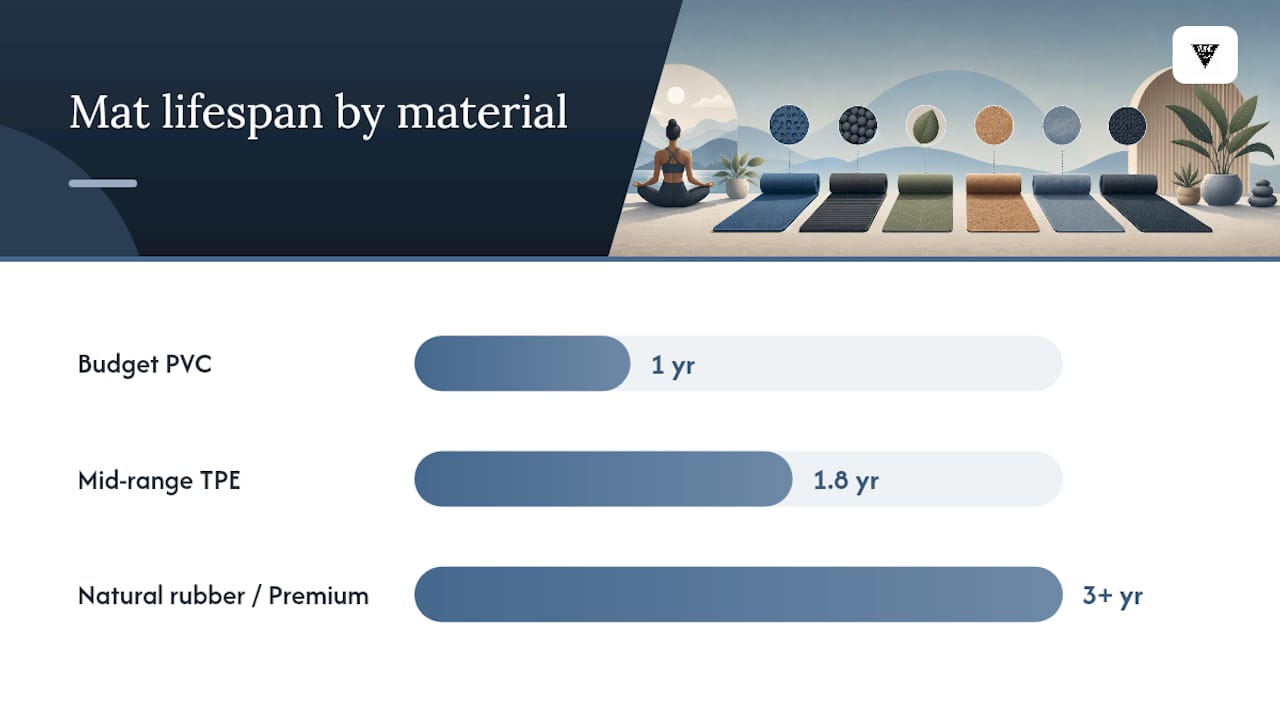
A budget PVC mat used a few times a week typically lasts about a year before it starts flaking, losing grip, or developing a permanent odor. A mid-range TPE mat under similar use can stretch to 18 months to two years. Natural rubber and premium hybrids, especially ones tested by outlets that track long-term durability, regularly last three years or more under daily practice.
Watch for these replacement signals rather than going by calendar age alone:
- Visible flaking or peeling material, especially at the edges
- Grip that has gone slick or feels noticeably worse than when new
- A persistent rubber or chemical odor that doesn’t fade after airing out
- Permanent compression marks or dents from hand and foot placement
The math that actually matters is price divided by number of uses. Take a $30 budget mat used twice a week for one year: that’s roughly 104 sessions, for a cost of about $0.29 per use. Now compare a $90 mid-range mat used the same twice a week, but lasting three years instead of one: that’s about 312 sessions, landing at the same $0.29 per use.
The three mats land at nearly identical cost-per-use, but that’s exactly the point: the premium mat gets you there with fewer replacements, less landfill waste, and better performance the entire time you own it. A durability breakdown of what actually determines mat lifespan backs up why some materials simply outlast others at the same use frequency.
What Should You Check Before Buying a Yoga Mat?
A little diligence before checkout saves you from the classic mistake: buying based on color and price alone, then discovering the grip fails the first time you sweat on it.
- Check the thickness and material listed in the product description, not just the photo, since thin mats often look identical to thick ones online.
- Read at least three reviews that mention grip specifically, since that’s the detail most first-time buyers overlook.
- Look for a stated warranty length. A manufacturer willing to back a mat for a year or more is signaling confidence in the build.
- Check the return policy before buying, especially for online purchases where you can’t test grip or texture in person.
- If a listing claims “eco-friendly” or “non-toxic,” look for a named certification or material specification rather than accepting the label at face value.
Pro Tip: If you’re shopping online, search the product name plus “long-term review” instead of relying on star ratings alone. A mat can have great initial reviews and still fall apart after six months, and that pattern only shows up in longer-term feedback.
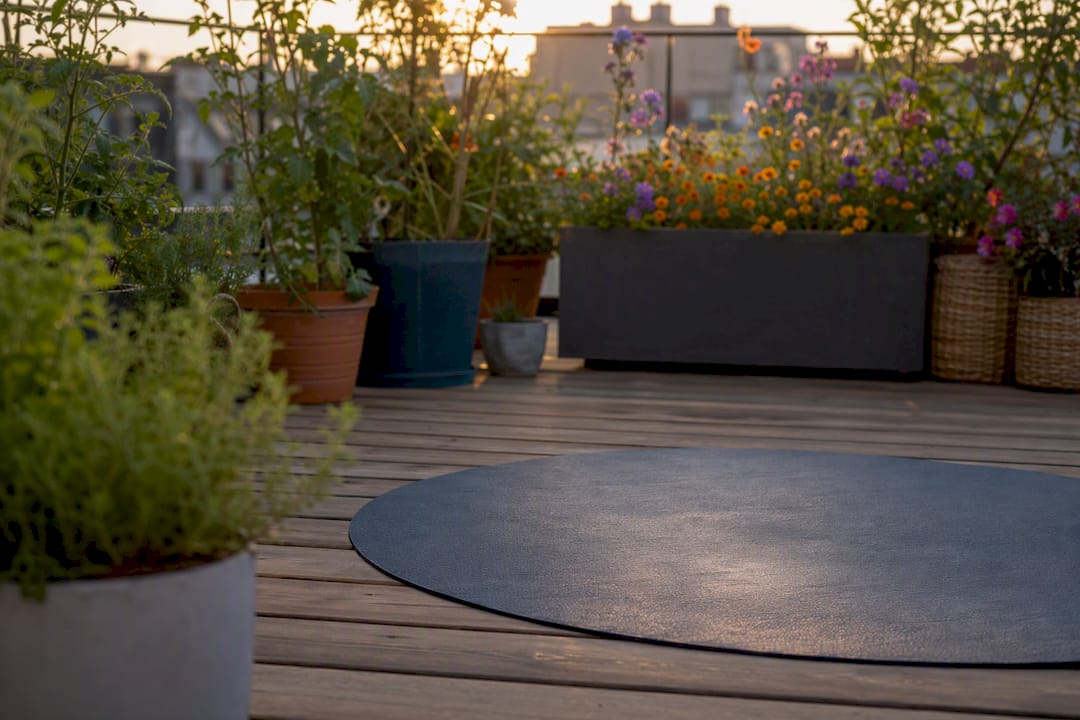
For mats with unusual dimensions or shapes, like round mats or uniquely designed options, pay extra attention to how they’ll fit your actual practice space before buying, since these formats aren’t always returnable once used.
Why Yune Yoga Is a Trustworthy Place to Buy
Yuneyoga’s entire catalog sits deliberately in the sweet spot and premium tiers, built around natural rubber and eco-friendly foldable travel mats rather than the disposable PVC end of the market. That focus isn’t accidental. It matches what the pricing data actually supports: materials that cost more upfront tend to save money over years of use.
- Yuneyoga’s natural rubber mats target the daily practitioner and hot yoga crowd who need real wet-grip performance.
- Foldable, travel-focused designs address the specialty use case of practitioners who need a mat that survives a suitcase without cracking.
- Product bundles pairing mats with towels and straps give regular practitioners a way to outfit a full home practice without piecing it together from three different brands.
This assortment maps directly onto the price tiers most buyers actually need: skip the budget tier’s short lifespan, land in the sweet spot or premium range, and get materials that hold up to the frequency you actually practice.
The Real Mistake Buyers Make on Price
Most people shop for a yoga mat the way they’d shop for a phone case: cheapest option that looks decent. That instinct fails here because a mat isn’t a passive accessory. It’s the surface your joints, grip, and balance depend on every single session, and a bad one actively works against your practice.
The conventional advice, “buy cheap and upgrade later if you stick with it,” gets the logic backward. You’re far more likely to quit a new habit when the equipment fights you, and a slick, thin budget mat does exactly that during the exact weeks you’re deciding whether yoga is worth your time. Spending in the sweet spot from the start removes a real barrier to consistency.
What the data actually supports is simple: match spend to frequency, not to how new you are to the practice. A daily practitioner buying budget is penny-wise and joint-foolish. A once-a-week practitioner buying premium is just overpaying for cushioning they won’t use enough to justify. Get the frequency-to-price match right first, and everything else, material, thickness, brand, becomes a secondary decision.
— Nicholas
Get a Mat That Actually Matches Your Practice
You’ve seen the price tiers and the cost-per-use math. If you’re ready to stop guessing and land in the range that actually fits how often you practice, Yuneyoga’s natural rubber and eco-friendly mat collection is built specifically for the sweet spot and premium buyer, not the disposable end of the market.

What makes Yuneyoga worth a look isn’t just materials, it’s that every mat, towel, and strap is designed to work together as a real home practice setup, not a single impulse purchase — a key part of building mindfulness as explained in The Role of Journals in Mindfulness: A Practical Guide. If you travel often, the foldable travel mats solve the exact durability problem cheap folding mats create. If you’re outfitting a daily practice, the bundles pair a premium mat with the towel and strap you’ll eventually buy separately anyway, usually at a better combined price than buying each piece alone.
Browse the current mat and bundle selection and pick the option that matches how many times a week you actually plan to use it.
Key Takeaways
Yoga mat cost should be decided by how often you practice, not by the sticker price alone, since a $90 mat and a $30 mat can land at the same cost per use.
| Point | Details |
|---|---|
| Match tier to frequency | Casual users can stay budget ($20 to $35); regular and daily practitioners save money long-term in the sweet spot or premium tier. |
| Use cost-per-use math | Divide price by expected number of uses; a $90 mat lasting three years can cost the same per session as a $30 mat lasting one year. |
| Material drives price | Natural rubber and cork cost more than PVC and TPE but grip better and last significantly longer under regular use. |
| Verify eco claims | Ask for a specific certification behind any “eco-friendly” or “non-toxic” label rather than accepting the term at face value. |
| Shop the sweet spot with Yuneyoga | Yuneyoga’s natural rubber and foldable travel mats sit in the sweet spot to premium range built for regular and daily practitioners. |
Sources
- 7 Best Yoga Mats of 2026 for Every Budget
- How Much Should You Spend on a Yoga Mat - ExerciseLean
- Epa