Yoga Mat Durability: What Actually Lasts Longest
The mats that survive years of daily practice all share three traits: a high-density base, tear-resistant edges, and a topcoat that keeps its grip when it’s wet. Everything else, price, color, brand story are secondary. If you practice regularly and want a mat that doesn’t fail on you in six months, buy dense over thick, and buy a closed-cell or well-sealed surface over anything described as “plush foam.”
Here’s the pattern that shows up across independent testing and years of real-world use:
- Fails fast: thin PVC foam mats, low-density “beach mat” style construction, anything under 4mm with no stated density.
- Lasts longest: natural rubber with a bonded PU top, dense single-piece PVC-alternative builds, and cork-over-rubber hybrids for sweat-heavy practice.
- Best all-around profile for daily practice: 4-5mm thickness, closed-cell or sealed top layer, reinforced edges, natural rubber or high-density TPE base.
If you practice more than three times a week, a mat built around those specs from a maker that discloses density and material sourcing, which is exactly the profile Yune Yoga designs around, will outlast a cheaper mat by years, not months.
Key Takeaways
Yoga mat durability comes down to density, tear-resistant edges, and a topcoat that holds grip under sweat, not thickness or price alone.
| Point | Details |
|---|---|
| Density beats thickness | High-density foam or rubber resists compression set better than thicker, low-density foam. |
| Topcoat wears out first | The grip layer typically fails before the base material does, especially under sweat. |
| Lifespan depends on use | Daily hot yoga can cut a mat’s lifespan roughly in half compared to weekly gentle practice. |
| Replace by performance, not calendar | Lost grip, dead spots, flaking, odor, or tears signal it’s time, regardless of the mat’s age. |
| Yune Yoga fits the durability checklist | Yune Yoga’s natural rubber and eco-friendly mats use dense construction and disclosed materials built for long-term daily practice. |
Table of Contents
- What Makes a Yoga Mat Durable?
- Materials Compared: Which Actually Wear the Best?
- How Long Do Yoga Mats Actually Last?
- Five Signs It’s Time to Replace Your Yoga Mat
- How to Care for Your Mat So It Actually Lasts
- How to Choose a Durable Yoga Mat
- Recommended Mat Profiles for Committed Practitioners
- What the Research Says About Wear, Safety, and Longevity
- Ready to Practice on a Mat Built to Last?
- Sources
What Makes a Yoga Mat Durable?
Durability isn’t one property. It’s the sum of five separate failure modes, and a mat only needs to lose on one of them to feel “dead” long before the others catch up.
Abrasive wear happens where your hands and feet contact the surface thousands of times per session. Tear propagation starts as a tiny nick at the edge and grows every time you roll or unroll the mat, this is the single most common way mats die catastrophically rather than gradually. Compression set is the foam’s failure to spring back after months of knees and palms pressing into the same spots, and it’s driven far more by density than by thickness. A heavy 3mm mat with high-density foam will typically resist compression set better than a soft 6mm mat, because density determines how the cellular structure handles repeated load, not the raw amount of material. Topcoat delamination shows up when the sticky top layer separates from the base, usually from heat, sweat chemistry, or aggressive cleaners. Chemical and UV degradation is slower but real: sunlight and ozone oxidize rubber and some foams over time, and that oxidation is what causes a once-tacky surface to turn slick and dusty.
Practice style accelerates all five at different rates. A hot yoga class puts moisture-driven stress on the topcoat and speeds delamination. A vigorous daily vinyasa practice with lots of transitions accelerates abrasive wear at the hand and foot zones specifically. Storing a mat rolled tightly in a hot car trunk accelerates compression set and oxidation simultaneously, which is why gym-bag mats often die faster than home mats of the identical model.
Construction details most buyers overlook:
- Edge finishing (sealed, taped, or raw-cut) determines how fast small tears start.
- Surface texture (embossed vs. smooth) affects both grip feel and how much debris gets trapped and abrades the surface over time.
- Single-piece construction resists delamination better than multi-layer laminated builds, because there’s no bonded seam to fail.
- Density, measured in kg/m³ when manufacturers disclose it, predicts long-term cushion retention better than thickness in millimeters.
Pro Tip: Most people roll their mat the same direction every single time, which means the same crease and the same edge take all the repeated stress. Flip your rolling direction every few weeks, and you’ll roughly double the life of the edge before it starts to tear.
Materials Compared: Which Actually Wear the Best?
Material chemistry decides almost everything about how a mat ages. Some materials resist abrasion beautifully but fall apart at the edges. Others last for years but lose wet grip the moment sweat hits them. Here’s how the common constructions actually perform against each other.
| Material | Expected lifespan | Grip (wet/dry) | Cushioning | Weight/packability | Eco-friendliness |
|---|---|---|---|---|---|
| Standard PVC | several months with regular use | Good dry, poor wet | Moderate, prone to compression set | Light, packs small | Poor, not biodegradable, recycling is difficult |
| Natural rubber + PU top | multiple years | Very good dry, excellent wet | High if density is good | Heavier, moderate packability | Good, natural rubber is renewable |
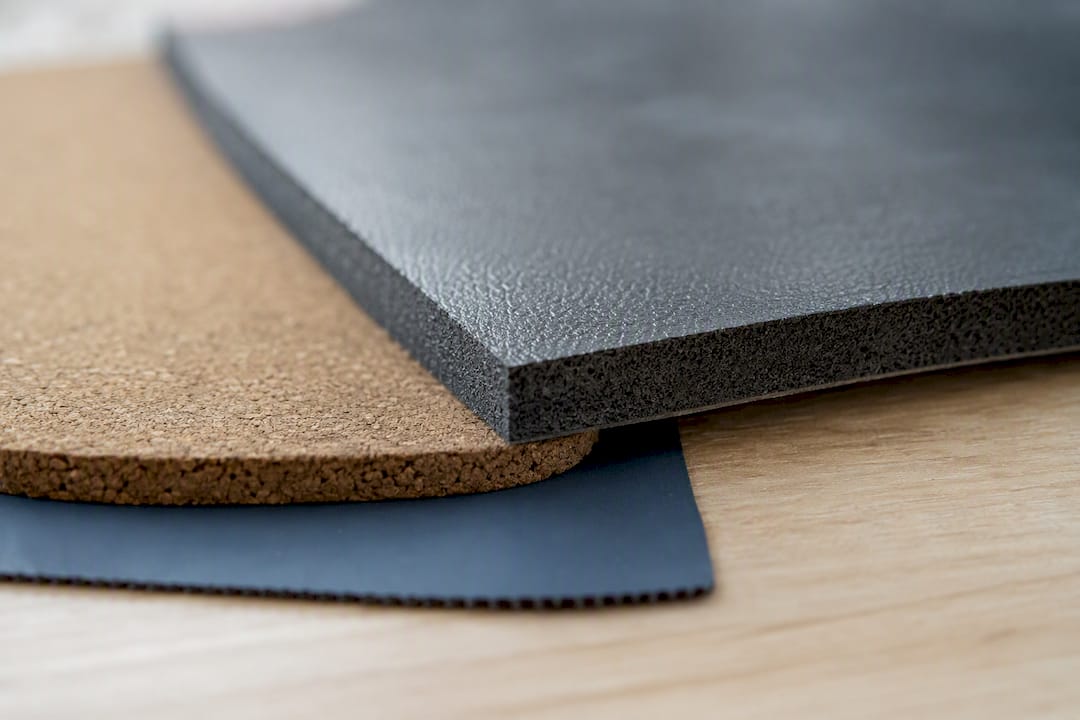
| Cork over rubber | 2-5 years | Fair dry, excellent wet (cork grips better as it dampens) | High | Heavier, poor packability | Very good, cork is a renewable, biodegradable resource |
| TPE (thermoplastic elastomer) | around one to a few years | Fair dry, mediocre wet | Moderate | Very light, packs well | Moderate, more recyclable than PVC but less durable than rubber |
| Recycled blends | around one to a few years, variable by manufacturer | Variable, depends on topcoat treatment | Variable | Light to moderate | Good in concept, quality depends heavily on execution |
The failure pattern for each material is predictable once you know what to watch for. Standard PVC foam mats crack and flake along heavily used zones once the plasticizers migrate out of the surface, a slow chemical process that leaves the mat feeling powdery. Natural rubber with a PU top rarely fails at the base. Instead, hands-on testing from Outdoor Gear Lab finds the sticky top coating wears down after years of vigorous daily use, even while the underlying rubber stays structurally sound. Cork composites resist bacterial growth and stay grippy when wet, which is why they show up so often in hot yoga recommendations, but the rubber base beneath the cork layer is what actually determines long-term life. TPE mats are light and travel-friendly, but the lower material density means they compress and lose spring faster than rubber. Recycled blends are the wild card: some perform close to virgin rubber, others use lower-grade filler material that shortens lifespan considerably, so checking the manufacturer’s specific construction matters more than the “recycled” label itself.
If you’re optimizing for a single priority:
- Maximum lifespan: dense natural rubber with a bonded PU top, a construction consistently favored in Wirecutter’s testing for long-term durability.
- Best wet traction: cork-over-rubber, especially for hot or sweaty practice.
- Best eco-durability compromise: natural rubber base with a certified recycled topcoat, which balances renewable sourcing against the wear resistance of a proven material.
Reading more on how each yoga mat material performs under specific practice conditions is worth doing before you commit, especially if you’re choosing between rubber and a synthetic blend for the first time.
How Long Do Yoga Mats Actually Last?
The honest answer depends far more on how you practice than on the calendar. A mat used once a week for gentle stretching can last four or five years. The same mat used daily for hot vinyasa might show real wear inside twelve months.
Consumer testing puts average lifespan for a mat in regular use around six to twelve months for heavy daily practice, with premium dense mats stretching well past that into multiple years. That range widens considerably once you factor in practice style: hot yoga and daily heavy use can approximately reduce expected lifespan significantly compared to a moderate three-times-a-week routine, because sweat and heat accelerate topcoat wear far faster than dry practice does.
A useful mental model, backed by lifespan analysis from HTS Yoga, treats a mat as “good” for as long as it reliably delivers traction and cushioning in the zones that take the most contact, not for as long as it’s been sitting in your closet. That reframes the whole replacement question around performance rather than age.
Rough lifespan patterns by practice frequency:
- Weekly gentle practice: 3-5 years for a mid-range mat, longer for dense rubber.
- Regular practice, 3-5 times weekly: around one to a few years depending on material and care.
- Daily vinyasa or power yoga: 8-18 months for standard foam, 2-4 years for dense rubber or hybrid construction.
- Hot yoga specifically: often 6-12 months for standard mats, extended significantly by choosing a construction built for sweat.
- Heavy travel use: shortened by 30-50% versus home use, since folding, packing, and floor variation add extra abrasion and compression cycles.
Turning that into cost-per-year math changes the decision entirely. A $20 foam mat replaced every eight months costs roughly $30 a year. A $100 dense rubber mat that lasts four years costs $25 a year, and it grips better the entire time. Durability isn’t just a comfort question. It’s frequently the cheaper option too.
Five Signs It’s Time to Replace Your Yoga Mat
Stop guessing and start checking these five things directly. Independent reviews consistently point to the same five failure signals, and each one carries a different level of urgency.
- Lost grip that survives a proper cleaning. If you’ve washed the mat correctly and it’s still slick in downward dog or during a sweaty flow, the topcoat has worn past the point of recovery. Action: replace it, since this affects both performance and fall risk.
- Permanent thinning or dead spots. Press your palm into a high-use zone. If it doesn’t spring back the way the rest of the mat does, you’re looking at compression set. Action: replace if the dead spot sits under your hands or knees; tolerate it a bit longer if it’s a low-contact area.
- Flaking or shedding material. Small bits of foam or rubber coming off onto your hands or the floor mean the surface chemistry is breaking down. Action: replace immediately, this isn’t cosmetic, it’s structural failure.
- Persistent odor or mildew that survives proper cleaning. A smell that returns after a full wash and complete drying usually means moisture has worked into the mat’s internal structure. Action: replace, since mildew inside foam isn’t something you can clean out.
- Tears, curling edges, or cracks. Once a tear starts, it spreads every time you roll the mat. Action: a small edge nick can sometimes be trimmed or sealed at home; a tear running into the practice surface itself means it’s time for a new mat.
A mat that fails on sign one or two but is otherwise intact can often be repurposed for stretching at your desk, padding for kneeling work, or a dog bed, rather than going straight to a landfill. Mats are notoriously hard to recycle through standard municipal programs, so getting a second use out of an aging mat is worth the extra five minutes it takes to find a use for it.
How to Care for Your Mat So It Actually Lasts
Care habits matter more than most buyers assume. A mid-range mat cleaned and stored properly will frequently outlast a premium mat that gets balled up in a hot car every week.
- Wipe after every sweaty session. A quick pass with a damp cloth or a proper mat cleaner prevents oils and salt from building up in the surface texture.
- Deep clean every one to two weeks depending on frequency. Regular wipe routines paired with periodic deeper cleaning reduce both odor and microbial growth significantly.
- Avoid soap film. Too much cleaner, or the wrong cleaner, leaves a residue that actually makes the surface less grippy. Use minimal product and rinse where the material allows it.
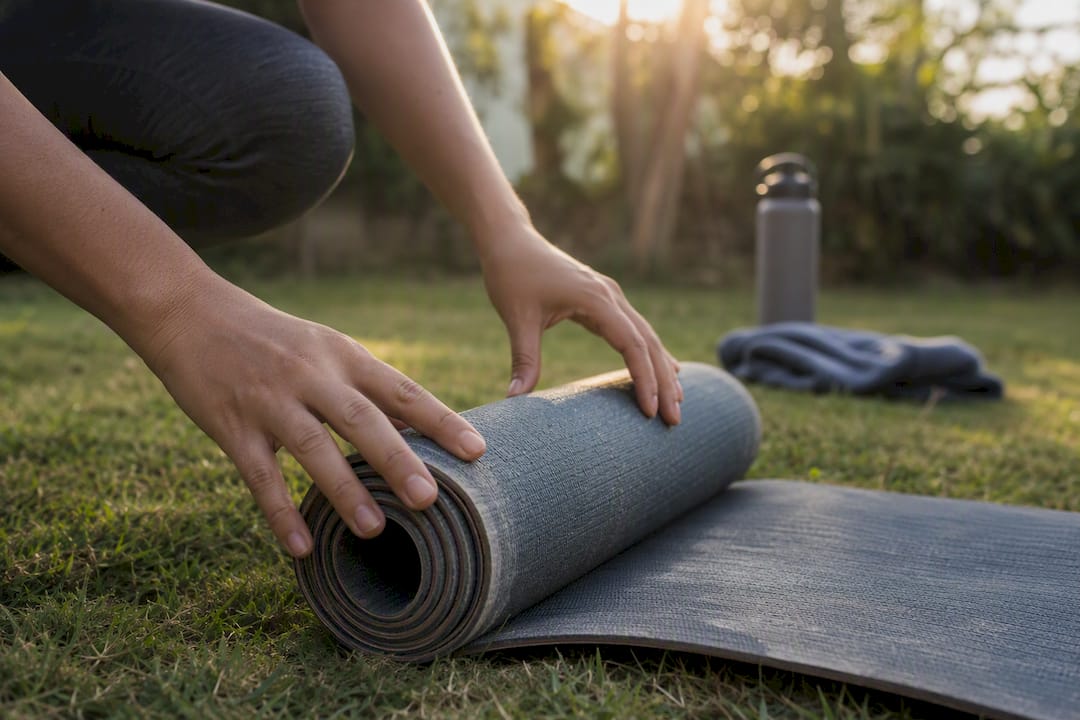
- Dry completely before rolling. Rolling up a damp mat traps moisture inside the roll, which is exactly the condition that breeds mildew and accelerates delamination.
- Use a towel on top for hot or heavy-sweat sessions. This shields the topcoat from direct sweat exposure and meaningfully slows down grip degradation.
Material dictates specific rules. Natural rubber degrades faster with UV exposure, so never leave it in direct sun or a hot car for extended periods. PU-topped mats generally shouldn’t be cleaned with alcohol-based or solvent cleaners, which can break down the coating’s bond to the base. Cork surfaces do best with plain water and minimal product, since heavy cleaners can strip the natural antimicrobial properties that make cork appealing in the first place.
Storage technique prevents two specific failure modes: edge tears and compression set. Roll loosely rather than tightly, rotate which end faces out each time you roll it, and avoid stacking heavy objects on top of a stored mat. A mat compressed under gym bags for months loses spring in exactly the spots under the pressure.
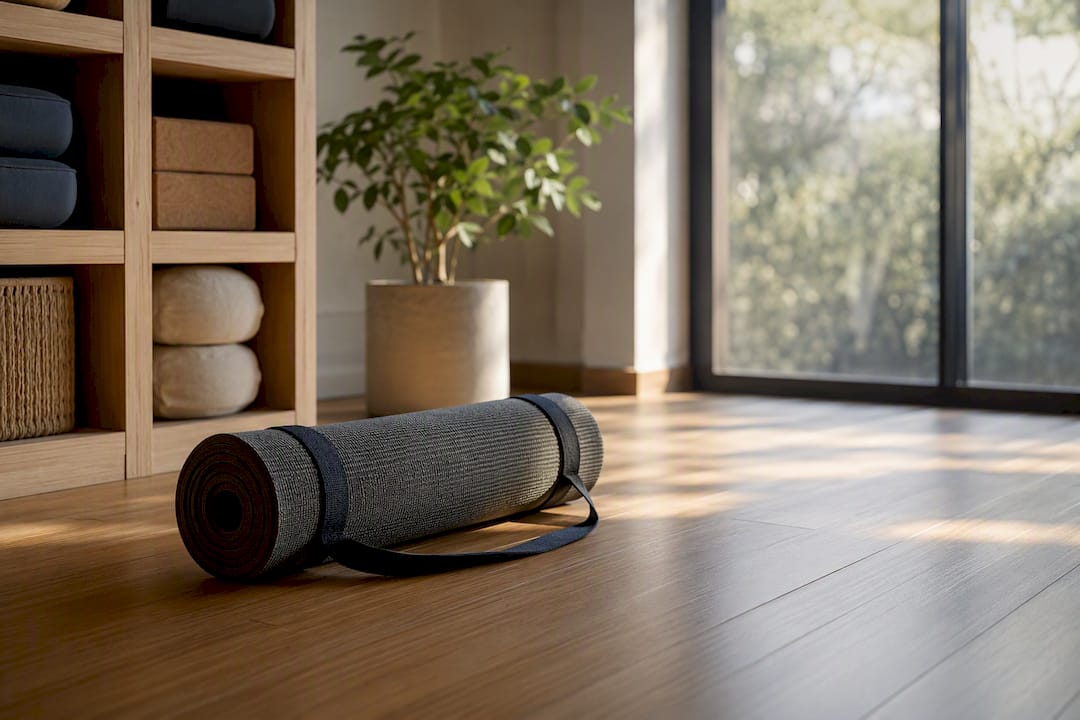
Pro Tip: If your mat feels slick after cleaning, run a simple diagnostic before assuming it’s dead: clean thoroughly, dry completely, then test grip with a downward dog. If it’s still slick, that’s topcoat wear, not residue, and no amount of extra cleaning will bring it back. For a full walkthrough, this step-by-step cleaning guide covers drying technique in more detail.
How to Choose a Durable Yoga Mat
Buying for durability means shifting your attention away from price tags and marketing photos and toward a handful of specific, checkable details.
The checklist:
- Density stated in kg/m³, or at minimum a manufacturer claim about density, not just thickness in millimeters.
- Edge finishing described explicitly, sealed or reinforced edges resist tearing far better than raw-cut foam.
- Topcoat material named clearly, PU, cork, or textured rubber each behave differently under sweat.
- A warranty or repair policy, since a maker willing to stand behind the product for a year or more usually has confidence in its construction.
- Weight and packability weighed honestly against how often you’ll actually travel with it, a heavier durable mat that never leaves your living room beats a light travel mat that falls apart in six months of daily use.
Questions worth asking before you buy:
- Is the mat a single-piece construction, or laminated layers bonded together?
- What cleaning method does the manufacturer recommend, and does it avoid harsh solvents?
- What’s the warranty period, and does it cover delamination or just manufacturing defects?
- Is there a phthalate-free or material-safety disclosure, particularly relevant for PVC or synthetic constructions, given EPA guidance on phthalate exposure in consumer products?
Red flags that predict a short life:
- Vague thickness claims with no density figure at all.
- No stated material composition beyond generic terms like “eco foam.”
- No care or cleaning instructions included with the product.
- Cleaning guidance that recommends alcohol or solvent-based products, a sign the topcoat may be fragile.
If durability standards from other product categories interest you, the concept of tested tear-strength and abrasion resistance in outdoor gear follows the exact same logic yoga mats do: density and edge construction predict real-world life far better than headline thickness numbers.
Recommended Mat Profiles for Committed Practitioners
Three mat profiles cover almost every serious practitioner’s needs, and each one accepts a specific trade-off in exchange for its strengths.
- The daily-practice workhorse: dense natural rubber base, 4-5mm thick, minimal branding, built to survive years of consistent use. Trade-off: heavier and less packable than travel mats, but it wins on cost-per-year by a wide margin.
- The sweat-tolerant hybrid: rubber base with a PU or cork top layer designed specifically for hot and vigorous practice. Trade-off: the topcoat will show wear before the base does, so expect to monitor grip more closely over time.
- The eco-conscious all-rounder: natural rubber with a certified recycled or sustainably sourced topcoat. Trade-off: slightly more research required at purchase time to confirm the recycled component doesn’t compromise wear resistance.
Yune Yoga’s natural rubber and eco-friendly foldable mats are built directly around this durability logic: a dense base for compression resistance, sustainably sourced materials for the eco-conscious buyer, and construction details disclosed clearly enough that you can actually apply the buying checklist above instead of guessing. That transparency matters, because density and construction details predict long-term performance far more reliably than a brand name does.
If you travel often, a lighter foldable mat paired with a grippy towel-on-top strategy for sweaty sessions makes more sense than forcing a heavy daily-practice mat into a suitcase every week. Save the dense, durable mat for your home practice space, and let the travel mat absorb the wear and tear of hotel rooms and studio floors.
What the Research Says About Wear, Safety, and Longevity
A few consistent findings show up across independent testing and regulatory guidance, and they line up closely with what real practitioners report after years of daily use.
- Density and edge construction predict compression resistance and tear resistance better than thickness alone.
- Topcoats wear out before the base material does, even on well-built mats, which is why grip loss is usually the first real sign of aging.
- Choosing a genuinely durable mat reduces environmental impact, since most mats aren’t easily recycled through standard municipal systems.
- Buyers considering PVC or other synthetic constructions should look for explicit safety disclosures, since some plasticizers used in consumer products carry documented health concerns.
A mat is functionally “good” for as long as it delivers reliable traction and cushioning where you actually need it, in the zones that take the most contact, not for as long as it’s technically still in one piece.
That performance-first framing, echoed across reviewer guides and lifespan analyses alike, is the single most useful mental shift for anyone trying to decide whether to keep practicing on an aging mat or retire it.
A Practitioner’s Take on Testing Durability in Real Practice
Judging a mat’s real durability means paying attention to the same handful of details every time: does the grip hold up after a sweaty flow, does the surface still spring back under the knees after months of use, and does the edge stay intact after dozens of roll-and-unroll cycles. Those three checks catch almost every failure mode that matters, long before a mat looks obviously worn out.
What stands out across product testing and long-term user reports is how rarely the base material actually fails first. It’s almost always the topcoat or the edge that goes first, which means the smartest buying decision focuses on those two details specifically rather than on overall thickness or price. A dense, well-finished mat with a durable topcoat will keep performing years after a flashier, thinner mat has been replaced twice over.
Ready to Practice on a Mat Built to Last?
Most mats on the market are optimized for a low price point, not for surviving three years of daily practice, which means you end up buying the same mediocre mat two or three times instead of one durable mat, once. Yune Yoga takes the opposite approach: dense natural rubber bases, disclosed material construction, and eco-conscious sourcing built specifically around the durability factors covered in this guide.

Every mat in the collection is designed to hold its grip and cushioning through years of regular use, not just the first few months, and the foldable travel options apply the same construction standards without asking you to sacrifice durability for portability. If you’re ready to stop replacing mats every few months, shop Yune Yoga’s durable, eco-friendly yoga mats and pick the profile that matches how often, and how hard, you actually practice.
Sources
- The 6 Best Yoga Mats of 2025 | Tested & Rated - Outdoor Gear Lab
- The 3 Best Yoga Mats of 2026 | Reviews by Wirecutter
- Phthalates - EPA