
Types of Yoga Mats Explained: Your 2026 Buying Guide
Yoga mat types are defined primarily by material, and that single choice determines your grip, joint comfort, durability, and environmental footprint. The eight dominant mat materials split into two families: synthetic foams (PVC, TPE, NBR, EVA, and PU hybrids) and natural materials (natural rubber, cork, and jute or hemp). With types of yoga mats explained across both families, you can match your mat to your practice style, travel needs, and values before spending a dollar.
1. Types of yoga mats explained: the material framework
Synthetic mats dominate 60–70% of the entry-level market, while natural options cost more but deliver biodegradability and premium grip. That split tells you something important: price alone does not predict performance. A $20 PVC mat works fine for a weekly beginner class, but it will slide under a sweaty Bikram session where a natural rubber or PU hybrid mat would hold firm. Understanding the material framework first makes every other buying decision easier.
2. PVC mats: the studio workhorse
PVC (polyvinyl chloride) is the most common yoga mat material in studios worldwide. It balances price and performance with moderate grip and solid durability, which is why budget-friendly and studio-rental mats almost always use it. The downside is environmental: PVC is not biodegradable and contains plasticizers that raise concerns for eco-conscious practitioners.
PVC mats typically run 4–6mm thick and hold up well to daily use. They clean easily with a damp cloth and mild soap. If you practice two to three times a week in a temperature-controlled room, a PVC mat is a practical, low-maintenance choice.
Pro Tip: Avoid PVC mats if you run hot or sweat heavily. The surface becomes slippery when wet, which creates a safety issue in dynamic flows.
3. TPE mats: the lighter, greener alternative
TPE (thermoplastic elastomer) mats are the most direct upgrade from PVC for practitioners who want a lighter mat with a smaller environmental footprint. TPE mats weigh less than PVC, offer moderate grip, and are generally considered more eco-friendly because they are free of PVC and heavy metals. The trade-off is durability: TPE mats tend to compress and degrade faster under heavy daily use.
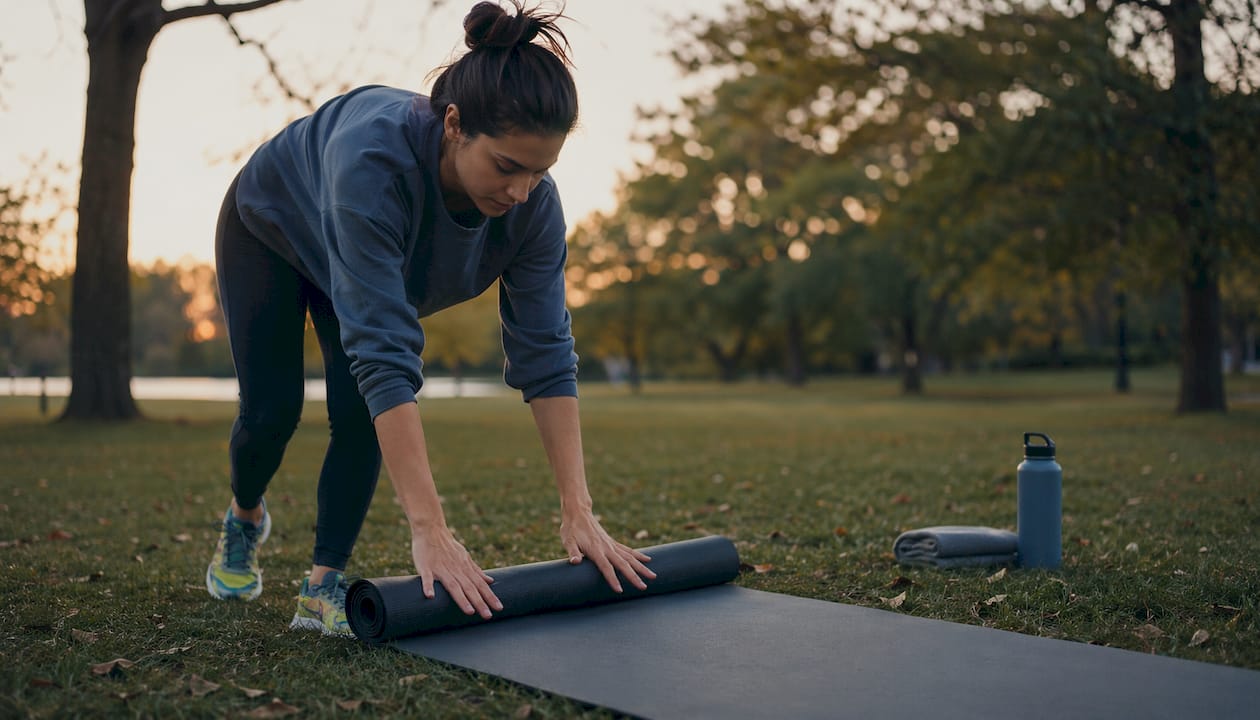
TPE works well for casual practitioners, yoga mats for beginners, and anyone who carries their mat to class regularly. The lighter weight makes a real difference when you commute on foot or by bike.
4. NBR mats: maximum cushioning for floor-based work
NBR (nitrile butadiene rubber) mats prioritize cushioning over grip. They typically run 10–15mm thick, which makes them the go-to choice for restorative yoga, Yin yoga, and Pilates-style floor work where joint protection matters more than traction. The dense foam absorbs pressure on knees, hips, and the spine effectively.
The grip on NBR mats is noticeably lower than on PVC or natural rubber. Standing balance poses on a thick NBR mat can feel unstable because the surface compresses under your foot. NBR is best reserved for low-movement, floor-focused sessions rather than dynamic flows.
5. EVA mats: ultralight travel companions
EVA (ethylene-vinyl acetate) is the lightest synthetic foam used in yoga mats. EVA mats are the lightest option available, which makes them attractive for travel, but that lightness comes with reduced grip and shorter lifespan. Most EVA travel mats run 1–3mm thick and fold flat, fitting inside a carry-on bag without adding meaningful weight.
The grip compromise is real. EVA surfaces can feel slick during standing poses, especially as the mat ages. For short trips or supplemental use over a hotel carpet, EVA is a smart pick. For daily practice, it falls short.
Pro Tip: Pair an EVA travel mat with a microfiber yoga towel to recover grip on smooth surfaces. The towel adds minimal weight but makes a significant difference in stability.
6. PU and rubber hybrid mats: the grip leaders
PU (polyurethane) top layers bonded to natural rubber bases represent the current performance standard for grip-intensive yoga. PU top layers become stickier with sweat, which means these mats actually improve as your practice heats up. That property makes them the preferred choice for hot yoga, fast vinyasa, and any style where you generate significant moisture.
The rubber base adds weight and firm cushioning, while the PU surface handles traction. These mats cost more than PVC or TPE options, but for practitioners who practice four or more times per week in sweaty conditions, the investment pays off in safety and confidence. Check out Yuneyoga’s hot yoga mat guide for specific recommendations within this category.
7. Natural rubber mats: the all-around premium choice
Natural rubber mats deliver excellent grip and biodegradable properties, making them the most popular premium option for high-intensity and dynamic yoga styles. The open-cell surface structure creates traction through suction rather than texture alone, which holds up well across dry and moderately sweaty conditions. Natural rubber also has a satisfying density that feels stable underfoot without being rigid.
The environmental profile is strong: natural rubber is biodegradable and sourced from rubber trees. The caveat is that most natural rubber mats require vulcanization and sometimes a synthetic backing layer, so they are rarely 100% natural in the strict sense. Anyone with a latex allergy should avoid natural rubber mats entirely.
Pro Tip: Natural rubber mats degrade faster when exposed to direct sunlight. Store yours rolled up in a shaded area to extend its lifespan significantly.
8. Cork mats: grip that improves when wet
Cork mats are a standout option for hot yoga and eco-conscious practitioners. Cork offers increased grip when wet because the surface becomes tackier as moisture increases, the opposite of what happens with most synthetic mats. Cork is naturally antimicrobial, which reduces odor buildup over time.
The texture feels firm and slightly rough compared to foam mats. Cork layers are laminated over rubber or TPE bases because cork alone is too brittle to function as a standalone mat. That lamination adds weight and cost. Pregnant practitioners who need stable, non-slip surfaces often find cork mats particularly useful, as noted in yoga during pregnancy resources that highlight the grip and joint support benefits.
9. Jute and hemp mats: texture-forward sustainability
Jute and hemp mats use natural plant fibers woven into the top surface, typically laminated over a rubber or TPE base. The texture is noticeably coarser than foam or rubber mats, which creates grip through friction rather than suction. That texture can feel abrasive during poses that involve sliding or skin contact with the mat surface.
The sustainability case for jute and hemp is strong. Both fibers grow quickly with minimal water and no pesticides. Eco-friendly mats like natural rubber, cork, and jute cost 50–100% more than synthetic mats due to material sourcing and processing. For practitioners who prioritize environmental values and can tolerate a firmer, coarser surface, jute and hemp mats are worth the premium.
10. How thickness and density shape your practice
Optimal mat thickness ranges from 3mm travel mats to 8mm restorative mats, and density determines how much support you get within that range. A high-density 4mm mat can outperform a low-density 6mm mat for joint support because the denser foam resists compression under load.
| Thickness | Best for | Trade-off |
|---|---|---|
| 1–3mm | Travel, balance-focused styles | Minimal cushioning |
| 4–6mm | All-around daily practice | Balanced grip and comfort |
| 6–8mm | Restorative, Yin, floor work | Reduced balance stability |
Texture also plays a role that thickness charts miss. A raised grid pattern improves grip mechanically, while a smooth surface relies entirely on material tackiness. Match your texture preference to your practice style and sweat level for the best result.
Pro Tip: If you practice both dynamic flows and restorative sessions, a 4–5mm high-density mat covers both without compromise. You do not need two mats for two styles.
11. Choosing a yoga mat for travel vs. home practice
Travel mats and home mats serve different purposes, and treating them as interchangeable leads to frustration. Travel yoga mats run 1–3mm thick and fold or roll into compact sizes that fit carry-on luggage. The cushioning sacrifice is acceptable for short sessions on hotel floors or outdoor surfaces.
Home practice mats can prioritize comfort and grip over portability. Key factors to weigh when choosing:
- Practice style: Hot yoga needs PU or cork; restorative needs NBR or thick TPE.
- Frequency: Daily practitioners need durable natural rubber or PVC; occasional practitioners can use TPE.
- Portability: Commuters benefit from TPE or EVA; home-only practitioners can choose heavier natural rubber.
- Budget: PVC and TPE offer the best value; natural rubber, cork, and PU hybrids cost more but last longer with proper care.
- Environment: Natural rubber, cork, and jute are biodegradable; PVC and EVA are not.
The right yoga mat for your practice depends on matching these factors to your actual habits, not your aspirational ones.
Key takeaways
The material a yoga mat is made from determines its grip, durability, weight, and environmental impact more than any other single factor.
| Point | Details |
|---|---|
| Material drives performance | Match mat material to your practice style: PU or cork for hot yoga, NBR for restorative work. |
| Thickness has a range | Use 1–3mm for travel, 4–6mm for daily practice, and 6–8mm for floor-focused sessions. |
| Natural mats cost more | Eco-friendly options like cork, rubber, and jute run 50–100% more than synthetic mats. |
| Grip changes with moisture | PU and cork mats grip better when wet; PVC and EVA surfaces become slippery. |
| Density matters as much as thickness | A high-density thin mat can outperform a low-density thick mat for joint support. |
What I’ve learned after years of testing yoga mats
Most people overthink the brand and underthink the material. I have seen practitioners spend $120 on a mat that looks beautiful but slides the moment they start sweating, simply because they did not check whether the surface handles moisture. The material is the only spec that actually predicts how a mat will behave under your specific conditions.
Maintenance habits matter more than most buyers realize. A natural rubber mat that gets rolled up wet after every class will degrade in months. The same mat, wiped down and stored properly, can last years. No amount of premium material compensates for poor care.
My honest recommendation: try mats in person before buying when you can. Thickness and texture feel very different in your hands than they read in a product description. If you practice at home and travel occasionally, consider owning two mats: a 4–5mm natural rubber or PU hybrid for home, and a foldable EVA or thin TPE for the road. That combination covers every scenario without compromise.
The best mat is the one that makes you want to practice. Grip, comfort, and weight matter. Price and appearance do not.
— Nicholas
Yuneyoga’s mat collection for every practice style
Yuneyoga builds its mat lineup around the principle that quality and sustainability are not mutually exclusive. Whether you need a natural rubber mat for daily vinyasa, a foldable travel mat for frequent trips, or a cork mat for hot yoga sessions, Yuneyoga’s curated selection covers the full range of yoga mat types.

Every mat in the Yuneyoga catalog is chosen for material integrity, durability, and real-world performance. The brand’s eco-conscious focus means you will find natural rubber and cork options alongside lightweight travel mats, all with detailed material descriptions so you know exactly what you are buying. Browse the full Yuneyoga mat collection to find the right match for your practice, your values, and your bag.
FAQ
What type of yoga mat is best for beginners?
PVC or TPE mats are the best starting point for beginners. They offer a balance of cushioning, moderate grip, and affordable pricing that suits irregular or developing practice schedules.
Are natural rubber yoga mats worth the extra cost?
Natural rubber mats deliver superior grip and biodegradability, making them worth the premium for practitioners who practice frequently or in sweaty conditions. Anyone with a latex allergy should avoid them.
How thick should a yoga mat be for hot yoga?
A 4–5mm PU and rubber hybrid or cork mat is the standard for hot yoga. Both materials grip better as moisture increases, which is the key performance requirement for that style.
What is the lightest yoga mat for travel?
EVA mats are the lightest option available, typically running 1–3mm thick and folding flat into a bag. Grip and cushioning are reduced, but the weight savings make them practical for short trips.
Do cork yoga mats wear out quickly?
Cork mats last well with proper care because cork is naturally resilient and antimicrobial. The rubber or TPE base layer typically determines the mat’s overall lifespan more than the cork surface itself.


