

10 beneficial y yoga poses for better alignment and strength
Key Takeaways
Elevating your daily movement routine is simple when you focus on geometric shapes like the Y, which can stabilize your core and improve posture. These movements are designed to be accessible, supportive, and effective for all practitioners.
- Y-shaped movements help stretch the chest and shoulders for better alignment.
- Standing balances using wide-arm positions challenge proprioception and core stability.
- Proper mat support, like the Janus Yoga Mat, ensures comfort during long holds.
- Incorporating these shapes provides a full-body engagement beyond standard practice.
- Consistency with pose variations allows for personal scaling as your strength builds.
1. Y balance pose
Finding your footing in a Y balance pose requires a steady gaze and an engaged core. Start by shifting your weight into your right foot, lifting your left leg to the side while extending both arms upward and outward into a wide Y shape. This creates a challenging center of gravity that forces your stabilizer muscles to work overtime.
As you hold this position, keep your chest open and your gaze forward to maintain alignment. You might notice a slight wobble, which is perfectly normal, as your body is learning to adapt to the asymmetrical load. Using a reliable base like the Obelisk Yoga Mat can help provide the traction you need to keep your standing leg grounded without slipping.
Finally, lower your leg with control, shaking out any tension before switching sides. The goal isn't perfection, but rather the intentional challenge of finding balance in an expanded shape. This practice serves as a foundational step for more advanced balancing variations throughout your sequence.
2. Standing Y arm extension
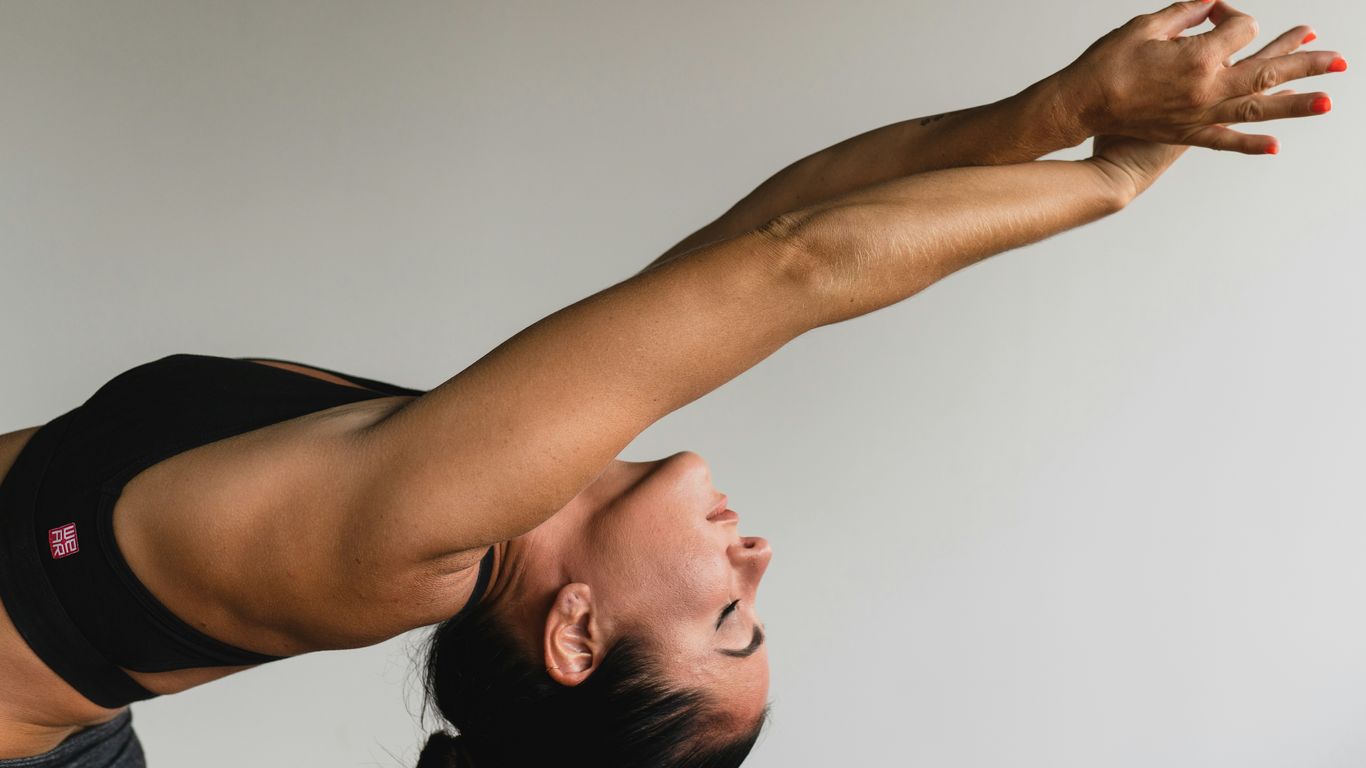
Standing Y arm extensions are a wonderful way to relieve upper body tension while promoting a broader range of motion. Stand with your feet hip-width apart and reach your arms overhead in a wide V, forming the bottom half of a Y. Focus on pulling your shoulder blades together and releasing unnecessary stress from your trapezius muscles.
This simple motion can be integrated into any transition, whether you are preparing for a Flow or winding down. It is particularly helpful after hours of desk work or hunching, as it physically opens the chest and rib cage. Having a Yune Yoga Bundle nearby can serve as a great reminder to integrate these quick, rejuvenating arm stretches during your daily routine.
To ensure proper form, avoid locking your elbows and try to keep your rib cage from flaring forward. You can deepen the effect by focusing on your breath, inhaling wide into your lungs and exhaling to let the shoulders settle further down your back. This gentle engagement helps maintain spinal integrity without overexerting your muscles.
3. Y-shape mountain pose
Transforming the classic mountain pose into a Y-shape mountain pose adds a new layer of openness to your standard alignment. Instead of reaching your arms straight up or at your sides, widen your hands to create a sturdy, elevated Y. This variation forces a deeper awareness of the connection between your feet and your fingertips.
Think of the Eagles Rest Yoga Mat as your anchor, providing the necessary stability as you stretch toward the ceiling. The firmness of the mat prevents your heels from shifting, which is essential when you are trying to lengthen the entire side body. You will feel an elongated stretch running from your core right to your fingers, helping you stand just a little bit taller.
Many practitioners find this pose ideal for morning routines where a full body wakeup call is needed. By keeping the arms wide and active, you avoid the common tendency to hunch, instead choosing posture that radiates confidence. Hold the position for a few rounds of deep breathing to fully integrate the expansion.
4. Extended Y warrior variation
For those who love a bit of intensity, the extended Y warrior variation brings dynamic movement into the classic lunge. Move into a standard warrior position, but as you reach your arms upward, angle them outward to form a wide Y. This changes the load on your shoulders and necessitates a stronger core to prevent leaning too far back.
To illustrate the progression of building strength through these variations, consider the following performance levels:
| Level | Focus Area | Stability Requirement |
|---|---|---|
| Beginner | Shallow lunge | Low |
| Intermediate | Deep lunge | Medium |
| Advanced | Wide arm extension | High |
Incorporating this movement helps build stamina in your legs while keeping your upper body alert. The shift in arm position requires constant micro-adjustments, ensuring that your arms aren't just dangling but are actively engaged. It is a fantastic way to turn a traditional holding pose into a full-body, high-energy activation sequence.
5. Y-grip forward fold
Deep folds provide a perfect opportunity to release the spine, and the Y-grip forward fold offers a unique path to that relaxation. From a standing position, hinge at your hips and reach your arms out to the sides at an angle as you fold, imagining pulling the floor toward you. This grip provides a sense of traction that can make the fold feel deeper and safer for your lower back.
It is helpful to keep a slight bend in your knees during this stretch to take pressure off your hamstrings. Whether you are using a Cave Warrior Heroine Yoga Mat or another surface, ensure your feet are set wide enough to feel completely secure before reaching forward. The extra space in your stance offers a more stable base for the forward hinge.
After a few moments, you can let your head hang heavy, allowing the weight of your torso to continue the decompression. This isn't just about flexibility; it is about providing the body with an intentional break from vertical pressure. Once you finish, slowly roll up to a standing position to keep everything feeling aligned and refreshed.
6. Y-arm downward dog variation
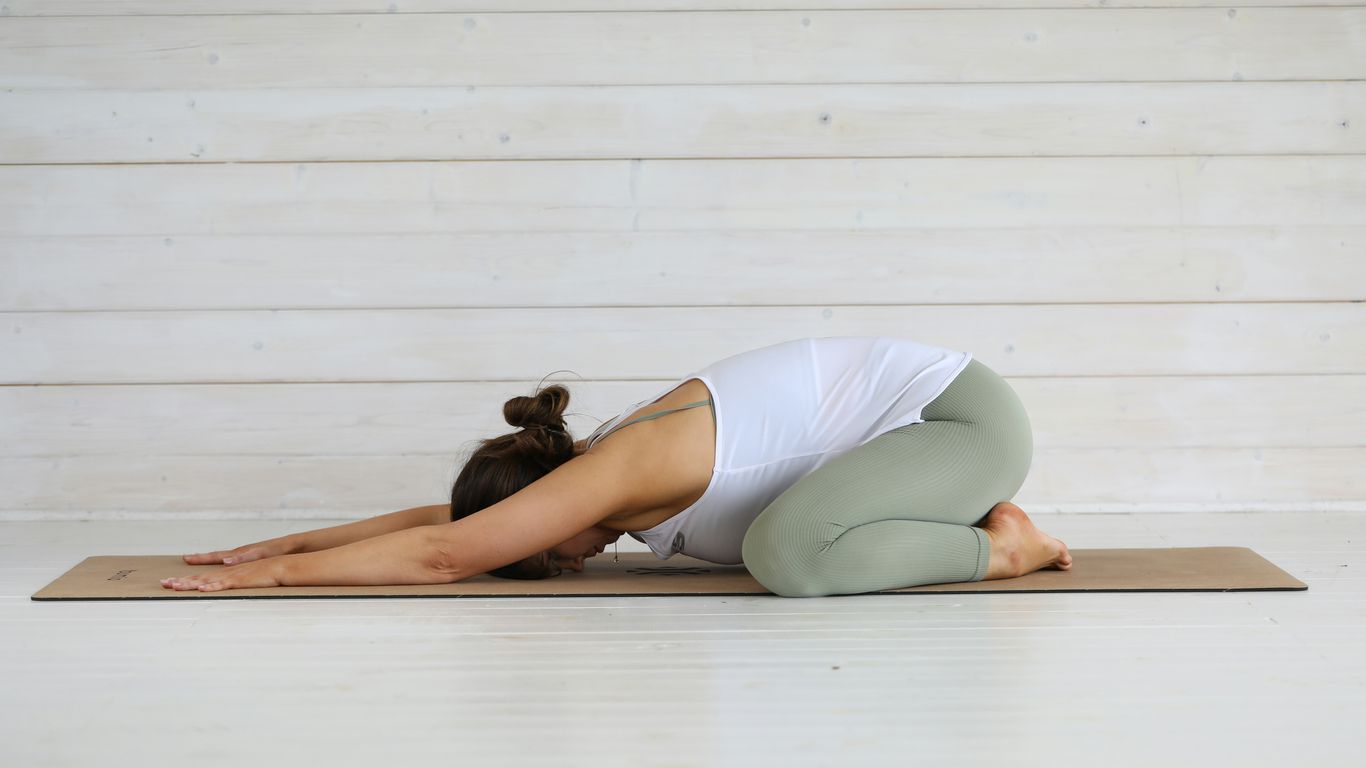
Downward dog is a staple, but the Y-arm downward dog variation changes how you engage your shoulders and your breath. Instead of hands directly parallel, widen them slightly and angle your fingers outward, creating a wider Y shape with your arms. This micro-shift changes the stretch profile of your lats and chest while in the inverted position.
I recommend using the Antonio Yoga Mat for this pose, as the extra grip ensures your hands don't slide unexpectedly when you widen your stance. The added stability invites you to press back more firmly, effectively lengthening the spine while keeping your shoulders safely away from your ears.
- Step into a standard downward dog.
- Shift your palms outward four to five inches.
- Keep your palms flat and fingers spread wide.
- Press your hips back to feel the stretch in your side body.
This small modification is perfect for loosening up tight areas that sometimes go ignored in a traditional dog pose.
7. Seated Y-stretch
Seated stretching allows you to be more targeted with your tension release, and the seated Y-stretch is excellent for sitting on the floor after a long day. Extend your legs in a wide V and reach your arms up at a corresponding angle. This makes a comprehensive Y shape that encourages an upright, energized spine.
If you find reaching difficult, imagine your arms are being pulled by gentle invisible strings connected to the ceiling. Using a Libra Yoga Mat can provide just enough cushion for your sit-bones, making it easier to maintain an upright tilt in your pelvis. Keep your feet flexed and active to maintain a sense of engagement even while seated.
This is a great moment to focus entirely on your breath, as your rib cage is essentially wide open. Notice the space you are creating in your torso and allow your shoulders to relax away from your ears. Practicing this seated form ensures that you are still strengthening your back muscles even when you aren't doing high-intensity work.
8. Y-position eagle arms
Eagle arms are often tight and restrictive, but a Y-position eagle arm twist offers a softer entry point. Start with arms wide, then cross them while maintaining the upward expansion, creating a modified, more open version of the classic wrap. This is far more accessible for beginners who struggle with the full arm bind.
By keeping the arms in a Y-based crossing pattern, you are able to access a deep stretch in the upper back without feeling suffocated by the pose. It is a fantastic remedy for those who sit at computers all day. If you find your balance is off, consider standing on a Korriban Yoga Mat for the added traction that helps you stabilize your lower body.
Keep your reach active throughout the cross, as this maintains the integrity of the muscle engagement. You don't need to force the hands to touch palms; simply reaching for the opposite shoulder or elbow is enough to get the benefits. This version encourages you to keep your chest lifted rather than rounding forward in frustration.
9. Crescent moon Y-stretch
Combining the crescent moon pose with a Y-arm reach creates an intense but refreshing stretch for your entire side body. Standing on your Repose Yoga Mat, sweep your arms up into a Y and then lean to one side, keeping your arms extended away from each other. This creates a beautifully long rainbow arc from your heel through your fingers.
This movement effectively targets the obliques and intercostal muscles, providing relief from shallow patterns of breathing. As you lean, try to keep your chest facing forward rather than rotating toward the ceiling. The goal is to move symmetrically, as if you are sandwiched between two panes of glass, preserving the integrity of that wide Y.
The beauty of this stretch is in the slow, rhythmic pulses you can perform while holding it.
By gently pulse-breathing into the side of your body, you encourage the tissue to lengthen even further, turning a static hold into a dynamic movement. This leaves your torso feeling significantly more open for the remainder of your day.
10. Reclined Y-shape leg extension
Sometimes, the best alignment work happens while lying down, and the reclined Y-shape leg extension is a perfect example. Lie on your back, extend your legs wide and reach your arms overhead at the same angle against your Trestles 6mm Non-Slip Yoga Mat, forming a full-body Y. It is essentially an active but supported full-body stretch.
This pose is wonderful because it allows you to utilize gravity to help you lengthen your spine while your limbs enjoy the freedom of space. Ensure your lower back remains stable, and engage your core slightly so that you aren't arching excessively away from the mat. It is a simple, effective pose to reset your nervous system.
You might find this to be the most restorative part of your entire practice. Let the weight of your body sink into the floor, using the contrast between the exertion of your limbs and the relaxation of your torso to find balance. It's a prime way to conclude a session while keeping the Y-shape focus clear and present.
Conclusion
Integrating the Y shape into your yoga practice provides a versatile and accessible way to improve your overall alignment and strength. By focusing on these open, expansive positions, you encourage the body to lengthen and release tension in ways that standard poses might overlook. Whether you are using a portable mat for a quick flow in a hotel or a durable surface at home, these movements ensure that you remain connected to your foundation, your breath, and your physical potential throughout every session.
Frequently Asked Questions
Are Y yoga poses safe for beginners?
Yes, these poses are generally safe and accessible for all levels because they avoid complex binds and twists that require high flexibility.
Can Y-shaped poses help with posture?
They are an excellent tool for improving posture by actively opening the chest and drawing the shoulder blades back.
Do I need special equipment for these poses?
No special equipment is required, but practicing on a mat with good grip will help stabilize your balance and keep you grounded.
How often should I practice these movements?
There is no strict rule, but incorporating them into your daily flow for just a few minutes can lead to noticeable changes in your physical awareness.
Can I do these poses while traveling?
These poses are highly portable and perfect for small spaces like park corners or hotel rooms where you need to stretch but have limited area.
Should I hold these poses for a long time?
Active holds are usually more effective than long, static stretches with these shapes, so aim for 3-5 deep breaths per movement.
Is it normal to feel unstable in balance poses?
Feeling unstable is a sign that your stabilizer muscles are working, which is exactly what you want for building long-term strength and coordination.

