Stop Buying Slippery Mats: 5 Tests for Yoga Mat Texture That Grips
Sweaty hands need a textured or PU-top surface; slow flow needs smooth or micro-texture; heavy holds need mechanical grip from an embossed pattern. Material chemistry changes all of this: cork and PU tend to grip better wet, while PVC and TPE lean on dry friction alone. Test any mat damp before you commit, and check the maintenance section below to keep that grip from fading.
TL;DR:
- Testing mats with damp palms before purchase reveals material chemistry differences that impact grip during sweat sessions.
- Natural rubber mats with open-cell structure improve grip as they absorb sweat, but require more frequent cleaning to maintain traction.
- PU-top overlays and cork surfaces enhance wet grip, making them suitable choices for hot yoga and heavy sweating.
- Smooth, micro-textured mats excel in flow but may slip once moisturized, while embossed textures provide reliable grip during prolonged holds.
- Proper cleaning with water and avoiding solvents preserve surface texture and prevent future grip loss from residue buildup.
Table of Contents
- What Does Yoga Mat Texture Actually Mean?
- How Do Materials Change the Way Texture Performs?
- Which Texture Fits Your Practice Style?
- How Do You Test a Mat’s Grip Before You Commit?
- How Do You Keep Texture From Wearing Down?
- What I’ve Learned Advising Buyers on Texture
- Ready to Find a Mat That Grips When It Counts?
- Sources
What Does Yoga Mat Texture Actually Mean?
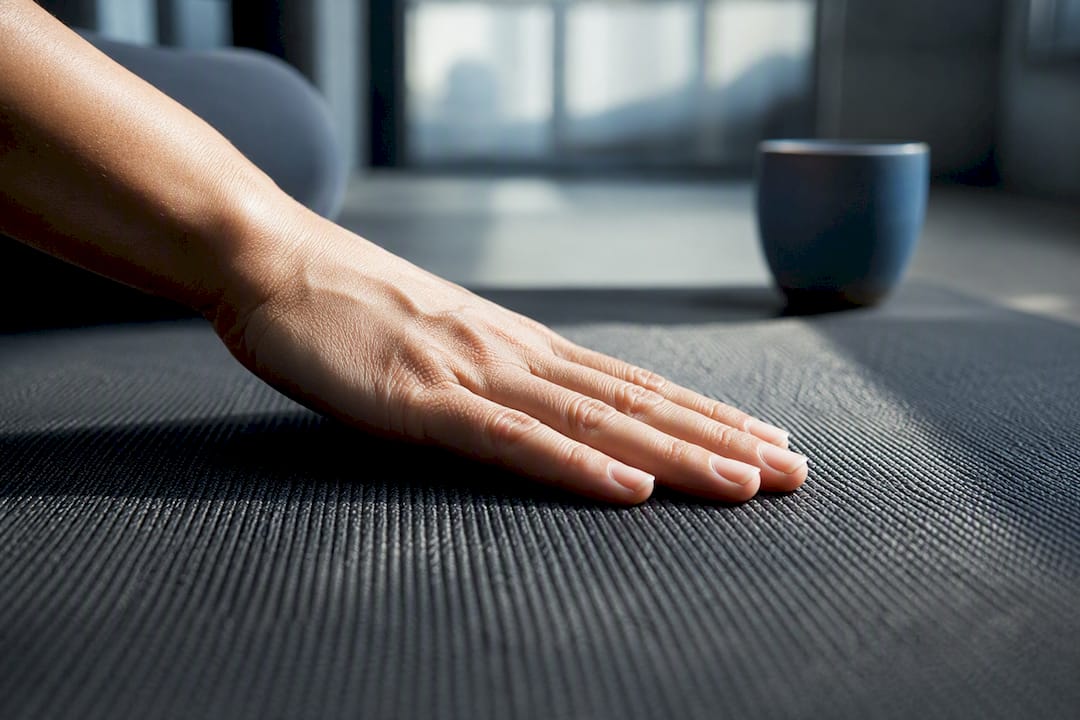
Surface texture comes down to three things: tack (how much the surface clings to skin on contact), drag (resistance as your palm or foot slides), and mechanical traction (grip created by raised patterns rather than surface stickiness). A mat can feel grippy in the store and still slide out from under you thirty minutes into a hot class, because tack and mechanical traction behave differently once sweat enters the picture.
Two main texture families dominate the market, and each solves a different problem.
Smooth and micro-textured tops feel close to skin with almost no visible pattern. They’re built for gliding through transitions, moving from Downward Dog to a lunge without your foot catching on the mat. The trade-off: that same smoothness can turn slippery once a film of sweat or lotion residue builds up, since the grip relies on surface tack rather than a physical pattern.
Embossed or textured tops use raised dots, ridges, or diamond patterns to create mechanical traction that works even when the surface itself loses some tack. That’s why textured mats often feel more confidence-inspiring to beginners holding a Warrior II for the first time. The downside is that aggressive texture can feel grabby against bare skin or leave marks on knees and forearms during longer holds.
Here’s the quick trade-off breakdown:
- Smooth/micro-texture: best for flow, gentle on skin, but wet performance varies by material
- Embossed/textured: strong mechanical grip for holds, more beginner-friendly stability, but can irritate sensitive skin
- Both families: dry grip rarely predicts wet grip, so testing smooth versus textured surfaces separately for sweat conditions matters more than the visual pattern alone
If you’re still narrowing down style and grip preferences together, this guide to choosing the right yoga mat walks through both at once.
How Do Materials Change the Way Texture Performs?
The same visible pattern behaves completely differently depending on what the mat is made from. Texture is only half the story. Chemistry decides whether that texture holds up once your hands start sweating.
Natural rubber splits into two types worth knowing. Open-cell rubber actually grips better as it absorbs sweat, but it soaks up moisture and needs more frequent cleaning to stay fresh. Closed-cell rubber repels moisture instead, which keeps it cleaner but can feel slick the moment it gets wet, according to a breakdown of rubber mat grip and care.
PU top layers bonded over a rubber base tend to improve grip specifically when wet, which is the opposite of how PVC and TPE behave. Those two materials rely almost entirely on dry friction, and as material science coverage explains, they lose traction fast once moisture shows up.
Cork deserves special mention. It contains suberin, a naturally hydrophobic compound, and that chemistry means cork surfaces actually grip better as they get wetter, making it one of the more reliable eco-friendly options for sweaty practice.
Thickness interacts with all of this. Most mats run 3 to 6 millimeters, and 4 to 5 millimeters is commonly recommended for balancing cushioning against stability. A mat much thicker than that starts to compromise balance in standing poses; much thinner, and knees take a beating during floor work.
Quick material comparison:
- Natural rubber (open-cell): grips better wet, needs more frequent cleaning
- Natural rubber (closed-cell): repels moisture, can feel slick when wet
- PU top over rubber: improves with moisture, favored for hot yoga
- Cork: hydrophobic surface chemistry, grips better as sweat builds
- PVC/TPE: strong dry grip, weaker once moisture appears
Grip is the first thing your body notices on a mat, and it directly affects alignment and injury risk. Long-term testing by consumer reviewers consistently favors natural rubber for durability and grip, with PU-on-rubber hybrids frequently recommended for anyone who sweats through a full class. For a deeper material comparison beyond grip alone, this guide to yoga mat materials breaks down eco-friendly options in more detail.
Which Texture Fits Your Practice Style?
Matching texture to practice style saves you from buying a mat that fights against how you actually move.
-
Vinyasa and flow practice. Smooth or micro-textured tops work best here since you need your foot to glide, not catch, moving between poses. Test the transition from dry to slightly damp early in a session, because that’s when smooth surfaces start to show their limits.
-
Hot yoga and heavy sweating. Prioritize a PU-top or cork surface, and plan on a towel strategy from day one. Even the best wet-grip materials benefit from a grippy towel layer once sweat really starts pooling, and sweat-resistant mat guidance covers exactly how to pair the two.
-
Power yoga, strength holds, and beginners. Textured or embossed tops paired with a stable, non-slip underside give you the mechanical traction to hold a plank or Chair Pose without your base shifting. Just check how the texture feels against bare skin during long holds. Some aggressive patterns leave pressure marks.
-
Restorative and meditation practice. Smoother surfaces paired with thicker cushioning protect joints during long seated or reclined holds, where comfort matters more than traction. If this is your main use case, this guide to meditation mat selection is worth a look before buying.
How Do You Test a Mat’s Grip Before You Commit?
Dry tack tells you almost nothing about how a mat performs once you’re sweating. Run these checks in-store or during a return window at home.
- Dry-hand twist test. Press your palm flat and twist. It should resist, not slide.
- Damp-palm Down Dog hold. Mist your hands slightly and hold Down Dog for 30 seconds. Watch for any creep.
- Pivot step-through. Move through a lunge-to-standing transition to check how the surface handles a moving foot.
- Forearm and knee comfort check. Kneel and lean on a forearm for a minute. Note any texture that digs in uncomfortably.
- Underside slip test. Place the mat on your actual floor type and push against it. A grippy top means nothing if the whole mat slides.
If a mat fails the damp test but passes dry, don’t write it off entirely. A towel strategy can rescue an otherwise good mat for occasional sweaty sessions. If it fails consistently, return it and try a different material chemistry instead.
Pro Tip: New natural rubber mats often need two to four sessions of break-in before their grip feels reliable. Don’t judge a rubber mat’s true texture on the first roll-out.
How Do You Keep Texture From Wearing Down?
Grip fades faster than most people expect, usually from residue buildup rather than actual material breakdown. Daily wiping with a damp cloth handles sweat and oil before it settles into the surface. For a deeper clean, mild soap and water rinsed off completely works better than anything stronger.
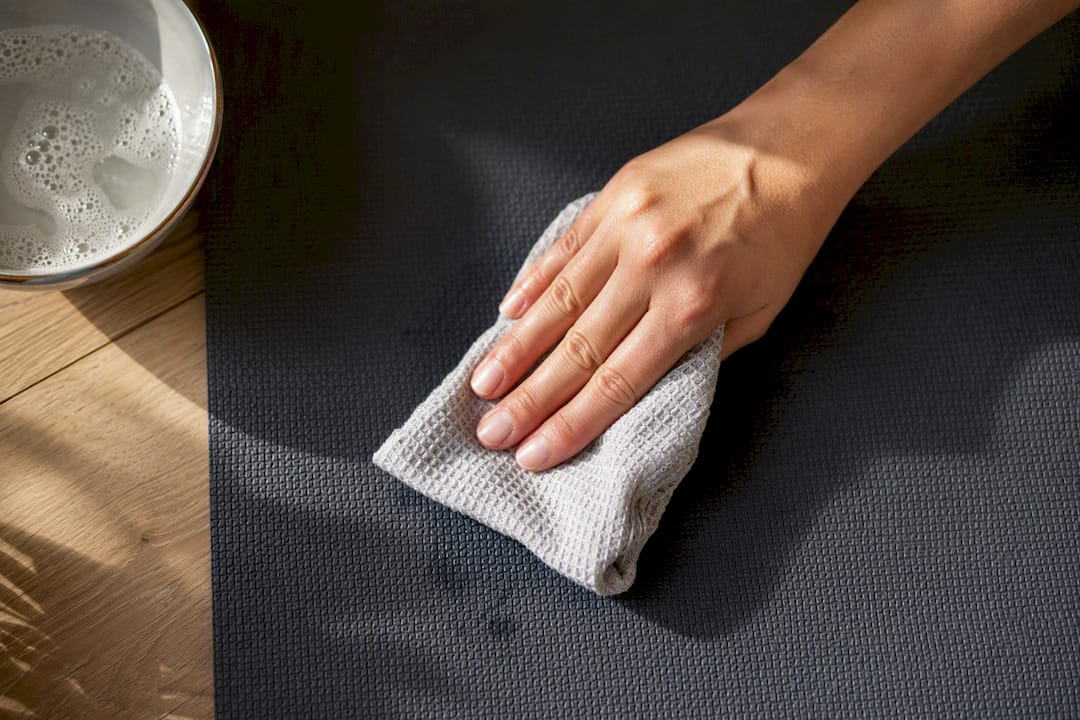
Skip solvents, alcohol-based sprays, and abrasive scrubbing pads. Those can alter the top layer’s chemistry and permanently dull the texture that gave the mat its grip in the first place, a risk noted in rubber mat care guidance.
Watch for these warning signs that a mat is done:
- Grip loss that persists after cleaning usually means residue has bonded into the surface texture
- Thin, shiny patches under hands and feet signal the material itself is wearing away
- Flaking or crumbling edges mean the mat has passed the point of cleaning and needs replacing
What I’ve Learned Advising Buyers on Texture
Most people obsess over how a mat feels dry in a showroom, then get surprised when it turns into a slip hazard twenty minutes into a sweaty flow. Dry tack and wet grip are separate questions, and treating them as one is the single most common mistake I see. If texture questions still feel murky, Yune Yoga’s blog has deeper breakdowns on material selection and size and thickness worth reading before you buy.
— Nicholas
Ready to Find a Mat That Grips When It Counts?
Skip the trial-and-error of buying blind. The selection focuses on eco-conscious mats, natural rubber builds, and foldable travel options that are designed around grip and comfort priorities, not just marketed on them.
Before you buy, run the damp-palm test from the checklist above so you know exactly how a mat behaves once sweat enters the picture. Browse the Yune Yoga mat collection to find a natural rubber or eco-friendly option suited to your practice, whether that’s daily flow or a mat you can fold into a travel bag.
Sources
- Yoga Mat Surface Texture: Smooth vs Textured Grip Guide
- Yoga Mat Guide: Choosing the Right Thickness, Grip, and Material - Los Angeles Times
- The 3 Best Yoga Mats of 2026 | Reviews by Wirecutter


