
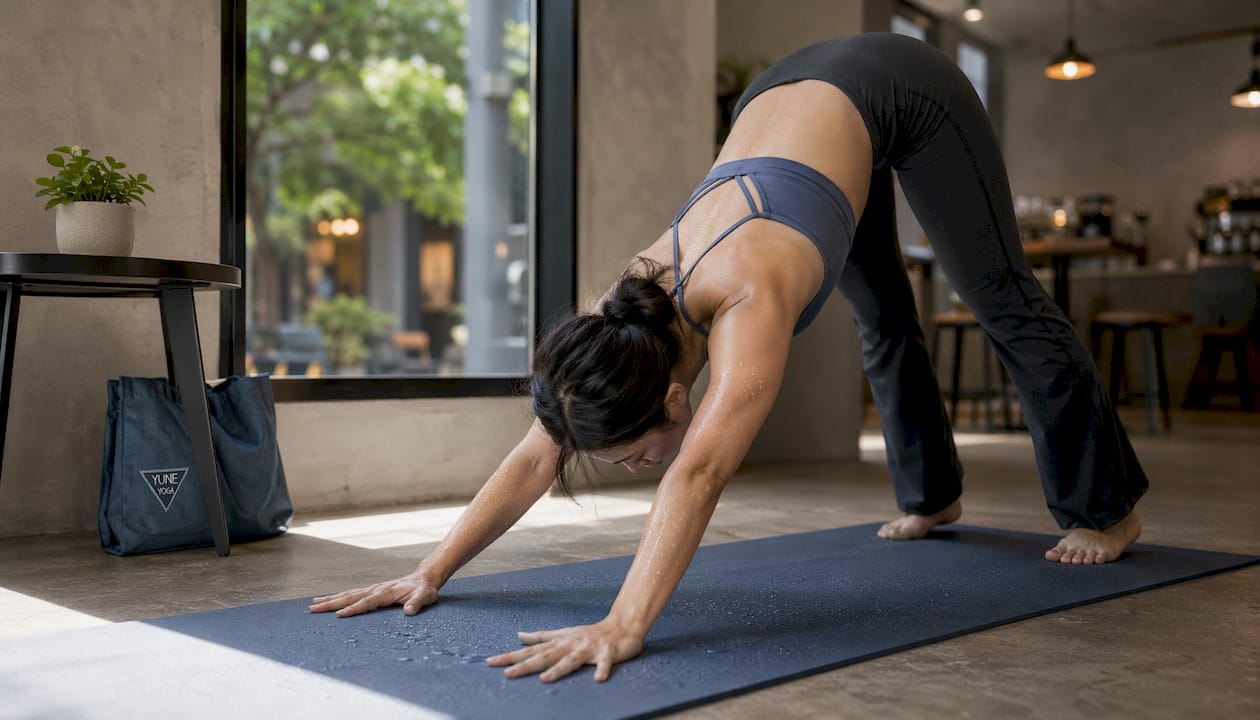
What Is a Sweat-Resistant Yoga Mat? A Sweaty Yogi's Guide
A sweat-resistant yoga mat is a mat engineered to maintain traction as moisture builds, typically through an open-cell or micro-absorbing surface, such as a PU-top bonded to a natural rubber base, a cork-and-rubber laminate, or a microfiber layer over rubber, rather than a sealed surface that lets sweat pool into a slick film. The core tradeoff is real and worth knowing upfront: the materials that grip best when wet tend to absorb sweat into their surface, which means they need more frequent cleaning and careful drying to stay hygienic.
Who benefits most from a mat built this way:
- Hot-yoga and Bikram regulars who sweat heavily from the first sun salutation and need grip that improves, not fails, as the session heats up
- Heavy-sweat practitioners in power vinyasa or vigorous flow classes where hands and feet shift constantly
- Studio teachers who practice daily and need a mat that holds up to repeated moisture exposure without breaking down or developing odor
Table of Contents
- How sweat-activated grip actually works
- Which material actually holds up when you sweat?
- How to choose the right mat for your practice
- How to clean, dry, and store a sweaty mat
- When a towel beats an expensive mat
- What studio buyers and teachers actually recommend
- Key Takeaways
- The case for being honest about what you’ll actually clean
- Yuneyoga has mats built for sweaty practice
- Sources and suggested further reading
How sweat-activated grip actually works
Not all “non-slip” mats perform the same when wet, and the reason comes down to cell structure. Mats fall into two categories: open-cell and closed-cell construction. Open-cell surfaces, like PU, cork, and natural rubber, have microscopic pores that draw in a thin layer of sweat instead of letting it sit on top. That micro-absorption increases friction between your skin and the mat. Closed-cell surfaces, like PVC and most TPE mats, are sealed. Sweat beads on top and forms a film, which is exactly what makes you slide.
Sweat-activated grip works because the surface pulls moisture in rather than repelling it. PU tops do this immediately. Cork does it more gradually but also resists bacterial growth. Natural rubber improves over time as its microscopic surface roughness develops during a break-in period. Closed-cell mats, by contrast, get slipperier as sweat accumulates.
Common slip triggers and how to address them:
- Sweat film on closed-cell surfaces: use a full-length towel or choose an open-cell mat
- Skin oils and body lotion: these clog PU pores and permanently reduce traction; skip lotion before practice
- Cleaning residue: soap left on the surface acts as a lubricant; rinse thoroughly and let the mat dry completely before rolling
Pro Tip: Before buying, mist the mat’s surface lightly with water and press your palm flat. If grip increases, the surface is absorbing moisture. If your hand slides, the mat is closed-cell and will need a towel in sweaty sessions.
Which material actually holds up when you sweat?
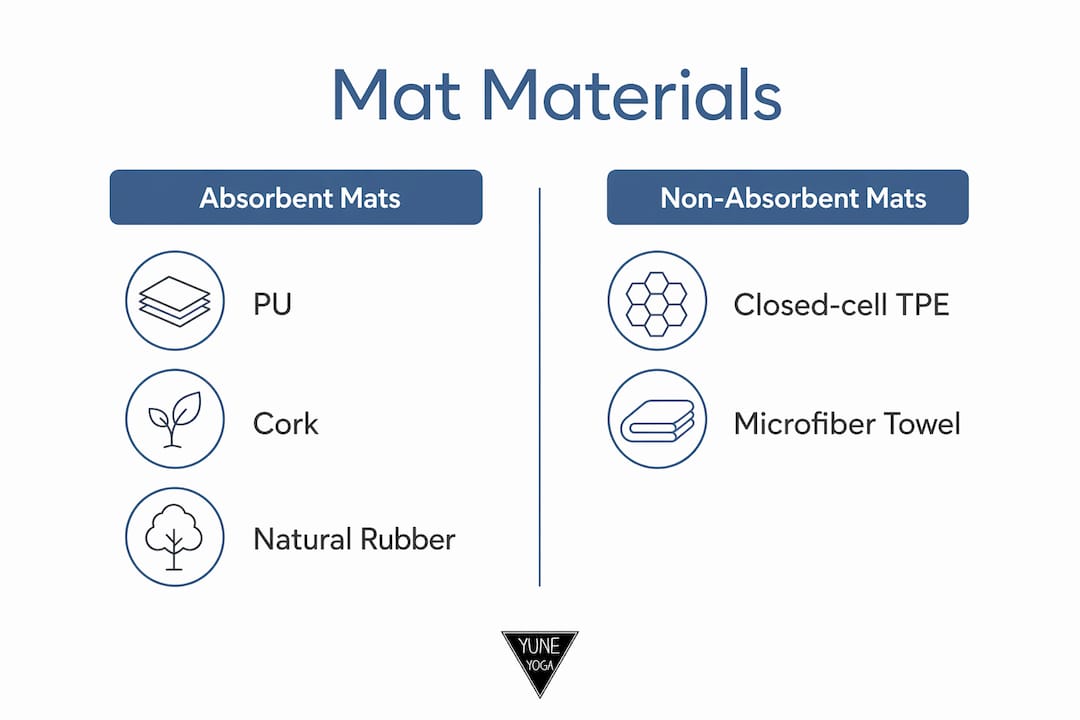
The five main materials each handle sweat differently, and the right one depends on how hard you practice, how often you clean, and what you’re willing to spend.
| Material | Grip when wet | Absorbency | Cleanability / hygiene | Durability | Eco / toxicity | Typical price |
|---|---|---|---|---|---|---|
| PU-top + rubber | Excellent; improves with sweat | Absorbs micro-layer | Moderate; sensitive to oils | Good, several years | Natural rubber base; PU is synthetic | — |
| Cork + rubber | Good; grippier when damp | Surface-level absorption | Easy; naturally antimicrobial | Good, several years | Renewable cork; rubber base | — |
| Microfiber over rubber | Very good; towel-like feel | High absorption | Moderate; machine-washable top | Moderate, a few years | Synthetic top; rubber base | $60–$120 |
| Natural rubber | Good; improves after break-in | Absorbs sweat | Moderate; needs regular cleaning | Good, several years | Biodegradable; contains latex | — |
| Closed-cell PVC / TPE | Poor when wet without texture | Repels; beads on surface | Easy; wipe clean | Excellent, many years | PVC has toxicity concerns; TPE is safer | — |
PU-top + rubber base is the go-to for serious hot-yoga practitioners. The PU surface absorbs a thin micro-layer of sweat and maintains traction as moisture appears, rather than after you’re already sliding. The catch: PU is sensitive to body oils and lotions, which can clog pores and permanently reduce grip. Clean it after every session.
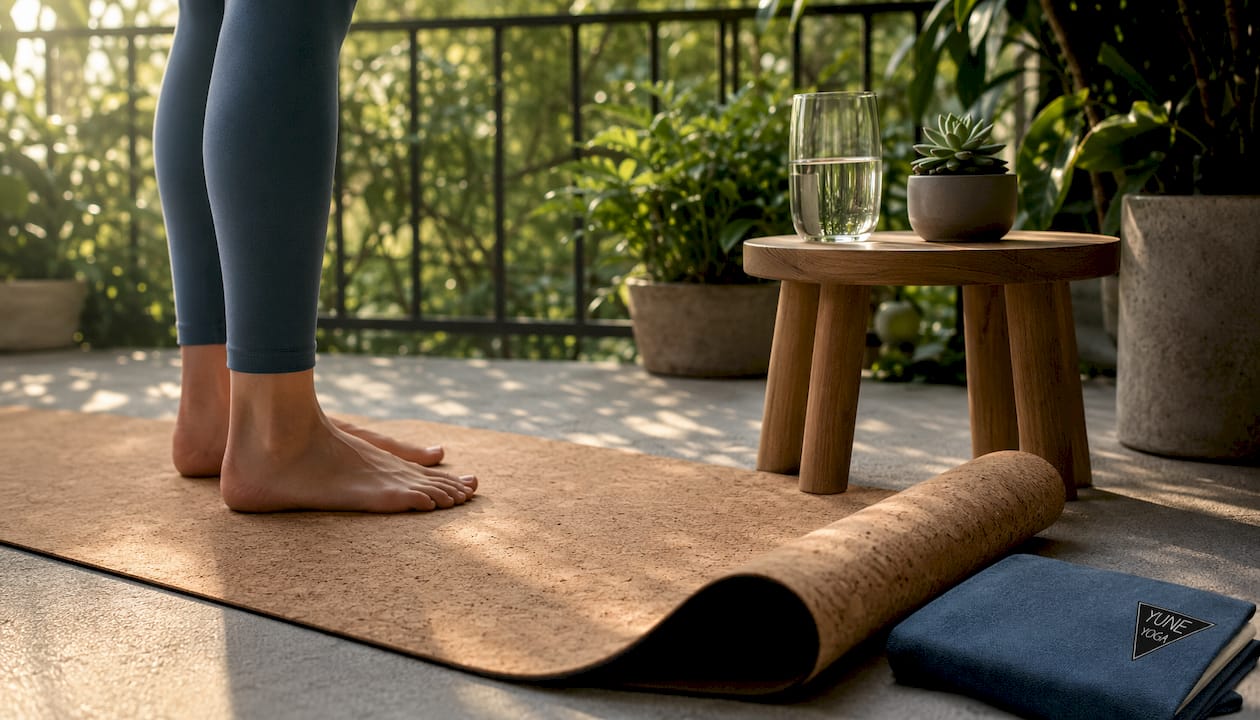
Cork + rubber is the hygiene-forward choice. Cork’s natural tannins give it antimicrobial properties that control odor in busy studio use, and the surface becomes grippier when slightly damp. It dries faster near the surface rather than soaking deep, which matters when you’re rolling it up after a 90-minute Bikram class.
Microfiber over rubber behaves like a built-in towel. The surface soaks up sweat aggressively, which keeps your hands and feet from sliding, but the top layer needs regular washing to stay fresh. Some microfiber tops are machine-washable, which is a genuine advantage for daily practitioners.
Natural rubber is the long-game material. It improves with a break-in period as microscopic surface roughness develops, and its open-cell structure draws in sweat to increase friction. One important note: natural rubber contains latex, so it’s not suitable for anyone with a latex allergy.
Closed-cell PVC / TPE is the easiest to clean but the hardest to grip when wet. Closed-cell surfaces repel liquid, so sweat sits on top as a film. These mats work well for gentle or moderate practices, and they’re the standard choice for studio rentals precisely because they wipe clean in seconds. In a sweaty class, pair one with a full-length towel.
Pros and cons at a glance:
- PU + rubber: instant grip, oil-sensitive, needs daily wipe-down
- Cork + rubber: antimicrobial, slower to grip than PU, heavier
- Microfiber: towel-like absorption, washable, wears faster
- Natural rubber: improves over time, latex risk, biodegradable
- PVC / TPE: durable and easy to clean, slippery when wet without a towel
How to choose the right mat for your practice
Start with your practice type, not the price tag. The wrong material for your sweat level will frustrate you regardless of what it costs.
Buyer questions to answer before you shop:
- How hot is your studio, and how much do you sweat by the midpoint of class?
- Do you practice daily, a few times a week, or occasionally?
- Do you travel with your mat, or does it stay at the studio?
- Are you sensitive to rubber smell or latex?
- How much time are you willing to spend cleaning after each session?
Decision flow:
- Heavy sweat, hot yoga, daily practice: PU-top + rubber base. Immediate wet grip, durable enough for daily use, and worth the extra cleaning time.
- Heavy sweat, hygiene priority, studio use: Cork + rubber. Antimicrobial surface means less odor risk, and it holds up well in shared spaces.
- Moderate sweat, occasional hot class: Natural rubber with a break-in period, or microfiber over rubber if you want faster results.
- Travel, rentals, or hygiene-first: Closed-cell TPE mat plus a washable full-length towel. Cheaper, easier to sanitize, and the towel handles the grip problem.
- Budget-conscious, mixed practice: TPE + towel combo. You get the durability of a closed-cell mat and the wet grip of an absorbent surface for less than a premium PU mat alone.
Quick in-store checklist:
- Mist the surface and press your palm flat. Does grip increase?
- Check the weight. Will you carry it to class daily?
- Ask about the base material. Natural rubber or TPE?
- Confirm the cleaning instructions. Can it handle daily wiping?
- Check the thickness. Thinner mats (3–4mm) give better ground feel; thicker ones (5–6mm) cushion joints.
For more on reducing slip during intense sessions, Yuneyoga’s blog covers practical tactics that work regardless of which material you choose.
How to clean, dry, and store a sweaty mat
Cleaning is where most practitioners fall short, and a neglected mat loses grip faster than a worn one.
Daily routine (after every sweaty session):
- Unroll the mat flat immediately after class. Never roll it up wet.
- Wipe both sides with a damp cloth or a diluted spray (a few drops of mild dish soap or white vinegar in water works well for most materials).
- Hang or lay flat in a ventilated area. Avoid direct sunlight for rubber and cork, which can dry out and crack.
- Wait until the surface is completely dry before rolling. For PU and cork, this typically takes 30–60 minutes in a well-ventilated room.
Weekly deep clean:
- For PU and natural rubber: wipe with a diluted vinegar solution (1 part white vinegar, 3 parts water). Do not soak or submerge.
- For cork: use a damp cloth only. Avoid harsh cleaners that can break down the cork-rubber bond.
- For microfiber tops: check if the top layer is machine-washable. If so, wash on a gentle cycle with no fabric softener.
- For TPE / PVC: wipe with a mild soap solution. These can handle slightly more aggressive cleaning without damage.
Warnings and hygiene checklist:
- Never store a mat rolled while damp. Mildew can develop within 24 hours in a humid environment.
- Avoid oil-based cleaners on PU surfaces. They saturate the pores and permanently reduce grip.
- Cork can delaminate if soaked. Surface-wipe only.
- For studio rental mats, spray with a diluted tea tree oil solution (a few drops in water) and wipe before and after use.
- Deep clean at least once a week if you practice daily in hot or humid conditions.
Pro Tip: If your mat starts to smell despite regular wiping, it’s usually a sign that sweat has penetrated deeper than a surface wipe can reach. Lay it flat, apply a baking soda paste, let it sit for 15 minutes, then wipe clean with a damp cloth and air dry fully.
When a towel beats an expensive mat
A full-length absorbent yoga towel is not a compromise. For certain situations, it’s the smarter choice.
Studio practitioners frequently recommend a towel-over-mat setup in heated rooms, especially where hygiene and quick turnover matter. A washable towel on a closed-cell mat gives you the wet grip of an open-cell surface with the easy sanitization of a sealed mat underneath.
When to choose a towel setup over a premium sweat-activated mat:
- Travel: a microfiber yoga towel weighs a fraction of a rubber mat and fits in a carry-on
- Studio rentals: you don’t know how well the rental mat was cleaned; a towel creates a personal hygiene barrier
- Extreme sweat levels: if you’re soaking through a PU mat in a 105°F Bikram class, a towel absorbs more volume than any mat surface can
- Budget: a quality microfiber towel costs $20–$40 and pairs with any mat you already own
Towel + mat vs. sweat-activated mat:
- Towel + closed-cell mat: lower cost, easy to wash, portable, slightly less stable underfoot
- PU or cork mat alone: better ground feel, no shifting, higher upfront cost, more cleaning discipline required
Pro Tip: For studio rental scenarios, pair a closed-cell TPE mat with a washable microfiber towel. The mat wipes clean in 30 seconds; the towel goes in the wash. You get grip, hygiene, and zero worry about what’s living in the rental mat.
If you’re still figuring out why your mat feels slippery, the cause is usually one of three things: sweat film on a closed-cell surface, oil residue on a PU surface, or cleaning product left behind.
What studio buyers and teachers actually recommend
Studio-level decision-making is more practical than most product reviews acknowledge. When a studio buys mats for 20 students, the priority shifts from peak wet-grip performance to durability, cleanability, and odor control over hundreds of uses.
“Not all ‘non-slip’ mats perform equally when wet. For heavy sweating, prioritize materials designed for moisture management, like PU or cork, rather than assuming any mat labeled non-slip will hold up in a heated room.” — HTS Yoga, material analysis
Recommendations by user type:
- Daily hot-yoga practitioner: PU-top + rubber base for maximum wet traction; commit to daily wipe-downs and weekly deep cleans
- Occasional sweaty class: natural rubber or cork + rubber; both improve with use and handle moderate sweat well without demanding daily maintenance
- Studio owner buying rental stock: closed-cell PVC or TPE mats that wipe clean quickly; provide towels or require students to bring their own
- Traveler: microfiber towel over a lightweight TPE mat, or a foldable natural rubber travel mat for practitioners who want grip without the towel
In U.S. studios, especially those running hot-hatha or power vinyasa formats, the practical standard is to offer closed-cell rental mats and recommend that regular students bring their own PU or cork mat. That split reflects the real tradeoff: open-cell surfaces improve grip when damp but require stricter cleaning, while closed-cell materials are easier to sanitize but can become slippery as sweat builds. A yoga teacher’s guidance on class format and sweat intensity is often the most direct way to narrow down which surface is right for your specific practice.
Key Takeaways
A sweat-resistant mat’s grip depends entirely on whether its surface absorbs moisture or repels it, and that single distinction drives every material, care, and cost decision that follows.
| Point | Details |
|---|---|
| Open-cell vs. closed-cell | Open-cell surfaces (PU, cork, rubber) absorb sweat and increase grip; closed-cell surfaces (PVC, TPE) repel it and get slippery. |
| Best material for hot yoga | PU-top bonded to a natural rubber base delivers the strongest, most consistent wet traction for heavy-sweat sessions. |
| Hygiene tradeoff | Better wet grip means more cleaning; open-cell mats need daily wiping and weekly deep cleans to prevent odor and mold. |
| Towel as a practical alternative | A washable microfiber towel over a closed-cell mat costs less and is easier to sanitize than a premium open-cell mat. |
| Yuneyoga for curated options | Yuneyoga offers eco-conscious mats and towels suited to hot-yoga and vigorous flow, with blog guidance on materials and care. |
The case for being honest about what you’ll actually clean
The conventional wisdom in yoga mat marketing is to buy the grippiest mat you can afford. That advice skips the part where grip and hygiene are in direct tension, and most practitioners don’t find out until their $120 PU mat starts smelling like a gym locker three months in.
The mats that grip hardest when wet, PU and open-cell rubber, are also the ones that absorb everything: sweat, skin oils, bacteria. They need real cleaning after every session, not a quick wipe. If that’s not your habit, a closed-cell mat plus a washable towel will serve you better in the long run, both for hygiene and for grip consistency.
Cork is the underrated middle ground. It grips well when damp, resists odor naturally, and doesn’t punish you as hard for skipping a day of cleaning. It’s heavier than PU, and it takes a class or two to warm up to the feel, but for studio teachers and daily practitioners who want a mat that stays cleaner longer, it’s worth the weight.
The other thing most guides don’t say: a new PU mat often grips better than one that’s six months old and improperly cleaned. Longevity of wet-grip performance depends almost entirely on how consistently you clean it and whether you’ve been applying lotion before class. Buy the right material for your actual cleaning habits, not your aspirational ones.
Yuneyoga has mats built for sweaty practice
If you practice hot yoga, power vinyasa, or any format where you’re dripping by the second pose, the mat underneath you matters more than most gear decisions. Yuneyoga carries a curated selection of eco-conscious mats and yoga towels designed specifically for practitioners who need wet-grip performance without sacrificing sustainability.
The collection includes natural rubber and eco-friendly options filtered by material, weight, and grip type, so you’re not guessing which mat handles sweat. Browse the full mat selection to find options suited to hot-hatha and vigorous flow, or check the best hot yoga mats post for a curated shortlist with material notes. If you’re unsure which surface fits your practice, the product filters on the Yuneyoga site let you sort by material and intended use before you commit.
Sources and suggested further reading
- HTS Yoga: Cork vs. PU/TPE/Rubber for Hot Yoga and Sweat — material-by-material analysis focused on wet-grip performance and hygiene tradeoffs
- HTS Yoga: Yoga Mat Materials Compared (Rubber vs. TPE vs. PU vs. PVC) — buyer guide covering open-cell vs. closed-cell behavior and cleanability
- HTS Yoga: Yoga Mat Texture Selection Guide — how surface texture affects wet traction and studio cleaning requirements
- Ming Yoga Mat: Natural Rubber Material Science and Performance Guide — break-in behavior, open-cell structure, and long-term grip development
- Hugger Mugger: Do Yoga Mats Absorb Water? — clear explanation of open-cell vs. closed-cell absorption
- Fitness StackExchange: Type of yoga mat for sweaty practice — practitioner community guidance on towel-over-mat setups and rental hygiene
- Outdoor Gear Lab: Best Yoga Mats of 2026 — tested rankings with wet-grip performance notes across multiple mat types
- Yuneyoga Blog: Tips to Prevent Slipping on Your Yoga Mat — practical tactics for reducing slip during sweaty sessions
- Yuneyoga Blog: Why Is Your Yoga Mat Slippery? — diagnostic guide for identifying the cause of slipperiness
- Yoga for Beginners eBook — foundational practice guide for practitioners new to hot yoga formats
Test wet grip in person whenever possible, and always follow the manufacturer’s cleaning instructions. A mat that’s right for your practice and your cleaning routine will outlast one that’s technically superior but impractical to maintain.


