

How to choose the lightest yoga mat without sacrificing grip or comfort
Key Takeaways
The lightest yoga mat is not automatically the best one. The right choice balances weight with grip, cushioning, packability, and the kind of surface where you usually practice.
- Choose thickness and cushioning around your joints and yoga style.
- Compare folded size, rolled size, and total carry weight.
- Look for a surface that stays stable on your usual floor.
- Check material, cleaning needs, and resistance to heat and moisture.
- Treat product specifications as a starting point, then match them to your routine.
Understand what makes a yoga mat lightweight
A lightweight mat uses less material, a thinner profile, or a construction designed to fold into a compact shape. That can make a noticeable difference when you carry it through a commute or fit it into a small suitcase. The trade-off is that less material may change how the mat feels under your hands and knees. Start by deciding whether portability is your main priority or simply a useful bonus.
Typical yoga mat weights by material
Weight varies by dimensions, thickness, density, and added layers, so material alone will not tell the whole story. A thin foam mat may weigh less than a natural rubber mat of the same size, while a dense, slim mat can feel surprisingly substantial. Read the listed weight alongside the dimensions rather than treating a material label as a guarantee.
A useful comparison is to weigh the mat together with its strap or carrying bag. That is the load you will actually take to class or on a trip. If you are comparing options with different widths, also consider how much usable practice space you gain for each additional ounce.
How mat thickness affects portability
Thickness affects both comfort and bulk. A very thin mat usually folds or rolls more easily, but it may transmit more pressure from a hard floor. A thicker mat takes more space in luggage and can be heavier, yet it may feel steadier during kneeling poses and seated work.
Think about the surfaces you use most. A thin travel mat placed over a carpet or studio floor can be perfectly practical, while the same mat on concrete may feel unforgiving. The best lightest yoga mat is the one that remains comfortable in the places where you actually practice.
Foldable, rollable, and hybrid designs
Foldable mats make efficient use of luggage because they can be stacked between clothes or slipped into a backpack. Rollable mats are often easier to carry over a shoulder and may lie flatter when unrolled. Hybrid designs combine a thin practice surface with a towel-like or textured layer, which can help when sweat or limited packing space is part of the problem.
Before buying, check how the mat behaves after folding. Creases are not necessarily a defect, but repeated sharp folds can affect the surface over time. A mat that folds compactly yet stores rolled between trips may hold its shape better than one that stays tightly folded for months.
When a lighter mat may be less durable
A low weight can mean fewer reinforcing layers or a thinner wear surface. That does not make every light mat fragile, but it does mean you should look for clear information about construction, edge finishing, and intended use. If you practice every day on rough flooring, durability may matter more than saving a few extra ounces.
Pay attention to the return policy as well as the specification sheet. A short trial on your normal floor can reveal whether the surface bunches, stretches, or loses its shape. Weight is one useful measure, not a complete quality rating.
Match the mat to your practice
Your practice determines what “light enough” really means. Someone walking ten minutes to a studio may value cushioning more than the person flying with only a personal item. Outdoor users also need to think about uneven ground, moisture, and cleaning. Choose the mat around those real conditions rather than an idealized practice space.
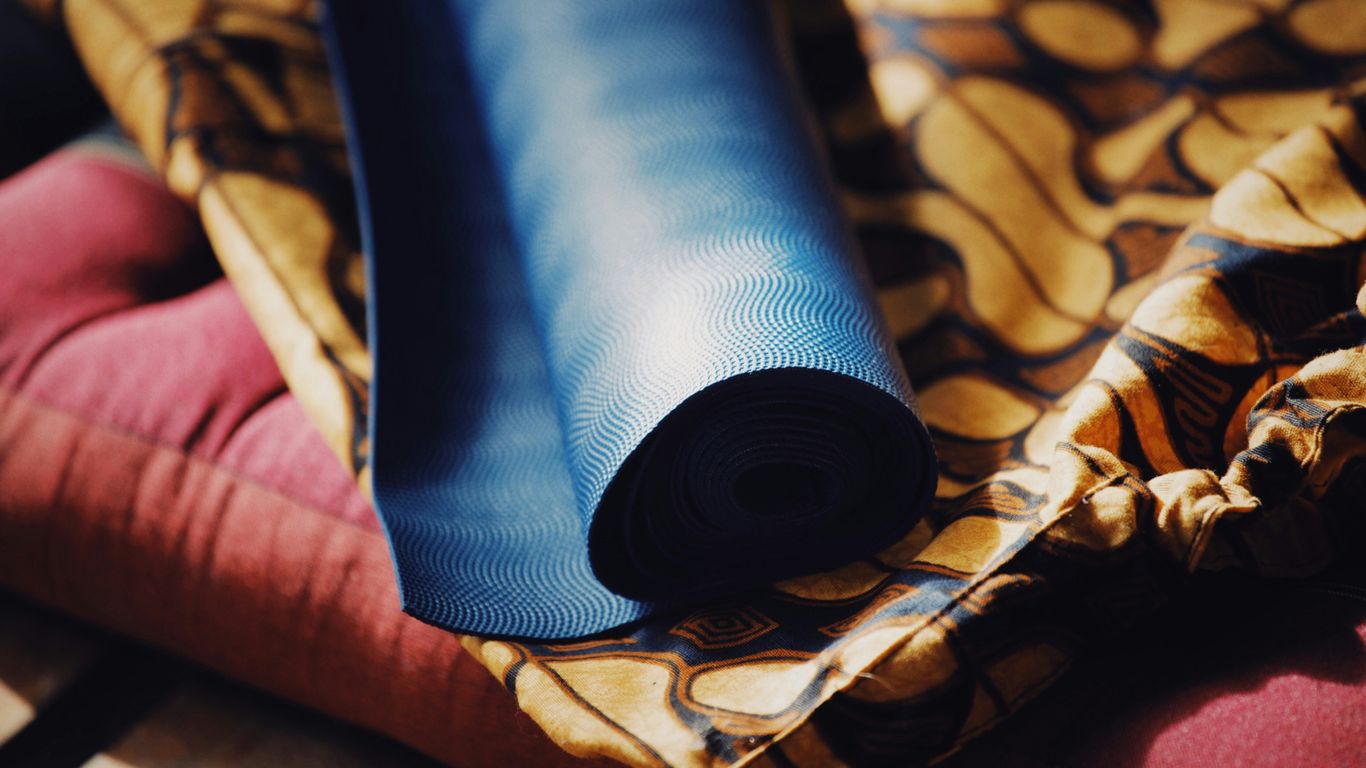
Lightweight mats for travel and commuting
For travel, folded dimensions can matter more than the number on the scale. A mat that is slightly heavier but folds into a small rectangle may be easier to pack than a lighter mat that stays long and cylindrical. For commuting, a strap, sleeve, or compact carry bag can prevent the mat from becoming awkward on public transport.
A travel mat packing guide can be useful when comparing weight, foldability, grip, and care together. Those factors work as a system: a compact mat is less helpful if it becomes slippery at the destination or needs special handling after every session.
Choosing support for yoga styles
Dynamic flows call for a surface that stays planted as you move between positions. Restorative practice may place more value on gentle cushioning and warmth, while meditation or breath-focused sessions can work well on a very thin mat over a softer floor. Pilates and strength work may require a different balance of traction and pressure relief.
The Durga Lightweight Yoga Mat is described as a 6mm non-slip mat with cushioned comfort, designed for all yoga styles and for home, studio, or outdoor use. That kind of specification suits someone who wants portability without choosing an especially thin surface.
Mats for outdoor and studio use
Outdoor practice introduces grit, grass, dampness, and uneven ground. A mat with enough cushioning can soften small imperfections, but you should still inspect the surface before placing it down. In a studio, the floor is usually more predictable, so a thinner design may be easier to carry without giving up as much stability.
If your routine moves between both settings, prioritize a mat that wipes clean and does not curl badly at the edges. Keep a small cloth in your bag, especially if you practice near sand or soil. Cleaning the underside before rolling it prevents outdoor debris from traveling into your storage space.
When extra cushioning matters most
Extra cushioning is most noticeable under knees, wrists, hips, and the base of the spine. It can also make a hard hotel floor more usable when you do not have another layer underneath. However, very soft foam may reduce floor feedback and make balancing poses feel less precise.
Try to separate cushioning from softness. A mat can feel plush at first but compress unevenly, while a denser mat may offer firm support with less overall thickness. If joint comfort is a recurring concern, saving a little weight may not be worth the daily compromise.
Compare materials and construction
Material affects grip, odor, texture, cleaning, and how a mat ages. Construction matters just as much: two mats made from related materials can feel different because one has a printed surface, a reinforcing layer, or a denser core. Read the description for what is actually stated, and avoid filling gaps with assumptions.
Natural rubber versus synthetic foam
Natural rubber often has a substantial, grounded feel and can provide strong traction, but it may be heavier than very thin synthetic foam. Some people also need to avoid latex-related materials, so the material disclosure deserves careful attention. Synthetic foam can be lighter and easier to fold, though its density and surface finish determine whether it feels stable.
Neither category is automatically superior. Compare weight, thickness, dimensions, and care instructions as a group. If the mat will sit in a warm car or damp bag, odor and drying requirements may be more important than the material name on the front of the package.
TPE, PVC, and eco-friendly alternatives
TPE, PVC, PER, and natural rubber each appear in different mat constructions, and product descriptions may use environmental language in different ways. Look for specific information such as latex-free, phthalate-free, toxin-free, or moisture-resistant rather than relying on a broad phrase like “eco-friendly.”
The Mafdet Lightweight Yoga Mat is described as a 6mm, non-slip, toxin-free PVC mat with a reversible design, lightweight construction, and easy cleaning. That makes it a useful example of how a product description can combine a stated material with practical features without requiring the mat to be ultra-thin.
Closed-cell and open-cell surfaces
A closed-cell surface generally resists absorbing moisture and is often simpler to wipe down. An open-cell texture may feel more absorbent and grippy, but it can require more careful drying and cleaning. The distinction is helpful, though the actual surface finish still matters more than the label alone.
If you sweat heavily, ask how the manufacturer recommends cleaning and drying the mat. A surface that feels excellent during class may become unpleasant if moisture remains trapped in a closed bag. Build a small care routine around the mat’s stated material and finish.
How construction affects odor and longevity
Odor can come from new-material off-gassing, trapped sweat, or storage while the mat is still damp. Layered construction may improve comfort but can also create more places for moisture to linger. Good ventilation after practice is often as important as the material itself.
Look for even edges, a consistent surface, and a base that does not separate when gently flexed. These are simple visual checks, not guarantees, but they can help you reject a poorly finished option before purchase. A well-cared-for lightweight mat can last longer than a heavier mat that is repeatedly stored wet.
Evaluate grip, stability, and comfort
Grip is not one single quality. A mat may feel sticky when dry, absorb moisture as you sweat, or rely on texture to keep hands and feet from sliding. Floor type also changes the result. Test the whole combination—body, mat, and floor—rather than judging traction from a product photograph.
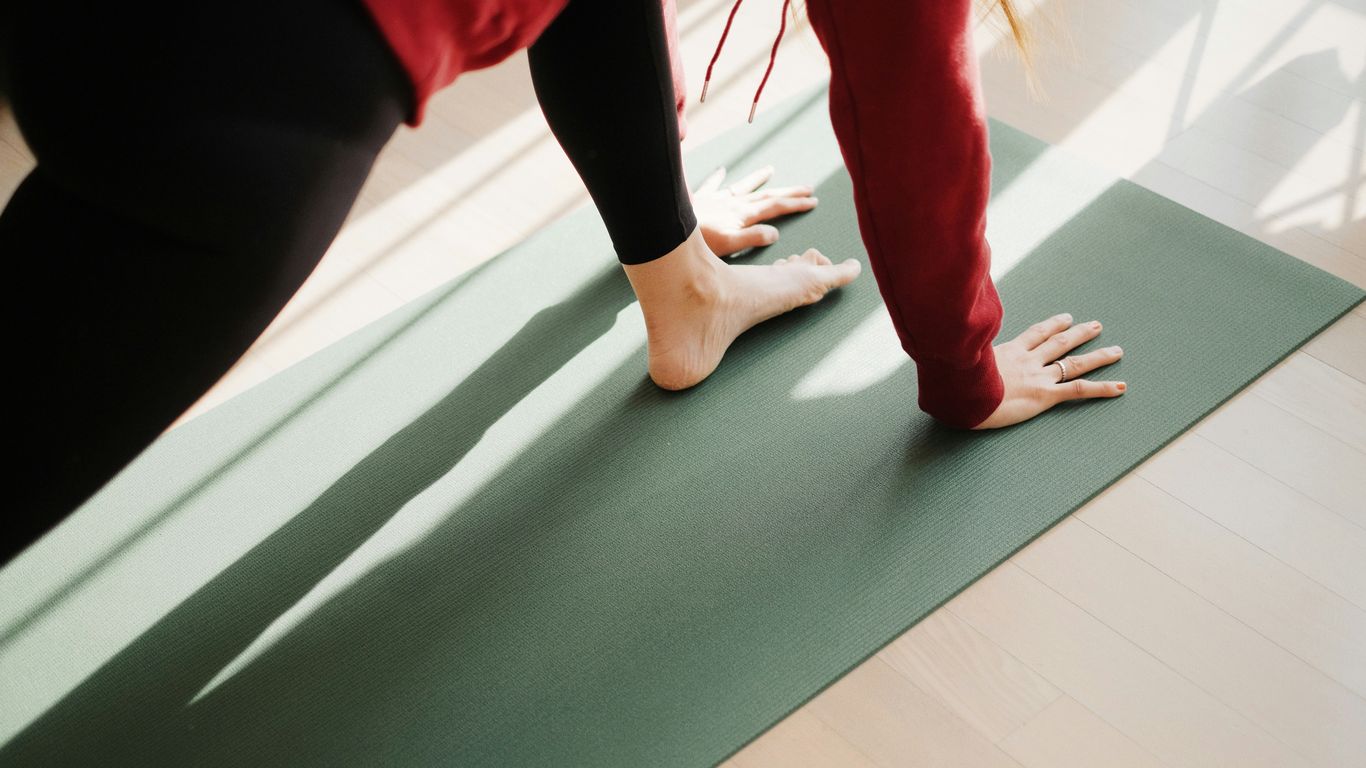
Dry grip for everyday practice
Dry grip matters during gentle flows, standing poses, and transitions before sweat becomes a factor. A textured surface can provide traction without feeling tacky, while a smoother surface may feel comfortable but require more deliberate placement. If you practice slowly, subtle slipping can be just as distracting as slipping during a fast sequence.
Place both hands and feet on the mat and shift your weight gradually. You are looking for a surface that stays in place without forcing you to clench your fingers or toes. Reliable traction matters daily because small adjustments can change how comfortable the whole session feels.
Sweat absorption and hot yoga performance
Sweat changes the grip equation. Some surfaces become more secure as moisture meets the texture, while others become slick and need a towel layer. If you attend hot classes, check whether the mat is intended to absorb moisture and whether it can be washed or wiped down as recommended.
Do not assume that a very absorbent surface is maintenance-free. It may need more time to dry fully, and a damp roll can develop odor. A simple routine—wipe, air out, and store only when dry—protects both comfort and longevity.
Surface texture and joint comfort
Texture affects how the mat feels under bare skin and clothing. Deep patterns may improve traction but can press into knees or palms, while a smooth surface may feel gentler but offer less mechanical grip. Density also changes comfort; a textured mat with firm support can feel better than a soft mat that bottoms out.
If you are sensitive around the wrists or knees, test those contact points instead of judging only how the mat feels under your feet. A folded towel can help during a trial, but it may also hide whether the mat itself provides enough support. Comfort should remain consistent across the poses you practice most.
Preventing slipping on different floors
A mat can grip the floor well in one room and slide in another. Dust, polished wood, tile, carpet, and outdoor surfaces each change the contact between the underside and the ground. Clean the floor and the mat before assuming the construction is at fault.
Use a short checklist when testing an option:
- Press down through both hands during a plank-like position.
- Step slowly between two standing positions.
- Check whether the corners lift after unrolling.
- Repeat the test on your most common practice floor.
These quick checks reveal more than a single dry-hand test. If the mat shifts, first remove dust and give it time to lie flat; if the problem remains, the design may not suit that floor.
Check portability and travel features
Portability is about more than weight. A mat can be light but inconvenient if it refuses to fold, takes up too much width, or lacks a practical way to carry it. Think through the complete trip from storage at home to the practice surface and back again. Small design details become noticeable when you repeat that trip often.
Foldability for packing in luggage
A foldable mat can fit between layers of clothing and avoid the long shape of a rolled mat. Before packing, check the manufacturer’s folding pattern and whether the practice surface should face inward or outward. A mat that folds neatly is easier to protect from sharp objects inside a suitcase.
Do not judge compactness only by the folded photograph. Look for the actual folded dimensions, then compare them with your bag’s interior. If you need a second layer for cushioning, include that in the space calculation.
Carrying straps, bags, and storage
A strap can make a rolled mat comfortable to carry, but it does not always protect the mat from rain or dust. A bag adds protection and may make a thin mat easier to organize, though it also adds weight. For regular commuting, the most useful accessory is the one you will actually use consistently.
Store the mat according to its construction. Many mats benefit from being rolled loosely between trips, even if they fold for travel. Keeping the surface clean and allowing it to dry before storage will usually matter more than adding another accessory.
Mat size and usable practice space
A narrow or short mat may save weight, but it can make transitions feel cramped. Compare the width and length with your reach and the poses you perform most often. A little extra surface can be worthwhile if it prevents hands or feet from landing on a dirty floor.
The Nakata Yoga Mat is described as a 6mm latex-free mat with cushioning, a moisture-resistant surface, and dimensions intended for home, studio, or outdoor use. It illustrates why usable space and easy cleaning should be considered alongside portability, especially for people who practice in changing locations.
Airline and commute-friendly considerations
Airline rules and personal-item limits vary, so check current baggage requirements rather than assuming a mat will qualify as a small carry-on. For commuting, measure the mat with its strap or case attached. A compact shape that fits inside your normal bag may be more valuable than a lower listed weight.
A practical portable practice setup can also include a towel, small cleaner, and a strap. Keep the extras minimal, though: the point of a travel kit is to reduce friction, not recreate your entire home studio in a suitcase.
Balance weight with durability and care
A lightweight mat earns its place when it remains useful after repeated packing, unpacking, cleaning, and rolling. Care requirements are part of the ownership cost. A mat that needs extensive maintenance may not be convenient even if it is easy to carry. Look for a routine you can follow without much fuss.
Signs of a mat built to last
Consistent thickness, cleanly finished edges, and a surface that does not flake or separate are encouraging signs. Product details such as anti-tear construction, moisture resistance, or UV-cured artwork can also be useful when they are explicitly stated. None replaces hands-on use, but specific construction information is better than vague durability language.
Consider how often the mat will travel. Occasional trips place different demands on it than daily folding and unfolding. If you practice frequently, a slightly heavier design with a stable base may deliver better value over time.
Cleaning requirements for different materials
Follow the care instructions for the specific material rather than using a strong household cleaner by default. Some mats can be wiped with a damp cloth, while others need a gentler solution and thorough air-drying. Avoid saturating a mat unless the manufacturer expressly says it can be washed that way.
For general home moisture planning, even a charcoal dehumidifier guide can be a useful reminder that ventilation and storage conditions affect many portable household items. In practice, the mat should be clean and completely dry before it goes into a closed bag.
Protecting the mat from heat and moisture
Heat can soften some surfaces, fade printed designs, or accelerate material changes. Moisture can create odor and may weaken adhesives or backing layers when trapped for long periods. Do not leave the mat in a hot car or pack it immediately after a sweaty session.
Air it out in shade, keep it away from sharp edges, and avoid placing heavy objects on a folded mat for long stretches. These habits take little time and help preserve both the surface feel and the shape.
When replacing a lightweight mat makes sense
Replace a mat when it has become slippery, permanently misshapen, cracked, or uncomfortable to use. A faded design alone may not matter, but a surface that changes during practice can affect confidence and stability. If cleaning no longer removes a persistent odor, the material may have reached the end of its useful life.
Treat replacement as a practical decision, not a failure. A mat that has supported years of travel and regular sessions may have provided good value even if it was never the heaviest or most expensive option.
Choose the best lightest yoga mat for your needs
The final choice should be a short list, not a contest to find the smallest possible number. Start with your practice surface, preferred cushioning, and travel pattern, then use weight as the tie-breaker. This approach leaves room for comfort and grip, which are the features you notice during every session.
Questions to ask before buying
Ask where you will use the mat, how often it will travel, and whether you need it to fold into luggage. Confirm the listed dimensions, thickness, material, and care instructions. If you have latex or other material sensitivities, check the full specification instead of relying on a product title.
It is also worth asking whether the mat needs a towel, bag, or separate strap. A low purchase weight can become less appealing if the complete setup requires several add-ons. For practical product comparisons, even a guide to HVAC air filters demonstrates the value of matching a specification to the conditions where an item will be used—not just choosing the biggest or smallest number.
A practical weight-to-performance comparison
Use a simple comparison table to keep the trade-offs visible. The ranges below are broad planning categories, not universal standards; actual weights vary with size and construction.
| Mat profile | Portability | Likely comfort | Best fit |
|---|---|---|---|
| Ultra-thin travel mat | Excellent | Limited on hard floors | Frequent flights and short sessions |
| Thin everyday mat | Very good | Moderate | Commuting and studio practice |
| Mid-thickness lightweight mat | Good | Higher | Mixed home, studio, and outdoor use |
| Cushioned full-size mat | Moderate | High | Daily practice with more joint support |
The table makes the central compromise easier to see. If you practice mostly on soft or predictable floors, the first two profiles may be enough; if you need one mat for every setting, the middle option may be more versatile.
Budget considerations and value
Price should reflect how often you will use the mat and how costly replacement would be. A modestly priced mat can be excellent for occasional travel, while a more durable option may make sense for daily practice. Include shipping, a carrying case, and any towel you will need when comparing total cost.
A bargain is less appealing if it forces you to replace the mat quickly or avoid using it because the surface is uncomfortable. Conversely, paying more for features you will never use does not improve value. Match the spend to your actual habits.
Red flags in product specifications
Be cautious when a listing gives a weight but omits dimensions or thickness. Vague claims such as “maximum grip” or “ultra durable” are hard to evaluate without information about texture, construction, or care. Also look for unclear material names, missing allergy information, and no guidance on cleaning or storage.
A dependable specification sheet should help you picture the mat in your bag, under your hands, and on your usual floor. If it cannot answer those basic questions, keep comparing. The lightest option is only a good choice when it remains practical after purchase.
Conclusion
Choosing the lightest yoga mat is really an exercise in balance: reduce the carrying burden without giving up the grip, support, and comfort that keep practice enjoyable. Compare the complete setup, test the mat against your usual floors, and choose the thinnest option that still meets your everyday needs.
Frequently Asked Questions
What is the lightest yoga mat?
The lightest option is usually a very thin travel mat, but exact weight depends on its dimensions, material, and construction. Check the listed weight together with folded size and usable practice space.
Is a lightweight yoga mat comfortable?
It can be comfortable on carpet, studio flooring, or another soft surface. On hard floors, a thin mat may provide less cushioning, so consider your joints and whether you can add a towel or second layer.
Are foldable yoga mats better for travel?
Foldable mats often fit more easily into suitcases and backpacks than long rolled mats. They may develop creases, so follow the maker’s storage instructions and avoid keeping them sharply folded between trips.
Does a heavier yoga mat have better grip?
Not necessarily. Grip depends on the surface texture, material, floor contact, and moisture response. Weight may improve steadiness, but it is not a reliable substitute for a well-designed underside and practice surface.
How thick should a travel yoga mat be?
Choose the thinnest thickness that remains comfortable on the floors you expect to use. Frequent outdoor or hotel-room practice may call for more cushioning than occasional use on a studio floor.
How should a lightweight yoga mat be cleaned?
Use the care method recommended for its material, usually a gentle wipe followed by complete air-drying. Do not store it while damp, and avoid strong cleaners unless the manufacturer specifically permits them.
When should a yoga mat be replaced?
Replace it when the surface becomes slippery, cracked, permanently uneven, or difficult to clean. A mat that no longer feels stable or comfortable is no longer serving its main purpose, regardless of its original price.

