

How to choose the lightest yoga mat for travel, comfort, and stability
Key Takeaways
The lightest yoga mat is not automatically the best travel mat. Weight, packed size, grip, cushioning, and the kind of practice you do all matter.
- Thin mats are easiest to carry, but they usually offer less cushioning.
- Natural rubber, TPE, PVC, and polyurethane surfaces each feel different in use.
- Foldable designs can fit more easily into backpacks and carry-ons than rolled mats.
- Grip and stability matter just as much as the number on the scale.
- Test the mat on a hard floor before relying on it for regular travel.
What makes a yoga mat lightweight
A lightweight mat uses less material, folds or rolls into a manageable shape, and does not turn a small travel bag into a heavy one. The right choice depends on whether you need a complete practice surface or simply a clean layer over another mat. Start with the numbers, then consider how those numbers affect actual use.
Typical yoga mat weights by material
Material influences weight, but thickness and construction often matter just as much. A thin natural-rubber mat may weigh less than a thick PVC mat, while a flexible TPE mat can be easier to carry without feeling flimsy. Product dimensions are worth checking alongside the listed weight.
| Mat type | Typical feel | Portability tendency | Best suited to |
|---|---|---|---|
| Thin natural rubber | Grippy and flexible | Light to moderate | Travel and active practice |
| TPE | Soft, springy, flexible | Light | General travel use |
| PVC | Structured and supportive | Moderate | Home, studio, and mixed use |
| Thin polyurethane surface | Smooth or absorbent, depending on design | Very light | Layering and short trips |
These categories are useful starting points rather than strict rules. A mat's backing, reinforcement, and full dimensions can shift the final weight considerably.
How thickness affects portability
Thickness changes both the amount of material you carry and the space the mat occupies when packed. A 2mm mat may slide into a laptop bag, while a 5mm or 6mm mat needs more room and tends to feel more substantial. For a broader look at weight, thickness, and durability, see this travel yoga mat guide.
A thin mat can work especially well on carpet, wood, or as a clean top layer over a studio mat. On tile or rough outdoor ground, however, the same slim profile may feel less forgiving.
The trade-off between weight and cushioning
Reducing weight usually means giving up some cushioning, structure, or both. That is not necessarily a problem: travelers who practice standing sequences may prefer a firm, direct surface, while anyone kneeling for long periods may want more padding. Your floor matters as much as your suitcase when deciding how thin to go.
Consider where most sessions will happen before choosing the lightest option available. Hotel carpet and a hard airport-floor-style surface create very different demands.
When a foldable mat is lighter in practice
A foldable mat can be easier to carry even when its listed weight is close to that of a rollable mat. Fold lines let it fit into a rectangular pocket, whereas a rolled mat may require a larger bag or hang awkwardly from the outside. The practical advantage is often the space it leaves for clothing and toiletries.
This is also why a foldable mat comparison can be more useful than a simple weight ranking. Packed shape changes how often you will actually bring the mat along.
Choose the right mat material
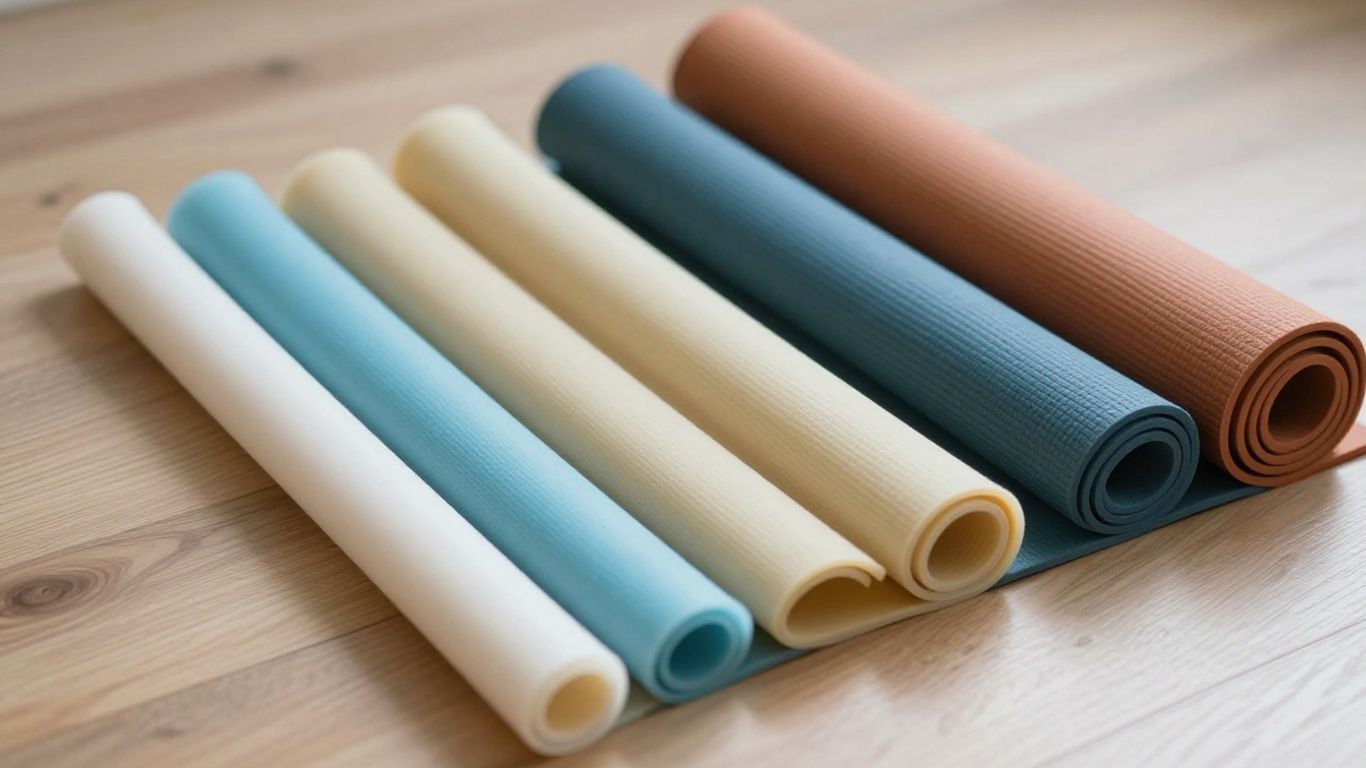
Materials affect grip, flexibility, odor, cleaning, and how a mat responds to repeated folding. There is no universally perfect surface, so think about your hands, the floor beneath you, and how frequently the mat will be packed. A material that feels pleasant at home should still suit the places where you travel.
Natural rubber for grip and durability
Natural rubber often provides a secure, slightly tactile feel and can hold its shape well. It may be heavier than an ultra-thin synthetic mat, and some people notice a distinct smell when it is new. Check care instructions and material sensitivities before choosing it for frequent travel.
TPE for a lightweight, flexible option
TPE is commonly chosen for its flexible, soft feel and relatively low weight. It can be comfortable for general practice and easy to roll, although the exact grip varies by surface finish. If you practice in several rooms or pack the mat often, flexibility may be more useful than maximum density.
PVC for affordability and structure
PVC can offer a stable, structured feel and is available in many thicknesses and price ranges. It may be a sensible choice when you want cushioning without moving into a premium price bracket. Yune Yoga's Mafdet Lightweight Yoga Mat is documented as a 6mm, non-slip, toxin-free PVC mat with cushioning, a reversible design, and easy cleaning.
The thicker construction makes a mat like this more suitable for people who want one mat for travel, home, and studio use rather than the absolute smallest packed option.
Travel mats and thin polyurethane surfaces
Very thin travel mats often use a grippy or absorbent top surface over a flexible base. They are designed for low packed volume and may work well over carpet, a borrowed studio mat, or a reasonably smooth floor. Their trade-off is clear: they are convenient to carry but provide less protection from hard ground.
For more packing ideas, this travel mat packing guide covers compact storage and use across different settings. Read the product details carefully, especially when a surface is intended to respond to moisture or sweat.
Match mat weight to your yoga practice
The best weight depends on what you ask the mat to do. Gentle stretching, flowing sequences, heated classes, and long kneeling sessions each reward slightly different features. Choose for the practice you repeat most, not an idealized routine you may only do occasionally.
Best features for gentle and restorative yoga
Restorative sessions often involve longer holds and more time on the knees, hips, or back. A little extra cushioning may matter more than saving the final few ounces. If the mat will stay in a hotel room for several days, a comfortable surface can make it easier to use consistently.
What to look for in vinyasa and flow classes
Flow practice benefits from a surface that stays aligned while you step, pivot, and move between poses. Moderate thickness, dependable traction, and a mat that does not bunch at the edges are practical priorities. Weight still matters, but a mat that shifts constantly will be frustrating to carry anywhere.
Stability needs for hot yoga and sweaty sessions
Sweat changes the feel of a surface, so look for a mat or top layer that maintains traction when damp. Yune Yoga's Ataraxy Foldable Suede Yoga Mat is documented as a PVC-free natural-rubber mat with a vegan suede top and sweat-activated grip, designed for hot yoga and outdoor sessions.
That kind of surface may be more useful than choosing solely by dry weight. Bring a towel when needed, and let the mat dry fully before packing it away.
A short demonstration can also help you judge how a travel mat folds, grips, and settles on the floor. Watch for real movement rather than relying only on a product photograph.
When extra cushioning matters for joints
If your practice includes frequent kneeling, seated poses, or low transitions, a very thin mat may feel harsh on a hard floor. You can add a small towel or knee pad, but that increases the total kit you carry. Sometimes a slightly heavier mat is the lighter overall solution because it removes the need for extra padding.
Evaluate portability beyond the scale
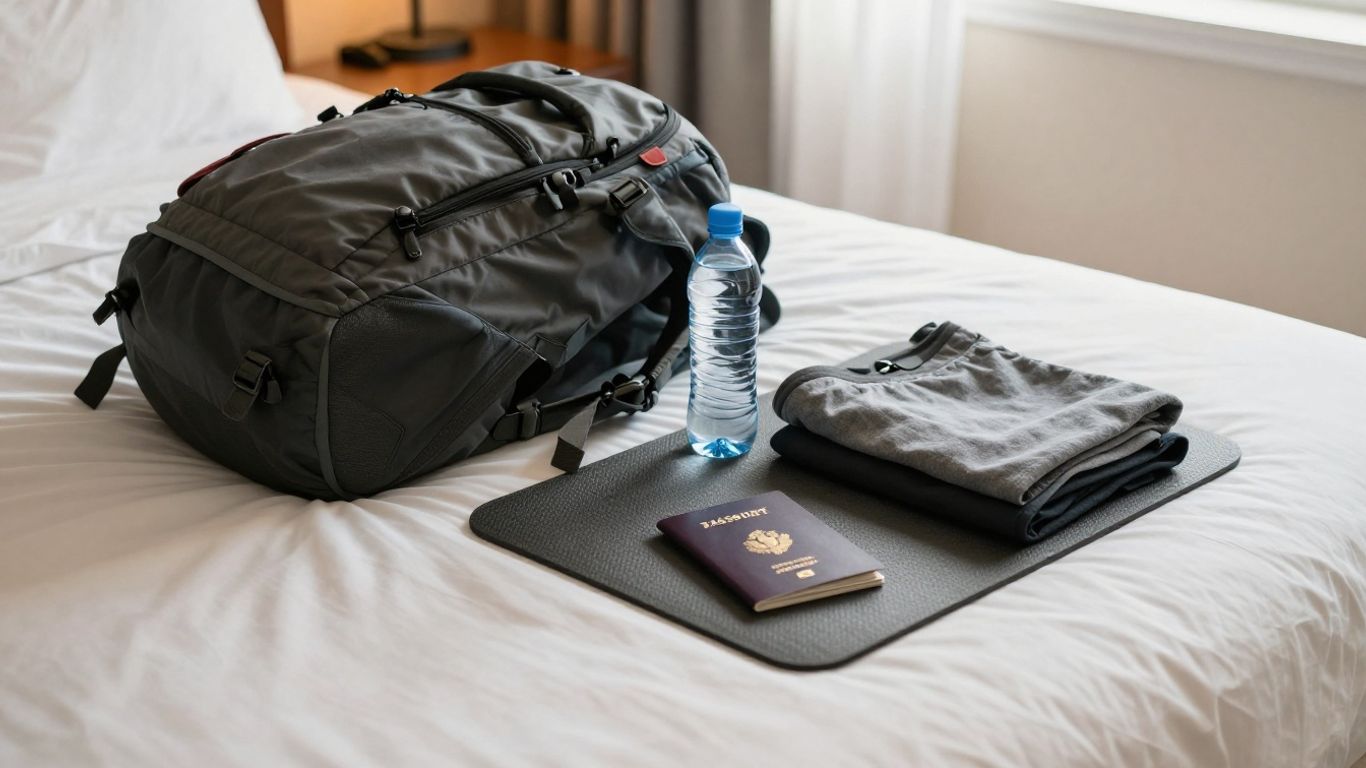
Portability is a combination of weight, shape, packed volume, and handling. A mat that weighs little but refuses to fit inside your bag may be less convenient than a slightly heavier foldable design. Think through the complete journey from closet to airport, hotel, class, and back again.
Foldable designs versus rollable mats
Foldable mats create flat sections that can fit into luggage, while rollable mats usually keep a cylindrical profile. Folding is convenient for backpacks and carry-ons, but creases may remain visible for a while after unpacking. Rolling can help a mat recover its shape, though it needs more vertical or horizontal space.
Packed size for backpacks and carry-ons
Measure the packed mat, not only its open dimensions. A mat that fits within the width of your backpack is easier to protect from rain, snagging, and crowded transit. This portable yoga mat guide is a useful reminder to compare weight, thickness, foldability, grip, and stability together.
Leave enough room for the mat to be removed without unpacking everything else. That small detail matters when you want a quick session between travel connections.
Carrying straps, bags, and storage options
A strap can make a rolled mat easier to carry, while a sleeve or bag can protect a folded mat from dirt. Check whether the accessory is included, detachable, or sold separately. If you already carry a backpack, a slim folded mat may be more useful than a dedicated mat bag.
The Juliet Trekk Travel Mat is documented as a 2.5-pound, 5mm mat with a double-sided design, a soft ridged top, a firmer stickier bottom, and moisture resistance. Those details illustrate why carrying convenience should be considered alongside comfort and grip.
How quickly the mat lays flat after travel
A mat that needs extensive time under books or furniture may not suit spontaneous travel. After unpacking, spread it on a clean floor and see whether the edges settle quickly enough for your routine. Foldable mats can show temporary creases, while some rollable mats may curl at the ends.
Give the surface a few minutes before judging it, especially if it has been compressed in a small bag. A little recovery time is normal; persistent curling is a practical warning sign.
Check grip, comfort, and durability
Weight is only valuable when the mat remains usable. Look closely at how the surface feels under bare hands, whether the base stays in place, and how the material responds to repeated packing. A lighter mat that stretches or tears quickly may create more expense and inconvenience than a sturdier one.
Surface texture and traction
Texture affects how confidently your hands and feet connect with the mat. Some surfaces feel naturally tacky, while others become more secure when slightly damp. Try a downward-facing dog, a lunge, and a slow transition if you can test the mat in person.
Cushioning on hard floors
Cushioning should be judged on the surfaces you are likely to encounter. A thin mat may feel fine on carpet but unforgiving on tile, wood, or concrete. If your travel plans include parks or beaches, also consider small stones, uneven ground, and moisture beneath the mat.
Resistance to stretching and tearing
Repeated folding places stress along the same lines, while rough floors can wear the underside. Inspect the edges, corners, and backing for signs of weakness. A mat that keeps its dimensions during movement will feel more stable and remain easier to pack.
Cleaning requirements for frequent use
Travel mats collect dust, hotel-floor residue, and outdoor moisture faster than mats used only at home. Choose a surface that can be wiped according to the manufacturer's instructions and allow it to dry completely. A washable accessory or towel can reduce how often the mat itself needs a deeper clean.
Find the lightest yoga mat for your needs
A good final choice comes from setting limits before browsing. Decide how much weight you can carry, how much cushioning you need, and how small the mat must become. Then compare products on the same terms instead of chasing the lowest number in isolation.
Set a practical weight limit
Think about the rest of your luggage first. If your backpack already contains a laptop, water bottle, and camera, a mat under two pounds may feel very different from one closer to three. Your personal limit should reflect the complete load and the distance you will carry it.
Compare weight with dimensions and thickness
A product's weight means little without its open size and thickness. Confirm that it is long and wide enough for your practice, then compare packed dimensions. The most useful choice is often the lightest mat that still gives you enough room and floor contact.
Balance price against expected lifespan
A low purchase price can be appealing for occasional trips, while frequent travelers may prefer stronger construction and easier maintenance. Estimate how many sessions the mat must handle each month. Also account for replacement costs if a very thin surface wears out quickly.
Test the mat before committing to regular travel
Use the mat on your hardest likely floor and repeat several familiar movements. Check slipping, edge curling, hand comfort, and whether the packed shape works with your bag. If you are comparing options, this travel yoga mat research can provide another perspective on weight, foldability, grip, and care.
A short trial will reveal more than a specification sheet. Pack it for a normal day, carry it on your usual route, and notice whether you still want to bring it next time.
Conclusion
The lightest yoga mat is the one that makes regular practice easier without creating new problems with grip, comfort, or durability. Match its thickness and material to your practice, compare packed dimensions with weight, and test it on realistic floors before traveling with it. A compact mat that you genuinely enjoy carrying is more useful than the lightest option left at home.
Frequently Asked Questions
What is the lightest type of yoga mat?
Ultra-thin foldable travel mats are usually among the lightest options, but their cushioning and hard-floor comfort are limited. Check the full dimensions and packed size rather than relying on weight alone.
Is a 2mm yoga mat comfortable enough for travel?
A 2mm mat can work well on carpet, smooth floors, or as a clean layer over another mat. It may feel too firm on tile or concrete, particularly during kneeling poses.
Are foldable yoga mats better than rollable mats for travel?
Foldable mats often fit more easily into backpacks and carry-ons because they form a flat package. Rollable mats may lay flatter after unpacking and can offer more familiar handling.
Which material is best for a lightweight yoga mat?
TPE and thin natural rubber can both be practical lightweight choices, while thin PVC and specialty surfaces offer other balances of structure, grip, and price. The best material depends on your floor and practice.
How much should a travel yoga mat weigh?
There is no universal limit, but many travelers choose a mat based on the total bag weight they can comfortably carry. Set a personal limit after considering your other travel essentials.
Do thin yoga mats have enough grip?
Some thin mats have excellent traction, while others become slippery with moisture or on dusty floors. Test the surface with several transitions and check how it behaves when your hands begin to sweat.
How should I pack a yoga mat for a trip?
Fold or roll it according to the manufacturer's instructions, keep it away from sharp objects, and let it dry before storage. A sleeve, strap, or separate compartment can help keep the mat clean and protected.


