Article: Sunscreen on a Yoga Mat: How to Clean It and Prevent It
Sunscreen on a Yoga Mat: How to Clean It and Prevent It
Sunscreen on a yoga mat is fixable, and it is also avoidable. Blot off the excess, treat the spot with a drop of mild dish soap in warm water (if your mat’s maker allows soap), wipe it away with a clean damp cloth until no film is left, then air-dry the mat completely. To keep it from happening again, put sunscreen on early, let it absorb, and keep a towel between your skin and the mat.
Below you will find the exact steps, what to do for each mat material, how to stop sunscreen from making your mat slippery, and how to dry and store the mat afterward.
TL;DR
- Blot first, then clean: wipe off excess sunscreen, treat the spot with a few drops of mild dish soap in a cup of warm water, and rinse the soap off with a clean damp cloth.
- Check your mat’s material before you reach for soap. Natural rubber, polyurethane, and cork each have their own limits.
- Apply sunscreen well before you step onto the mat so it can absorb, and use a yoga towel for the contact zones: hands, feet, and face in forward folds.
- Air-dry the mat fully, away from heat and prolonged direct sun, then roll it rather than folding it.
- Never scrub hard or use bleach, alcohol, or oily makeup-remover wipes on a mat.
Table of Contents
- Why sunscreen and yoga mats clash
- How to remove sunscreen from a yoga mat, step by step
- Match the cleaning method to your mat material
- How to dry the mat after cleaning
- Keep sunscreen off the mat in the first place
- Practicing outdoors: a short checklist
- What not to do
- Our perspective
- Gear that makes sunscreen days easier
- Routine care that keeps your mat ready
- FAQ
- Sources
Why sunscreen and yoga mats clash
Sunscreen is made to stay on your skin through sweat and water. That staying power is exactly what makes it a nuisance on a mat. It is oily, it spreads when hands and feet press into a surface, and it can leave a greasy film that grabs dust and makes the surface feel slick.
The slipperiness is the first thing most people notice. Verywell Fit attributes a slippery mat partly to skin oil or lotion and recommends washing your hands and feet before practice to remove oils that could make the mat slick. That advice is aimed at lotion in general, but sunscreen behaves the same way: whatever is on your palms ends up on the mat, and whatever is on the mat ends up under your palms in Downward Dog.
The second problem is the stain or sticky patch left behind. Sunscreen that is not wiped away can sit in the surface of the mat, especially on textured or open-cell materials, and it often shows up as a shiny or cloudy patch where your hands and feet land.
The good news: a mat is not ruined by a little sunscreen. Caught early and cleaned gently, it comes out fine in most cases.

How to remove sunscreen from a yoga mat, step by step
The New York Times Wirecutter guide treats sunscreen as an oily, stubborn residue, so the method is closer to cleaning a greasy fingerprint than wiping up sweat. Here is how to do it.
What you need
- A soft cloth or microfiber towel (two, ideally: one for soap, one for rinsing)
- Mild dish soap, free of added moisturizers if you can find it
- Warm water
- A clean, dry towel
The method
- Blot the excess. If the sunscreen is fresh, lift it off with a dry cloth or paper towel. Press and lift. Wiping smears it into a wider patch.
- Mix a gentle solution. Wirecutter suggests one cup of warm water with two to four drops of dish soap. Less soap is better, because soap film is its own problem.
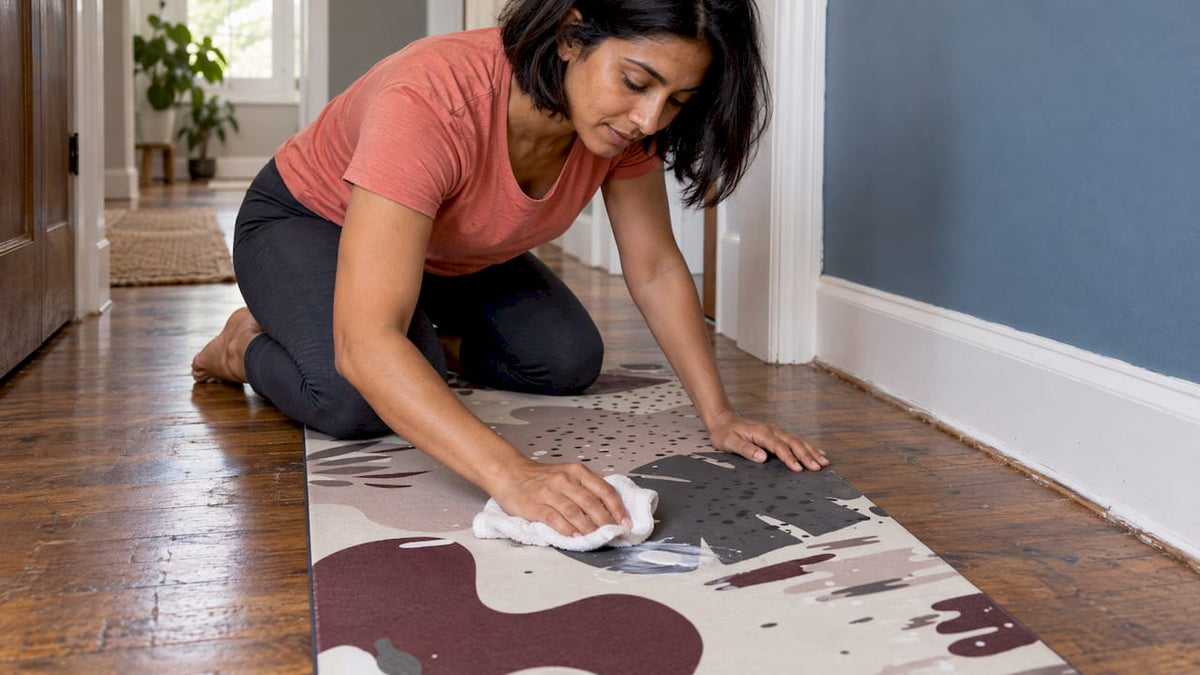
- Apply sparingly. Dampen a soft cloth with the solution, wring it well, and work it over the soiled area. Do not pour the liquid on the mat or soak it.
- Let it sit briefly. For a stubborn spot, about a minute gives the soap time to break down the oil.
- Wipe gently. Use light, circular motions. Do not scrub aggressively, which can roughen the surface and wear down the grip.
- Rinse by wiping. Go over the area repeatedly with a clean, damp cloth until no soap film remains. A leftover soapy layer is slippery too, so keep going until the surface feels the way it did before.
- Dry. Pat the area with a clean towel, then let the mat air-dry fully (more on that below).
One caution: skip oily makeup-remover wipes. They add oil to a problem that is already oil.
If you want a ready-made option rather than dish soap, our guide to yoga mat cleaners covers what to look for, and the homemade cleaner recipes walk through gentle mixes you can make at home.
Match the cleaning method to your mat material
The steps above are a good default, but materials react differently. The same Wirecutter guide breaks down what each type generally tolerates. Always check the manufacturer’s instructions first, because they override any general rule.
| Mat material | What generally works | What to avoid |
|---|---|---|
| PVC | Mild soapy wipe | Soaking, harsh chemicals |
| TPE | Damp cloth and mild soap, then a plain-water rinse | Soaking, heat, harsh chemicals |
| Natural rubber | Water or the maker’s approved cleaner | Oils, alcohol, vinegar, and often soap |
| Cork | Damp cloth, without soaking | Saturating the surface |
| Polyurethane | Water or the maker’s own cleaner | Vinegar and alcohol |
| Polyurethane/rubber composite | Very gentle wiping | Soaking, aggressive scrubbing |
| Cotton or jute | Gentle hand-washing | Rough scrubbing |
Two things stand out. First, natural rubber is the fussiest material when it comes to soap and oil, which matters because sunscreen is oily. If you own a natural rubber mat, start with a cloth dampened with plain water and only move to anything stronger if the mat maker says it is fine. Second, vinegar and alcohol, two of the most popular DIY mat-spray ingredients, are on the avoid list for several materials. Sunscreen is not a reason to reach for them.
If you are not sure what your mat is made of, check the label or the product page. If it is PVC, our PVC mat material explainer covers how to care for it. For everything else, our general yoga mat care guide is a good companion.
What about disinfectants?
It is tempting to blast a sunscreen smear with a disinfecting wipe. Wirecutter’s routine-cleaning advice is to lightly spray a compatible solution and wipe the whole mat with a soft cloth, and to avoid harsh disinfectants such as bleach and alcohol, because they can degrade mats over time. Mild and consistent beats strong and occasional.
How to dry the mat after cleaning
Cleaning is only half the job. A mat that stays damp can encourage mold and bacteria, and Wirecutter says a mat should air-dry completely, preferably flat or draped over a sturdy rod or rack.
Here is the drying routine that fits that advice:
- Press out surface water with a clean towel.
- Lay the mat flat, or hang it over a smooth, wide rack or rod, so both sides get airflow.
- Keep it away from heat. That means no tumble dryer, hair dryer, radiator, or hot car.
- Avoid prolonged intense sun. This one surprises people on a sunscreen day, because outdoor practice makes the sun feel like the obvious drying tool. Shade or a well-ventilated room is the safer choice, especially for natural rubber.
- Once the mat is completely dry, roll it instead of folding it, and store it somewhere cool and dry.
If you are short on time, our towel roll method for drying a yoga mat shows how to pull moisture out faster, with notes for different materials.
One storage detail is easy to miss: if you keep your mat in a bag or strap, make sure the mat is totally dry before it goes in, and wash the bag and strap from time to time. Otherwise they carry yesterday’s sunscreen and sweat straight back onto a clean mat.
Keep sunscreen off the mat in the first place
Cleaning is a fallback. The better plan is to reduce how much sunscreen reaches the mat. You do not have to give up sun protection to do it.
Apply sunscreen early
The American College of Sports Medicine says athletes can reduce sunscreen-related slipperiness by applying sunscreen before going outside so it can absorb, choosing a formulation that feels comfortable, and combining sunscreen with protective clothing and shade. The practical translation for yoga: put it on at home, not on the grass at the start of class.
A common rule of thumb is about 15 minutes before heading out, though the right wait depends on the product, so follow the directions on your bottle. Rub it in thoroughly rather than leaving a visible layer, then wipe your palms and the soles of your feet with a dry towel before you step on the mat.
Let clothing and shade do some of the work
The same ACSM guidance points to clothing and shade as part of a sun-protection plan. For yoga, that gives you good options:
- Wear long-sleeve or longer-length breathable layers so there is less bare skin to cover with lotion.
- Set up in the shade of a tree or building during the middle of the day.
- Save the heavier sunscreen application for areas that will not touch the mat, such as the face, neck, and tops of the shoulders, and use less on hands and feet.
You are still protected; you are just putting the product where it works and not where it will rub off on your equipment.
Put a towel between you and the mat
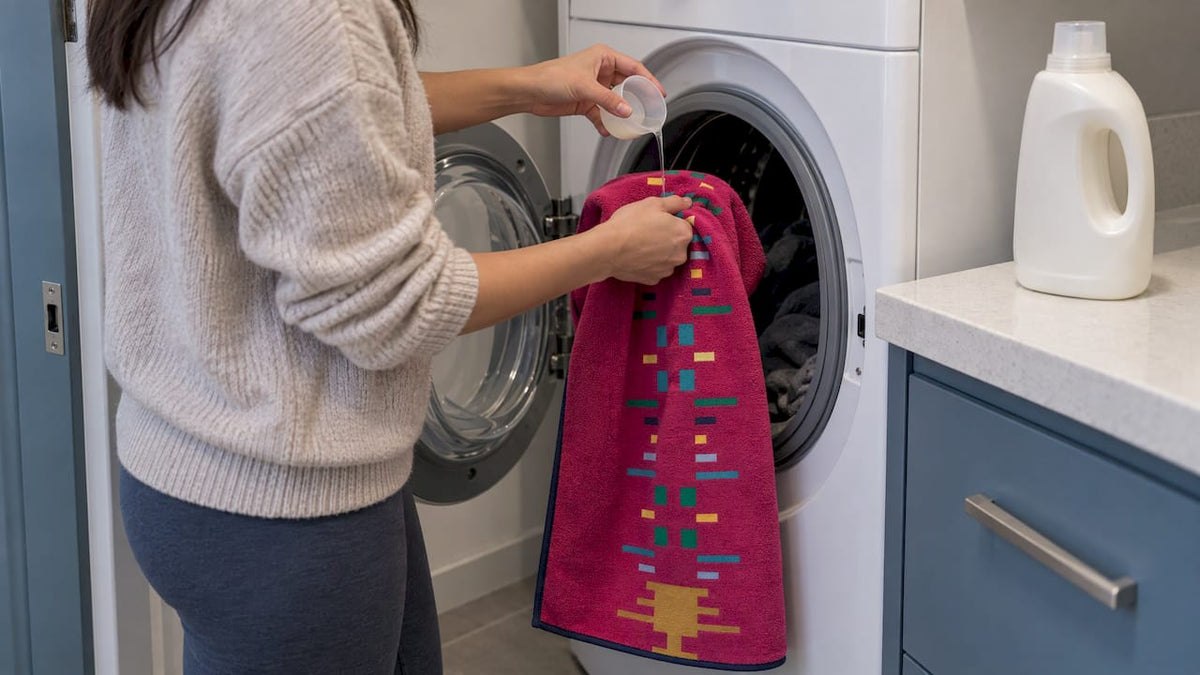
A yoga towel is the simplest barrier. Laid across your mat, it catches sunscreen and sweat from your hands and feet, grips better when damp, and goes in the wash afterward. It is a lot easier to launder a towel than to scrub a mat. We make yoga towels from durable, sustainable materials for just this kind of practice.

Wash hands and feet first
If you have just applied sunscreen to your arms and legs, rinse or wipe your palms and feet before practice. This is the same advice Verywell Fit gives for any oil or lotion on skin, and it takes ten seconds.
For more ways to improve grip generally, read our guide on making your yoga mat less slippery.
Practicing outdoors: a short checklist
Outdoor yoga is where sunscreen and mats meet most often. Before you go:
- Apply sunscreen at home, early, and let it settle.
- Pack a towel for the mat and a second small one for wiping hands.
- Bring a damp cloth in a sealed bag so you can blot a fresh smear right away. Fresh sunscreen is far easier to remove than a patch baked in for hours.
- Choose a shaded spot if you can.
- Afterward, wipe the mat, let it dry fully in the shade, and roll it up.
Travelers have an extra reason to pay attention: a mat that goes into a suitcase or backpack should be clean and dry before it is packed, or the residue goes along for the ride. A foldable travel mat is easy to wipe down and slips into a bag, which is why we designed our Trekk travel mats for home and on-the-road practice.
What not to do
A few habits make sunscreen problems worse:
- Scrubbing hard. It damages the surface and removes grip you are trying to protect.
- Soaking the mat. Water trapped in an open-cell surface takes a long time to leave and invites mold.
- Using harsh chemicals. Bleach and alcohol can degrade mats over time.
- Drying with heat. Dryers, radiators, and hot cars can warp or damage a mat.
- Leaving it in sun to dry. Prolonged intense sun is not recommended for mats, and natural rubber in particular does not like direct UV.
- Rolling it up dirty. Residue left on a rolled mat sets in and transfers to the other layers.
Our perspective
We hear this question often, usually from someone who loves practicing in a park or on a patio and has just noticed a greasy handprint on a mat they care about. Our view is simple: sun protection and a good mat can coexist, and a little planning is all it takes.
The first thing we tell people is to choose a mat that fits how they practice. If you practice outdoors or travel, a mat designed for it makes life easier. Our natural rubber and eco-conscious mats are built for a grippy, grounded feel, and our foldable Trekk travel mats are made to go where you go. Pair either with a yoga towel and you have a barrier that handles sunscreen and sweat, so the mat stays cleaner between washes.
The second thing is to build a short routine. Sunscreen on early. Towel down. Quick wipe afterward. Dry in the shade. That is about two minutes of effort, and it protects both your skin and your gear.
Finally, treat your mat gently. Mild cleaning, light pressure, and patience beat strong chemicals every time. A mat cared for this way stays comfortable and supportive for years of practice.
Nicholas
Gear that makes sunscreen days easier
If you practice in the sun, a mat and towel setup built for it saves effort. At Yune Yoga we offer natural rubber and eco-friendly mats, foldable travel mats, yoga towels, and straps, all made with sustainable materials and designed for home or travel use. Browse the Slate Trekk travel mat, the Crow Trekk travel mat, or the Antonio Trekk travel mat if portability matters, or see the full range of mats, towels, and straps on our store page.

For layers and add-ons that cover more skin for outdoor sessions, look at our yoga clothes and accessories.
Routine care that keeps your mat ready
Once sunscreen is handled, a light routine keeps the mat in shape:
- After each session: a quick wipe with a soft, damp cloth.
- Weekly or as needed: a light spray of a compatible cleaner, then a full wipe-down.
- After sunscreen or heavy sweat: the spot treatment above, then a thorough dry.
- Storage: rolled, not folded, in a cool, dry place. For a natural rubber mat, rolling it with the rubber side facing in helps limit sunlight exposure.
For a fuller walk-through, our guides on how to clean a yoga mat effectively and washing your yoga mat cover the details by mat type.
FAQ
Does sunscreen ruin a yoga mat?
Usually not, if you clean it promptly and gently. The risk comes from leaving oily residue to build up, or from aggressive fixes such as hard scrubbing, bleach, or alcohol. Blot, spot-clean with a mild solution suited to your mat’s material, rinse by wiping, and dry fully.
Why is my mat slippery after I put sunscreen on?
Sunscreen is oily, and any oil or lotion on your skin transfers to the mat. Verywell Fit links slippery mats partly to skin oil and lotion. Apply sunscreen early so it absorbs, wipe your hands and feet, and use a yoga towel over the mat.
Can I use dish soap on my mat?
Often yes, in tiny amounts, but check your mat’s care label first. Wirecutter suggests two to four drops in a cup of warm water for sunscreen spots, followed by repeated wipes with a clean damp cloth. Natural rubber mats are generally limited to water or the maker’s approved cleaner, so confirm before using soap.
Can I dry my mat in the sun after washing it?
It is better not to. Prolonged intense sun can damage mats, and direct UV is especially hard on natural rubber. Air-dry the mat in the shade or indoors, with both sides exposed to airflow, and roll it only when it is fully dry.
Sources
- How to Clean a Yoga Mat, Wirecutter (The New York Times)
- How to Fix a Slippery Yoga Mat, Verywell Fit
- Sports, Physical Activity and Sun Protection, American College of Sports Medicine