
PVC yoga mat material explained: Performance, safety, care, and sustainable alternatives
Key Takeaways
PVC yoga mats remain popular because they are cushioned, durable, easy to clean, and often affordable. Their trade-offs are mainly related to material disclosure, odor, end-of-life disposal, and environmental impact.
- PVC is a flexible synthetic plastic whose feel depends on plasticizers, fillers, foam structure, and surface texture.
- A closed-cell, textured surface can offer useful cushioning and traction, but quality varies widely between mats.
- Check thickness, density, odor, grip, care instructions, and material information before buying.
- PVC can last for years, although recycling options are limited and it is not biodegradable.
- Choose PVC when practical performance and price matter most; consider alternatives when sustainability or sensitivity is a higher priority.
What PVC yoga mat material is and how it is made
The phrase pvc yoga mat material usually refers to polyvinyl chloride, a synthetic plastic modified to become flexible and comfortable under the body. A finished mat is not simply a sheet of rigid PVC. Manufacturers combine the polymer with softening agents, stabilizers, colorants, and a foamed or layered structure. The result can feel soft and sticky, dense and supportive, or thin and firm depending on the formulation.
PVC has been used in yoga mats for decades because it is relatively easy to shape and finish. Still, two mats labeled PVC may feel very different. Looking past the material name helps explain why.
The basic composition of PVC yoga mats
PVC begins as a naturally rigid polymer. To turn it into a mat, manufacturers blend it with ingredients that improve flexibility, resilience, color, and processing. Some mats use a solid or lightly foamed layer, while others rely on a thicker foam core to create a softer landing for knees and wrists.
The top and bottom may also be finished differently. One surface can be molded with a fine pattern for traction, while the underside is designed to sit flat on the floor. In practical terms, the finished construction matters as much as the label.
For a broader look at how materials influence grip, cushioning, and longevity, see this yoga mat material guide.
How plasticizers and additives affect the material
Plasticizers make PVC less rigid, which is essential for a mat that needs to roll, flex, and cushion movement. Other additives can help with color, processing, firmness, and resistance to wear. The exact recipe is rarely visible to the buyer, so material transparency becomes useful when comparing products.
A softer mat is not automatically better. Too much softness can make balance work feel unstable, while a firmer formulation may feel more secure but less forgiving on hard floors. Odor can also vary according to the ingredients, curing process, packaging, and storage conditions.
Closed-cell and textured surface construction
Many PVC mats use a closed-cell or relatively nonporous surface. This structure can limit how deeply sweat and moisture enter the material, making the mat easier to wipe down than an absorbent textile surface. It does not make the mat self-cleaning, and dirt can still collect in texture or along edges.
Surface pattern is equally important. Fine texture can provide a more predictable foothold, while a very smooth finish may become less comfortable when hands are damp. A textured surface should support movement without feeling abrasive during kneeling or seated poses.
Why manufacturing quality varies between mats
Manufacturing quality affects thickness consistency, edge shape, smell, rebound, and how quickly the surface wears. A well-made PVC mat should lie reasonably flat, maintain its texture, and resist premature cracking or peeling under ordinary use.
Look for a seller that explains dimensions, thickness, care, and material composition clearly. Independent safety information can also help; a useful non-toxic yoga mat resource discusses material disclosure and alternatives without treating every synthetic mat as identical.
Why PVC yoga mats remain popular
PVC continues to earn space in homes, studios, schools, and gyms because it offers a familiar balance of comfort and cost. It can be made in many thicknesses and textures, cleaned without much fuss, and replaced without a major expense. For a new practitioner, that practical combination often matters more than a perfect material profile.
It is also a predictable choice for people who want a mat that stays put and provides some protection from a hard floor. The best fit still depends on practice style, body comfort, storage, and how often the mat travels.
Cushioning for joints and support during practice
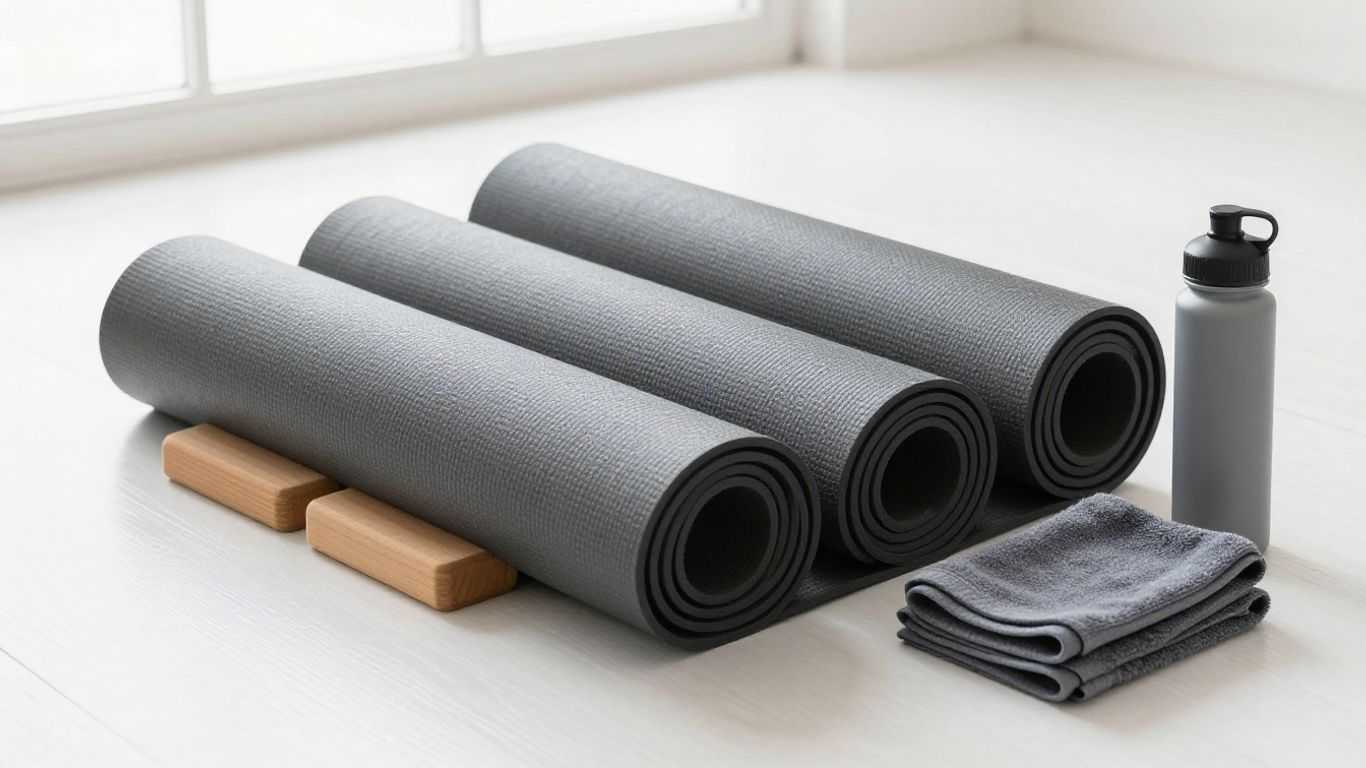
PVC foam can provide noticeable cushioning beneath knees, hips, hands, and feet. Thickness alone does not tell the whole story: density and rebound determine whether the mat feels supportive or overly squishy. A thicker mat may be comfortable for floor-based practice, while a dense medium-thickness mat can offer a steadier base for standing poses.
If extra padding is the priority, test whether the mat compresses evenly rather than simply choosing the thickest option. A mat that bottoms out under pressure may feel less supportive than a thinner, denser one.
Grip, stability, and performance when sweating
The classic PVC feel is often described as sticky, though actual traction depends on surface finish, moisture, and wear. A molded texture can help hands and feet stay aligned with the surface. Heavy sweating may still reduce grip, especially if the mat has a smooth coating or becomes slick with residue.
A towel can be useful for high-sweat sessions, but it should not hide a surface that is consistently unstable. Before committing, try several positions with both dry and slightly damp hands.
Durability for frequent home or studio use
PVC can tolerate repeated rolling, unrolling, wiping, and ordinary studio use. Its durability is one reason it remains common in settings where mats see many sessions. Sun exposure, heat, harsh cleaners, and sharp objects can shorten that life, however.
The practical advantage is strongest when the mat is cared for and used regularly. A long-lasting mat may have a lower impact per practice than a cheap mat that needs frequent replacement, even though PVC itself presents disposal challenges.
Affordability compared with other yoga mat materials
PVC is often available at a lower price than premium natural or specialty materials. That makes it attractive to beginners, households buying several mats, and practitioners who want a reliable surface without a large initial investment.
Price should not be the only filter. Very inexpensive construction may bring stronger odor, uneven foam, weak edges, or a surface that wears quickly. Compare the total useful life rather than the checkout price alone.
How PVC compares with other yoga mat materials
Material comparisons are helpful when they stay grounded in actual practice. PVC may win on cost and familiar cushioning, while another material may be lighter, more absorbent, easier to recycle, or more aligned with a buyer’s environmental priorities. There is no universal best surface.
The following comparisons are directional rather than absolute. Formulation, thickness, texture, and manufacturing quality can change the experience as much as the material category itself.
PVC versus TPE for comfort and portability
TPE, or thermoplastic elastomer, is often chosen for a lighter and more elastic feel. It can be easier to carry than a dense PVC mat, although weight varies by thickness and size. PVC may feel more substantial and familiar, while TPE can appeal to people who want a softer, springier, or more portable option.
For travel, foldability and packed dimensions matter as much as material. A thin mat may be convenient for a hotel room or park, but it may provide less cushioning on hard ground.
PVC versus natural rubber for grip and sustainability
Natural rubber is valued by many practitioners for strong traction and a renewable raw material base. It can also be heavier and may not suit people with latex sensitivities. PVC generally offers more predictable low-cost availability, but it is a synthetic material with more limited end-of-life options.
The choice becomes clearer when priorities are stated plainly: choose the material that fits your grip needs, allergy concerns, carrying habits, and environmental standards. A general PVC, TPE, and rubber comparison can help organize those trade-offs.
PVC versus cork for moisture management
Cork often feels different from PVC because its surface can become grippier as moisture increases, depending on its construction and backing. PVC is usually easier to wipe clean and may offer more consistent cushioning, while cork can provide a drier, more natural-feeling surface in some conditions.
Cork mats vary considerably. Some have a thin cork layer over another material, so buyers should check the full construction rather than assuming the top surface tells the entire story.
PVC versus PER and other modified materials
PER is sometimes presented as a modified alternative that aims to retain familiar PVC-like performance while changing parts of the formulation. The label alone does not establish how a mat was made or what additives it contains, so product-specific documentation still matters.
The PVC, TPE, and PER guide offers a useful framework for comparing safety, performance, and sustainability claims. Treat certifications and full material descriptions as supporting evidence, not as substitutes for understanding how the mat feels and how it will be disposed of.
PVC yoga mat safety considerations
Safety questions about PVC usually concern odor, additives, manufacturing controls, and individual sensitivity. A smell does not by itself prove that a mat is unsafe, but a strong persistent odor is a reasonable reason to pause and seek clearer information. Ventilation and an appropriate cleaning routine are sensible first steps.
Buyers should also distinguish between a general material category and a specific product. Formulations differ, and trustworthy documentation is more useful than broad claims that all PVC mats are either harmless or dangerous.
Understanding odors and off-gassing
A new PVC mat may release a noticeable smell after opening, especially if it has been sealed in packaging. Airing it out in a shaded, well-ventilated place can reduce the odor over time. Avoid leaving it in intense heat or direct sun, which can damage the surface and may worsen the smell.
If the odor remains strong after reasonable ventilation, or if it causes discomfort, choose a different mat. The PVC safety discussion covers common concerns about additives and manufacturing byproducts in greater detail.
Choosing mats with clearer material information
Look for a product page or package that identifies the material, dimensions, thickness, care instructions, and any relevant testing or certification. Vague phrases such as “premium non-toxic material” are less helpful when the underlying composition is not explained.
Clear information cannot guarantee a perfect product, but it makes comparison easier. It also gives you something concrete to revisit if the mat develops a strong odor, surface change, or other unexpected issue.
Potential concerns about plasticizers and additives
Plasticizers and stabilizers are part of what makes PVC flexible and usable as a mat. Some buyers prefer to limit exposure to particular additives, especially when a mat will be used by children, in warm rooms, or by people who react to chemical odors.
The right response is not panic but careful screening. Ask what the manufacturer discloses, look for credible testing where available, and avoid products that provide no meaningful material information.
When sensitive users should consider alternatives
People with chemical sensitivities, respiratory concerns, or latex allergies should consider their own reactions and seek professional advice when needed. A different material may be more comfortable, but “natural” does not automatically mean irritation-free; rubber, cork finishes, dyes, and adhesives can also affect sensitive users.
A practical test is useful when possible. Spend time near the mat, ventilate it, and stop using it if it causes symptoms rather than trying to tolerate the discomfort.
How to choose a high-quality PVC yoga mat
Choosing well means matching the mat to your body, practice, floor, and routine. Thickness, density, grip, size, and odor should be evaluated together instead of treating one specification as decisive. A mat for gentle home practice may need different qualities from one carried to a studio every day.
It is also worth considering how the mat will be stored and cleaned. The best purchase is one that you can realistically maintain and continue using.
Selecting the right thickness and density
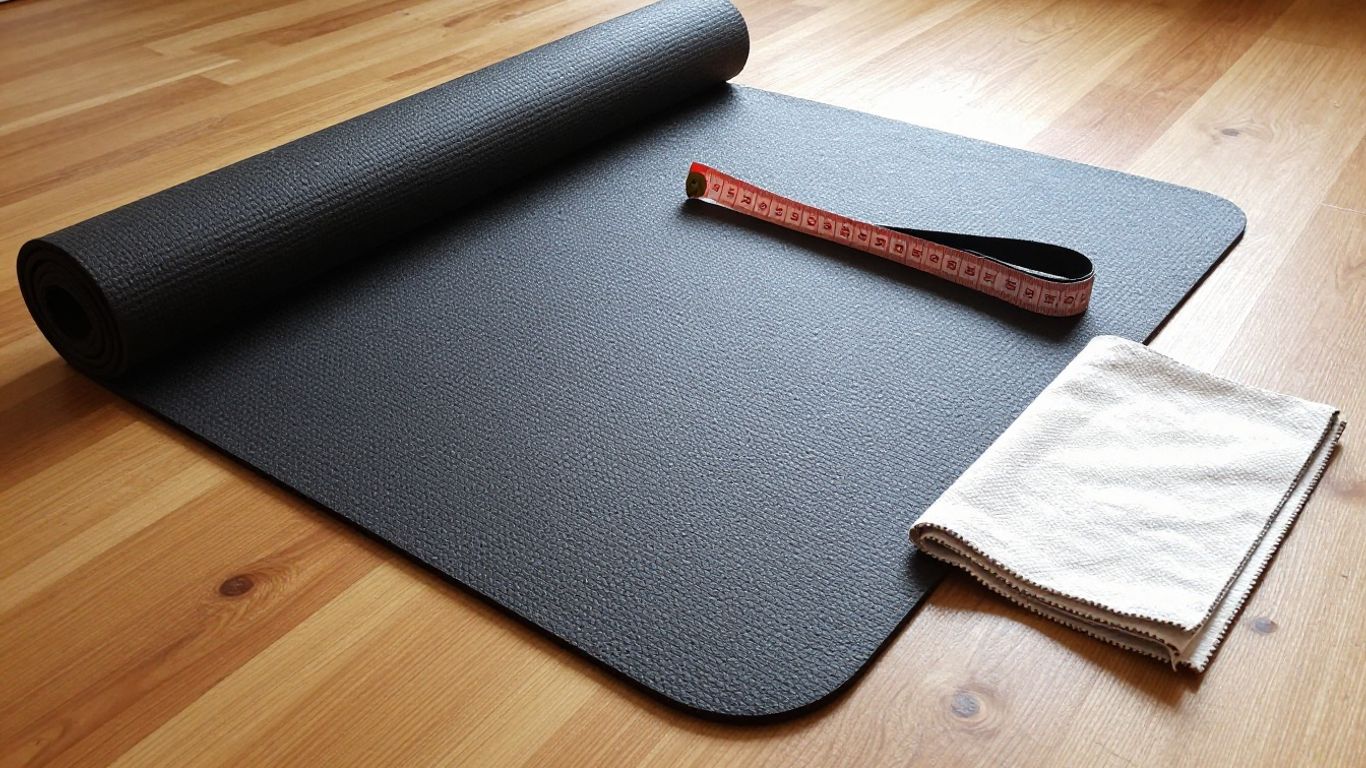
Thin mats are lighter and easier to pack, but they provide less separation from a hard floor. Thicker mats can feel kinder to knees and hips, though excessive softness may make balancing less stable. Density is the missing detail in many product descriptions, so read reviews carefully for comments about compression and support.
If possible, kneel and stand on the mat before buying. Comfort should not come at the cost of a surface that shifts or sinks noticeably under pressure.
Checking surface texture and traction
Run a hand across the surface and look for an even texture without glossy patches, loose coating, or rough seams. Grip should feel dependable in the positions you practice most often. For sweaty sessions, consider whether a towel or absorbent accessory will be part of your setup.
Traction also depends on the floor beneath the mat. Dust, polish, and moisture can reduce stability even when the mat itself has a good texture.
Evaluating size, weight, and portability
Measure the packed mat as well as its open dimensions. A mat that fits your practice space but cannot fit in your bag may remain at home more often than expected. Lightweight construction is convenient for commuting, travel, outdoor practice, and small living spaces, though it can involve a compromise in cushioning.
The Yune Yoga Pagoda Mat is described as a 6mm, non-slip, easy-to-clean mat with a spacious design, so it illustrates how thickness, traction, and portability-related considerations can appear together in a product description. Choose based on documented features rather than assuming every mat in a category performs the same way.
Looking for durability, certifications, and care guidance
Inspect the edges, surface finish, and packaging for signs of careful construction. Certifications can add useful information when their scope is clear, but they should be read alongside the material description and care instructions. A product that explains how to clean and store the mat is easier to evaluate than one that offers only lifestyle language.
Before ordering, check return terms as well. A mat may look suitable online yet feel too soft, too narrow, or too slick once unrolled.
How to clean and maintain PVC yoga mat material
PVC is generally straightforward to maintain because its surface can be wiped rather than deeply laundered. Regular cleaning prevents sweat, skin oils, dust, and product residue from building up. Gentle care also protects texture and reduces the temptation to use harsh chemicals.
A simple routine is usually more effective than occasional aggressive scrubbing. Always follow the manufacturer’s instructions when they differ from general guidance.
Routine cleaning after each practice
After practice, wipe the mat with a soft cloth and a mild, diluted cleaner suitable for the surface. Use enough moisture to remove residue, not enough to saturate edges or leave a film. Let the mat dry fully before rolling it.
A separate towel for hands and face can reduce the amount of oil and sweat transferred to the mat. This is especially useful during frequent practice or in warm rooms.
Removing sweat, stains, and persistent odors
For a stubborn mark, use a soft sponge and mild soap rather than an abrasive pad. Rinse away residue with a clean damp cloth, then allow the mat to air out. Avoid mixing cleaning chemicals, and test any new solution on a small inconspicuous area first.
Persistent odor may come from trapped moisture, residue, or the original formulation. If ventilation and gentle cleaning do not help, replacing the mat may be more sensible than repeatedly applying stronger products.
Drying and storing the mat correctly
Dry the mat flat or loosely draped in a shaded, ventilated area. Once completely dry, roll it without sharp folds and store it away from heaters, radiators, and direct sunlight. Do not put a damp mat into a closed bag, since moisture can create an unpleasant smell and encourage surface deterioration.
The Yune Yoga Pagoda Mat is described as easy to clean, but even an easy-care mat benefits from thorough drying and sensible storage. Care guidance supports longevity; it does not remove the need for regular cleaning.
Preventing cracking, flaking, and surface damage
Keep shoes, buckles, rough flooring, and pet claws away from the mat. Do not use oils, strong solvents, bleach, or abrasive cleaners unless the manufacturer specifically permits them. Repeated exposure to intense heat can also make the surface brittle or sticky.
A mat that begins to crack or flake should be retired, particularly if pieces transfer to skin or the floor. Continued use rarely restores a damaged surface and may make cleaning less hygienic.
The sustainability of PVC yoga mats
PVC presents a sustainability trade-off rather than a simple yes-or-no answer. It is a plastic material with limited biodegradability and recycling access, yet a durable mat that is used for years does not need to be replaced frequently. The most responsible choice depends on the product’s life, your use habits, and the available disposal route.
Material alternatives can reduce some concerns, but they also have manufacturing, transport, durability, and disposal impacts. Compare the whole life cycle where possible.
Why PVC can have a long usable life
A well-made PVC mat can withstand frequent rolling, repeated cleaning, and regular home or studio practice. Keeping it away from damaging heat and chemicals can extend that service life. Longevity matters because replacing any product repeatedly uses additional materials and energy.
The environmental value of durability is strongest when the mat is actually used for a long time. Buying a durable mat and replacing it quickly for a minor cosmetic issue works against that benefit.
Recycling and disposal limitations
PVC mats are not usually accepted in ordinary curbside recycling, and local programs vary. Before disposal, check with municipal waste services or a specialty recycling facility. Do not burn the mat, since heating PVC can create hazardous emissions.
Reuse may be possible if the mat is still clean and structurally sound. It could serve as a protective layer for household projects, but damaged or flaking material should not be passed on as exercise equipment.
How material quality affects environmental impact
A poorly made mat that cracks early can have a larger practical footprint than a sturdier mat used for many years. Quality also affects whether cleaning is easy enough to keep the product in rotation. Clear care instructions, durable construction, and realistic sizing all support longer use.
For a wider discussion of production, use, and disposal, this eco-friendly yoga mat materials guide provides useful context. Sustainability claims should still be checked against the specific product rather than accepted as a category-wide promise.
When a PVC mat may still be a practical choice
PVC may remain reasonable for a beginner on a budget, a studio that needs many easy-care mats, or a practitioner who values cushioning and stable indoor use. It may also be practical when alternatives are unavailable, too heavy, too costly, or unsuitable for a particular sensitivity.
A thoughtful purchase can reduce waste: choose a mat you will use often, maintain it carefully, and plan for responsible disposal before buying. If environmental impact is your primary criterion, compare recycled, rubber, cork, and textile options as well.
Who should and should not choose a PVC yoga mat
PVC makes sense for some routines and feels wrong for others. The decision comes down to the balance between price, cushioning, traction, portability, odor tolerance, and environmental priorities. It is worth being honest about which factors will determine whether you keep using the mat.
There is no prize for choosing the most fashionable material. A suitable mat is the one that supports your actual practice without creating avoidable problems.
Best use cases for beginners and regular practitioners
Beginners often appreciate PVC because it is widely available, relatively affordable, and offered in many thicknesses. Regular practitioners may value its familiar grip, cushioning, and easy wipe-down care. It can be a sensible first mat when the buyer wants to learn what thickness and texture feel comfortable before investing more.
For practice-specific comparisons, this yoga mat selection guide connects material choices with different styles and grip needs. The main question is not whether PVC is universally best, but whether its strengths match your routine.
Situations where extra cushioning matters
Extra cushioning can help when practicing on hard floors, spending time kneeling, or needing more comfort during seated and floor-based movements. A dense mat with moderate thickness may offer a better balance than an extremely soft one.
People who travel frequently should also weigh cushioning against packed size. The most protective mat is not useful if it is too bulky to bring along, while a very thin travel mat may need a softer surface underneath.
When eco-friendly materials are a higher priority
Choose an alternative when renewable content, biodegradability, recycled inputs, or a specific certification is central to your decision. Natural rubber, cork, organic cotton, and some modified or recycled materials may better match those priorities, though each has its own maintenance and performance trade-offs.
For perspective beyond yoga equipment, comparisons such as vegan leather and real leather, green construction materials, and Ayurveda treatments show why “eco-friendly” or “natural” should be defined rather than used as a vague label. The useful question is which attribute matters most for this purchase.
Signs it is time to replace the mat
Replace the mat when its surface becomes persistently slippery, cracked, flaking, deeply stained, or difficult to clean. A strong odor that does not improve with ventilation is another reason to reconsider it. Loss of shape or a backing that no longer stays flat can also affect practice stability.
Retire a mat before damage creates a fall risk or leaves particles on your skin and floor. If a replacement becomes necessary because of an injury or another serious concern, seek appropriate professional guidance; a general Massachusetts personal injury attorney resource is not a substitute for advice about your equipment or practice.
Conclusion
PVC yoga mat material remains a practical choice when cushioning, durability, easy cleaning, and price matter most. It deserves a closer look at additives, odor, construction, and disposal, especially for sensitive users or environmentally focused buyers. Choose a well-documented mat that fits your practice, care for it gently, and use it for as long as it remains safe and comfortable.
Frequently Asked Questions
Is PVC a good material for a yoga mat?
PVC can be a good choice when you want affordable cushioning, familiar traction, durability, and simple cleaning. Quality varies, so thickness, density, texture, odor, and care instructions should be evaluated before purchase.
Do PVC yoga mats smell?
Some new PVC mats have a noticeable plastic odor after unwrapping. Ventilation in a shaded area may reduce it, but a smell that remains strong or causes discomfort is a reason to stop using the mat and seek another option.
Are PVC yoga mats waterproof?
Many PVC mats have a relatively nonporous surface that resists absorbing moisture, but they are not automatically waterproof in every construction detail. Water can still reach seams, edges, or damaged areas, so the mat should be dried fully after cleaning.
How long can a PVC yoga mat last?
A well-made PVC mat may last for years with regular use and gentle maintenance. Heat, sunlight, harsh cleaners, sharp objects, heavy wear, and poor storage can shorten its useful life.
Can PVC yoga mats be recycled?
Recycling options for PVC yoga mats are limited and depend on local facilities. Check municipal guidance or specialty programs, and never burn the mat. Reuse is possible only when the material remains clean and structurally sound.
What is the safest way to clean a PVC yoga mat?
Use a soft cloth, mild diluted cleaner, and limited water unless the manufacturer gives different instructions. Wipe away residue and let the mat dry completely before rolling and storing it.
Should people with sensitive skin choose PVC yoga mats?
People with sensitivities should consider their own reactions, seek clearer material information, and ventilate a new mat before use. If odor or contact causes symptoms, discontinue use and consider an alternative material with suitable documentation.


