

How to Use Yoga Straps and Blocks to Improve Flexibility, Alignment, and Balance
Key Takeaways
Yoga straps and blocks make many poses more accessible without forcing the body into a shape it is not ready for.
- Use a strap to extend reach and keep the spine, shoulders, and hips better organized.
- Use blocks to bring the floor closer and create steadier points of contact.
- Choose props for comfort, firmness, adjustability, and easy storage.
- Let props support gradual progress rather than chasing a deeper stretch.
- Stop or modify any pose that causes sharp pain, numbness, or unstable breathing.
Understand what yoga straps and blocks do
Props are simple tools for changing the distance, height, or support required by a pose. A strap can give the hands something to hold when flexibility limits reach, while a block can make the floor easier to meet. Used thoughtfully, they help you practice the intended shape with less strain and more awareness.
How straps support reach and mobility
A strap creates a connection between the hands and feet, or between the hands themselves, without asking you to round the spine or yank a joint into position. In a seated forward fold, for example, it can loop around the feet while the arms remain long and the chest stays easier to lift. This is gradual work, not a contest to pull farther.
For a portable practice, yoga strap benefits can include practical support for alignment, flexibility, and balance. A strap is especially useful when the body needs a little more length than the arms can currently provide.
How blocks improve stability and alignment
A block gives the hands, hips, or seat a dependable surface. In a standing pose, placing one beneath the lower hand may reduce the need to collapse toward the floor; in a seated pose, sitting on a block can help the pelvis tilt more comfortably. The right height is the one that lets you maintain steady breathing and a clear line through the pose.
Blocks are not a shortcut around technique. They are a way to adjust the environment so the body can work with better control and less compensation.
When to use one prop or both together
Choose one prop when one part of the pose is limiting you. A strap may be enough for a hamstring stretch, while a block may be all you need to steady a triangle pose. Use both when you need reach in one direction and support in another, such as holding a strap around the feet while sitting on a block.
The best setup is usually the least complicated one that improves your position. If adding a second prop makes the pose busy or difficult to monitor, put it aside and return to the simpler version.
Common misconceptions about yoga props
Props do not mean a pose is being done incorrectly, and they are not reserved for beginners. Experienced practitioners use them to explore positioning, conserve energy, or work with a changing body from one day to the next. A deeper shape is not automatically a better shape.
A prop should make your practice clearer, not merely harder.
Notice whether the tool helps you breathe, balance, and stay present. If it only increases effort, change its height, loosen the strap, or choose a different variation.
Choose the right yoga straps and blocks
Shopping for props becomes easier when you start with how you practice. Consider whether you travel, practice on hard floors, prefer a lightweight setup, or need especially firm support. For people who move between home, studios, parks, and hotel rooms, portability can matter as much as material.
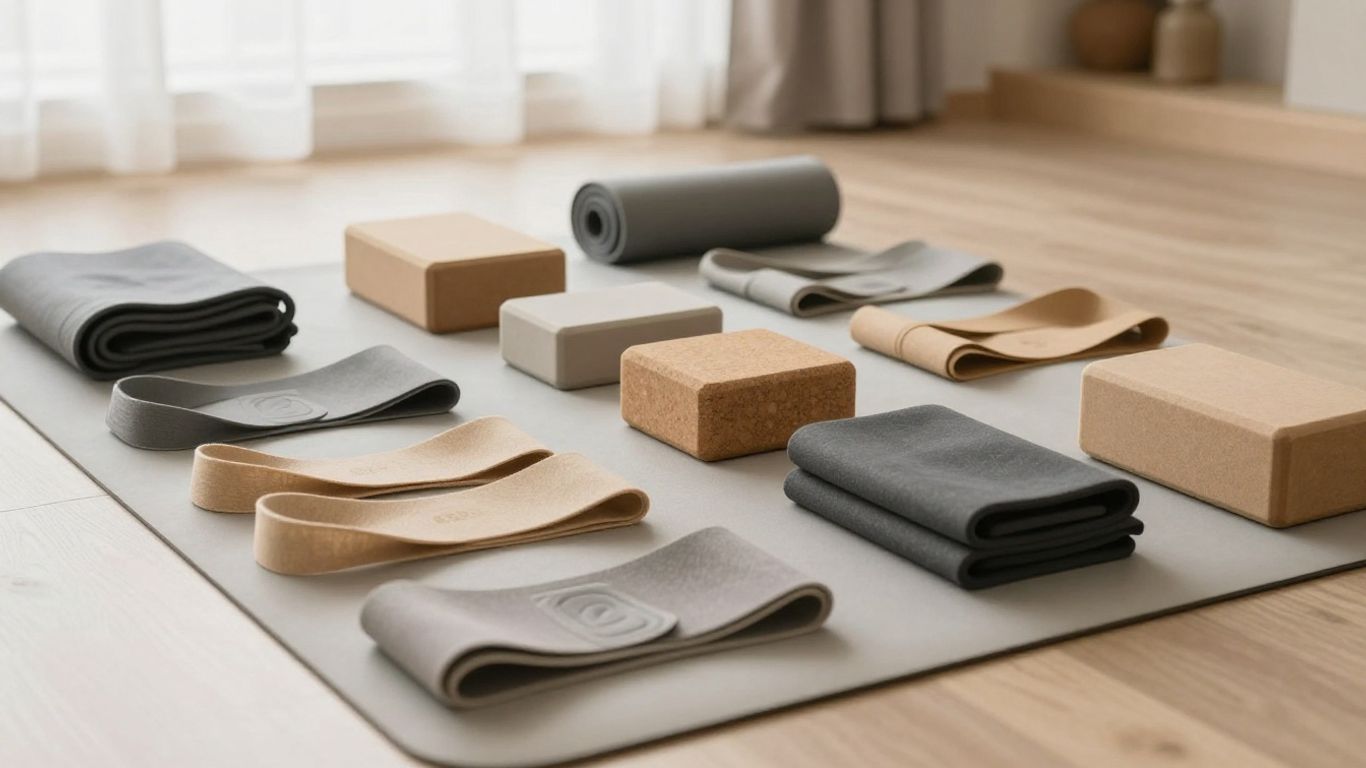
Comparing strap materials, lengths, and buckles
A strap should feel comfortable in the hands and remain easy to adjust while you are focused on the pose. Cotton can feel soft and familiar, while synthetic webbing may feel more structured; either can work when the width and finish suit your grip. Length depends on your proportions and intended uses, so a longer strap offers more options but may leave extra material to manage.
The Horatio Yoga Strap is documented as an 8-foot strap made from GOTS-certified organic cotton, with a 1.5-inch width and metal D-ring buckles. It is described for stretching and carrying a mat, and it is machine washable, which suits a practice that moves between locations.
Choosing foam, cork, or wood blocks
Foam blocks are often light and forgiving, making them convenient for travel or restorative work. Cork tends to feel firm and grounded, while wood offers a very stable surface but can feel less forgiving under pressure. Think about grip, weight, floor contact, and whether you will carry the block regularly rather than choosing by appearance alone.
For comparison, yoga blocks and straps are commonly offered in different materials and sizes for support, stability, flexibility, and alignment. Those categories are useful starting points when you are narrowing down a set.
Selecting the right block height and firmness
Most blocks have several usable sides, so turning one onto a different face changes the height without requiring another accessory. Start with the tallest stable position if the floor feels far away, then lower it only when your form remains steady. Firmness should match the task: a supported seat may feel better with a little give, while a standing balance often benefits from a solid base.
A block is doing its job when it reduces reaching and bracing. If your shoulder hikes, your knee twists, or the block wobbles, change the setup before continuing.
Features that improve comfort and durability
Rounded edges can feel nicer beneath the hands, and a surface with dependable grip is useful when palms or feet begin to warm. Look for construction that stays stable on your floor and materials that are easy to wipe clean. For a mobile setup, lower weight and a shape that packs easily can make the difference between using a prop and leaving it at home.
The Everyday Yoga Blocks kit is described as including two 4-inch foam blocks and an 8-foot polyester strap for modifying poses, increasing flexibility, and supporting range of motion. Whether or not you choose a set, matching the equipment to your actual routine is more useful than collecting every prop.
Learn foundational techniques with a yoga strap
A strap is most helpful when it creates space without taking control away from you. Keep the grip firm but not clenched, and check that the strap is not pressing directly into a sensitive joint. Begin with a little slack, then adjust only enough to maintain a steady shape.
Extending reach in seated stretches
Sit with the legs extended or comfortably bent, then loop the strap around the soles of the feet. Hold the ends with the elbows soft and draw the chest forward rather than pulling the torso down. The strap gives the hands a useful anchor while the spine can stay long.
If the hamstrings feel intense, bend the knees slightly. That small change often makes it easier to distinguish a purposeful stretch from a collapse through the lower back.
Supporting shoulder and chest openers
Hold the strap wider than shoulder distance and raise it overhead only as far as the ribs can remain settled. Slowly move the hands behind you or back overhead, keeping the elbows straight but not locked. A wide grip is usually kinder to the shoulders than forcing the hands close together.
You can also hold the strap behind the back with one hand above and one below, using gentle tension to guide the shoulders into a more organized position. Never pull the lower hand sharply or turn the movement into a test of range.
Improving hamstring flexibility safely
For a reclining leg stretch, loop the strap around one foot and hold both ends. Let the leg rise only until the pelvis stays level and the opposite leg remains relaxed. The strap should help you maintain direction, not drag the leg toward the face.
Try several calm breaths, then lower the leg slightly before fatigue changes the position. Small, repeatable adjustments are more useful than forcing a dramatic depth for a few seconds.
Avoiding overstretching and poor positioning
Pain, tingling, numbness, or a sharp pulling sensation is a reason to stop and reassess. Avoid wrapping a strap directly around the neck or placing it across an area where pressure could restrict circulation. Keep the joints soft enough to respond, and make sure the strap is not slipping toward a vulnerable position.
A good rule is to maintain the pose you can control without holding your breath. If you need to yank, twist, or brace your jaw to stay there, release some tension and try again.
Build better alignment with yoga blocks
Blocks can change the height of the floor, the angle of the pelvis, or the amount of weight carried by the hands. They are especially useful when balance is developing or when a range of motion varies from day to day. Place them deliberately, test their stability, and keep the support close enough that you do not have to reach for it.
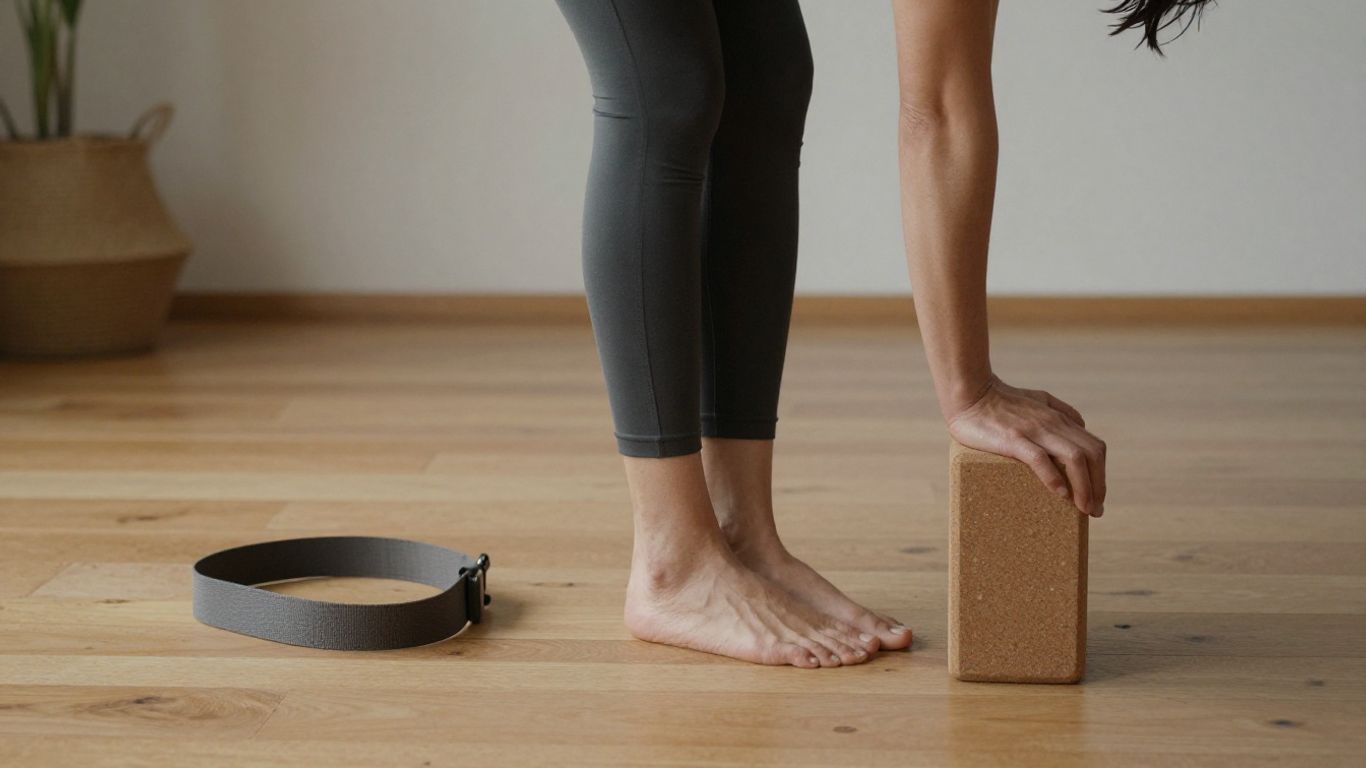
Modifying standing poses for balance
In triangle or a wide-legged fold, place a block outside or inside the front foot, depending on which position lets the torso remain long. In a lunge, blocks beneath the hands can make it easier to organize the shoulders over the wrists while the legs find their footing. Use a wall or another stable support as well if balance is uncertain.
The point is not to avoid working. It is to distribute the work so that the feet, legs, and trunk can participate instead of letting one area absorb everything.
Supporting hips in seated poses
A block beneath the sitting bones can raise the pelvis and make cross-legged or kneeling positions more comfortable. If the knees sit much higher than the hips, add support beneath the knees rather than forcing them down. The goal is an easy seat in which the spine can rise without constant muscular effort.
Try a folded blanket over the block if the surface feels too firm. Small changes in height can have a noticeable effect on the angle of the hips.
Bringing the floor closer in forward folds
Place blocks under the hands in a standing forward fold when the fingertips do not reach comfortably. Set them at a height that keeps the back broad and the neck relaxed. You can also use two blocks so both hands have equal support, which helps prevent the body from rotating toward one side.
Here is a quick way to choose the setup:
- Start with the highest stable side of the block.
- Keep the knees softly bent if the back rounds.
- Move the blocks closer to the feet only if the shoulders stay relaxed.
- Lower the height gradually as control improves.
After the adjustment, check whether your breathing is smoother and your weight is spread across both feet. If not, return to the previous height rather than treating lower as a requirement.
Using blocks to protect joints and maintain form
A block can reduce the distance a joint must travel, but it cannot make an unstable surface safe. Keep the support flat and fully grounded, especially under the hand in a standing pose. Avoid placing a block directly under a sharply bent knee unless a qualified teacher has shown you that variation.
Use the prop to preserve the intended direction of the pose. When the shoulder, hip, or knee begins to twist away from that direction, change the height or come out of the pose.
Combine yoga straps and blocks in common poses
Using two props can make a pose feel more organized, but more equipment does not always mean more benefit. Set up the block first, then add the strap only if reach remains the limiting factor. Move slowly enough to notice whether the props are helping the pose or simply allowing you to stay in a shape you cannot yet control.
Making downward-facing dog more accessible
Place blocks under the hands if the floor feels too far away or the shoulders cannot stay spacious. A strap around the upper arms can provide a gentle reminder to keep the elbows tracking without squeezing the shoulders inward, but it should never restrict circulation or force the arms into place.
Bend the knees and prioritize a long back over straight legs. The pose becomes more useful when the hands, shoulders, spine, and hips can work together.
Supporting triangle and half-moon pose
In triangle, a block beneath the lower hand can let the chest rotate without the top shoulder collapsing forward. In half-moon, place the block ahead of the standing foot so the hand has somewhere reliable to land as the other leg lifts. A strap may help the top arm reach upward if the hands do not comfortably connect in a variation.
Keep the lifted leg active but not rigid. If balance disappears, lower the block or reduce the height of the lifted leg before trying again.
Modifying bridge and restorative backbends
For a supported bridge, place a block beneath the sacrum at a height that feels steady rather than intense. A strap around the thighs can help maintain parallel leg alignment, provided it is loose enough for comfortable breathing. The support should allow the front of the hips to soften instead of creating pressure in the lower back.
Rest in the supported version for a shorter period at first. Come down carefully, pause, and notice how the spine and hips feel before repeating it.
Improving alignment in bound-angle pose
Sit on a block or folded blanket in bound-angle pose to raise the hips and make the pelvis easier to organize. A strap around the lower back and feet can create a gentle container for the legs, but it should not pull the knees downward. Place cushions or blocks beneath the outer thighs if they hover far above the floor.
The pose should feel supported and spacious. If the knees or groin feel strained, increase the support and reduce the forward inclination.
Create a safe and effective prop-based practice
A useful prop practice is built around attention, not intensity. Begin with movements that warm the joints and give you information about the day’s range of motion. Then choose one or two poses in which the strap or block clearly solves a practical problem.
Warming up before using deeper stretches
Start with easy joint movements, slow spinal flexion and extension, or several comfortable standing transitions. Let the breath become steady before using a strap to add leverage or a block to hold a longer position. Warmth does not guarantee safety, but rushing into a deep stretch gives you less information about how the body is responding.
Keep the first round modest. You can always add time or reduce support later.
Progressing from support to independence
Use the prop until you can maintain the pose with stable breathing and clear alignment. Then test a small change: lower the block one level, loosen the strap, or release one hand briefly. If the shape becomes less organized, return to the supported version without judging it.
This gradual approach is also reflected in yoga strap exercises, which frame the strap as a tool for flexibility, strength, alignment, and targeted work across several areas of the body.
Cleaning and storing yoga straps and blocks
Wipe blocks after practice, especially when they have been used on shared floors or beneath sweaty hands. Follow the care directions for the material, and let anything damp dry fully before storage. Keep straps loosely coiled or hung so they do not become sharply creased, and store the props somewhere clean and easy to reach.
The Bear Creek Yoga Strap is described as machine washable and made from GOTS-certified organic cotton, with an 8-foot length and metal D-ring buckles. Those documented care and construction details illustrate the kind of practical feature worth checking when comparing equipment.
Knowing when to adjust or stop a pose
A pose needs changing when the breath becomes strained, the support shifts, or the body starts compensating to remain in position. Come out if you feel sharp pain, numbness, dizziness, or a sensation that worsens with each breath. Afterward, choose a gentler position rather than immediately repeating the same attempt.
A short instructional video can be useful for seeing setup and transitions, but it cannot assess your body in real time. Use it as a visual reference and keep your own sensations, stability, and comfort as the final guide.
Conclusion
Yoga straps and blocks make practice more adaptable, whether you are stretching at home, traveling with a light setup, or refining a familiar pose. Choose support that improves reach, steadiness, or alignment, then progress slowly enough to stay aware of your breathing and position. The most effective prop is the one that helps you practice with control and consistency.
Frequently Asked Questions
Are yoga straps and blocks suitable for beginners?
Yes. Beginners can use them to reduce the distance to the floor, support balance, and explore a pose without forcing flexibility. Start with simple setups and learn how each prop changes your alignment.
Can props make a stretch deeper?
They can sometimes allow a more comfortable range, but deeper is not always better. A prop should help you maintain a steady position rather than pull you past your controllable range.
How do I know which side of a block to use?
Use the highest stable side first when you need more support, then lower the height only if your form and breathing remain steady. The best side is the one that lets you reach without collapsing or twisting.
Should I use a strap for every seated forward fold?
No. Use one when your hands cannot comfortably reach the feet or when reaching causes the spine to round sharply. If you can maintain a relaxed, well-organized position without it, leave the strap aside.
How often should yoga props be cleaned?
Wipe them regularly, especially after sweaty sessions or use on shared surfaces. Follow the care instructions for the material, and let straps and blocks dry fully before storing them.
Can blocks help with balance poses?
Yes. A block can give the hand a more reliable landing point and reduce the need to reach toward the floor. It should remain stable and should not replace careful foot placement or gradual practice.
When should I stop using a prop in a pose?
Stop or modify the pose if you feel sharp pain, numbness, dizziness, unstable breathing, or increasing discomfort. Return to a simpler variation and seek qualified instruction when you are unsure how to adjust.


