

Amazon.in yoga mat guide: How to choose the right mat for your practice
Key Takeaways
The best amazon in yoga mat choice depends less on appearance and more on how, where, and how often you practise.
- Match the mat to your yoga style and preferred level of cushioning.
- Compare PVC, TPE, natural rubber, and other materials before buying.
- Check grip, thickness, dimensions, weight, and care requirements.
- Read reviews and confirm specifications before ordering on Amazon.in.
- Choose a portable option if you practise while travelling or outdoors.
Understand your yoga mat needs
A yoga mat should suit your routine rather than simply look appealing in a product photo. Think about your usual poses, practice location, body comfort, and how often the mat will be carried. These details make it easier to narrow a large online selection. For a broader overview, this yoga mat buying guide is a useful companion.
Choose a mat based on your yoga style
Gentle Hatha, Yin, and restorative sessions often feel better on a mat with more cushioning and a comfortable surface. Faster flows and balance-focused practice usually call for a stable base that does not shift as you move. If you alternate between styles, choose a practical middle ground rather than buying for only one occasional class.
Match cushioning to your joints and comfort
A thinner mat can feel firm and stable, while a thicker mat gives more padding for kneeling, seated work, or longer floor-based sequences. Too much softness may make balancing poses feel less secure, so comfort should be weighed against control. If joint sensitivity is a concern, test how your knees and wrists feel after several minutes rather than judging thickness by sight alone.
Consider grip, sweat, and stability
Grip matters most when your hands or feet begin to slide during transitions. Consider whether you practise in a cool room, outdoors, or somewhere warm, and remember that surface texture can feel different when dry or damp. A separate towel may be useful during sweaty sessions; Yune Yoga offers absorbent yoga towels as part of its range of yoga accessories.
Decide whether portability matters
A mat that stays at home can be heavier and more substantial, but a travel mat needs to fold or roll without becoming a burden. Measure the space in your bag and consider whether you will carry it on public transport, to a hotel, or across a park. Yune Yoga focuses on thin, light, foldable travel mats for people who want a convenient setup in different locations.
Compare yoga mat materials
Material affects feel, weight, durability, and how a mat behaves over time. There is no single best option because a home practitioner may value longevity while a frequent traveller may prioritise easy packing. Look beyond labels and consider the surface, backing, cleaning needs, and expected use.
PVC mats for durability and value
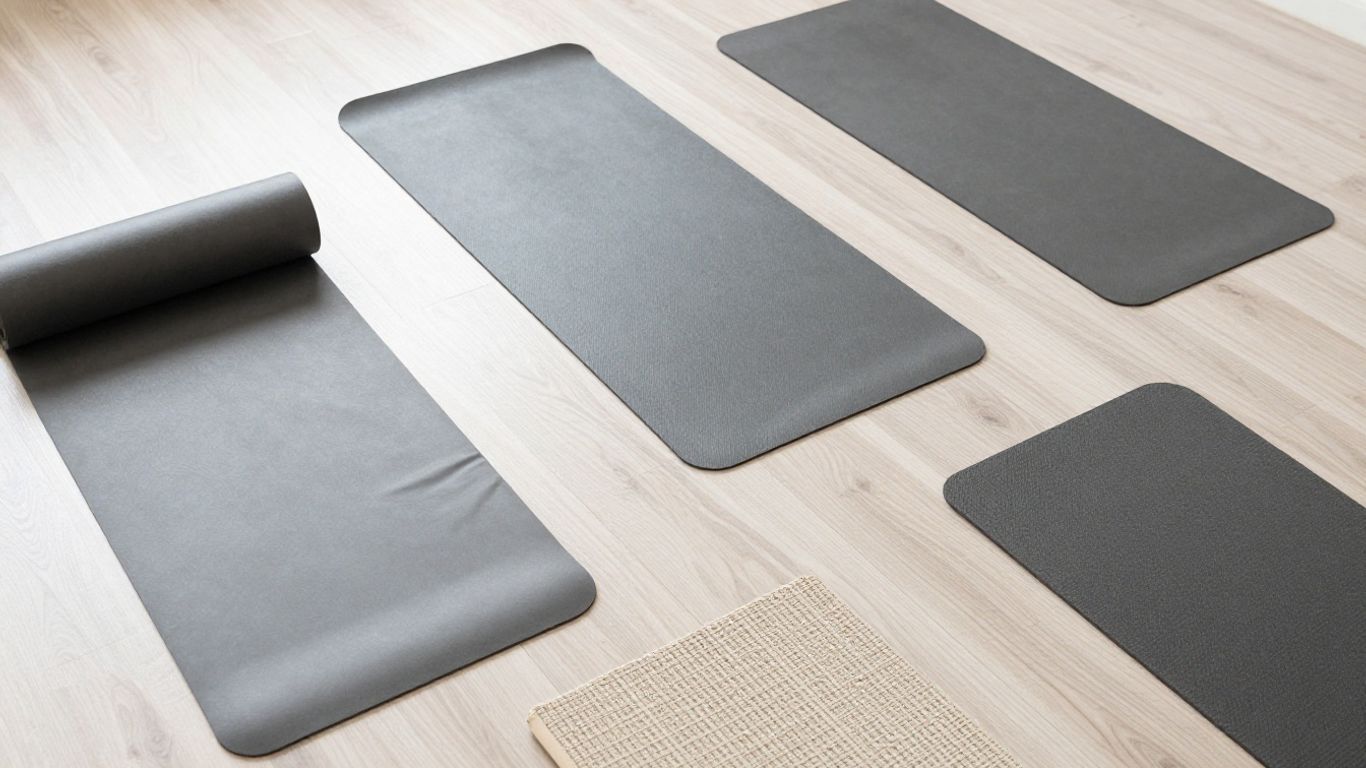
PVC mats are often considered when a shopper wants a durable, budget-conscious option. They can provide a consistent surface for regular home practice, though their weight and environmental profile may matter to some buyers. Check the listed texture and thickness, since the material name alone does not tell you how the mat will feel.
TPE mats for lightweight cushioning
TPE mats are commonly chosen for a lighter feel and comfortable cushioning. They can suit people who move between rooms or occasionally carry their mat, but the exact grip and firmness vary by construction. Read the full product specifications rather than assuming every TPE mat has the same traction.
Natural rubber mats for grip
Natural rubber can offer a grippy feel and a grounded surface for movement. It may also be heavier than some synthetic alternatives, and people with latex sensitivities should check the listing carefully before purchase. Allowing the mat to air out after opening can also help with any initial material smell.
Eco-friendly materials and potential trade-offs
Eco-friendly materials can be appealing when environmental considerations are part of your buying decision. Still, sustainability claims should be read precisely: check what the material is, how it is produced, and whether the product has particular care instructions. This eco-friendly construction guide offers broader context on comparing greener material choices, even though building materials and yoga mats are different categories.
Evaluate key yoga mat features
Material is only one part of the decision. Thickness, traction, dimensions, and small design details can change how a mat works in daily practice. Before comparing prices, identify the features that affect your own comfort and routine most.
Select the right thickness
Thickness is a balance between padding and stability. A moderate thickness may suit mixed practice, while extra cushioning can be more comfortable for knees, wrists, or floor work. Very thin mats are easier to pack, but the floor underneath will be more noticeable, especially on hard surfaces.
Check surface texture and traction
A smooth surface may be easy to wipe, while a textured one can provide a more secure feel. Look for language that explains traction in dry conditions and, where available, damp conditions too. Reliable grip matters more than a fashionable finish when a mat is used for regular movement.
Look for suitable dimensions and weight
Your mat should give you enough length for lying down and enough width for natural movement without forcing you to stay rigidly centred. Taller users may prefer an extra-long option, while travellers may accept a smaller footprint to save space. This yoga mat size guide can help you compare length, width, and portability before ordering.
A simple comparison can make the trade-off clearer:
| Priority | Feature to check | Likely compromise |
|---|---|---|
| Home comfort | More thickness and width | Greater weight |
| Daily commuting | Moderate weight and standard size | Less padding |
| Travel | Foldable or very light construction | More floor feel |
| Dynamic practice | Stable base and dependable traction | May cost more |
The right choice is the one that fits your actual storage space and practice area, not merely the largest option on a product page.
Consider alignment markings and accessories
Alignment markings can help some people position hands and feet consistently, while others prefer a plain surface. Accessories such as straps can make carrying and storage easier. Yune Yoga also offers durable yoga straps, which can be useful when a simple carrying aid fits your routine.
Shop smarter on Amazon.in
Online shopping gives you many choices, but it also makes small specification differences easy to miss. Treat the listing as a source to verify, not just a photo to browse. The best amazon in yoga mat purchase is usually the one whose dimensions, materials, and return terms remain clear after a careful read.
Compare prices, discounts, and seller ratings
A discount can be useful, but the lowest displayed price is not always the lowest long-term cost. Compare thickness, size, material, included accessories, and seller ratings together. A price difference may reflect a larger mat or a more durable construction rather than a simple promotion.
Read verified reviews for recurring issues
Individual reviews can be subjective, so look for patterns across several recent comments. Repeated mentions of curling edges, peeling, strong odor, weak grip, or inaccurate dimensions deserve more attention than a single enthusiastic rating. Reviews are most useful when they describe how the mat performed after repeated use.
Check return policies and delivery details
Confirm whether the item can be returned, how long the window lasts, and whether the package may arrive folded or tightly rolled. Delivery timing matters if the mat is needed for a class or trip. Also check whether the seller, rather than the product title alone, determines the applicable terms.
Confirm product specifications before ordering
Before pressing Buy Now, compare the listed measurements with your available floor space and storage area. Check the material, thickness, weight, care instructions, and what is included in the package. For another perspective on shopping for yoga mats online, see this Amazon India yoga mat selection.
Choose a yoga mat for different users
Different users need different compromises. A beginner may want a forgiving, affordable mat, while a frequent traveller may care most about folding and carrying. Thinking in terms of use case keeps the decision practical and prevents unnecessary features from driving the purchase.
Beginner-friendly mats for home practice
Beginners often benefit from a stable, comfortable mat with enough room to move and a surface that feels reassuring under the hands. A moderate price can make it easier to learn what you prefer before investing in a specialist model. This beginner yoga mat guide provides another way to think through those first choices.
Travel mats for portability
Travel mats should fit the way you move through the day. A foldable mat may suit hotel rooms, parks, or visits to family, while a very thin mat may need to be placed over a carpet or another surface for comfort. Yune Yoga’s positioning centres on portable, foldable mats designed to make practice easier to take from place to place.
Extra-thick mats for sensitive joints
Extra thickness can soften contact with a hard floor, particularly during kneeling or seated poses. It can also feel less stable for standing balances, so try to balance cushioning with a firm enough base. If you already use a very thick mat, check that it does not make your feet feel unstable during transitions.
Non-slip mats for hot or sweaty sessions
For warm rooms or sweaty practice, focus on traction and sweat management rather than relying on the words “non-slip” alone. A towel can help keep the surface drier and may be easier to wash after a session. The right combination depends on how much you sweat and whether you prefer a softer or firmer feel.
Maintain your yoga mat for longer use
Good care helps a mat remain pleasant to use and makes small problems easier to spot. Cleaning routines should match the material and the manufacturer’s instructions, since harsh products can damage some surfaces. Storage matters too, especially for mats that are folded or rolled frequently.
Clean the mat after regular practice
Wipe the mat after regular sessions, particularly when sweat or outdoor dust is involved. Use a gentle cleaning method recommended for the material and avoid soaking it unless the instructions specifically allow that. A simple routine is easier to maintain than occasional aggressive scrubbing.
Dry and store it correctly
Let the mat dry fully before rolling or folding it away. Store it in a cool, dry place rather than leaving it in direct sun or a damp bag. For general care ideas, this guide to cleaning vegan leather pillows concerns a different material, but its emphasis on gentle tools and avoiding unnecessary moisture is a useful household reminder.
Prevent odors, peeling, and loss of grip
Odor is more likely when moisture is trapped between sessions, so ventilation helps. Avoid leaving a mat in a hot car for long periods, and do not use strong solvents without checking the care label. If the surface starts peeling or becomes unusually slick after cleaning, stop and reassess the product instructions.
Know when it is time to replace the mat
Replace a mat when its grip has noticeably deteriorated, the cushioning has become uneven, or cracks and peeling interfere with practice. A faded colour alone may not mean the mat is finished, but structural changes can affect comfort and stability. Choosing a replacement is also a good time to reconsider whether your practice, storage, or travel habits have changed.
For perspective on staying present during a routine, you can read about mindfulness training, although this article remains focused on practical mat selection and care.
Conclusion
Choosing an amazon in yoga mat becomes simpler when you start with your practice, then compare material, cushioning, grip, size, portability, and care. Read the listing carefully, look for recurring review themes, and choose the features you will genuinely use. A well-matched mat should feel comfortable at home and manageable wherever your practice takes you.
Frequently Asked Questions
What thickness is best for a yoga mat?
A moderate thickness suits many mixed practices, while a thicker mat may feel more comfortable for sensitive joints and floor-based poses. Thinner mats are often easier to carry but provide less separation from a hard floor.
Which yoga mat material is easiest to maintain?
The easiest material depends on the specific surface and care instructions. In general, choose a mat with clear cleaning guidance and allow it to dry fully after wiping.
Are thicker yoga mats better for beginners?
Not always. Extra cushioning can feel comfortable, but too much softness may make standing balances less stable. Beginners should look for a balance of comfort, grip, and control.
How do I choose a yoga mat for travel?
Prioritise low weight, compact storage, and a size that fits your bag. If the mat is very thin, consider where you will practise and whether the floor requires an additional layer.
How can I tell if a yoga mat has good grip?
Read reviews for repeated comments about slipping in both dry and damp conditions. Product descriptions can help, but real-world feedback is useful for understanding how the surface behaves over time.
How often should I clean my yoga mat?
Wipe it after regular or sweaty practice and clean it more thoroughly when dirt or odour builds up. Always follow the care guidance for the material.
When should I replace my yoga mat?
Consider replacement when the surface loses dependable grip, the cushioning becomes uneven, or cracks and peeling affect comfort or stability. A strong smell that persists despite proper cleaning can also be a warning sign.


