Detergent for Yoga Towels: What to Use and What to Skip
The best detergent for a yoga towel is a mild, fragrance-free liquid, used in a small amount, in cold water. Skip fabric softener and dryer sheets, rinse thoroughly, and wash the towel after every class. That combination removes sweat and bacteria without leaving the film that makes a towel slick or smelly. Below you’ll find how to pick a detergent, how much to use, a step-by-step wash routine, and fixes for odor and stiffness.
TL;DR
- Use a gentle, fragrance-free liquid detergent. Hot yoga guidance recommends cold water and a mild detergent to protect the texture and function of the towel.
- Use less than you think. Leftover detergent leaves residue that traps odor and makes the towel feel stiff or slippery.
- Never use fabric softener or dryer sheets. They coat fibers and cut absorbency.
- Wash after every sweaty session, then dry the towel completely, on low heat or by air drying.
- For lingering smell, add white vinegar to the rinse instead of more detergent.
Table of Contents
- Why the detergent you choose matters for a yoga towel
- What to look for in a detergent for yoga towels
- How much detergent to use
- How to wash a yoga towel, step by step
- Detergent, water temperature and drying: the combinations that work
- Fixing odor without wrecking the grip
- How often to wash
- Mistakes that shorten a towel’s life
- A towel built for the routine
- FAQ
- Sources
Why the detergent you choose matters for a yoga towel
A yoga towel does a different job from a bath towel. It sits on your mat, soaks up sweat, and gives your hands and feet something to grip. Most hot yoga towels are made of microfiber, a dense, fine-fiber fabric that pulls moisture away from the surface. That is exactly why they respond differently to laundry products.
Two things can go wrong. The first is too little cleaning: sweat, body oil and bacteria stay in the fabric and the towel starts to smell. The second is too much product: suds and additives that stay in the fibers. Both end with a towel that grips worse and smells worse.
The CDC’s guidance on cleaning your home says laundry, towels included, should be washed with detergent at the recommended water temperature and dried completely. So yes, towels should be washed with detergent. The question for a yoga towel is which one, and how much.

What to look for in a detergent for yoga towels
You don’t need a specialty product. You need the right profile.

Mild and fragrance-free
A gentle, fragrance-free detergent is the standard recommendation for yoga towels, since it protects the towel’s texture and functionality. Heavy perfumes also tend to sit on fabric, and on a towel pressed against your face and hands during practice you will notice them.
Liquid rather than powder
Liquid detergents dissolve easily in cold water. Powders can leave undissolved grains in a cold cycle, which is a problem on a fine, dense fabric. If you prefer powder, dissolve it in water first.
No built-in softener
Check the label for “with softener” or “2-in-1” claims. Softening agents are the single biggest enemy of towel absorbency. According to USA Today’s Reviewed laundry guide, the main active ingredient in most fabric softeners is a silicone oil, polydimethylsiloxane, that undermines the absorbent properties of terry cloth. The same logic applies to any towel you want to stay absorbent.
Sport detergent, when odor is the problem
If your towel keeps smelling after washing, a detergent made for athletic fabrics can help, since these are formulated for sweat and body oils. Use it as an occasional upgrade, not a reason to add more product to every load. For plain upkeep, mild and fragrance-free is enough.
What about dish soap?
For hand washing, a small amount of mild dish soap works because it cuts oil and rinses out readily. Use a few drops, not a squirt. It is a fine travel option, covered below.
How much detergent to use
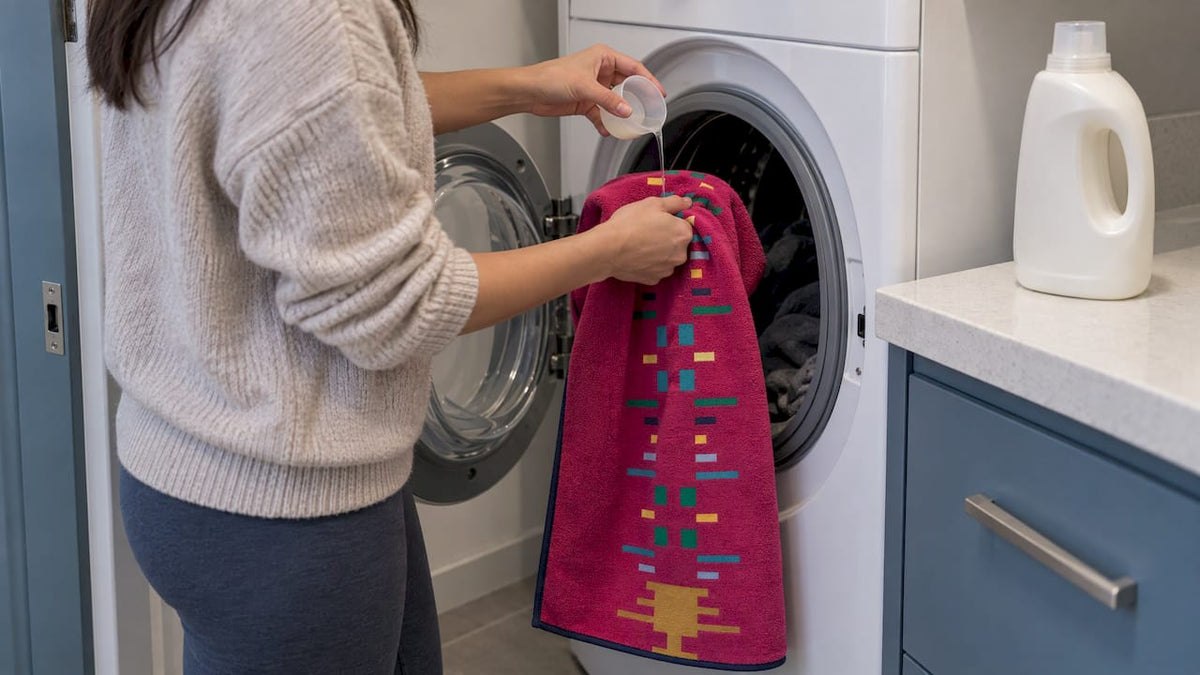
Use the smallest amount your detergent’s label allows for a small, lightly soiled load, and err on the low side. Detergent residue is a known problem with thick, absorbent fabrics because suds can stay in the fibers, leaving towels stiff when dry and slippery when wet, a point made in this towel care guide.
A few practical rules:
- A yoga towel or two is a small load. Don’t use the dose meant for a full drum of laundry.
- If you see suds in the rinse water or on the towel at the end, you used too much.
- Add an extra rinse cycle if your machine has one.
How to wash a yoga towel, step by step
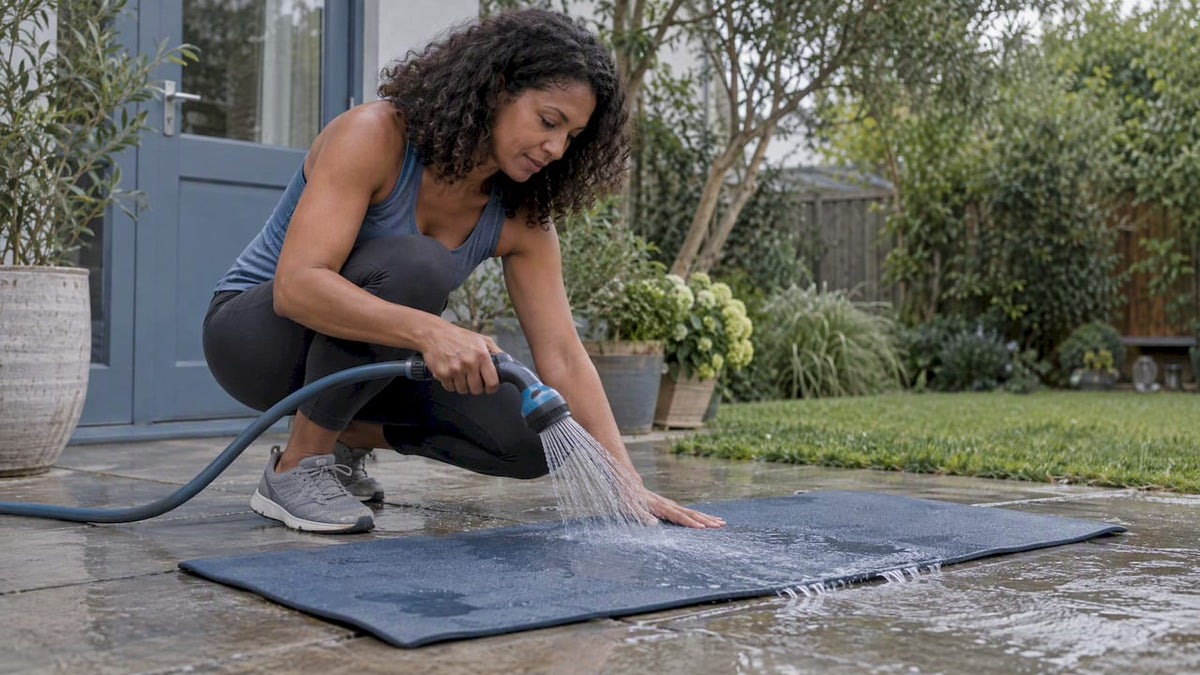
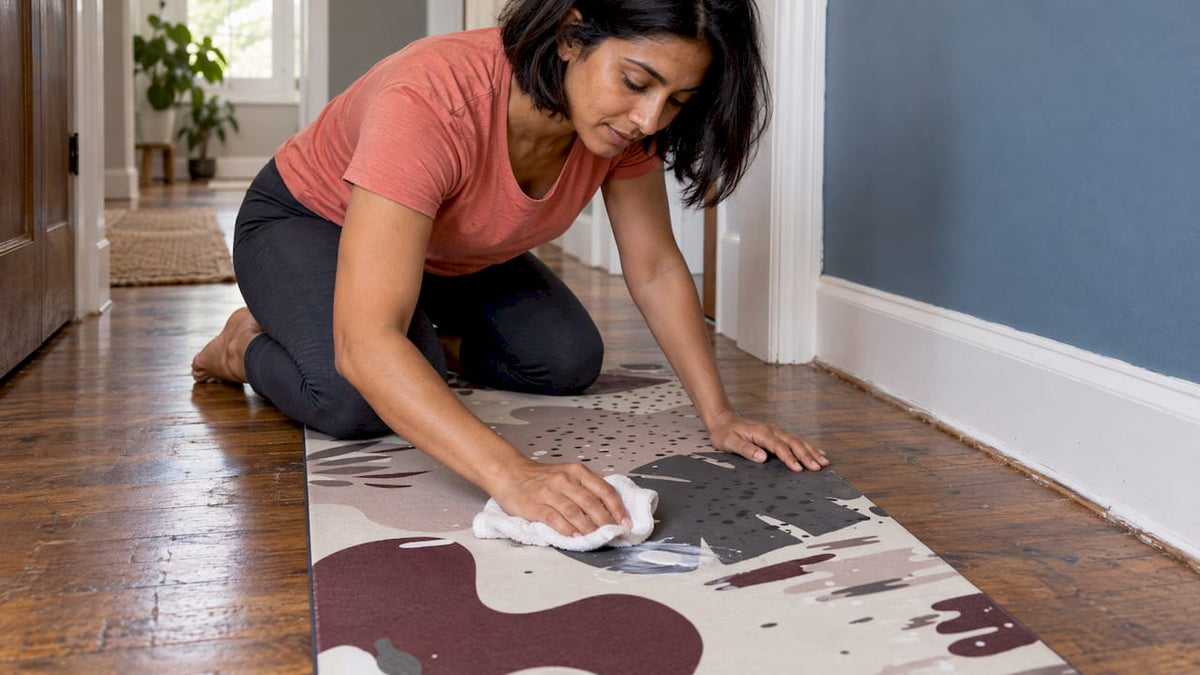
The general method is the same across microfiber care guides: cold water, mild detergent, no softener, gentle drying. One microfiber yoga towel guide describes machine or hand washing in cold water with a mild detergent, and keeping softener and bleach out.
Machine washing
- Shake it out. Remove loose dirt, especially after outdoor practice.
- Rinse right after class if you can. A quick cold rinse stops sweat from setting in. Our own post-class towel routine shows how to do it in a few minutes.
- Wash with similar items. Keep it away from cotton towels and fluffy fabrics, which shed lint onto microfiber. Don’t wash it with zippers or Velcro that could snag it.
- Choose cold water and a gentle cycle. Cold water protects the fabric and color. Hot water can damage fibers.
- Add a small amount of mild, fragrance-free liquid detergent.
- Skip softener and bleach.
- Run an extra rinse if you tend to see residue.
Hand washing
Hand washing suits travel and delicate towels.
- Fill a sink or basin with cool water and a few drops of mild detergent.
- Submerge the towel and gently knead it for a minute or two.
- Let it soak for about 30 minutes if it’s been a while since the last wash.
- Rinse under running water until the water runs clear and no suds remain.
- Press out the water, don’t twist it, and hang it.
For a longer walkthrough, see our guide on washing a yoga towel without killing its grip.
Detergent, water temperature and drying: the combinations that work
| Choice | Recommended | Avoid |
|---|---|---|
| Detergent | Mild, fragrance-free liquid | Heavily scented, 2-in-1 with softener |
| Amount | Small dose, extra rinse | Full-load dose |
| Water | Cold | Hot |
| Additives | White vinegar in the rinse for odor | Fabric softener, dryer sheets, bleach |
| Drying | Air dry, or low heat | High heat, ironing |
| Frequency | After every sweaty session | Letting it sit damp in a bag |
On drying: high heat and ironing can damage microfiber, as manufacturer care advice notes. Air drying is the safest option. If you use a dryer, choose the lowest setting. The CDC also says laundry should be dried completely, because damp fabric left in a bag is where odor and mildew start.
Fixing odor without wrecking the grip
When a towel still smells after washing, the answer is usually removing residue, not adding more detergent.
- Use white vinegar in the rinse. Adding about a cup of white vinegar to the rinse water is a common deep-clean tip for lingering bacteria and odors. Rinse it again with plain water so the vinegar smell does not linger.
- Run the towel through a wash with no detergent. A plain cold rinse cycle can clear a film built up from past washes.
- Switch to a gentler or sport-specific detergent if the smell returns within a day.
- Dry it fully before it goes back in your bag.
Our guide to fixing yoga towel odor without killing grip goes deeper. If you see dark spots or smell something musty, read how to remove mildew from a yoga towel.
How often to wash
Wash a yoga towel after every use, especially after hot yoga. Hot yoga studios recommend washing gear after each session to prevent bacteria growth and keep it fresh for the next class. If you can’t wash it right away, rinse it, wring it gently, and hang it open instead of leaving it rolled up in your bag.
After class, the same logic applies to you: a shower and clean clothes complete the routine. This piece on post-workout care after training covers the body side of the habit.
Mistakes that shorten a towel’s life
- Fabric softener or dryer sheets. They coat fibers and cut absorbency.
- Too much detergent. More soap does not mean more clean. It means more residue.
- Washing with cotton towels. Lint transfers onto microfiber and clogs the weave.
- Hot water and high heat. They can damage the fibers.
- Storing it damp. This is how smell and mildew set in.
Even with good care, a towel wears out. Replace it when you notice visible wear, lost grip or reduced absorbency, a sign manufacturers point to.
Our take on washing yoga towels
We design towels for people who practice hard, and sweat is part of that. The care routine is simple, and we think it should be: a small amount of gentle detergent, cold water, a thorough rinse, and a full dry. Most of the complaints we hear about slick or smelly towels trace back to residue and storage, not the towel itself.
That’s why we pair our towels with simple habits. Rinse after class, wash after every session, keep softener away, and let it dry open. Treat the towel as part of your practice kit and it stays reliable, class after class.
If you practice at home and on the road, a towel that is easy to wash by hand in a hotel sink is worth more than one that needs special handling. We build and recommend our range with that routine in mind.
Nicholas
A towel built for the routine
If your current towel has lost its grip or won’t lose its smell, a fresh one and a simple wash routine can reset your practice. We make yoga towels, along with mats and straps, for home and travel. You can browse the Yoga Towel SE34, the Yoga Towel Spruce or the Yoga Towel Reed, or see the full range on our shop.

Not sure what a hot yoga towel does for your practice? Start with our explainer, what a hot yoga towel is, or learn how to choose the best microfiber yoga towel.
FAQ
How do you wash a yoga towel?
Wash it in cold water on a gentle cycle with a small amount of mild, fragrance-free liquid detergent, and no softener. Keep it apart from cotton towels to avoid lint. Rinse well, then air dry or use the lowest dryer heat. By hand, a basin, a few drops of detergent and a thorough rinse do the job.
Should you wash towels with detergent?
Yes. The CDC advises laundering towels with detergent at the recommended water temperature and drying them completely. For a yoga towel, use a mild detergent in a small dose and rinse well so no residue stays behind.
Can I use fabric softener on a yoga towel?
No. Softeners contain silicone-based ingredients that reduce a towel’s absorbency. A yoga towel needs to absorb sweat and keep its grip, so leave softener and dryer sheets out. White vinegar in the rinse is a better option for freshness.
How often should I wash my yoga towel?
After every sweaty class. Washing after each use helps prevent bacteria growth. If you can’t wash it right away, rinse it and hang it open to dry.
Is a yoga mat towel necessary?
It depends on how much you sweat. In hot or heavy-sweat classes, a towel on your mat helps absorb moisture and keeps your hands and feet from slipping. Our guide to hot yoga towels explains how to choose one.
Sources
- CDC: When and How to Clean and Disinfect Your Home
- The Hot Room: How to Clean Your Yoga Towel
- USA Today Reviewed: Here’s the truth about washing your towels
- Cotton With Love: How to Wash Towels
- Yoga Mat Manufacturers: How to clean and care for your yoga towel