
Five Minutes After Class That Preserves Your Yoga Towel's Grip
Wash your yoga towel after every hot or heavily sweaty session, and hang it open to air the moment you roll up your mat. That single habit, drying it out fast instead of leaving it damp in a bag, does more to control bacteria and odor than any detergent choice. Light home practice can stretch to every two or three uses if the towel dries fully between sessions. Silicone or grip-dot towels need a gentler first wash and should never meet fabric softener.
TL;DR:
- Wash hot yoga towels after every session due to heavy sweat absorption and bacteria growth; avoid skipping even once in hot practice.
- Immediately unroll and hang towels open after class to prevent dampness, mold, and bacteria, especially in shared or studio environments.
- Use a gentle, cold wash with low detergent and no softener, followed by an extra rinse or vinegar addition to maintain grip and remove residue.
- Hand washing extends the lifespan of grip dots on heavily used towels, reducing damage from machine agitation and heat.
- Regular deep-cleaning with vinegar or baking soda every 2 to 4 weeks prevents odor buildup and salt crust, preserving towel tack quality.
Table of Contents
- Yoga Towel Hygiene: How Often to Wash by Use Case
- What to Do With Your Towel Right After Class
- The Machine-Washing Routine That Keeps Grip Intact
- Hand-Washing: When It’s Worth the Extra Effort
- Drying and Storage That Actually Preserve Grip
- Deep-Cleaning for Odor and Salt Buildup
- Caring for Silicone and Grip-Dot Towels Specifically
- Signs Your Yoga Towel Is Past Its Prime
- Product-Aware Care Guidance From Yune Yoga
- The Real Priority: Grip First, Laundry Habits Second
- Give Your Towel the Same Care You Give Your Practice
- Sources
Yoga Towel Hygiene: How Often to Wash by Use Case
There’s no single right answer for every practitioner, but the rule of thumb is simpler than most people assume: match the wash frequency to how much the towel actually absorbed, not to a fixed schedule.
Hot yoga is the clearest case. A 90 minute session in a heated room can soak a towel with several ounces of sweat, along with the skin cells and oils that come with it. That combination is exactly what bacteria feed on, which is why hot yoga towels need washing after every single use. Skip that wash, even once, and you’re rolling out a damp surface for bacteria to multiply on before your next class.
Shared or studio use raises the stakes further. Any towel that touches a communal mat, gets passed between bags, or sits in a studio’s lost-and-found for a day needs a full wash before its next use, regardless of how light the session felt.
Home practice is more forgiving. If you’re doing a gentle 30 minute flow in a cool room and the towel comes out barely damp, you can reasonably stretch to two or three uses, provided it dries completely between sessions. The moment it stays even slightly damp overnight, that grace period disappears.
Three quick checks tell you when it’s time regardless of your schedule:
- Smell test: any sour or musty note means bacteria are already established, not just starting.
- Visible soil: makeup transfer, dirt, or discoloration means wash now, not next time.
- Moisture check: a towel that’s still cool to the touch after four hours hasn’t dried and shouldn’t go back in your bag.
Community habits back this up. Threads among practitioners consistently show people washing after every hot session and rotating two towels so one is always clean while the other airs out. That rotation habit alone solves the “I forgot to wash it” problem more reliably than any reminder app.
What to Do With Your Towel Right After Class
The five minutes right after you roll up your mat matter more for yoga towel hygiene than the wash itself. Bacteria don’t wait for laundry day, and a towel crumpled damp in a gym bag is basically an incubator.
- Unroll it immediately. Don’t fold or stuff a wet towel into your bag. Shake it out and let air reach every part of the fabric, even if that just means draping it over the outside of your bag on the walk to your car.
- Hang it open the second you’re home. A towel bar, a shower rod, or even a chair back works. The goal is airflow on both sides, not a heap on the bathroom floor.
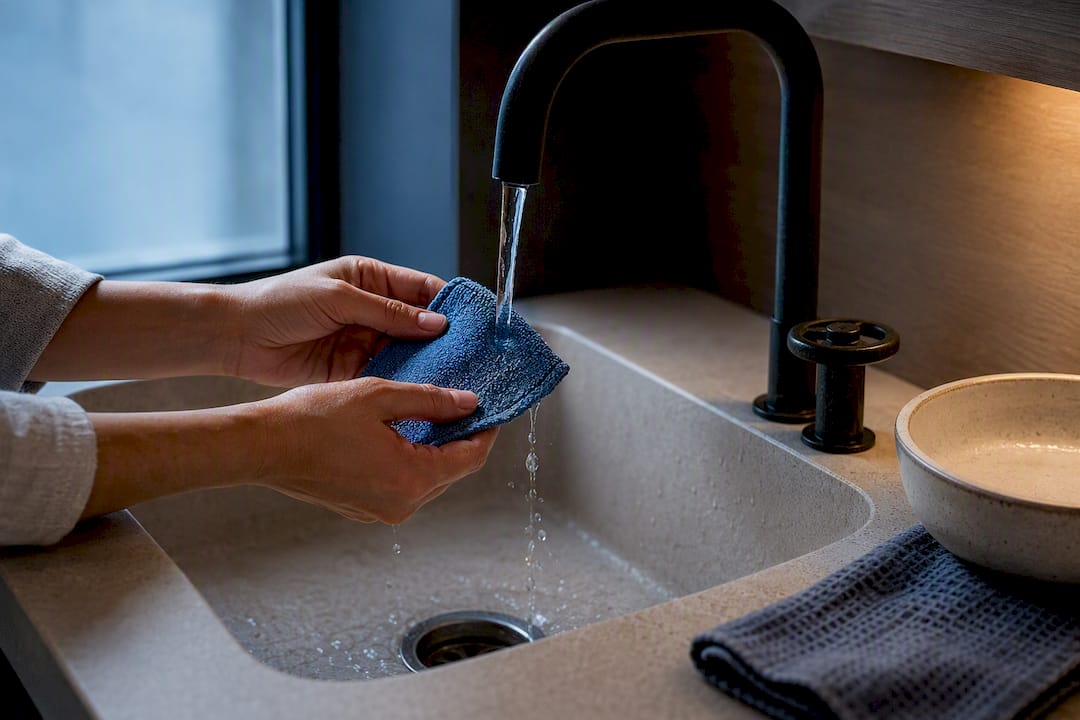
- Blot the heaviest zones. If you’ve got a spare minute, press a small microfiber cloth against the sweat-heaviest spots (usually the center and the hand zones) to pull out moisture before it sets.
- Mist with diluted vinegar if you can’t wash right away. A light spray of distilled water with a splash of white vinegar knocks down odor-causing bacteria without soaking the towel, which is useful when you’re traveling or between studio classes.
- Keep a small care kit in your bag. A travel-size spray bottle, a spare microfiber cloth, and a mesh bag for the dirty towel turn this from an afterthought into a two-minute routine.
Pro Tip: Keep a dedicated “dirty towel” mesh bag clipped to your gym bag. Tossing a damp towel straight into a mesh bag instead of loose against your other gear stops moisture from transferring to your clothes and keeps the towel breathing until you get home.
None of this replaces a real wash. But it buys you time when life doesn’t cooperate with laundry day, and it stops one damp towel from turning into a smell you can’t get rid of later.
The Machine-Washing Routine That Keeps Grip Intact
Most people wash yoga towels the same way they wash bath towels, and that’s exactly why the grip disappears after a few months. Technical microfiber and silicone-dot fabric need a gentler, more deliberate routine.
Start with sorting. Wash your yoga towel with similar synthetics, never with heavy cotton towels or anything with Velcro. Cotton sheds lint that clogs microfiber pores, and Velcro snags grip dots and pulls threads loose.
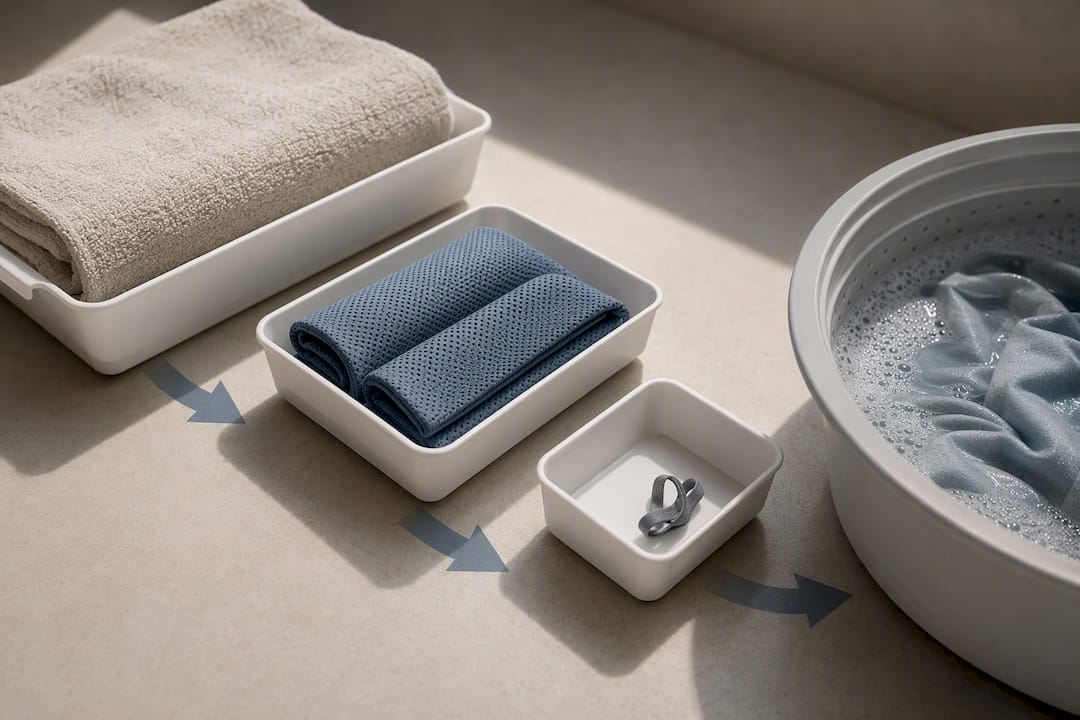
Detergent choice matters more than most people expect. Skip anything with fragrance, brighteners, or fabric softener built in, and use far less than the bottle recommends. A quarter of the standard detergent dose is enough to lift sweat and oil without leaving the kind of residue that makes fabric feel slick instead of grippy.
Here’s the wash breakdown that protects both hygiene and tack:
- Cycle: gentle or delicate, never a standard heavy-duty cycle.
- Temperature: cold to warm water; avoid hot, which stresses silicone dots and synthetic fibers.
- Bag: use a mesh laundry bag for any grip-dot towel to reduce direct agitation against the machine drum.
- Softener: none, ever. Fabric softener coats fibers with a film that kills both wicking ability and tack, which is exactly why manufacturers like Manduka explicitly warn against it on their own care instructions.
- Final rinse: run an extra rinse cycle, or add a small amount of white vinegar to the rinse water, to strip out any lingering detergent film.
That last step is the one people skip most often, and it’s the one that actually restores grip. A vinegar or double rinse pulls out the detergent residue that builds up over repeated washes, which is often the real reason a towel feels less sticky after a few months even though nothing about the fabric itself has changed.
Independent testing backs up something worth knowing before you agonize over which towel to buy: Wirecutter found that expensive and budget hot-yoga towels perform similarly when it comes to wicking sweat and reducing slip. The washing routine you follow affects longevity and grip far more than the price tag on the towel itself.
Hand-Washing: When It’s Worth the Extra Effort
Machine washing is faster, but it’s also the main source of mechanical wear on grip dots. If your towel has logged heavy use, or you’re starting to see the first signs of dots lifting at the edges, switching to hand washing extends its working life noticeably.
Hand washing makes the most sense for towels that have been through dozens of sweaty sessions, or any towel where you notice slight delamination starting at a corner or seam. Machine agitation is the main stress factor behind that kind of wear, and cutting it out, even part-time, slows the damage.
- Fill a basin with warm (not hot) water and add a small amount of the same mild, fragrance-free detergent you’d use in the machine.
- Submerge the towel and let it soak for 10 to 15 minutes, agitating gently with your hands rather than scrubbing.
- Compress, don’t wring. Press water out by squeezing the fabric between your palms. Wringing twists and stresses the grip dots in ways that speed up delamination.
- Rinse thoroughly, twice if needed. Add a splash of vinegar to the second rinse to clear any remaining detergent film.
- Lay flat to dry rather than hanging by one edge, which lets gravity stretch damp fabric out of shape.
This method takes longer than tossing a towel in the machine, but for a towel you’ve invested in and want to last, it’s the difference between replacing grip dots after a year versus after three.
Drying and Storage That Actually Preserve Grip
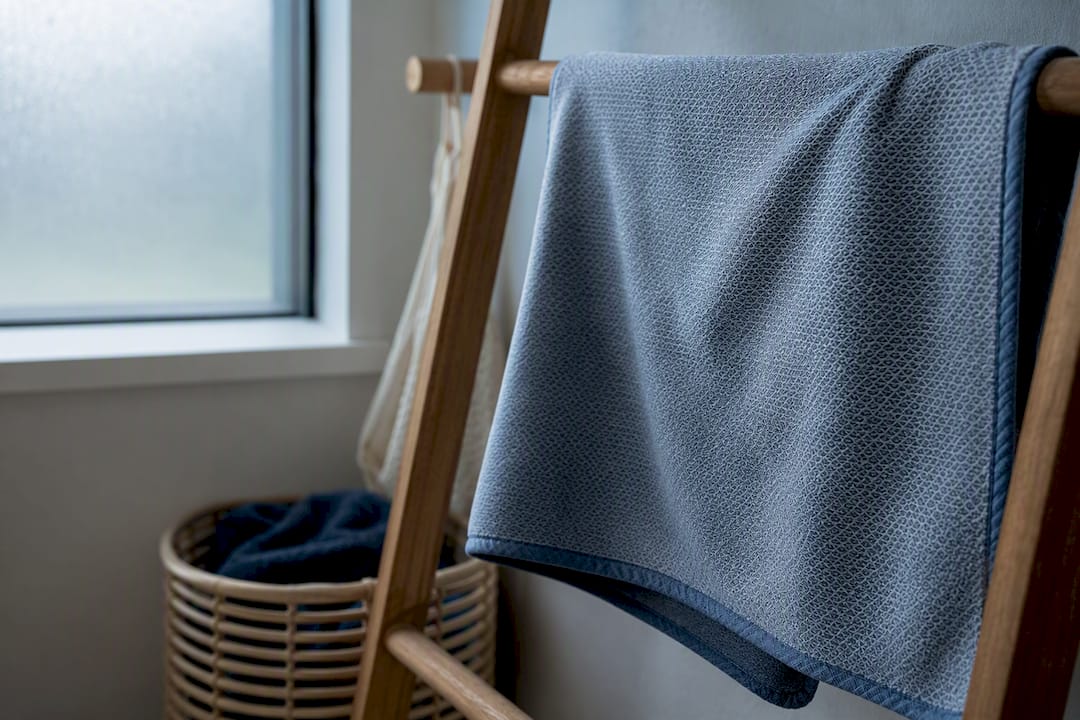
How you dry a yoga towel affects its lifespan almost as much as how you wash it. Heat is the enemy of both microfiber wicking and silicone tack, so the drying method deserves the same attention as the wash cycle.
Air drying is the safer default. Preserving fabric integrity means favoring air drying whenever your schedule allows it, hung flat or over a wide bar so the fabric doesn’t fold on itself while damp. Folding a wet towel traps moisture in the crease, which is a fast route to a musty smell even after a clean wash.
If you genuinely need the dryer, treat it as a finishing step, not the main event:
- Use the no-heat or air-fluff setting, never medium or high heat.
- Pull the towel out while it’s still slightly damp, then finish air drying the rest of the way.
- Never leave a grip-dot towel in a hot dryer for a full cycle. That’s the single fastest way to warp or melt the adhesive holding dots in place.
- Limit direct sun exposure to short stretches, and only once the towel is already fully dry. UV breaks down synthetic fibers over time.
- Store dry towels in a breathable bag, not sealed plastic, and toss in a silica gel packet if you’re storing one for travel or off-season.
Pro Tip: If you travel with your towel, roll it around a small silica packet before packing it damp-adjacent gear. It’s a cheap trick that keeps humidity from building up inside your bag during a long flight or car ride.
Deep-Cleaning for Odor and Salt Buildup
Regular washing handles day-to-day hygiene, but sweat leaves behind salt crystals and mineral residue that a normal cycle doesn’t fully dissolve. Every month or two, a deeper clean resets the towel without wearing it down.
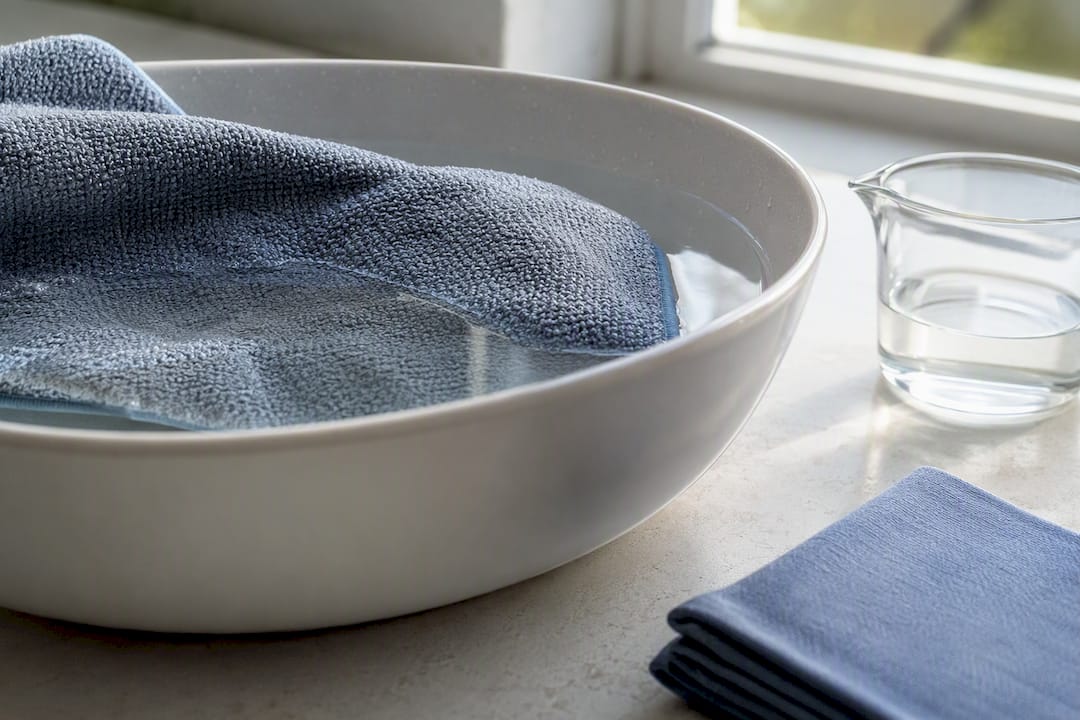
A vinegar soak is the most reliable fix for lingering odor and residue. Submerge the towel in a basin of water with a cup of white vinegar for 20 to 30 minutes, then run it through a double rinse. Removing detergent buildup this way restores tackiness that hot water and repeated washing had flattened.
Salt crust, the white, slightly crunchy residue you sometimes see after an especially sweaty session, responds better to a baking soda paste. Mix baking soda with a small amount of water into a paste, work it gently into the affected area, let it sit for 10 minutes, then rinse fully. Use this treatment sparingly, no more than roughly once every 50 sessions, since baking soda is mildly abrasive and repeated use can wear down fine fibers or grip texture over time.
Enzyme cleaners are worth keeping on hand for organic stains, biological residue like blood, sunscreen, or makeup that regular detergent struggles to break down. Follow the product’s dilution instructions and always rinse thoroughly afterward, since enzyme residue left on the fabric can itself irritate skin during your next sweaty session.
| Treatment | Best for | Frequency limit |
|---|---|---|
| Vinegar soak and double rinse | Odor and detergent residue | Every 2 to 4 weeks |
| Baking soda paste | Salt crust buildup | Roughly every 50 sessions |
| Enzyme cleaner | Organic stains (sunscreen, makeup) | As needed, always followed by a full rinse |
Treat this as maintenance, not emergency response. A monthly vinegar soak, even on a towel that seems fine, keeps residue from accumulating to the point where it noticeably dulls grip.
Caring for Silicone and Grip-Dot Towels Specifically
Grip-dot towels need their own rulebook, because the silicone that gives them their tack behaves nothing like the microfiber around it.
Before that towel ever touches detergent, run it through one vinegar-only rinse. Manufacturing leaves a light residue on silicone dots straight out of the packaging, and a first-wash vinegar rinse clears it and improves tack right from the start, without introducing detergent chemicals the dots haven’t been exposed to yet.
After that, the rules that protect grip long-term:
- Never use hot water on a grip-dot towel. Heat is the single biggest cause of dots lifting or warping.
- Skip fabric softener and harsh detergents entirely; both leave films that make silicone slicker instead of grippier.
- Always use a mesh laundry bag on machine cycles to cut down on direct agitation against the dots.
- During class, blot sweat rather than letting it pool and soak into the dot bases, which speeds up salt buildup right where grip matters most.
- Never scrub dots with a stiff brush. Agitation and heat, not dirt, are the main causes of dot delamination over time, and scrubbing accelerates exactly that damage.
A light baking soda polish can help restore tack on dots that feel slightly waxy from residue buildup, but limit it to once every couple of months at most. Anything more frequent starts to wear down the texture that creates the grip in the first place.
Pro Tip: Run your thumb across a few dots before every wash. If they feel tacky and slightly resist your skin, you’re maintaining grip well. If they feel smooth or slick, that’s your cue for a vinegar rinse before the next detergent wash.
Signs Your Yoga Towel Is Past Its Prime
Even perfect care has a shelf life. At some point, cleaning stops restoring the towel and starts just delaying the inevitable.
- Grip that won’t come back. If a vinegar rinse and a full deep-clean cycle don’t restore tack, and dots feel permanently smooth or are visibly peeling away from the backing, the towel has reached the end of its functional life.
- Odor that survives deep-cleaning. A smell that lingers after a vinegar soak, a baking soda treatment, and a full dry cycle usually means bacteria have worked into the fibers deeply enough that washing alone can’t reach them anymore.
- Visible fabric breakdown. Thinning patches, fraying edges, or small holes mean the towel can no longer wick sweat evenly, which undermines both hygiene and the flat, stable surface you need during a pose.
None of these show up overnight. They’re the accumulation of dozens or hundreds of sessions, and catching them early means replacing a towel on your own terms rather than mid-class.
Product-Aware Care Guidance From Yune Yoga
Care advice works best when it’s grounded in how these towels are actually built, which is where product-specific guidance earns its place. A detailed step-by-step washing guide walks through the wash cycle, detergent dose, and drying steps that keep grip intact over dozens of sessions, tailored to the microfiber and grip-dot construction used across many towel lines.
For practitioners choosing their next towel, the guide to selecting a slip-free mat towel breaks down what separates a towel that holds up under repeated hot sessions from one that degrades fast regardless of how carefully you wash it.
This article was written by Nicholas, drawing on hands-on familiarity with how technical yoga fabrics respond to heat, detergent, and repeated washing cycles. That background shapes the emphasis here on residue and heat as the real enemies of grip, rather than treating a yoga towel like a bath towel that just happens to be used on a mat.
The Real Priority: Grip First, Laundry Habits Second
Most towel care advice treats hygiene and grip as separate problems, one about bacteria, one about tack. They’re not. Every mistake that damages grip, hot water, fabric softener, aggressive scrubbing, also creates the exact conditions bacteria thrive in: warm, residue-coated fibers that never fully dry.
The conventional advice oversells frequency and undersells technique. Washing daily with the wrong detergent and a standard hot cycle does less for your towel than washing every third day with a cold, gentle cycle and a proper vinegar rinse. Frequency matters, but how you wash determines whether the towel is still gripping well six months from now.
If you take one thing from all of this, prioritize the vinegar rinse over everything else. It’s the cheapest, simplest step, and it’s the one that directly reverses the residue buildup that quietly kills tack long before the fabric itself wears out. Buy a good towel, then protect what makes it good. That’s the whole game.
— Nicholas
Give Your Towel the Same Care You Give Your Practice
Yune Yoga builds its towels around the same principle covered throughout this guide: grip and hygiene aren’t separate concerns, they’re the same fabric responding to the same care choices. The microfiber and grip-dot construction used across the line is designed to hold tack through repeated washing, provided you follow the cold-cycle, low-residue approach outlined above.

A simple care-kit bundle, a travel spray bottle, a dedicated microfiber cloth for blotting, and a few silica packets for storage, turns the post-class routine from an afterthought into a two-minute habit that actually extends the life of your towel. Pair that with a towel built for the abuse of regular hot sessions, and the maintenance described here gets a lot easier.
If your current towel is already showing the delamination or persistent odor signs covered earlier, it’s worth browsing Yune Yoga’s towel collection to see which option fits your practice before your next hot class.
Sources
- How to Wash Yoga Mat Towel for Lasting Grip and Hygiene
- How Often to Wash Hot Yoga Towel for Hygiene and Grip
- Non-Slip Grip Towel Care: How to Keep the Silicone Dots Sticky After 100+ Hot Yoga Sessions - Yoga Gear Flow
- How to Clean Your Yoga Towel


