

10 yoga strap leg stretches for flexibility, mobility, and deeper poses
Key Takeaways
A yoga strap can make leg stretches more comfortable, controlled, and accessible without forcing your range of motion.
- Move slowly and keep the strap secure around the foot or leg.
- Aim for steady tension rather than pulling hard.
- Keep the supporting leg and pelvis as stable as possible.
- Use props to create space in hamstring, hip, quad, and inner-thigh stretches.
- Stop if you feel sharp pain, numbness, or unusual joint pressure.
1. Reclined hamstring stretch with a yoga strap
Lie on your back with both legs extended. Bend one knee toward your chest, loop the strap around the ball of that foot, and slowly straighten the leg toward the ceiling. Hold the strap with both hands, keeping your shoulders relaxed on the floor.
Let the strap extend your reach instead of using it to yank the leg closer. A slight bend in the knee is completely fine, especially at first. Keep the opposite leg long and heavy, or bend it if your lower back starts to arch away from the floor.
Stay for several calm breaths, then lower the leg with control. This is one of the simplest yoga strap leg stretches for noticing the difference between useful tension and strain. Repeat on the other side, adjusting the strap length so your arms can remain relaxed.
2. Supine hand-to-big-toe pose
Start in the same reclined position, with one knee drawn in and the strap around the foot. Extend the leg upward until you feel a clear stretch along the back of the thigh, then settle into the pose without trying to make the leg perfectly straight. The floor gives you useful feedback here: your ribs and pelvis should stay quiet.
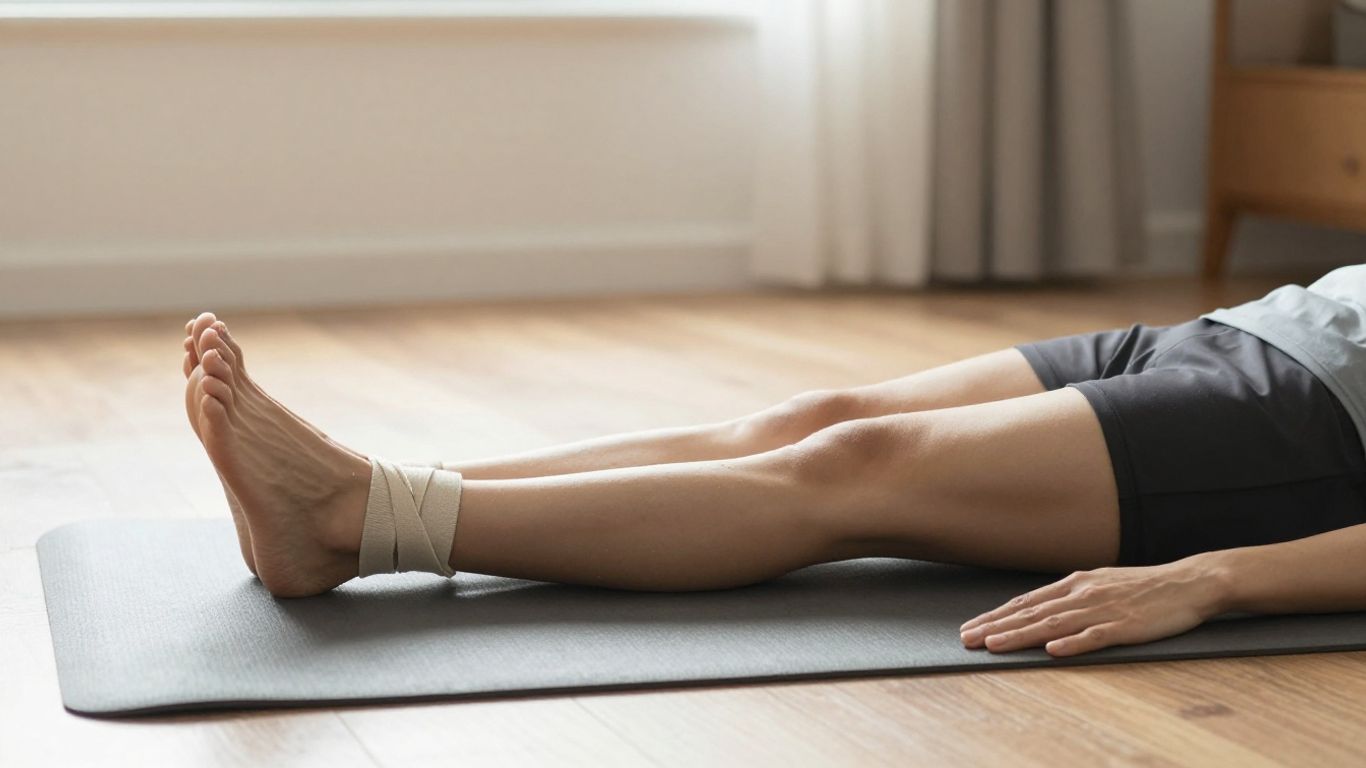
After a few breaths, guide the lifted leg slightly across the body while keeping both shoulders grounded. Return to center before lowering it. The movement should come from the hip, not from twisting the torso to chase a deeper angle.
This pose works well as a gentle warm-up because you can change the angle by only a few inches. If your hamstrings feel especially tight, keep the strap fairly long and focus on an even breath rather than a bigger range.
3. Strap-assisted side leg stretch
Remain on your back and extend one leg toward the ceiling with the strap around the foot. Hold the strap in the opposite hand, then slowly guide the leg out to the side. Keep the opposite hip weighted toward the floor so the stretch stays in the inner thigh instead of becoming a full-body roll.
Move only as far as you can while keeping your pelvis steady. The strap should provide direction and reach, not force. If the leg drops quickly, shorten the movement and return to center before trying again.
Pause at the edge for several breaths, then bring the leg back over your hip and lower it. This variation is particularly useful when reaching the foot directly would make you round your shoulders or grip your neck. Repeat on the other side with the same patient pace.
4. Reclined inner-thigh stretch
For a supported inner-thigh stretch, lie comfortably on your back and bring one strapped foot toward the ceiling. Instead of moving the leg far out to the side, keep the knee soft and let the thigh open gradually. Your lower back should feel supported rather than pressed down aggressively.
The strap gives your hands a stable connection while the hip learns to release. Keep your breathing unhurried, and resist the temptation to bounce at the end of the range. If the sensation shifts into the knee or groin, bring the leg back toward center and reduce the angle.
A folded blanket under the head or a small cushion beneath the pelvis can make the position more comfortable. Practicing this stretch after the side leg variation helps you compare a broader outer-hip movement with a more focused inner-thigh opening.
5. Seated forward fold with a yoga strap
Sit with your legs extended in front of you and loop the strap around both feet. Hold one end in each hand, sitting tall before you begin to hinge forward. The strap is useful because it lets you keep your spine spacious even when your hands cannot reach your feet.
Use this quick guide to choose a comfortable setup before folding:
| Setup | What to adjust | Helpful cue |
|---|---|---|
| Legs long | Strap around the feet | Hinge from the hips |
| Knees tight | Bend the knees slightly | Keep the chest broad |
| Low back rounding | Sit on a folded blanket | Lengthen before leaning |
| Shoulders gripping | Loosen your hold | Let the strap do less |
After the table, remember that the goal is not to pull your chest to your thighs. Keep a gentle hold on the strap, lengthen through the crown of your head, and fold only as far as you can maintain a smooth breath. This is a steady, supported fold, not a test of how close you can get.
Stay for a few breaths, then use your hands and abdominal support to return upright. For more ideas on using straps in forward folds and other poses, you can browse yoga strap exercises without changing the calm, gradual approach used here.
6. Strap-assisted wide-angle forward fold
Sit with your legs open in a comfortable V shape and place the strap around one foot, or around both feet if the strap is long enough. Keep the knees soft and begin by lengthening your torso upward. Then hinge forward slightly, using the strap to maintain reach without collapsing into the pose.
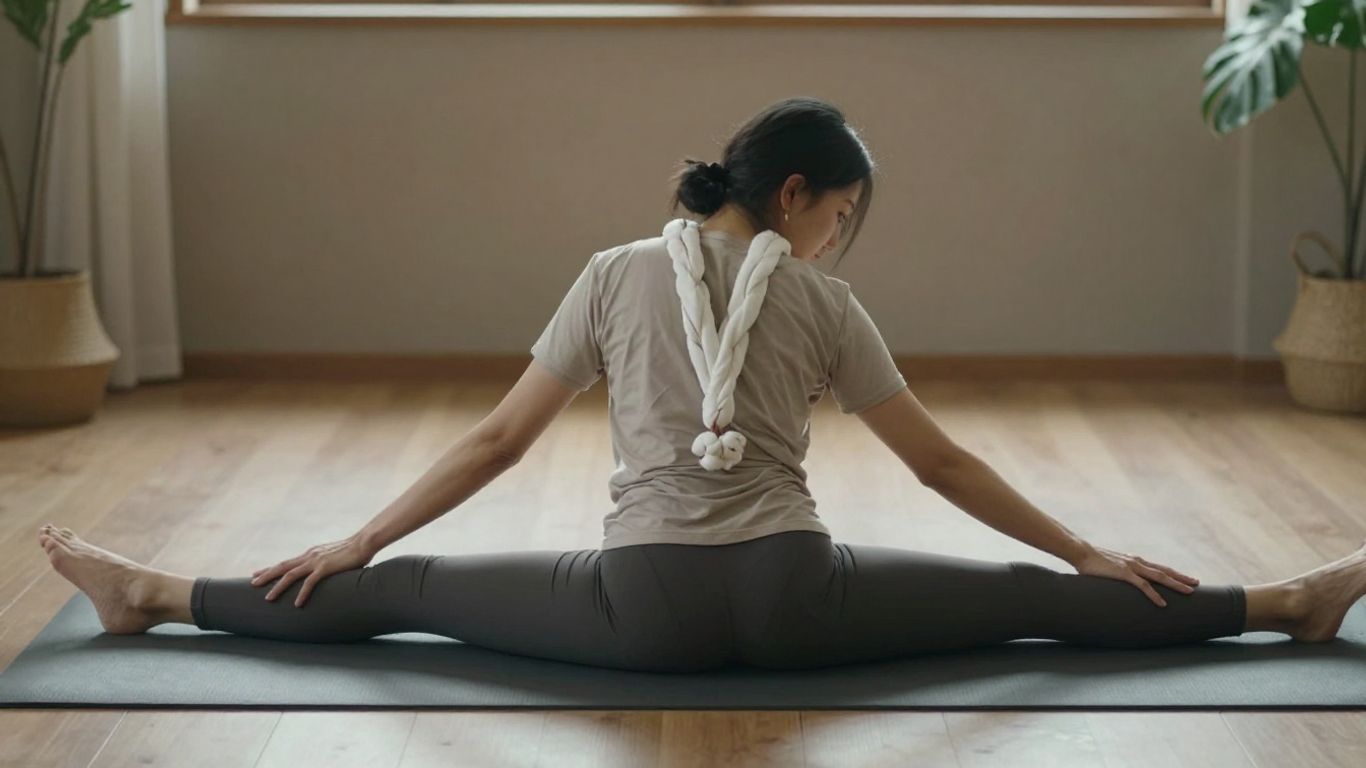
You can angle the torso toward the center or toward one leg. Each direction changes the emphasis, so move slowly and avoid forcing the hips to open beyond their current comfort. A cushion beneath the sitting bones may make it easier to keep the pelvis upright.
The strap should remain a light guide throughout the pose. If you notice gripping in the feet, jaw, or shoulders, ease off and take a smaller shape. For another perspective on accessible yoga strap stretches, see this guide to deeper flexibility, then return to the version that feels manageable today.
7. Standing hamstring stretch with a yoga strap
Stand near a wall or chair for balance and place the strap around the ball of one foot. Extend that leg forward, keeping the heel grounded or the foot lifted slightly according to your balance. Hold the strap ends at a height that lets your spine remain upright.
The standing version adds a balance element, so the stretch does not need to be deep. Keep a soft bend in the standing knee and draw the lifted leg forward only until you can stay steady. If you wobble, use the wall and shorten the hold rather than fighting to remain unsupported.
Lower the foot slowly and pause before switching sides. This can be a practical option in a hotel room, park, or other small practice space, especially when lying down is inconvenient. A portable strap such as the Gemini Yoga Strap is designed as a stretching aid and yoga mat carrier, which suits a routine that moves from place to place.
8. Quad stretch with a yoga strap
Lie on your side or stand with one hand supported, then bend the top knee and loop the strap around the ankle or foot. Hold the strap behind you and gently draw the heel toward the seat. Keep the knees close rather than letting the bent leg drift forward.
Do not pull the foot sharply toward the body. Instead, guide the heel back while lengthening the front of the hip. If the low back arches, reduce the range or switch to the side-lying version, where the floor can make balance less demanding.
Take several breaths, release the strap carefully, and change sides. The Bowie Yoga Strap is documented as a supportive stretching tool with adjustable D-ring buckles, so adjust the length before beginning rather than trying to manage a loose strap mid-pose.
9. Strap-assisted hip flexor stretch
Come into a low lunge with one knee down and the other foot forward. Place the strap around the back foot, holding it over the same-side shoulder or behind the body if that feels accessible. First settle the pelvis, then gently draw the heel toward the seat without pushing the front ribs forward.
Keep the front knee stacked in a comfortable position and press the top of the back foot into the strap. You may feel the stretch along the front of the thigh and hip. A folded blanket beneath the kneeling knee can make the setup easier on a firm floor.
Hold briefly and release slowly, especially if the strap is under strong tension. If you experience persistent pain rather than an ordinary stretch sensation, stop and seek appropriate guidance; general muscle tension advice is not a substitute for individualized care. This pose should feel organized and moderate, not like a struggle to reach the foot.
10. Reclined figure-four stretch with a yoga strap
Lie on your back, bend both knees, and cross one ankle over the opposite thigh. You can loop the strap around the thigh of the supporting leg if reaching behind it is uncomfortable. Gently draw the legs toward you while keeping the crossed knee relaxed.
The strap can help you stay connected to the pose without rounding your neck or lifting your shoulders. Keep the crossed foot active and avoid pressing the knee downward with your hand. Let the hip soften gradually as you breathe, rather than trying to create a dramatic shape.
Release the legs slowly and repeat on the other side. If sitting for long periods leaves your hips feeling stiff, small movement breaks and these gentle variations may fit well into your day; practical long-drive leg tips can also complement a regular mobility routine. Never use a stretch to push through sharp, radiating, or numb sensations.
Conclusion
These yoga strap leg stretches offer simple ways to adjust reach, support balance, and explore comfortable movement. Practice a few at a time, keep the strap tension light, and let consistency matter more than depth.
Frequently Asked Questions
What is the best yoga strap length for leg stretches?
An 8-foot strap works well for many leg stretches because it provides enough reach for reclined, seated, and standing variations. Choose a length that lets you hold the strap without rounding your shoulders.
How long should I hold each stretch?
Start with several slow breaths, usually around 15 to 30 seconds. Shorter holds are appropriate when you are learning the setup or working near the edge of your range.
Should my knee be completely straight?
No. A soft bend can make the stretch more comfortable and help you keep your pelvis and spine organized. Straighten the knee only as far as you can without strain.
Can beginners use a yoga strap?
Yes. A strap can make positions easier to reach and simpler to control. Begin with gentle tension and use a wall, chair, blanket, or other support when balance is involved.
Can I stretch with a strap every day?
Many people can practice gentle stretching daily, provided the sessions stay comfortable and varied. Reduce intensity or rest if soreness, joint irritation, or unusual symptoms develop.
Should I stretch before or after exercise?
Gentle movement can prepare the body before exercise, while longer relaxed holds often fit better afterward. Avoid forcing deep static stretches when your muscles are cold.
What sensations mean I should stop?
Stop for sharp pain, numbness, tingling, sudden weakness, or a pulling sensation in a joint. A mild, steady stretch is different from pain that travels or worsens.

