How to Wash a Yoga Towel Without Killing Its Grip
Wash your yoga towel in cold water on a gentle cycle with a fragrance-free detergent, or hand-wash it in lukewarm water if the fabric is delicate. Skip the fabric softener and dryer sheets entirely. Air dry whenever you can, and only tumble on low if the care label allows it.
Do this after every sweaty session, not once a week:
- Machine wash cold, gentle cycle, fragrance-free detergent
- Never use fabric softener or dryer sheets
- Air dry flat or hanging; tumble low only if the label permits
- Wash after heavy-sweat sessions and rotate at least two towels
Quick fact: Fabric softeners coat microfiber strands, which is exactly why a towel that used to grab your mat starts sliding around after a few washes with the wrong detergent.
Key Takeaways
Washing a yoga towel correctly means cold water, gentle detergent, zero softener, and full air drying between every heavy-sweat session.
| Point | Details |
|---|---|
| Wash after every sweaty class | Heat and sweat build bacteria fast, so don’t let a used towel sit before washing. |
| Skip fabric softener entirely | Softener coats microfiber and flattens the texture that gives the towel its grip. |
| Use cold water, gentle cycle | Hot water and rough cycles wear down fibers and fade color faster. |
| Vinegar handles odor safely | A half to one cup in the rinse cycle neutralizes smell without damaging fibers. |
| Rotate two towels minimum | Yuneyoga’s microfiber towels work well in a two-towel rotation, giving each one time to fully air dry. |
Table of Contents
- How Do You Wash a Yoga Towel Right After Practice?
- What Machine Settings Keep a Yoga Towel From Losing Its Grip?
- When Should You Hand-Wash a Yoga Towel Instead?
- What’s the Best Way to Dry a Yoga Towel?
- How Do You Get Rid of Persistent Odor Without Damaging the Towel?
- Does Material Change How You Should Wash a Towel?
- Why Does My Towel Still Smell or Slip After Washing?
- What’s a Realistic Weekly Towel Routine?
- A Quick Note From My Own Practice
- Ready for a Towel That Actually Holds Up to This Routine
- Frequently Asked Questions
- Sources
How Do You Wash a Yoga Towel Right After Practice?
The thirty minutes right after a hot class matter more than the wash itself. A damp towel jammed into a gym bag starts breeding bacteria before you even get home, and that’s where most odor problems actually start.
Here’s the sequence that keeps things under control:
- Hang the towel flat or drape it over a rack the moment class ends, even if you’re still in the studio.
- Never roll a damp towel and stuff it into a bag. Let it breathe on the drive home if you have to hang it over a car seat.
- Toss it in the wash within a day, sooner if you practiced in a heated room above 90 degrees.
- Rotate between at least two towels so one is always fully dry and ready to go.
If you practice three or more times a week, three towels in rotation saves you from ever grabbing a still-damp one. Frequent practitioners tend to do best owning at least two towels and running a simple weekly routine rather than trying to wash and dry one towel between every single class.
In the studio itself, you’ve got a few stopgaps. A quick wipe-down with a clean corner of the towel, a few minutes of open-air hanging near a fan, or a fast rinse under a bathroom tap can buy you time until you get to a real wash. None of these replace the actual laundering, but they slow down bacterial growth on a towel you’ll reuse before it hits the machine.
Pro Tip: Keep a second towel in your bag at all times, even if you think you won’t need it. A backup towel means you’re never tempted to reuse a damp one just because it’s the only option you brought.
Getting this immediate window right does more for hygiene than any deep-cleaning trick later. Once bacteria and sweat set into microfiber loops, they’re harder to fully flush out, even with a proper wash.
What Machine Settings Keep a Yoga Towel From Losing Its Grip?
Cold or cool water on a gentle or delicate cycle is the standard that protects both color and texture. Hot water is fine only if the towel’s care label specifically says so, and most microfiber towels don’t earn that exception.
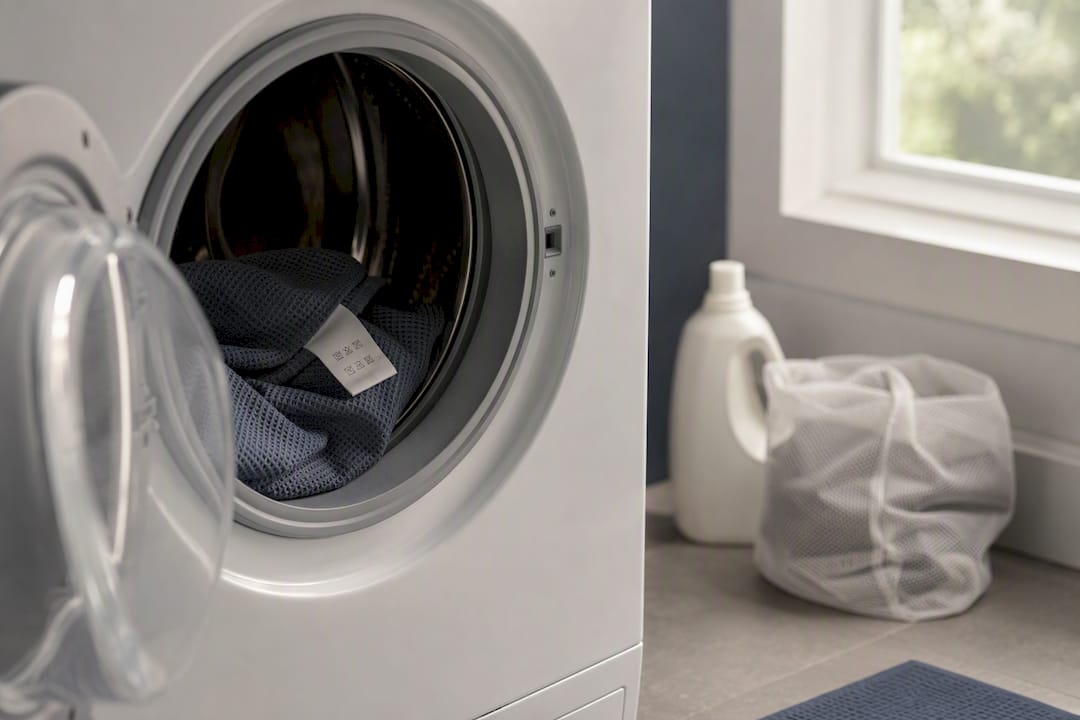
Cold-water machine washing with a gentle detergent is what keeps the fiber loops on a microfiber towel doing their job, absorbing sweat and gripping a mat surface instead of gliding across it.
Detergent choice matters as much as water temperature. Look for something fragrance-free and enzyme-free. Skip anything labeled as “softening” or “fabric care,” since those formulas work by coating fibers with a residue that feels nice on cotton sheets but flattens the microfiber texture that gives your towel its grip in the first place.
A few habits protect the towel long term:
- Wash dark or deep-colored towels separately for the first three or four cycles. Even eco-friendly dyes made without heavy metals can bleed initially, and you don’t want that dye landing on a light-colored mat or a pair of leggings.
- Don’t overload the drum. A crowded washer means less water circulation, which means detergent and sweat residue don’t fully rinse out.
- Check the care label for cycle-specific guidance, since manufacturer-style instructions consistently point back to cold water and gentle cycles as the default for a reason.
- Wash with like colors and similar fabric weights. Throwing a thin microfiber towel in with heavy cotton bath towels means uneven agitation and more wear on the lighter fabric.
One overloaded wash won’t ruin a towel. A pattern of overloading, combined with hot water and softener, is what turns a towel that once gripped like sandpaper into something that slides during downward dog within a couple of months.
When Should You Hand-Wash a Yoga Towel Instead?
Hand-washing makes sense for delicate towels, small loads that don’t justify running a full machine cycle, or towels with visible stains that need targeted attention before they go anywhere near a washer.
Follow this soak-and-rinse method for the best results:
- Fill a basin or sink with lukewarm water and add a small amount of gentle, fragrance-free detergent.
- Submerge the towel and let it soak for 30 to 60 minutes. This window is long enough to loosen sweat and body oil without breaking down the fibers.
- For visible stains, pre-treat with a gentle enzyme-based spot remover, or mix a small paste of detergent and water and dab it directly onto the spot. Avoid scrubbing hard. Microfiber loops can flatten or snag under aggressive rubbing.
- Agitate the towel gently by hand for a minute or two, working the water through the fabric rather than twisting or wringing it.
- Rinse repeatedly, changing the water each time, until it runs completely clear.
That last step gets skipped more than people realize. Leftover detergent residue sitting in the fibers doesn’t just reduce absorbency, it can also irritate skin during a sweaty class, especially anywhere the towel touches your neck or hands directly. Rinse until the water looks the same going out as it did coming in.
What’s the Best Way to Dry a Yoga Towel?
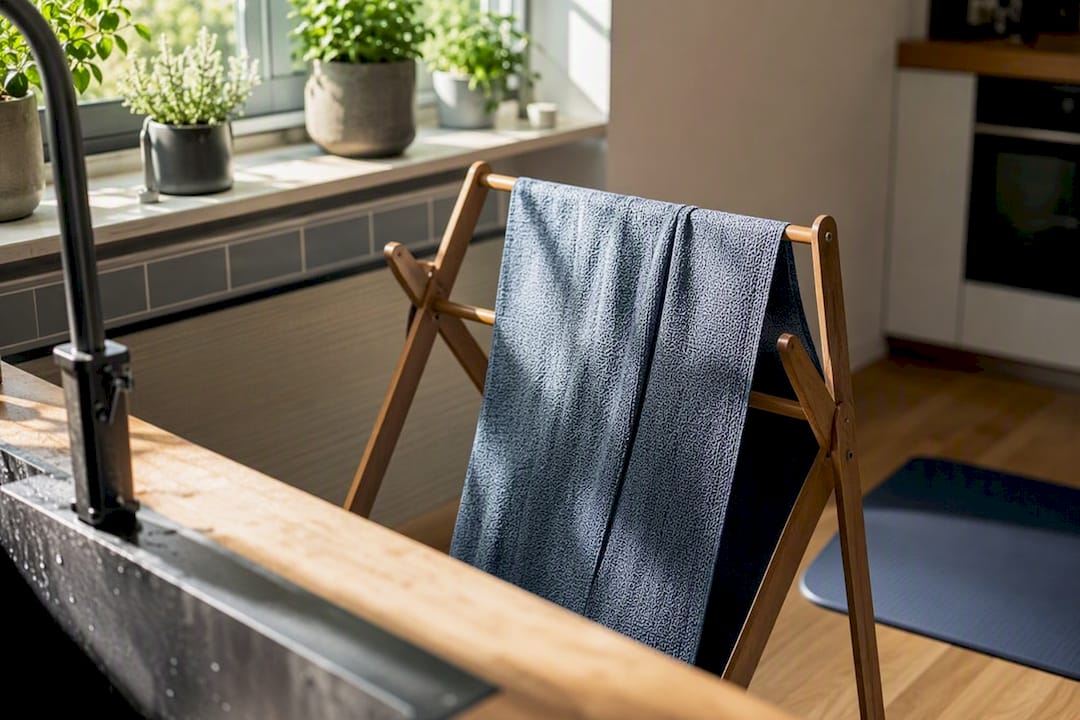
Air drying is the gold standard for keeping a towel absorbent and grippy for as long as possible, as detailed in this practical guide on how to extend shoe lifespan that shares maintenance and care strategies relevant to fabric care. Lay it flat or drape it over a rack in a spot with decent airflow, and resist the urge to roll it up while it’s still damp, since trapped moisture is exactly what breeds mildew and musty smells.
If you need a dryer, there’s a right way to use one:
- Choose the lowest heat setting your dryer offers, and skip dryer sheets completely. They’re just fabric softener in sheet form, and they’ll flatten microfiber the same way liquid softener does.
- Pull the towel out as soon as the cycle ends rather than leaving it to sit in a warm, damp dryer drum. That extra hour of sitting time is prime wrinkle and odor territory.
- Air drying or tumbling on low after every heated class is what actually preserves a microfiber towel’s function over months of regular use, rather than letting heat damage build up cycle after cycle.
Only store a towel once it’s completely dry, not just dry-to-the-touch on the surface. A towel that feels dry on the outside but holds moisture in its inner fibers is a mildew problem waiting to happen in a drawer or gym bag.
Pro Tip: If you’re packing a towel for travel, always air dry it fully first, even if that means waiting an extra day before your trip. A damp towel sealed in a suitcase for even 12 hours can pick up a smell that no amount of washing fully removes.
For long-term storage between busy seasons, use a breathable container like a mesh bag or a cotton pillowcase rather than a sealed plastic bin. Plastic traps whatever residual moisture is left, even in a towel that seems bone dry.
How Do You Get Rid of Persistent Odor Without Damaging the Towel?
A half cup to one cup of white vinegar, either added to the rinse cycle or used as a standalone 30-minute soak, neutralizes lingering sweat odor without breaking down microfiber fibers. This works because vinegar’s acidity disrupts the bacteria that cause that sour smell, rather than just masking it with fragrance.
One rule matters more than any other here: never mix vinegar with bleach. Combining the two produces chlorine gas, which is dangerous in an enclosed laundry room. Keep the two treatments in completely separate wash cycles if you plan to use both.
For heavier staining or a towel that’s gone past simple odor into genuinely soiled territory, follow these steps:
- Check the care label first. If it allows bleach, use an oxygen-based formula rather than chlorine bleach, since chlorine bleach breaks down microfiber over repeated use.
- Apply the oxygen bleach per the product’s own directions. More isn’t better here, and overdosing can leave its own residue.
- Run an extra rinse cycle after any deep-clean treatment. This step catches leftover detergent, vinegar, or bleach residue that would otherwise sit in the fibers and trap new odors almost immediately.
- Let the towel dry fully before deciding whether the smell is actually gone. Odor can seem to linger simply because the towel’s still damp.
A vinegar rinse used occasionally is one of the few disinfecting methods gentle enough for regular rotation without slowly wearing down the fabric the way harsher chemical treatments can.
Does Material Change How You Should Wash a Towel?
Yes, and this is where a lot of practitioners get it wrong by treating every towel the same way regardless of what it’s made from.
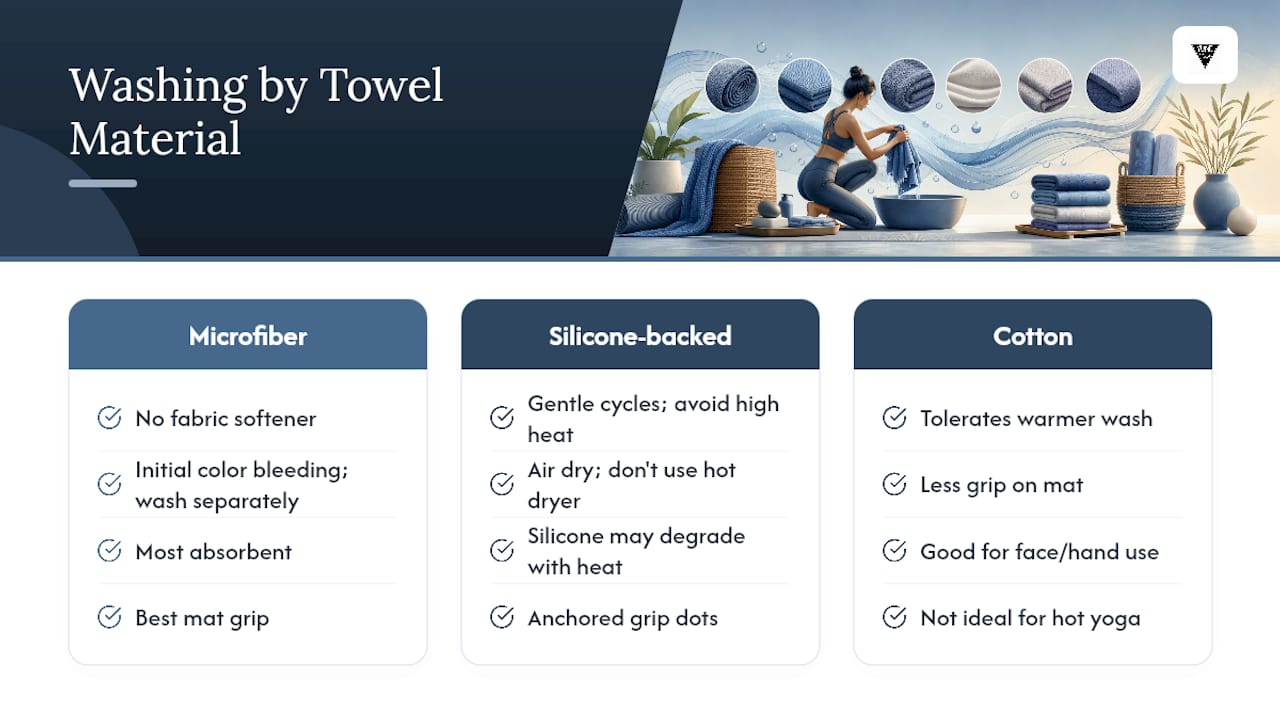
Microfiber towels are the most absorbent option and typically need zero softener to feel right, since the material’s whole appeal is the texture that softener destroys. Expect some initial color bleeding on darker microfiber towels, so wash separately for the first few cycles. Learn more about what sets microfiber apart from other towel materials if you’re deciding between fabric types.
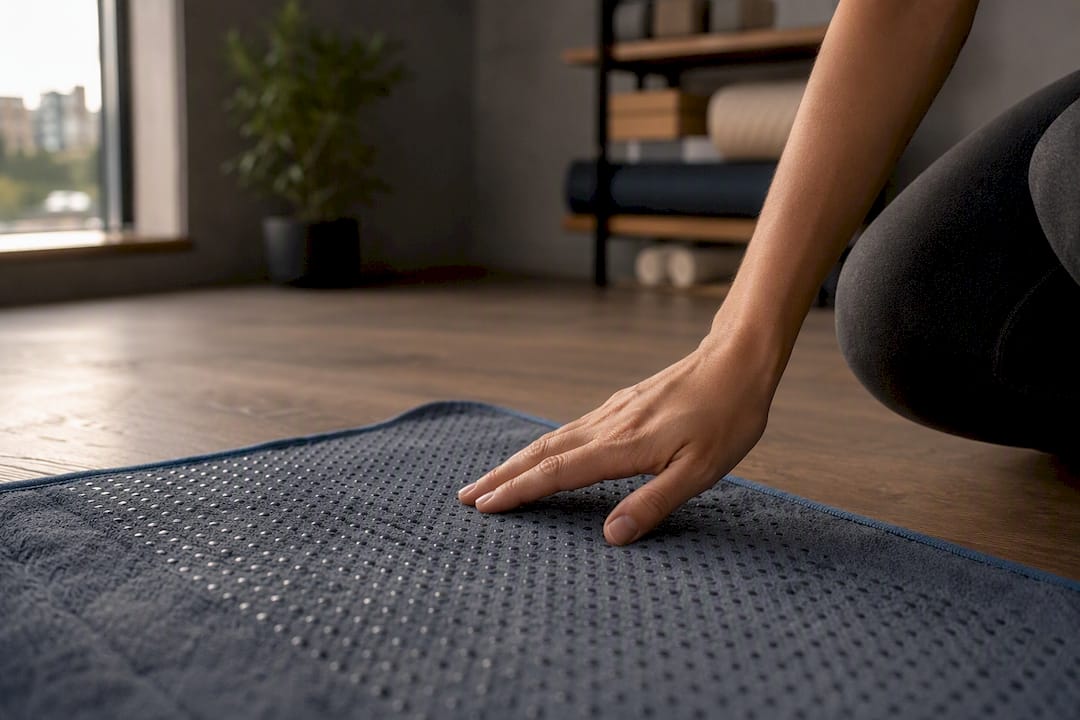
Silicone-backed towels, the ones with grip dots on one side to anchor them to your mat, need extra care around heat. High heat degrades the silicone dots over time, so stick to gentle cycles and air drying rather than tossing them in a hot dryer.
Cotton towels handle heat better than microfiber or silicone-backed options and can survive a warmer wash without issue. They’re just less ideal for hot yoga specifically, since cotton doesn’t grip a mat surface the way textured microfiber does. Many practitioners keep a cotton towel around as a face or hand towel instead, saving the microfiber version for the mat itself.
Why Does My Towel Still Smell or Slip After Washing?
Most towel problems trace back to one of three culprits, and figuring out which one you’re dealing with takes about five minutes.
Persistent odor after a full wash cycle usually means bacteria survived the detergent alone. Run a vinegar soak or try an oxygen-based cleaner, then follow with an extra rinse cycle to clear out anything left behind.
Reduced absorbency or a towel that feels like it’s sliding instead of gripping almost always points to softener residue, even from a wash months ago. That coating builds up slowly. A deep clean without softener or dryer sheets sometimes restores it. If the towel still feels slick afterward, the fibers themselves may simply be worn out from age and heavy use.
Color bleeding that shows up after several washes, not just the first one, means you’re washing dark towels with lighter fabrics or using water that’s too hot. Separate your colors and drop the temperature for the next several cycles.
- Odor that won’t quit: vinegar soak plus an extra rinse
- Slippery, low-grip feel: check for softener residue, then deep clean
- Ongoing dye transfer: separate wash loads, cooler water
What’s a Realistic Weekly Towel Routine?
A workable routine doesn’t need to be complicated. It just needs to happen consistently enough that you’re never grabbing a towel that’s still damp or overdue for a wash.
Here’s a routine that holds up for most regular practitioners:
- Rotate two towels at minimum. Wash one while the other air dries completely.
- Machine wash cold after any heavy-sweat session, using gentle detergent and skipping softener every single time.
- Run a vinegar rinse once a week if you’re in a heated room three or more times weekly, or every other week for lighter, less frequent practice.
- Check your towel’s grip and smell monthly. Either issue signals it’s time for a deeper clean or, eventually, a replacement.
If you want more context on how towel choice affects your actual practice, the benefits of using a towel during hot yoga go beyond just hygiene, and pairing towel care with a regular mat-cleaning routine keeps your entire setup in better shape overall.
A Quick Note From My Own Practice
I keep two towels in rotation year round, and the habit that’s saved me the most trouble is dead simple: never pack a towel that’s even slightly damp. Air dry first, always, even if it means waiting an extra hour before you leave for a trip or a back-to-back class day.
Ready for a Towel That Actually Holds Up to This Routine
A washing routine only works as well as the towel you’re running it on, and plenty of budget microfiber towels lose their grip after a handful of cycles no matter how carefully you wash them. Yuneyoga’s yoga towels use durable, eco-conscious microfiber built to hold texture and absorbency through repeated cold washes, without needing softener or special treatment to stay functional.
A two-towel starter set solves the rotation problem this article keeps coming back to. One towel dries fully while the other’s in use, so you’re never grabbing something still damp or overdue for a wash. Browse the current lineup and find your next yoga towel to build a rotation that actually lasts.
Frequently Asked Questions
How often should you wash a yoga towel?
Wash it after every session where you sweat heavily, especially hot yoga classes. For lighter practice, washing every two to three uses is reasonable as long as you air dry it fully between sessions.
Can you put a yoga towel in the dryer?
Only if the care label allows it, and even then, stick to the lowest heat setting. Air drying is gentler on both microfiber and silicone-backed towels and helps them hold their grip longer.
Why does my yoga towel smell even after washing?
Leftover bacteria or detergent residue are the usual causes. A vinegar rinse or soak, followed by an extra rinse cycle, typically clears up smell that survives a regular wash.
Is it safe to use bleach on a yoga towel?
Oxygen-based bleach is fine if your care label permits it. Avoid chlorine bleach on microfiber towels, since it breaks down the fibers over repeated use, and never combine bleach with vinegar in the same wash.
Do machine washable yoga towels lose their grip over time?
They can, usually from fabric softener buildup, hot water, or general wear after months of heavy use. Washing cold, skipping softener, and rotating towels between uses slows that wear down considerably.
Sources
- How to Clean Your Yoga Towel
- Hot Yoga Towel Guide: Materials, Grip, Sizing & Care
- How to Wash Yoga Towel Mat: Easy Cleaning Tips