The Only Yoga Starter Kit Beginners Really Need
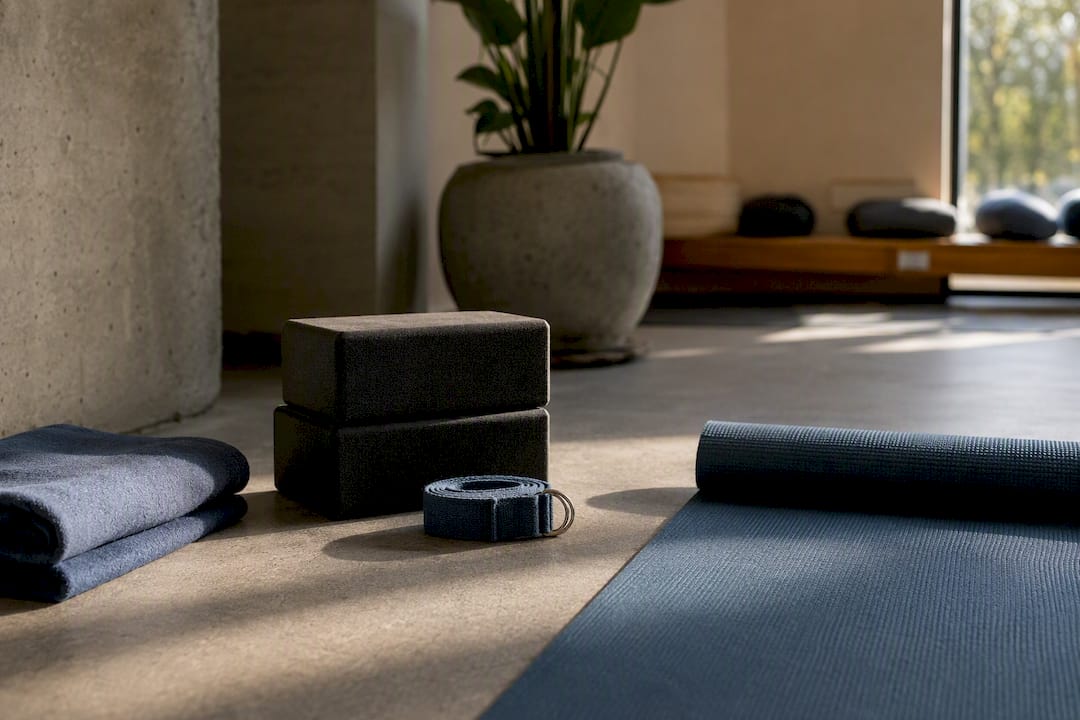
A mat, two blocks, and a strap will get most beginners through their first six months of practice without spending another dollar. That’s the whole verdict. Everything else, a towel, a carrying bag, a resistance band, is a nice add-on once you know your practice will stick.
Here’s a quick shortlist to work from:
- Minimal kit: yoga mat + 2 blocks + 1 strap
- Worth adding early: a microfiber towel (if you sweat a lot or plan to try hot yoga)
- Worth adding later: a carrying bag or strap for transport, a resistance band for strength work
- Expect to pay: roughly $25 to $90 for a complete beginner bundle, depending on materials and brand
Key Takeaways
A minimal three-piece kit, mat, two blocks, and a strap, covers what most beginners need, with towels, bags, and bands as optional upgrades once practice becomes routine.
| Point | Details |
|---|---|
| Start minimal | A mat, two blocks, and a strap cover the core needs of a beginner practice. |
| Match thickness to use | Choose 3mm to 4mm for balance work, 5mm to 8mm for extra joint cushion. |
| Add a towel for sweat | Bring in a microfiber towel only once hot or heavy-sweat sessions enter your routine. |
| Budget by tier | Basic kits run under $30, mid-range $30 to $80, premium above $80 with natural materials. |
| Yune Yoga’s kit fits the checklist | Its natural rubber mat, blocks, and strap bundle matches the buying criteria at a mid-range price. |
Table of Contents
- What’s in a Yoga Starter Kit and Why
- How Do You Choose the Right Beginner Yoga Kit?
- What Beginners Get Wrong About Building a Kit
- Where to Buy a Beginner-Ready Yoga Kit
- Frequently Asked Questions
- Sources
What’s in a Yoga Starter Kit and Why
A well-built beginner kit isn’t a random pile of gear. Every item solves a specific problem you’ll hit in your first few classes, whether that’s slipping hands, tight hamstrings, or a mat that won’t fit in your gym bag.
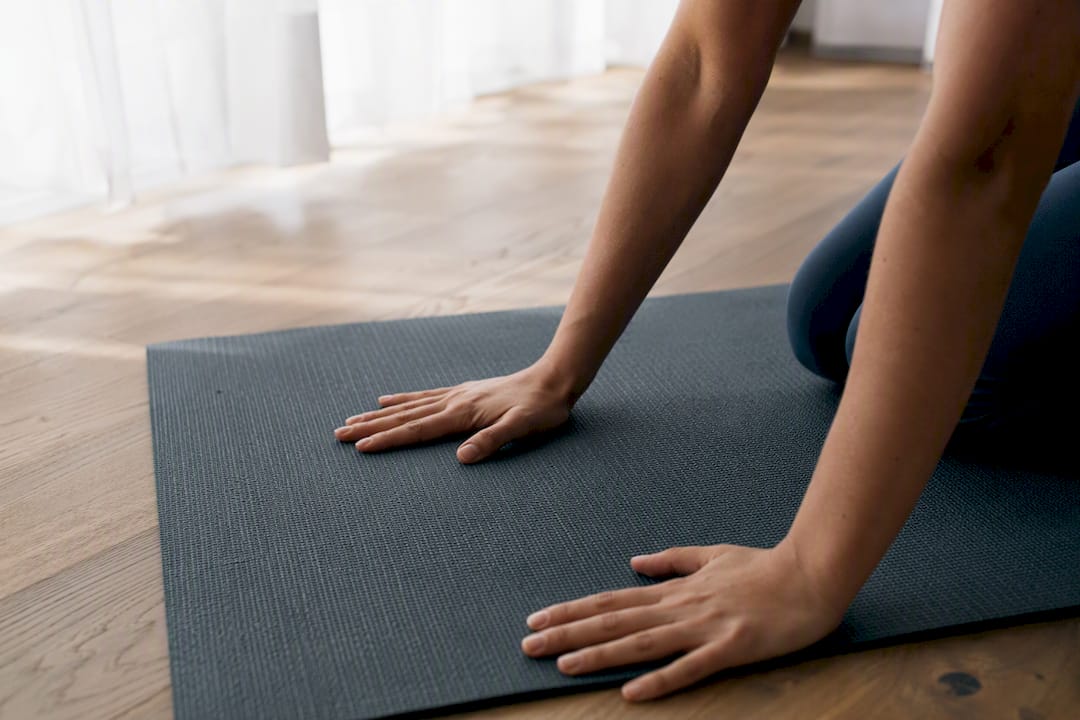
1. The mat. Thickness matters more than most beginners realize. A 3mm to 4mm mat gives you better balance feedback for standing poses, while a 5mm to 8mm mat cushions knees and wrists during floor work. Some starter kits list thickness right on the product page, which makes comparison shopping easier. Natural rubber grips well and biodegrades but costs more and can smell rubbery at first. TPE is lighter and cheaper with decent grip. PVC is the most affordable option but doesn’t break down in a landfill for decades. Full-size mats (around 68 inches by 24 inches) suit most home practice; foldable travel mats sacrifice some cushioning for something that fits in a suitcase.
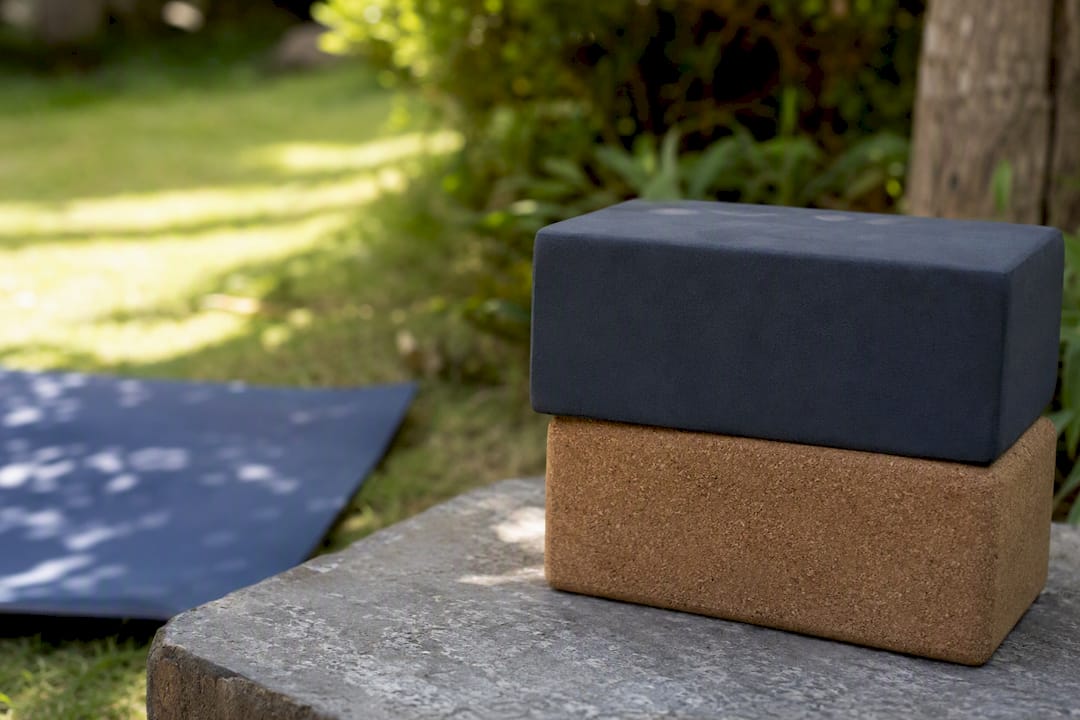
2. Blocks. Foam blocks are lighter and gentler on joints if you drop one on your foot; cork blocks are denser, more stable, and tend to last longer. Standard dimensions run about 9 inches by 6 inches by 4 inches. You’ll use them to bring the floor closer to your hands in poses like triangle or half-moon, which protects your lower back from overreaching.
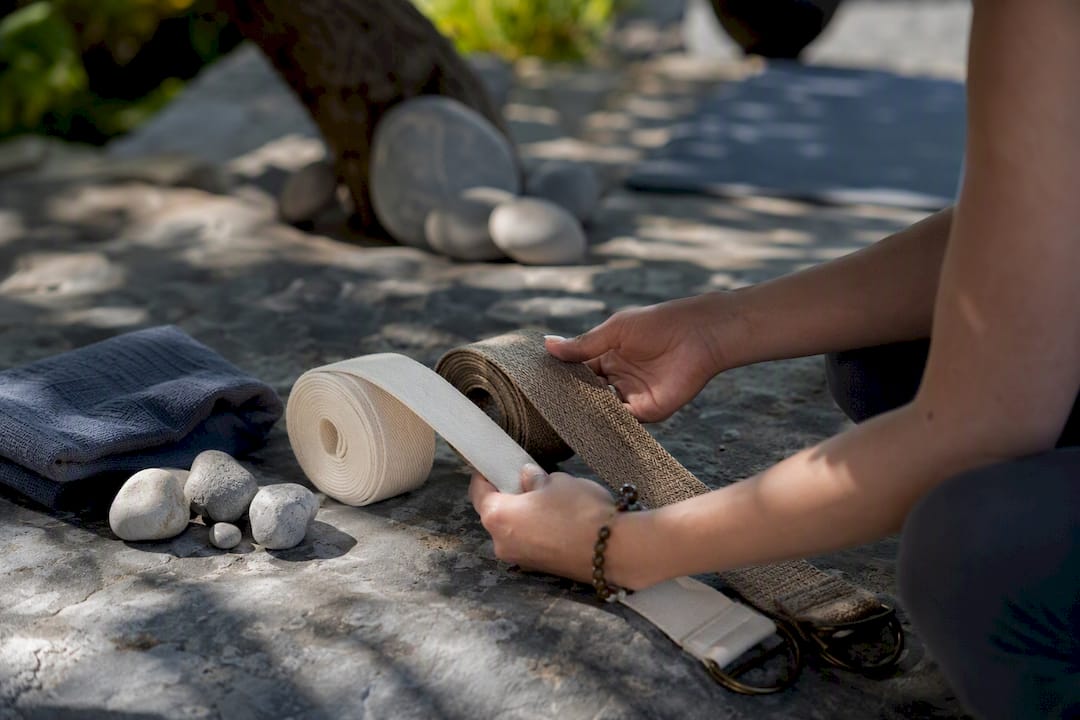
3. The strap. A 6-foot strap with a D-ring buckle works for most body types and lets you reach your feet in seated forward folds long before your hamstrings cooperate. Some straps double as a mat-carrying sling, which is a nice two-in-one feature for anyone building a travel-friendly kit.
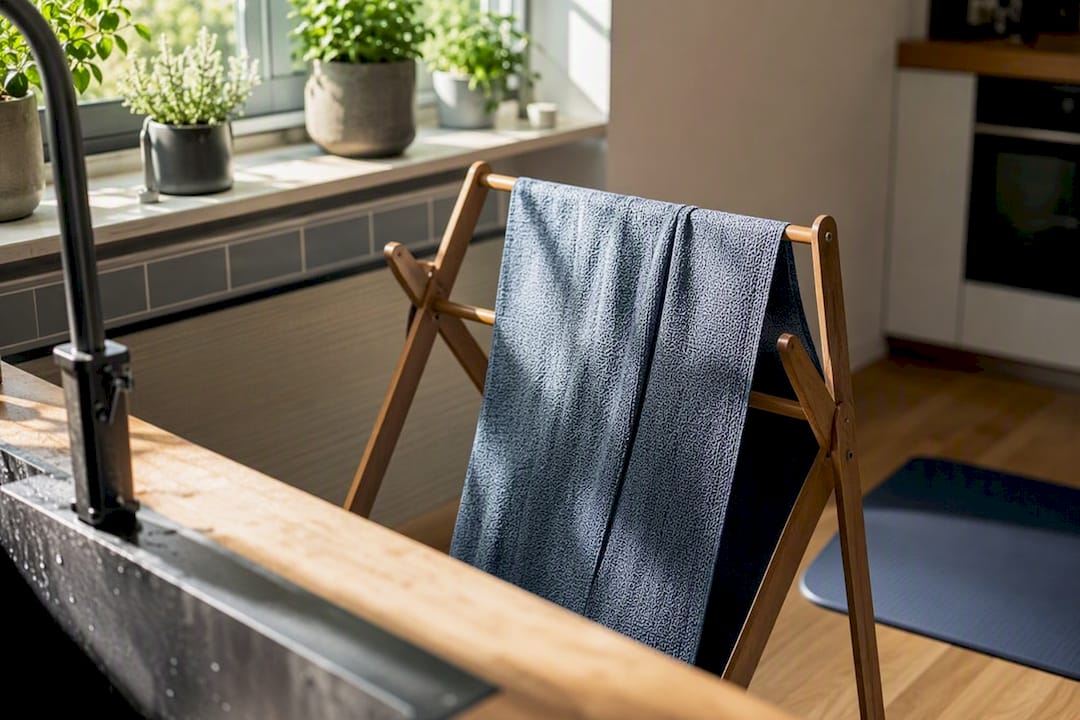
4. Towel and grip. Skip it for a typical living-room practice. Add a microfiber towel the moment you try a heated class, since sweat and grip don’t mix well without one.
5. Carrying options. A dedicated bag protects your mat from dirt and makes commuting to a studio realistic. If you’re only practicing at home, skip the bag and save the money.
6. Optional extras. Resistance bands, a foam roller, or a knee pad round out a kit, but none of them are essential in month one.
Pro Tip: Buy your mat and blocks first, use them for two to three weeks, then decide what’s actually missing before adding anything else.
How Do You Choose the Right Beginner Yoga Kit?
Picking a kit comes down to matching a handful of tradeoffs to how you’ll actually practice, not chasing the longest feature list.
Portability, cushioning, and eco-friendly materials rarely all max out in one product. If you travel often, prioritize a foldable mat and accept slightly less cushion. If you have joint sensitivity, prioritize thickness and accept a bit more bulk. If sustainability drives your decision, natural rubber or cork block combos usually beat PVC on both feel and footprint.
A quick materials checklist:
- Prefer: natural rubber, cork, TPE, natural fiber towels
- Avoid: latex if you have any known sensitivity, since it triggers allergic reactions in some people
- Look for: open-cell vs. closed-cell rubber listed in the product description, which affects grip and moisture absorption
On thickness, lighter or smaller-framed practitioners generally do fine with 3mm to 4mm mats, while anyone practicing on hard floors or with knee issues should look at 5mm to 6mm. Some kits list mat thickness between 3 and 8 millimeters depending on the intended use, so check the spec field rather than guessing from photos.
Grip is harder to judge online. Read reviews specifically mentioning sweaty hands or downward dog slipping, since marketing copy rarely admits a mat is slick when wet.
A genuinely complete bundle covers a mat plus two props (blocks and a strap) plus some kind of carrying solution, and it comes with a clear returns policy. A 7-piece kit typically bundles a mat, blocks, strap, towel, and bag together, which is worth comparing against buying pieces separately.
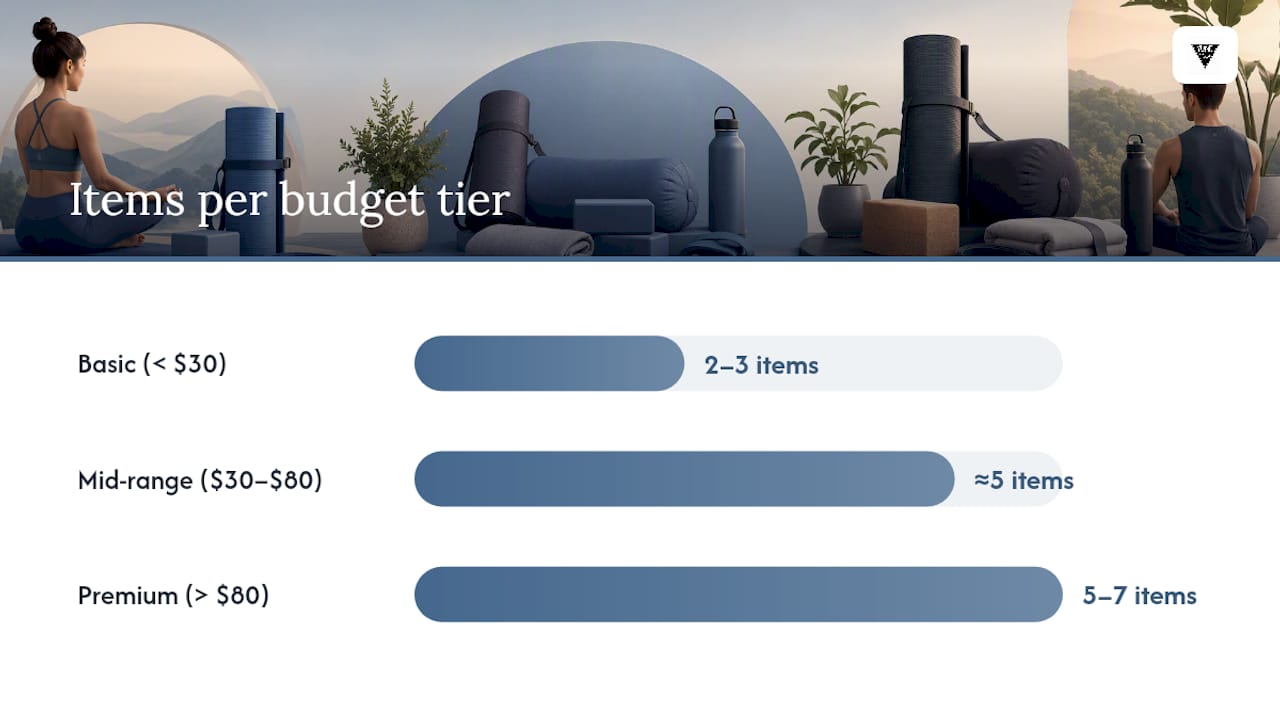
Budget tiers roughly break down like this: basic kits under $30 usually include a thin mat and one or two props; mid-range kits from $30 to $80 add a strap, towel, and often a bag; premium kits above $80 typically upgrade to natural rubber or cork and include better stitching on bags and straps, based on pricing patterns across retail kit listings.
Before buying, check three things on the product page: listed mat thickness, material composition, and whether blocks and straps are included or sold separately.
What Beginners Get Wrong About Building a Kit
Most advice on this topic pushes people toward buying everything at once, seven pieces, matching colors, a bag with fifteen pockets, before they’ve rolled out a mat more than a few times. That’s backwards. Foam blocks and a strap are the two props that actually change what poses you can access safely, and a mat towel or carrying bag change nothing about your form.
The conventional wisdom also underweights material quality relative to accessory count. A cheap PVC mat with seven accessories is a worse purchase than a solid natural rubber mat with just two blocks. Grip and cushioning affect whether you stick with practice at all; a fancy bag doesn’t.
I’d also push back on treating eco-friendly materials as a premium upsell. Natural rubber and cork perform better on grip and durability than most synthetic alternatives, sustainability is a side benefit, not the main reason to choose them.
If you’re starting today, buy the minimal three-piece kit, use it consistently, and let your own practice tell you what’s actually missing. A curated, purpose-built kit beats a random accumulation of gear almost every time, mainly because it removes decisions you’re not yet equipped to make well.
Where to Buy a Beginner-Ready Yoga Kit
Yune Yoga built its starter kit around the exact checklist above, not the other way around. The mat comes in natural rubber for grip and durability, paired with two lightweight blocks and a 6-foot strap with a secure buckle. Every material choice maps to what a new practitioner actually needs: enough cushion for knees on hard floors, enough grip to hold a pose through a sweaty afternoon session, and packaging that doesn’t fall apart after a month of gym-bag life.
The kit sits in the mid-range price tier, where you get natural materials and real durability without paying premium markup for extras you won’t touch for months. Shipping and returns follow standard e-commerce timelines, so if the thickness or grip isn’t right for your practice, you’re not stuck with it.
Prefer to build your own combination instead of buying a bundle? Start with the mat, since it’s the item you’ll notice most, then add blocks and a strap once you know your practice will stick. Either way, browse the current lineup and get your first mat unrolled this week instead of next month.
Frequently Asked Questions
What’s the minimum I need to start practicing yoga at home? A mat, two blocks, and a strap. That combination handles balance poses, alignment support, and flexibility limits without any extra spending.
Do I need a special mat for hot yoga, or will my starter mat work? Your starter mat works fine if you add a microfiber towel on top for grip once things get sweaty. Check out everything you need for a hot yoga class if you’re planning to try heated sessions regularly.
Are cork blocks better than foam blocks for beginners? Cork is denser and more stable for weight-bearing poses; foam is lighter and gentler if it slips out of your hand. Either works for a first kit.
How much should a decent beginner yoga kit cost? Expect to spend somewhere between $25 and $90 for a complete bundle with a mat and two props, with eco-friendly materials pushing toward the higher end.
Is a foldable travel mat good enough for regular home practice? It can work, but foldable mats usually sacrifice some cushioning for portability. If you’re mostly practicing at home, a full-size mat gives better support.
Do I need a carrying bag right away? No. Skip it until you’re commuting to a studio or traveling regularly with your mat.