
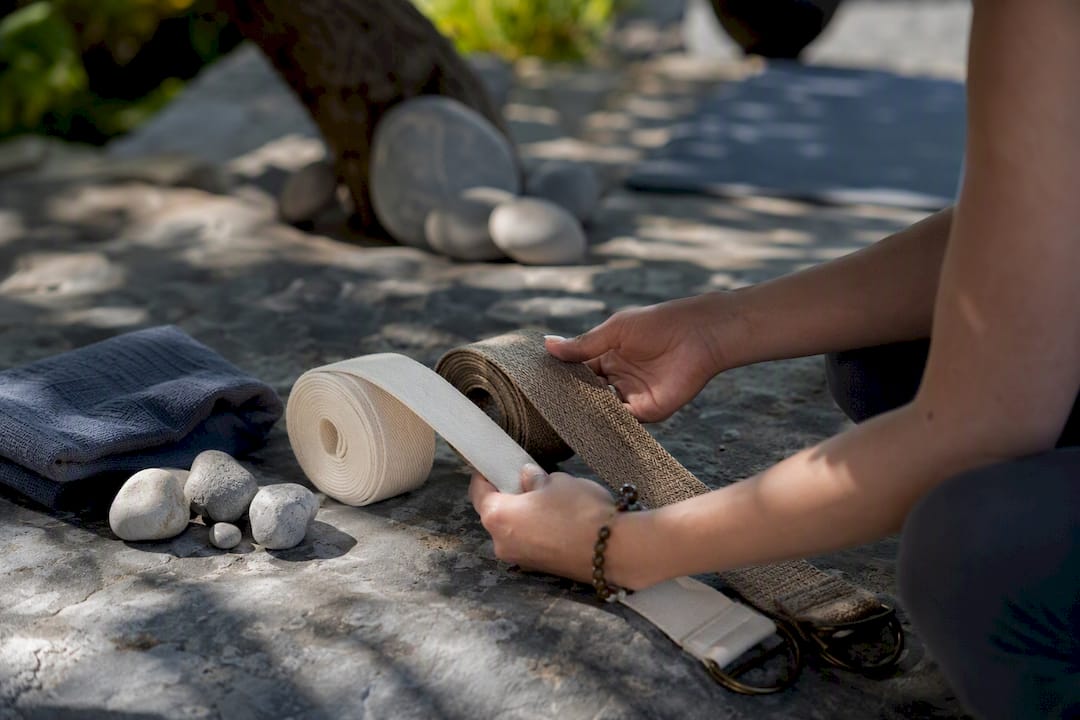
Eco-Friendly Yoga Strap Materials for Conscious Yogis
Organic cotton and hemp are the best eco-friendly yoga strap materials for most practitioners, offering biodegradability and low chemical risk without sacrificing grip. Recycled polyester (rPET) and recycled nylon are solid runners-up when you need extra tensile strength for heated or high-intensity practice. Skip virgin nylon dyed with unknown processes, and treat leather as off-limits unless it carries vegetable-tanning certification.
- Organic cotton — biodegradable, breathable, gentle on skin
- Hemp — exceptional durability with a smaller water footprint than cotton
- Recycled polyester/nylon — diverts waste, holds up under heavy tension
- Avoid: virgin nylon with undisclosed dyes, conventional (non-certified) leather
Pro Tip: Before buying, ask the seller for GOTS or OEKO‑TEX certificate numbers. A legitimate seller can produce them in seconds; a vague answer is your cue to keep shopping.
Key Takeaways
The most eco-friendly yoga strap materials are organic cotton and hemp for everyday practice, with recycled nylon or rPET as the responsible choice when a heated or high-tension practice demands more strength.
| Point | Details |
|---|---|
| Default to plant fibers | Organic cotton and hemp lead on biodegradability and low chemical risk for most practices. |
| Verify certifications directly | Ask for GOTS or OEKO‑TEX certificate numbers rather than trusting an unverified “eco” label. |
| Match material to practice | Choose recycled nylon or rPET for hot yoga and heavy tension, cotton or hemp for restorative work. |
| Construction affects lifespan | Reinforced bar-tacks and metal buckles extend a strap’s life regardless of fiber. |
| Yuneyoga offers certified options | Yuneyoga’s strap lineup lists fiber content and certifications on each product page for easy verification. |
Table of Contents
- Comparing Eco-Friendly Yoga Strap Materials by Performance
- What Certifications Confirm a Strap Is Non-Toxic?
- How Do You Choose the Right Strap Material?
- Caring for and Retiring Your Yoga Strap
- When Is a Household Substitute Actually Safe?
- Frequently Asked Questions
- Sources
Comparing Eco-Friendly Yoga Strap Materials by Performance
Every strap material trades off sustainability against strength, and understanding that trade-off is the whole game. Plant-based fibers like organic cotton, hemp, and jute top most sourcing guides because they’re biodegradable and typically processed with fewer harsh chemicals, but they’re not automatically the strongest option on the shelf.
Organic cotton grows without synthetic pesticides and, when GOTS-certified, gets processed without the toxic dyes common in conventional cotton. It’s biodegradable, breathable, and comfortable against skin during long holds. The tradeoff is moderate long-term durability compared to synthetics, and it absorbs sweat rather than shedding it. Best for restorative practice and home use.
Hemp rivals cotton for biodegradability but grows with less water and often no pesticides at all. Its fibers run coarser, which some practitioners love for grip and others find rough on bare skin. Hemp straps tend to soften with washing, making them better after a break-in period. Best for practitioners prioritizing minimal environmental footprint over plush comfort.
Recycled cotton reclaims pre- or post-consumer cotton scraps, cutting new water and land use, though the shorter reclaimed fibers can mean a slightly weaker weave than virgin organic cotton. It’s a reasonable middle ground when organic isn’t available at your price point.
Recycled polyester (rPET) diverts plastic bottles from landfills and dries fast, resisting the mildew that plagues damp cotton. It won’t biodegrade on any practical timescale, though a growing number of brands offer take-back or recycling pathways at end of life. Disclosed recycled percentages and tensile specs separate a genuinely responsible rPET strap from one riding on a vague “eco” label.
Recycled nylon delivers the highest tensile strength of the group, which matters if you’re using a strap for deep assisted stretches or partner work. Nylon can turn slippery once your hands sweat, a real drawback in heated rooms. Best for studio durability and performance-focused practice.
Virgin nylon and polyester offer no sustainability advantage over their recycled counterparts and often carry undisclosed dye processes. There’s rarely a reason to choose virgin synthetic over recycled synthetic when both cost about the same.
Cork shows up as an accent on strap buckles or grip zones and is naturally renewable, but watch for cork veneers glued over a synthetic backing, a common shortcut that inflates the “natural material” story on the label.
Leather alternatives, including cork leather and vegetable-tanned hide, avoid the chromium tanning baths used in most conventional leather. Standard leather hardware should raise questions unless the brand specifies its tanning method.
What Certifications Confirm a Strap Is Non-Toxic?
A material can be organic and still get dyed with something you wouldn’t want against your skin for an hour a day. Certifications close that gap by verifying the processing, not just the raw fiber.
GOTS (Global Organic Textile Standard) certifies both organic fiber content and non-toxic processing from field to finished product, covering dyes and finishing chemicals along the way. OEKO‑TEX Standard 100 tests the finished textile for harmful substances, including formaldehyde, heavy metals, and banned azo dyes, regardless of whether the fiber is organic or synthetic. GRS (Global Recycled Standard) verifies the recycled content percentage a brand claims and audits the chemical processing used on that recycled material.
The chemical red flags worth knowing:
- Azo dyes — banned variants can release carcinogenic amines
- Heavy-metal pigments — sometimes used in bright, saturated colorways
- Formaldehyde finishes — applied for wrinkle resistance or colorfastness
If a listing doesn’t mention a certification, ask the seller directly for the fiber content breakdown, the dye method, and the country where processing happened. Retail sourcing guides increasingly recommend treating this as a standard question, not an awkward one.
Pro Tip: Every legitimate OEKO‑TEX certificate carries a verification number you can check on OEKO‑TEX’s own database. If a seller can’t produce one, or the number doesn’t resolve, assume the “certified” label is marketing. Yuneyoga breaks down exactly what OEKO‑TEX certification means for buyers trying to decode a hangtag.
How Do You Choose the Right Strap Material?
Practice style comes first. Everything else, certifications, weave weight, hardware, is a refinement layered on top of that one decision.
- Do you practice hot yoga or vinyasa? Lean toward recycled nylon or rPET for wet-grip performance and fast drying.
- Do you need maximum tensile strength for deep assisted stretches or partner-assisted work? Recycled nylon wins on raw strength.
- Is compostability a priority over synthetic durability? Organic cotton or hemp is the answer, full stop.
- Does the strap need to survive studio rotation through dozens of hands weekly? Look for 8–10 oz webbing and reinforced bar-tacks regardless of fiber.
| Practice style | Recommended material |
|---|---|
| Restorative / yin | Organic cotton |
| Hot yoga / vinyasa | Recycled nylon or rPET |
| Travel / weight-sensitive | Hemp (lightweight, packs small) |
| Studio / shared prop use | Recycled nylon with metal D-ring |
Yuneyoga’s guide on choosing a strap for your practice walks through the same logic in more depth if your situation doesn’t fit neatly into one row.
Caring for and Retiring Your Yoga Strap
Wash cotton and hemp straps by hand or on a gentle cycle, then dry them flat rather than in a dryer, which stresses natural fibers. Synthetic straps tolerate machine washing better and dry within an hour.
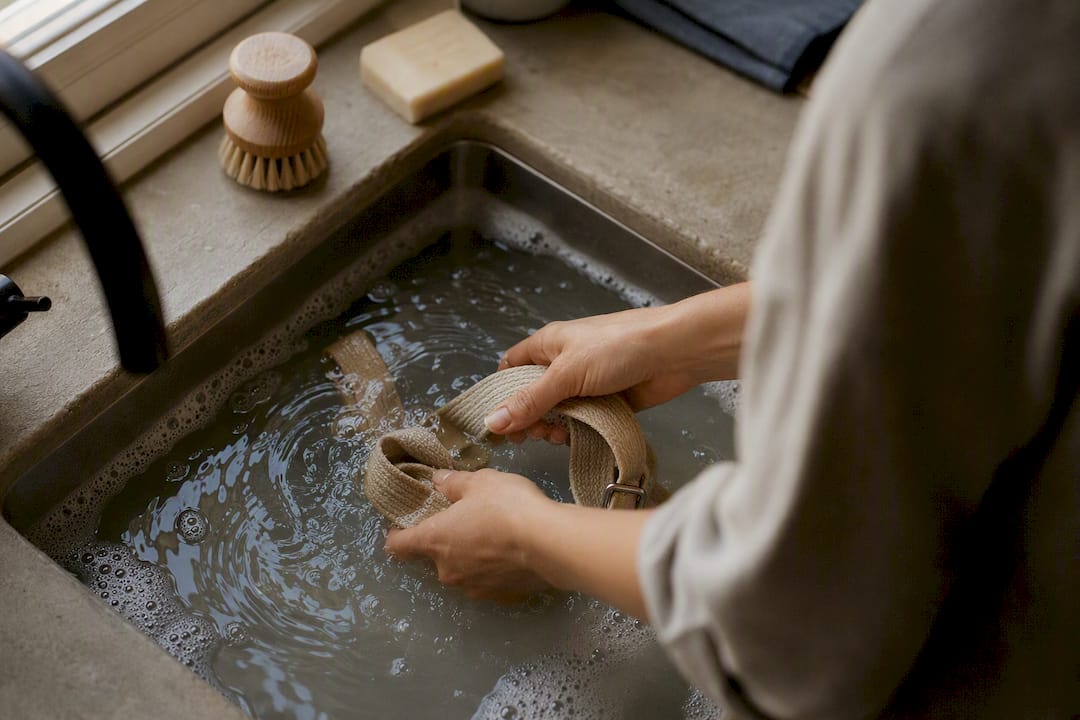
Construction determines lifespan as much as fiber does. Reinforced bar-tacks and a secure metal buckle can make a cotton strap outlast a poorly stitched synthetic one. Cotton straps also absorb moisture and take longer to dry, so store them fully dry and avoid bundling a damp strap into a bag, where mildew and shape distortion set in fast.
At end of life:
- Organic cotton/hemp — compostable if free of synthetic thread and metal hardware
- rPET/recycled nylon — check for a brand take-back program before landfilling
- Any material with a working buckle — donate rather than discard if the webbing still holds
Pro Tip: A fraying stitch line doesn’t mean your strap is done. A local tailor or shoe-repair shop can reinforce bar-tacks or swap a cracked buckle for a few dollars, adding years to a strap you’d otherwise toss.
When Is a Household Substitute Actually Safe?
Yes, for casual stretching. No, for therapeutic loading or shared studio props unless you know what’s on it.
A cotton belt or a rolled towel works fine for basic hamstring stretches at home. Stick to plain cotton belts and skip synthetic belts with unknown dyes, since you have no certification trail to check. Avoid old climbing webbing of unverified tensile rating and any leather substitute treated with heavy-metal tanning chemicals unless it’s specifically vegetable-tanned.
Is a towel loop as effective as a strap? For light stretches, yes. For anything requiring a fixed length or repeated loops, a real strap holds its shape better.
Can I use a bathrobe belt instead of a yoga strap? Occasionally, but the loose weave stretches under load and won’t hold a consistent length session after session.
Why Weave Weight and Bar-Tacks Matter More Than the Label
The right material depends on how hard you’re using it. A strap you loop once for a gentle stretch has different demands than one bearing your full body weight in an assisted backbend, and matching material to practice intensity prevents both overpaying and premature failure.
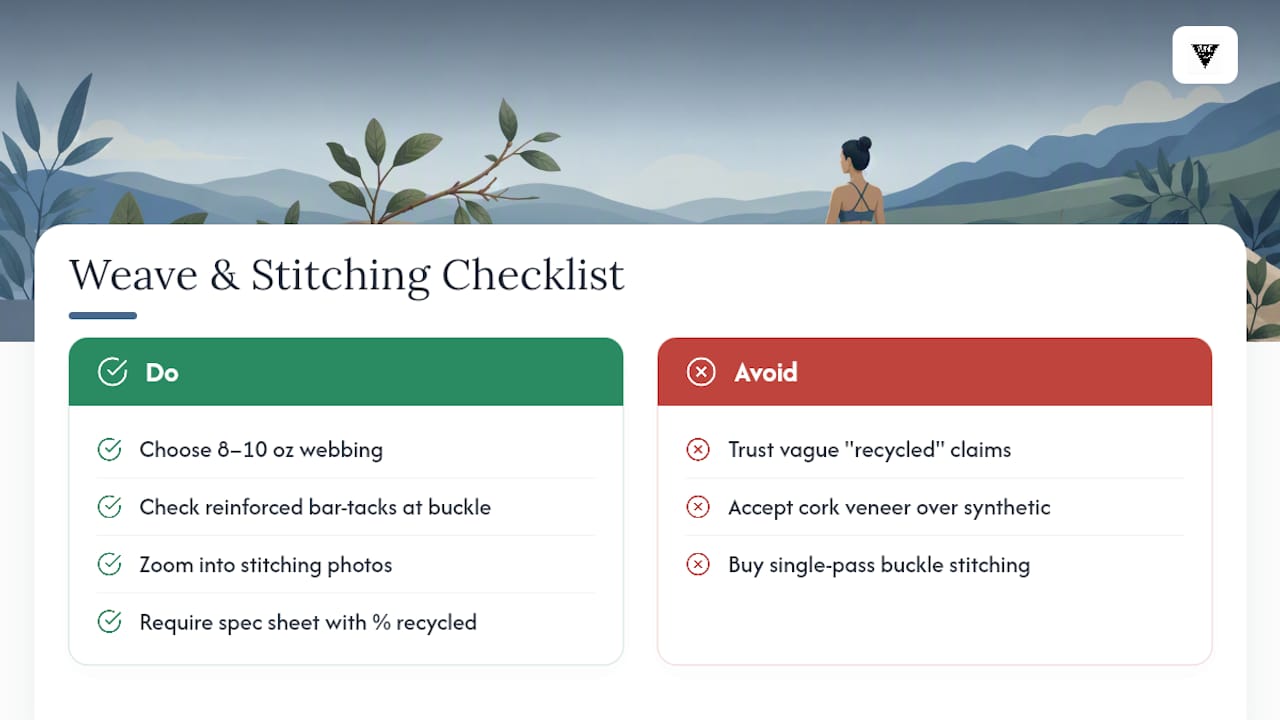
Look for 8 to 10 ounce webbing and reinforced buckle stitching in product photos, details that separate a strap built to last from one built to look good in a listing photo. Manufacturers sometimes shortcut sustainability claims, cork veneer over synthetic backing, or a “recycled” label with no percentage disclosed. A spec sheet that lists exact ounces, thread type, and recycled content percentage is doing the work a vague marketing paragraph is not.
Pro Tip: Zoom into stitching photos before buying. Dense, straight bar-tacks at the buckle mean reinforced construction; loose or single-pass stitching there is often the first failure point.
Why Yuneyoga Recommends These Materials
We source strap materials the same way we vet our mats: certifications first, marketing claims second. That approach shaped the recommendations above, organic cotton and hemp as defaults, recycled synthetics where performance genuinely requires it, because non-toxic processing and a clear end-of-life path matter as much as what’s printed on the swing tag.
Where to Find Yuneyoga’s Eco-Certified Straps
Yuneyoga carries straps built around the exact standards this guide recommends, organic cotton and durable hardware, with certifications and fiber content listed on the product page instead of buried in fine print.

- Material: GOTS-eligible organic cotton webbing
- Hardware: reinforced metal D-ring, bar-tacked stitching
- Transparency: fiber content and sourcing listed on every product page
If hot practice is your priority, our guide to grip in sweaty conditions can help you decide between cotton and a recycled synthetic before you buy. Browse the current strap lineup at Yuneyoga and check the product page for the exact certification numbers before you check out.
Frequently Asked Questions
Is organic cotton or hemp better for a yoga strap? Both are biodegradable and low-risk. Hemp edges out cotton on durability and water use; cotton wins on softness and grip against skin.
Are recycled polyester and recycled nylon actually eco-friendly? They can be, provided the brand discloses the recycled percentage and offers a real recycling pathway at end of life, not just a vague “made from recycled materials” claim.
What’s the biggest red flag when shopping for an eco-friendly strap? A missing certificate number. If a listing claims GOTS or OEKO‑TEX status but can’t produce a verifiable number, treat the eco claim as unproven.
Can I use a bathrobe belt or towel instead of buying a strap? For light, casual stretching, yes. For assisted stretches or shared studio use, a properly constructed strap with known tensile strength is the safer choice.
Sources
- Eco Friendly Yoga Accessories Sourcing Guide | Hunan MSY
- How to Choose Material for Yoga Straps?
- Cotton vs Nylon Yoga Straps: Which is better? - IMA YOGA FITNESS
%20...)