
Yoga Accessories for Strength Training: Build Your Kit
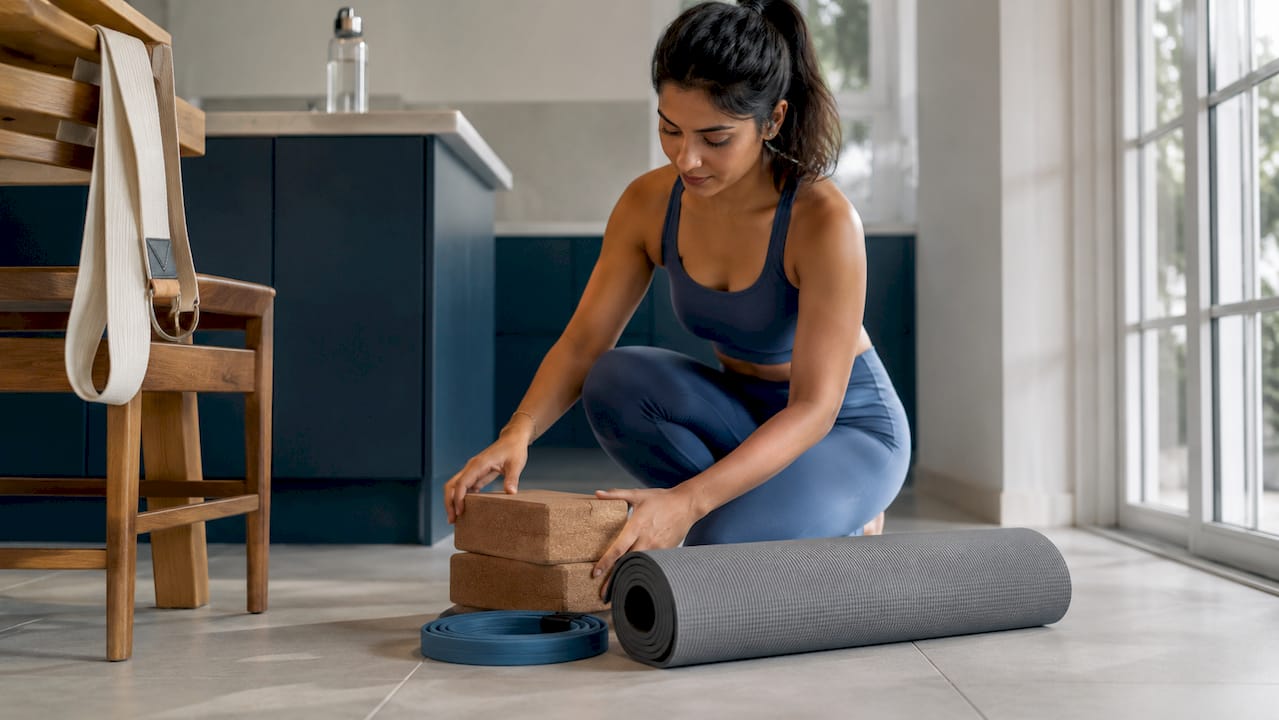
Yoga accessories for strength training are defined as props and gear that improve alignment, stability, and muscle engagement during strength-focused yoga practice. The right kit starts with a 4–5 mm high-density mat, two cork or high-density foam blocks, and a 6–8 foot cotton strap with a D-ring buckle. A core strength kit costs between $50 and $150. That range puts effective training within reach for most practitioners, regardless of experience level. Proper selection of these tools directly affects safety, performance, and long-term progress.
1. What are the essential yoga accessories for strength training?
Proper mat selection is the foundation of safe strength training in yoga. Grip, thickness, and material directly impact performance and injury risk. A mat that slides during a Warrior III or Chaturanga puts joints and focus at risk simultaneously.
The three non-negotiable props are:
- High-density yoga mat (4–5 mm thick): Materials like TPE or natural rubber provide the grip and cushioning needed for dynamic strength sequences. TPE and natural rubber mats prevent slip hazards that compromise both safety and focus. Thinner mats under 3 mm lack the joint support required for loaded poses.
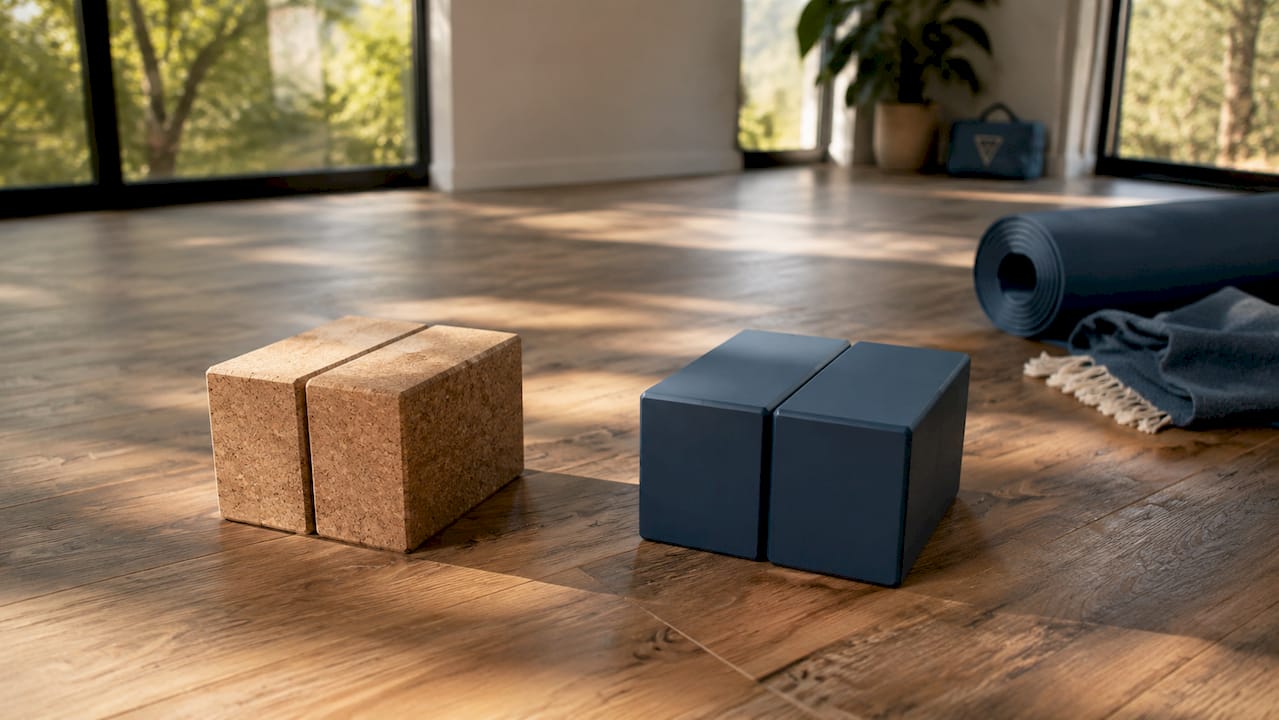
- Cork or high-density foam blocks: Cork blocks do not compress under weight, making them the top choice for daily strength practice. High-density foam blocks weigh less and travel better, but they warp faster under repeated load. Experts recommend blocks rated at 50 kg/m³ or higher for durability and effectiveness.
- Cotton strap with D-ring buckle (6–8 feet): Straps extend reach in poses like Seated Forward Fold and Reclined Hand-to-Big-Toe, allowing full muscular engagement without sacrificing alignment. The D-ring buckle holds tension reliably under load. Cotton is the preferred material for comfort and grip during extended holds.
Pro Tip: Buy cork blocks before foam. If budget forces a choice, cork blocks outlast foam by years and hold their shape under the weight of daily strength work.
Yoga props function as bridges, not shortcuts. Props make poses accessible and allow precise alignment that is critical for building strength safely. Skipping them does not make practice harder. It makes it less effective.
2. How do additional accessories enhance yoga strength training?
Supplementary gear adds load, variety, and challenge to a baseline yoga practice. These tools extend the benefits of foundational props by targeting specific muscle groups and movement patterns.
Key supplementary accessories include:
- Resistance bands (loop and long stretch): Resistance bands add load to traditional yoga poses, particularly for hip, glute, arm, and shoulder activation. Loop bands work well around the thighs during Bridge Pose or Clamshells. Long stretch bands assist with overhead shoulder work and hamstring stretching under tension.
- Wearable ankle and wrist weights: Soft, breathable materials like silicone and neoprene keep weights comfortable during flows. Weights that dig into bones or are too heavy reduce effectiveness and risk injury. Starting with lighter, adjustable options protects form while building strength progressively.
- Stability balls: A stability ball challenges core engagement during poses like Plank, Pike, and Supine Bridge. The unstable surface forces stabilizer muscles to fire continuously. This makes it one of the most effective tools for building functional core strength alongside yoga.
Pro Tip: Start resistance band work with a light loop band around the thighs during standing poses. You will feel glute activation in poses like Chair and Warrior II that you never noticed before.
Accessories that require minimal setup increase how often you actually use them. Gear that is hard to store or awkward to assemble gets skipped. Portability and simplicity directly support consistent practice, and consistency drives strength gains.
3. What features should you look for in strength training yoga gear?
Not all yoga gear performs equally under the demands of strength training. Knowing what to evaluate before buying prevents wasted money and potential injury.
Mat surface and material
Closed-cell mats resist sweat and bacteria absorption, which matters during high-intensity sessions. Closed-cell construction keeps the surface hygienic and easier to wipe clean after sweaty strength work. Natural rubber mats offer excellent grip but may cause reactions in practitioners with latex sensitivities. Always check material specs before purchasing if you have known allergies.
Block density and durability
| Feature | Cork blocks | High-density foam blocks |
|---|---|---|
| Density under load | Does not compress | May warp over time |
| Best use | Daily strength practice | Travel and lighter use |
| Durability | Long-term | Moderate |
| Weight | Heavier | Lighter |
Cork wins for strength training because it holds its shape under repeated body weight. Foam is acceptable for travel or occasional use, but not as a primary strength prop.
Strap buckle and material
D-ring buckles hold tension better than cinch buckles during extended holds. Cotton straps grip the hands without cutting into skin during long stretches. Nylon straps are more durable but feel slippery when hands are sweaty. For strength-focused practice, cotton with a D-ring buckle is the standard recommendation.
Wearable weight ergonomics
Wearable weights with soft silicone or neoprene exteriors minimize pressure on bones and joints. Rigid or poorly fitted weights shift during movement and break form. Check that the weight sits flush against the limb and does not bounce during dynamic transitions. A good fit feels like part of the body, not an attachment.
4. How to build a cost-effective home strength training yoga kit
A practical home kit does not require buying everything at once. Building in stages keeps costs manageable and prevents buying gear you do not yet need.
- Start with the mat. A 4–5 mm TPE or natural rubber mat is the single most important purchase. Expect to spend $30–$60 for a quality option. Skimping here creates a safety problem, not a savings.
- Add two cork blocks. Cork blocks run $15–$30 each. Buy two from the start. Single blocks limit the range of poses you can safely modify.
- Get a cotton strap. A 6–8 foot cotton strap with a D-ring buckle costs $10–$20. This is the lowest-cost item with the highest impact on alignment and flexibility work.
- Introduce a resistance band set. A basic loop band set costs $10–$25 and covers most lower-body and shoulder activation work. Start with light to medium resistance.
- Consider wearable weights last. Add ankle or wrist weights once your form in standing and balance poses is solid. Rushing into wearable weights before mastering bodyweight control reduces their benefit.
- Avoid low-density foam blocks. Beginners frequently buy cheap foam blocks that compress under load. They feel fine in a store and fail within months of real use. Cork or high-density foam rated at 50 kg/m³ or higher is the minimum standard.
- Prioritize portability for home use. Gear that stores easily gets used more often. A mesh bag or dedicated shelf keeps props accessible and removes the friction of setup.
The total cost for steps 1 through 4 falls within the $50–$150 range that experts identify as the baseline for an effective strength-focused kit. Upgrade individual items as your practice deepens rather than replacing everything at once.
Pro Tip: Read about yoga practice surfaces before buying your first mat. The difference between a $20 mat and a $50 mat is not marketing. It is grip, density, and longevity under real training conditions.
Key takeaways
The most effective yoga accessories for strength training combine a high-density mat, cork blocks, and a D-ring strap as the foundation, then add resistance bands and wearable weights as practice advances.
| Point | Details |
|---|---|
| Start with three core props | A 4–5 mm mat, two cork blocks, and a cotton strap cover most strength training needs. |
| Choose cork over foam blocks | Cork blocks rated at 50 kg/m³ or higher hold shape under daily load and outlast foam. |
| Closed-cell mats stay hygienic | Closed-cell construction resists sweat absorption, critical for high-intensity sessions. |
| Add load progressively | Introduce resistance bands before wearable weights to protect form and build strength safely. |
| Portability drives consistency | Gear that stores easily gets used more often, directly improving strength training results. |
What I have learned from years of watching practitioners build their kits
Most people who struggle with yoga-based strength training are not lacking motivation. They are using the wrong gear. I have watched practitioners work through Warrior sequences on mats so slippery they spend half the class recovering their footing. That is not a strength workout. That is a balance emergency.
The insight that changed how I think about this: props are not training wheels. A cork block under your hand in a low lunge changes the mechanics of the pose entirely. It shifts load into the glutes and hip flexors in a way that hovering your fingertips off the floor never does. The block is the tool that makes the muscle work harder, not easier.
I have also seen the opposite mistake. Practitioners who buy every accessory at once and then feel paralyzed by choice. A stability ball, three resistance band weights, ankle weights, two block sizes, a bolster, and a wheel all stacked in the corner of a room that gets used once. Simplicity wins. A mat, two cork blocks, and a strap will take you further than a full equipment catalog used inconsistently.
The one accessory most people overlook is the strap. Practitioners assume it is for beginners who cannot reach their feet. That is wrong. A strap under tension in Reclined Hand-to-Big-Toe Pose creates a hamstring load that rivals a leg curl machine. Used correctly, it is one of the most effective strength tools in the kit.
Build your kit in layers. Master the basics before adding load. And buy quality once rather than cheap gear twice.
— Nicholas
Yuneyoga has the gear your strength practice needs
Strength-focused yoga practice demands gear that holds up under real training conditions. Yuneyoga carries a curated selection of mats, straps, and accessories built for practitioners who treat their practice seriously.
Every product in the Yuneyoga lineup is selected for durability, function, and eco-conscious materials. Whether you are building your first kit or upgrading worn-out props, the yoga essentials at Yuneyoga cover the full range of what strength training yoga requires. Natural rubber mats, quality straps, and accessories designed to last through daily use are all available in one place. You can also explore the compact strap guide to find the right strap for your training style and goals.
FAQ
What yoga mat thickness is best for strength training?
A 4–5 mm high-density mat made from TPE or natural rubber provides the best balance of grip, cushioning, and stability for strength-focused yoga. Thinner mats under 3 mm lack the joint support needed for loaded poses.
Are cork blocks better than foam blocks for strength training?
Cork blocks are the better choice for strength training because they do not compress under body weight and maintain their shape with daily use. High-density foam blocks are acceptable for travel but warp faster under repeated load.
Can resistance bands replace weights in yoga strength training?
Resistance bands add meaningful load to yoga poses, particularly for hip, glute, and shoulder work, but they do not fully replace wearable weights. Both tools serve different functions and work best used together as practice advances.
How do I keep my yoga mat hygienic during intense sessions?
Choose a closed-cell mat, which resists sweat and bacteria absorption. Wipe it down after every session with a mild cleaner. Natural rubber mats offer excellent grip but require checking for latex sensitivity before purchase.
What is the right order to build a yoga strength training kit?
Start with a quality mat, then add two cork blocks and a cotton strap. Once those are in regular use, introduce a resistance band set. Add wearable weights only after your form in bodyweight poses is solid and consistent.


