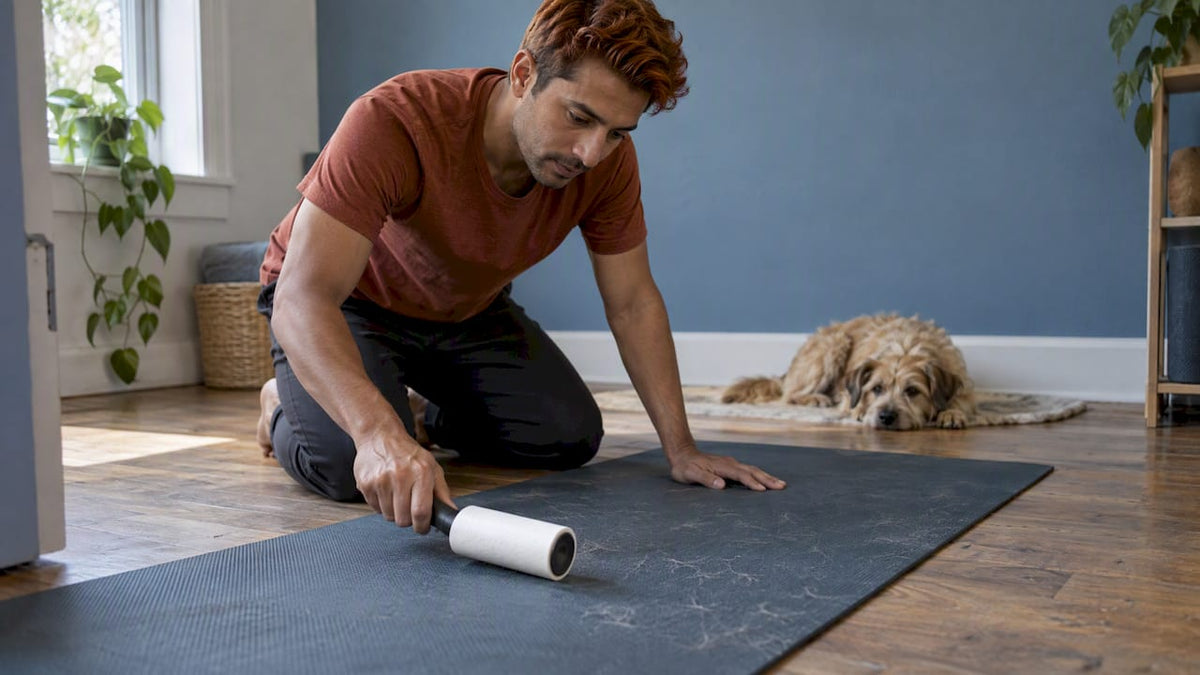
Article: Mildew on a Yoga Towel: How to Remove It and Keep It Gone
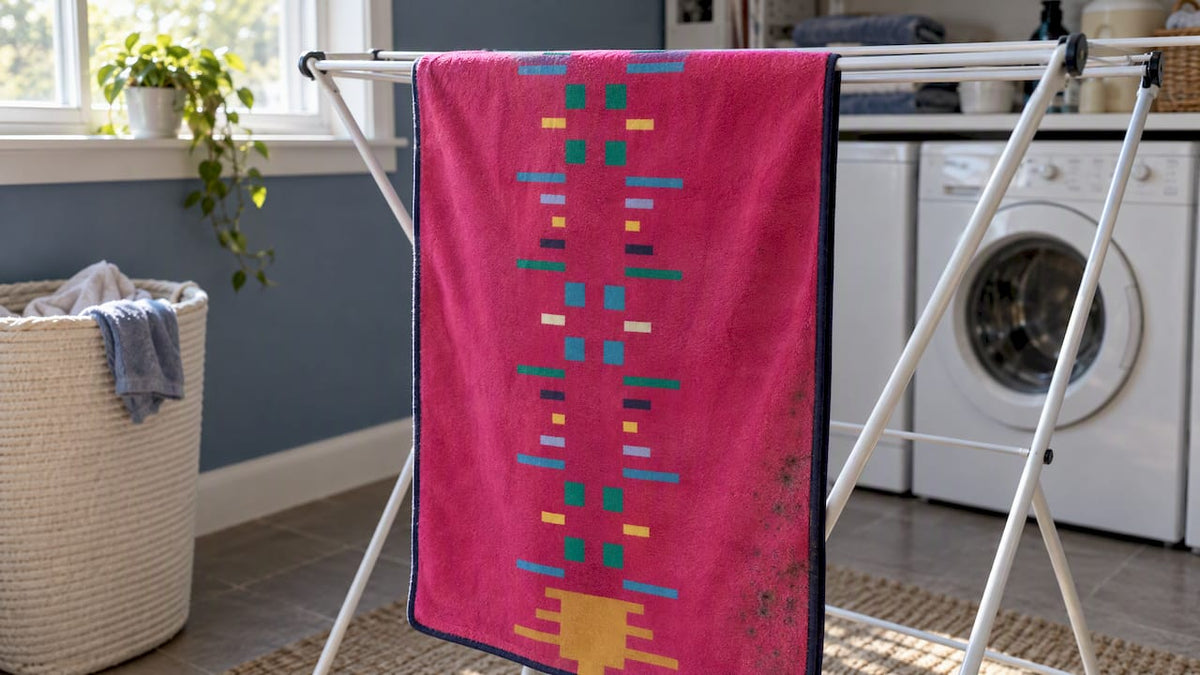
Mildew on a Yoga Towel: How to Remove It and Keep It Gone
If your yoga towel smells musty or has gray, black or colored spots, treat it as mildew. Take it outside and shake off any loose growth, wash it hot enough for the fabric with detergent, and dry it completely in the sun or a dryer. Light mildew usually comes out. A towel that still smells or looks stained after two washes is better replaced. The rest of this guide covers how to tell mildew from plain sweat odor, what to do step by step, when to give up on a towel, and how to keep the problem from returning.
TL;DR
- Mildew shows up as a musty smell and irregular gray, black, yellow, orange or red stains. Sweat odor alone smells sour and leaves no spots.
- Brush the towel off outdoors, then wash with detergent and water. Use bleach only if the care label allows it, and test colored fabric first.
- Dry the towel fully before it goes into a bag or drawer. Dampness, warmth and poor airflow are what let mildew start.
- If you have asthma, allergies or a weakened immune system, ask someone else to handle a badly moldy towel, or check with your doctor first.
- Replace a towel when the smell or stains survive repeated washing. Mold can weaken fibers and leave marks that stay.
Table of Contents
- Why a yoga towel grows mildew
- Is it mildew, or just sweat odor?
- How to get mildew out of a yoga towel
- Don’t forget the mat and the bag
- Is it safe to keep using a mildewed towel?
- When to replace the towel
- How to prevent mildew on a yoga towel
- Our perspective
- Choose a towel that is easy to keep dry
- FAQ
- Sources
Why a yoga towel grows mildew
Mold and mildew need moisture, and a yoga towel supplies plenty of it. A towel that is damp, kept warm and given little airflow is the ideal setting. The Smithsonian’s Museum Conservation Institute says high humidity, warm temperatures and poor ventilation encourage mold growth. Think of a towel balled up in a gym bag in a hot car.
The fabric itself is not the only food. Molds feed by digesting whatever they grow on, and the Canadian Conservation Institute notes they can grow on nylon and polyester if the fabric is soiled or has finishes that feed them. Most yoga towels are microfiber, which is polyester and nylon. So a clean synthetic towel is a poor host, but one loaded with sweat, skin oils, lotion and detergent residue is not. The Smithsonian adds that soiling, organic residues and stains can encourage mildew on polyester or nylon even at lower humidity.
That explains why mildew is most common in these situations:
- A sweaty towel stuffed into a bag right after class
- A towel left rolled up on the mat, or folded inside a closed mat bag
- A wet towel packed in a suitcase after a trip
- A towel washed but pulled from the dryer or line while still slightly damp
- A towel washed with too much detergent or fabric softener, which leaves residue that holds moisture and dirt
Is it mildew, or just sweat odor?
People often confuse the two, and the fix differs slightly.
| Sign | Likely mildew | Likely sweat or body oils |
|---|---|---|
| Smell | Musty, earthy, like a damp basement | Sour, sharp or stale |
| Spots | Irregular patches, often gray to black, sometimes yellow, orange or red | None, or an overall dingy tint |
| Reaction to washing | Smell returns when the towel gets damp, or stains stay | Smell mostly disappears after a good wash |
| Feel | Sometimes slightly slimy or powdery | Stiff or greasy |
The National Park Service’s conservation guidance says mildew often has a musty odor and appears as irregular stains, generally gray to black but sometimes yellow, orange or red. The same document notes that mildew can glow under UV light, but optical brighteners in fabrics and detergents glow too, so a blacklight does not prove anything on a towel.
If you are unsure, do this: wash the towel once, dry it completely, then wet a corner and smell it. A sweat-only towel smells clean. A mildewed one brings the musty smell back.
Odor without spots is also a common complaint, and it does not always mean mold. We cover that case in our guide to fixing yoga towel odor without killing grip.
How to get mildew out of a yoga towel
This routine follows university extension guidance and works on most synthetic yoga towels. Always read the care label first.
1. Take it outside and shake it out
Mold spores spread easily, so do not shake the towel in the laundry room or over your mat. Missouri’s extension service recommends brushing off loose growth outdoors before washing. Hold the towel at arm’s length and brush it with a dry cloth or soft brush.
2. Wash it by itself
Run the towel alone or with other items that were also damp or musty. Use detergent and the warmest water the care label permits. Use the normal amount of detergent, not extra. Consumer Reports notes that excess detergent and fabric softeners can reduce towel absorbency and may irritate skin or damage fibers, and absorbency is exactly what you need from a yoga towel.
3. Treat stains only if the fabric allows it
If stains remain after washing, the Missouri guidance says to use bleach only if it is safe for the fabric, and to test colored fabrics for colorfastness. Many microfiber towels are dyed in bold colors and can fade or blotch. Test a hidden corner first. Never mix bleach with vinegar, ammonia or other cleaners.
If the label says no bleach, a second wash with detergent is the safer choice. Some people add white vinegar to the rinse for odor. It is a common household trick, but it is not a substitute for removing the mold, and a clean, fully dried towel is what really matters.
4. Dry it completely
Sun and airflow are your allies. Hang the towel outdoors or run it in the dryer if the label allows heat. Check the thick seams and corners, which dry last. A towel that feels cool or damp in the middle is not done.
5. Clean the washing machine afterward
A load of mildewed laundry can leave spores in the drum and gasket. Run an empty cleaning or hot cycle afterward, as is also recommended for heavily soiled or mildewed items. Wipe the door seal and leave the door open so it dries.
6. Check the result
Wet a corner and smell it once the towel is dry. If it is clean and the spots are gone or faint, you are done. If not, repeat the wash once. A second failure is your cue to move on, as we explain below.
Don’t forget the mat and the bag
A towel that grew mildew often points to a damp environment elsewhere. Check your mat, especially the underside, and the bag you carry both in. Porous materials hold moisture deep inside, and the EPA’s contractor report on flood cleanup stresses that porous materials like fabric absorb moisture and contaminants deep into their structure, making them harder to clean. That is true of towels, and of mat bags too.

For the mat, our guides cover cleaning your yoga mat in five steps and how to dry a yoga mat properly. If you prefer making your own spray, see our homemade yoga mat cleaner recipes.
Is it safe to keep using a mildewed towel?
After a successful wash and full drying, a lightly affected towel is generally fine for most healthy people. The caution is in the cleanup and in the borderline cases.
- Cleaning it: The CDC’s guidance says people with respiratory conditions, allergies, asthma or weakened immune systems should avoid mold cleanup if possible or seek their doctor’s advice. If that is you, ask someone else to wash a badly moldy towel, or discard it.
- Skin reactions: If you get a rash, itching or breathing symptoms after using a towel that smelled musty, stop using it and talk to a doctor or pharmacist.
- Don’t mask it: Perfume, scented sprays and essential oils cover the smell but do nothing to the mold.
When to replace the towel
Washing can remove living growth, but it may not repair what the mold did. The CDC’s report on mold prevention is a reminder that fungal growth on textiles causes lasting damage, and that the quicker you remove it, the better the odds. Replace the towel when:
- The musty smell returns after two proper washes and full drying
- Dark or colored stains stay in the fabric
- The towel feels weak, thin, slimy or has lost its texture
- It no longer absorbs sweat or grips the mat as it used to
- You have a respiratory condition and the growth covers a large area
A towel is a low-cost item. Keeping one that makes you uneasy, or one that won’t hold grip, is not worth the effort.
How to prevent mildew on a yoga towel
Prevention is easier than cleanup, and it comes down to keeping the towel dry and clean.
- Unpack it at once. Take the towel out of your bag when you get home or back to the hotel. Don’t leave it rolled in the car.
- Hang it to dry. Open it fully over a chair, shower rod or hook. Air should reach both sides.
- Wash after sweaty sessions. For hot yoga, we wash the towel after every class, because it soaks up sweat, skin oils and salt. A towel used on a cooler, lighter practice can wait a few uses if it is dry and smells fresh, but it should still go in the wash regularly. Washing right after use also stops the buildup that feeds mold.
- Keep detergent modest. Use the amount on the bottle, skip fabric softener, and run an extra rinse if your towel feels slick.
- Dry completely before storing. Sun is excellent. In humid weather, use a dryer on a setting the label permits.
- Give it room. Store towels on a shelf or hook, not at the bottom of a closed bag or bin.
- Carry a spare when traveling. Bring a thin zip bag for the wet towel only until you can hang it, and unpack it the same day. Never seal a damp towel in a suitcase for days.
A simple travel routine
After a class abroad, rinse the towel in a sink with a little soap, wring it out, and hang it near an open window or on the back of a chair. Roll it in a dry bath towel and press to take out extra water. By morning it is usually dry enough to pack. A quick-drying towel makes this much easier than a thick cotton one.
Our perspective

We sell yoga mats, towels and straps, and most of the towel questions we get come down to one habit: the towel goes in the bag wet. The material rarely matters as much as the minutes after class. A microfiber towel built to grip and absorb is also built to hold moisture until you let it dry, so you have to do that part.
We would also warn against overcorrecting. Fabric softener, heavy scents and harsh treatments may make a towel seem fresher, but they can cost you the absorbency and grip you bought it for. Wash it regularly with a modest amount of detergent, dry it fully, and replace it when it has had enough. And if you use a natural rubber mat, the same logic applies underneath: do not leave a wet towel pressed against it.
— Nicholas
Choose a towel that is easy to keep dry
A good yoga towel should absorb sweat, grip the mat, dry quickly and survive frequent washing. If you need a replacement, take a look at our Yoga Towel SE34, Yoga Towel Reed or Yoga Towel Spruce. You can also browse our full range of yoga mats, towels and straps for home and travel.

Whatever towel you pick, follow the care label on the product page or tag for water temperature and bleach.
FAQ
How do I clean a moldy yoga mat?
Wipe it with a cloth lightly dampened with mild soap and water, then let it air-dry fully, away from direct heat. Avoid soaking, especially natural rubber, since trapped water can slow drying. Follow our guide to deep cleaning a yoga mat for the full routine. If mold has penetrated the foam or smells strongly after cleaning, replace the mat.
How often should I wash a hot yoga towel?
After every class. A hot room means a lot of sweat and oils, and a towel left damp for even a day can start to smell. For lighter practices at home, you can reuse a dry, fresh-smelling towel a few times, but wash it at least weekly.
Can I use bleach on a yoga towel?
Only if the care label allows it. Extension guidance says to use bleach only when the fabric is safe with it and to test colored fabrics first. Many dyed microfiber towels fade, so a second regular wash is often the safer first step.
What happens if a yoga towel stays wet in a bag?
Moisture, warmth and no airflow let mildew start, and a towel loaded with sweat and oils feeds it. Within a day or two you may notice a musty smell. Unpack and wash it quickly, then dry it fully.
Sources
- Conserve O Gram: Causes, Detection, and Prevention of Mold and Mildew (National Park Service)
- Mould Growth on Textiles (Canadian Conservation Institute)
- Mold and Mildew on Textiles (Smithsonian Museum Conservation Institute)
- How to Prevent and Remove Mildew (University of Missouri Extension)
- Mold Prevention Strategies and Possible Health Effects (CDC)
- How Often Should You Wash Your Towels? (Consumer Reports)
- Flood-Related Cleaning Contractor Report (US EPA)