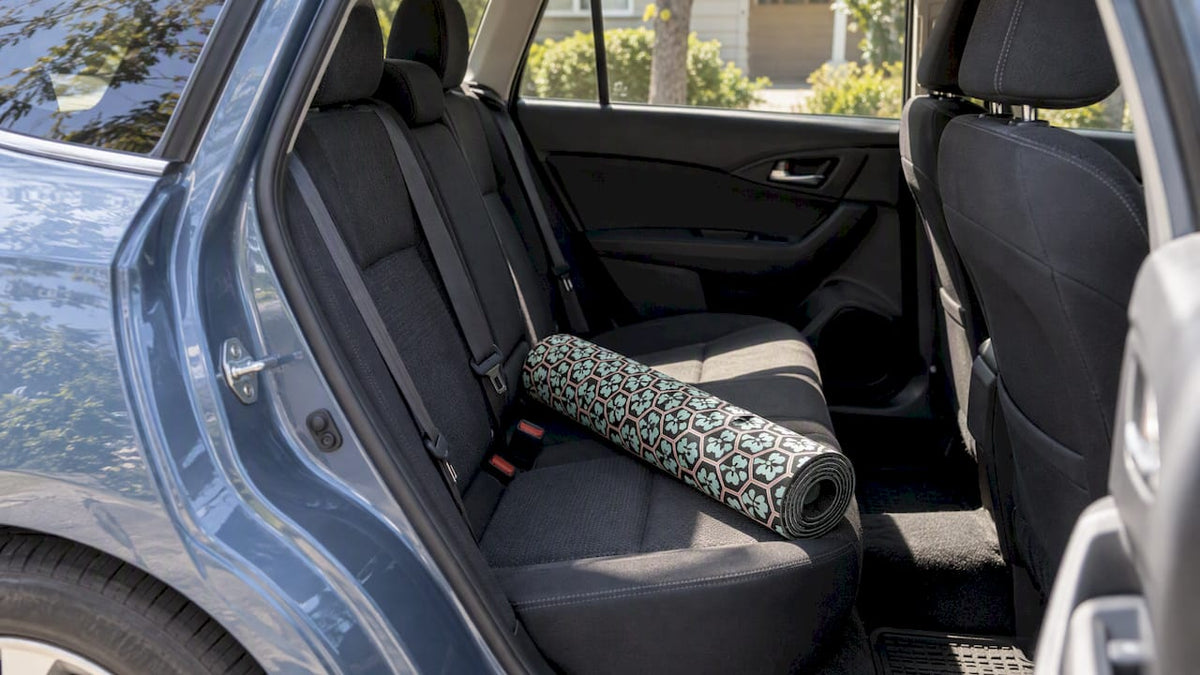
Article: How to Remove Pet Hair From a Yoga Mat
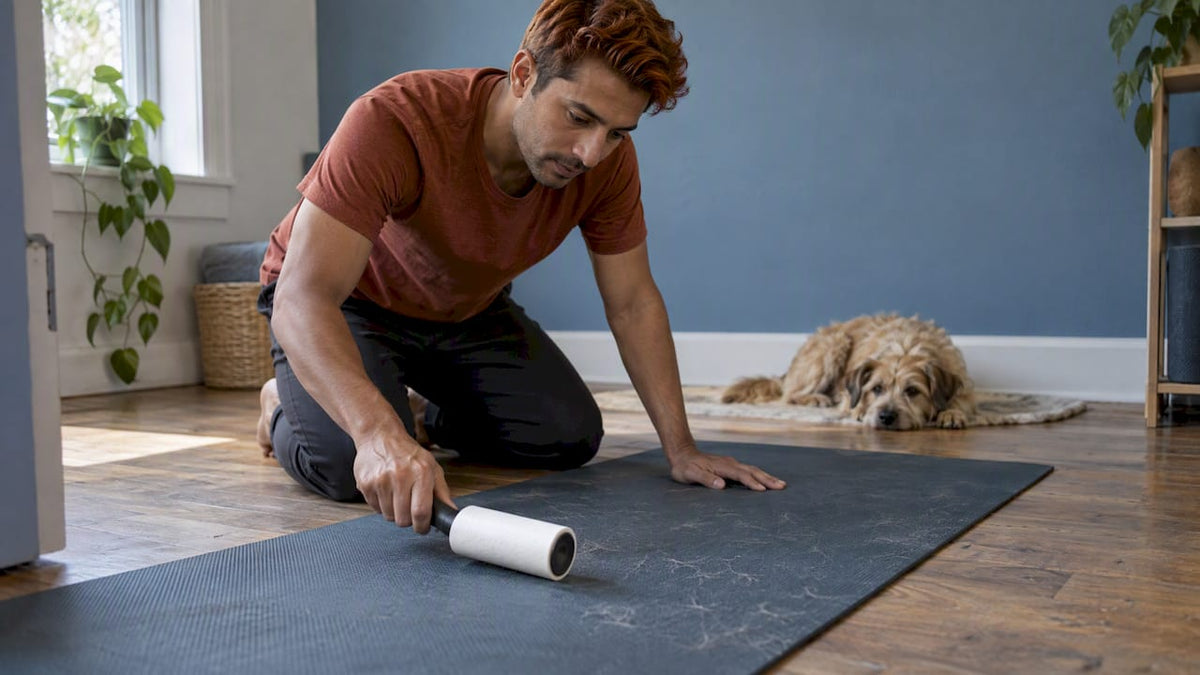
How to Remove Pet Hair From a Yoga Mat
Start dry. Run a lint roller over the mat in one direction with light pressure, then use a soft brush or a microfiber cloth on the textured spots. For hair that clings, a slightly damp rubber glove clumps it so you can pick it up. Skip sharp scrapers, rough pads, vacuum beater brushes and harsh chemicals. They remove hair, but they also wear down the surface you stand on.
The rest of this guide covers the tools, the order to use them in, how each mat material changes the answer, and how to stop the hair from coming back.
TL;DR
- Keep the mat dry at first. A lint roller, soft brush or microfiber cloth lifts most dog and cat hair without touching the surface.
- A dampened rubber glove pulls stubborn, woven-in hair into clumps by friction alone.
- Use a vacuum only with a gentle upholstery attachment, never a rotating beater brush.
- Match the method to the material: natural rubber, PVC, TPE, cork and polyurethane mats each have their own limits, so read the care label.
- Prevention beats scrubbing: wipe after practice, dry fully before rolling, and store the mat away from your pet’s favorite spots.
Table of Contents
- Why pet hair clings to a yoga mat in the first place
- The tools that work, in the order to reach for them
- A simple step-by-step routine
- When hair leaves grime behind
- Your mat material changes the method
- Dish soap, disinfectant wipes and the “is it safe?” questions
- Keeping pet hair off your mat between sessions
- What we have learned at Yune Yoga
- A mat and a towel that suit practice with a pet
- Common mistakes to avoid
- A quick weekly plan
- FAQ
- Sources
Why pet hair clings to a yoga mat in the first place
A good yoga mat is built to grip. That grip works on your hands and feet, and it works on fur too. Fine, short hairs, such as those from a lab, a boxer or a short-haired cat, settle into the surface texture and stay there. Add a little static, a little moisture from your palms and the pressure of a downward dog, and the hair gets pressed into the mat instead of sitting on top of it.
That is also why the first instinct, grabbing a wet sponge, often makes things worse. Water and friction turn loose hair into a mat of tiny strands that stick to the surface. Dry removal first, damp cleaning second, is the order that works.
If your pet likes to join your practice, the goal is not a mat that never gets hair on it. The goal is a quick routine that takes two minutes and does no damage.
The tools that work, in the order to reach for them
The guidance in Wirecutter’s yoga mat cleaning guide points to the same basic approach: lift hair gently while the mat is dry, then clean only as the manufacturer allows. Here is how that plays out in practice.
1. Lint roller: the daily tool
A lint roller is the fastest way to clear loose surface hair. Roll in one direction, using light pressure, and peel off the sheet when it fills. Do not scrub back and forth, which can push hair into the texture. For a mat that gets pet hair every day, keep a roller next to it so removal becomes a habit rather than a project.
A few practical notes:
- Use a roller with a standard adhesive sheet. Heavy-duty sticky tape can leave residue on some surfaces.
- Press just hard enough for the sheet to touch the mat. More force does not pick up more hair.
- Do both sides if you roll the mat up between sessions, since hair migrates to the back when the mat is stored.
2. Soft brush or microfiber cloth: for textured surfaces
Mats with a pronounced pattern, such as a diamond or grid, hold hair in the grooves. A soft-bristled brush or a dry microfiber cloth reaches into those grooves. Sweep in one direction, gather the hair into a pile, and lift it away. A clothes brush with soft bristles works well. A stiff scrub brush does not.
3. Dampened rubber glove: for hair that will not let go
When hair is woven into the surface, a rubber dish glove helps. Put it on, dampen it only slightly, and pull your hand across the mat in short strokes. The friction rolls the hair into clumps that you can pick up in one go. It costs next to nothing, and it is gentler than most scraping tools because the rubber is soft. Wring the glove nearly dry first. You want it tacky, not wet.
4. Vacuum with an upholstery attachment: only if needed
A vacuum can help on a large, heavily furred mat, but only with a gentle upholstery attachment. Never use a rotating beater brush. Those bristles can scuff, pull and mark the surface. Hold the attachment just above the mat and move it slowly, again in one direction.
What to leave in the drawer
Avoid sharp scrapers, abrasive pads, beater brushes and harsh chemicals. They can nick the surface, strip the texture that gives you traction and shorten the life of the mat. If you want to test any cleaner, try it first on a hidden corner.
A simple step-by-step routine
This is the routine we suggest for a mat that regularly meets a shedding pet.
- Lay the mat flat on a clean floor, practice side up.
- Roll with a lint roller in one direction, overlapping each pass slightly.
- Brush the grooves with a soft brush or microfiber cloth if the mat has texture.
- Use the damp glove on any hair still clinging, with short strokes toward you.
- Pick up the clumps by hand and throw them away.
- Check the back. Flip the mat and repeat quickly.
- Spot-clean if there is grime (see the next section), then let the mat air-dry completely before rolling it.
The whole thing takes a couple of minutes once you have the tools in one place.
When hair leaves grime behind
Sometimes the hair is not the only problem. Paw prints, drool or dirt may stay after the hair is gone. Wirecutter recommends a lightly applied solution of one cup of warm water with two to four drops of dish soap. Wipe gently with a soft cloth, then wipe again with a clean damp cloth so no soap film remains, and air-dry the mat.
Two cautions matter here:
- Light application. Use a cloth that is damp, not dripping. You are cleaning the surface, not soaking the mat.
- Check the care label first. Wirecutter says to follow the manufacturer’s care instructions because mats differ in absorbency and are commonly made of natural rubber, TPE or PVC, and that bleach, alcohol and many disinfectant wipes can degrade mats over time.
If you want to go deeper on cleaning recipes, our guides on homemade yoga mat cleaner recipes and five proven steps to clean your yoga mat walk through the options.
Your mat material changes the method
Not every mat tolerates the same treatment. Wirecutter’s guidance is that methods differ by material, and that no universal soap or vinegar treatment suits all of them. Here is a practical summary.
| Mat material | Dry hair removal | Damp cleaning | Main caution |
|---|---|---|---|
| Closed-cell PVC or TPE | Lint roller, soft brush, glove | Surface wipe is generally fine | Do not soak unless the maker says so |
| Natural rubber | Lint roller, soft brush, glove | Only with the cleaner the manufacturer specifies | Dry thoroughly, keep away from harsh chemicals |
| Absorbent open-cell PU or rubber | Lint roller, soft brush | Extra caution | Do not submerge or saturate |
| Cork, polyurethane, fabric | Follow the maker’s guidance | Material-specific instructions | No one-size-fits-all soap or vinegar |
The one rule that holds for all of them: do not submerge or saturate any mat without the manufacturer’s explicit approval.
Natural rubber mats
Natural rubber has a slightly tacky, grippy surface, which is lovely underfoot and good at holding hair. Dry tools do most of the work: roller, soft brush, glove. If you need to clean, use what the manufacturer recommends and dry the mat thoroughly afterward. Our guide to cleaning a natural rubber yoga mat without ruining it covers this material in detail.
PVC and TPE mats
These closed-cell mats resist moisture on the surface, so a lightly damp wipe after dry removal is usually fine. Still, they should not be soaked unless the maker says so.
Absorbent, open-cell mats
Mats with an absorbent top layer, such as polyurethane or open-cell rubber styles, soak up moisture and anything dissolved in it. Stay with dry removal wherever possible and follow the maker’s instructions for the rest.
Cork and fabric
Cork and fabric-topped mats each have their own instructions. Check the label or the maker’s care page before using water, soap or vinegar.
Dish soap, disinfectant wipes and the “is it safe?” questions
Two questions come up often when people deal with pet hair and messes on a mat.
Dish soap. In very small amounts, diluted in warm water, it is the cleaner Wirecutter suggests for grime left after hair removal. The key is dilution (a few drops in a cup of water), a light touch and a damp-cloth rinse so no soap residue stays on the surface.
Disinfectant wipes. Here we would be careful. Wirecutter notes that bleach, alcohol and many disinfectant wipes can degrade mats over time. If you share equipment in a studio or gym, the CDC does advise cleaning shared equipment after each use, letting it dry before use and following the manufacturer’s instructions so the cleaner does not harm the equipment. For a personal mat at home that only you and your pet touch, there is rarely a reason to go beyond gentle cleaning. The same CDC page also says not to put cleaners or disinfectants on skin or wounds, so do not wipe your pet or yourself with them either.
For broader context, the CDC says wide-area or electrostatic spraying is generally not recommended as a primary way to disinfect surfaces in community settings. A mat does not need a heavy spray treatment.

Keeping pet hair off your mat between sessions
Removal is a chore. Prevention is cheaper. These habits make the biggest difference.
Wipe and dry after every practice
Wipe the mat after each session using the method the maker approves, then let it air-dry completely, flat on the floor or over a sturdy drying surface. Wirecutter points out that storing a mat only once it is dry helps avoid conditions that favor mold and bacteria. A rolled-up damp mat also traps hair against the surface.
Store it where your pet cannot reach
Keep the mat rolled up in a cool, dry place, away from direct sun and away from your pet’s favorite napping spots. A closet shelf or a tall basket works better than a corner of the living room floor.
Use a towel or a dedicated practice area
If your pet sheds near your mat, a yoga towel on top gives you a layer you can shake out or toss in the wash. A designated practice area, ideally a hard floor you can sweep before you unroll, helps too. Hair that never reaches the mat is hair you never have to remove.

Consider a smooth cover for storage
A mat bag or cover made of smooth, washable fabric acts as a barrier while the mat is stored. You wash the cover often instead of washing the mat. Look for smooth fabric, since fuzzy or knit fabrics hold hair themselves.
Clear the floor first
A quick sweep or vacuum of your practice space before you unroll takes thirty seconds and keeps tumbleweeds of fur off the mat. If your pet has just come in from outside, brush or wipe them down first.
What we have learned at Yune Yoga
We sell yoga mats, towels and straps, and we hear about pets and mats all the time. Many of our customers practice with a dog or cat nearby, and our product range includes dog-themed designs because our customers asked for them.
Our view is simple. Gentle, frequent care beats occasional heavy cleaning. A mat that gets rolled and brushed after practice rarely needs a deep clean, and a mat that is scrubbed hard once a month tends to look worse for it. We would rather you spend two minutes with a lint roller after a session than twenty minutes fighting hair that has been ground in for weeks.
We also think the material you choose shapes how much work you will have. Natural rubber mats are a favorite of ours for grip and for their sustainable character, and the care approach stays the same: dry removal first, gentle cleaning only as needed, full drying, careful storage. Whatever you own, read the care instructions that came with it. They are written for that exact surface.
And a plain word on towels: a yoga towel over your mat is the cheapest hair barrier there is. It also helps with grip when your hands get sweaty, and it goes in the wash.
— Nicholas
A mat and a towel that suit practice with a pet
If you are replacing a mat, or building a setup that handles a furry practice partner, we make it easy to find what fits. Our natural rubber and eco-friendly mats are made for grip and sustainability, and we carry designs that dog and cat lovers enjoy, such as the Golden Retriever Color yoga mat and the Black and Tan Boxer yoga mat.

Pair a mat with the Leopard yoga towel as a washable layer on top, or browse our yoga clothes and accessories for straps and more. Check each product page for its care instructions before you clean.
Common mistakes to avoid
- Wetting the mat first. Water and friction clump hair into the surface. Dry removal first.
- Using a beater brush vacuum. The rotating bristles can mark and wear the surface.
- Scraping with a blade or hard tool. It takes hair, and a layer of the mat, with it.
- Spraying disinfectant on a schedule. Many disinfectants can degrade mats over time, so use them only if the manufacturer allows.
- Rolling the mat up damp. It traps moisture and hair together.
- Skipping the patch test. Try any new cleaner on a hidden corner first.
For more on regular care, see our guides on how to wash a yoga mat and how to properly clean your yoga mat for a hygienic workout.
A quick weekly plan
You do not need a complicated schedule. This rhythm keeps most mats in good shape:
- After each session: lint roll or brush, wipe if needed, air-dry fully, roll and store.
- Once a week: use the damp glove over the whole surface and check the back of the mat.
- Once a month: spot-clean any grime with the mild soap solution if your care label allows it, wipe off residue and dry completely.
- Whenever you change something: test a new cleaner or tool on a hidden corner first.
With that routine, hair rarely gets the chance to build up, and you will not need to scrub.
FAQ
Can I use Dawn dish soap on my yoga mat?
In very small amounts, yes, if your mat’s care label allows it. Wirecutter suggests one cup of warm water with two to four drops of dish soap, applied lightly with a soft cloth. Follow with a damp-cloth wipe to remove any soap, then air-dry the mat fully.
Can I use Clorox wipes to clean my yoga mat?
We would not. Wirecutter notes that bleach, alcohol and many disinfectant wipes can degrade mats over time. Check the manufacturer’s instructions first, and use a mild soap solution for routine cleaning instead.
What is the fastest way to get dog hair off a yoga mat?
A lint roller. Roll it in one direction with light pressure while the mat is dry. For hair that stays stuck, use a slightly damp rubber glove to clump it, then pick it up by hand.
Can I vacuum my yoga mat?
Yes, if you use a gentle upholstery attachment and not a rotating beater brush. Hold it just above the surface and move slowly in one direction. Dry tools like a lint roller are usually simpler and gentler.
How do I stop pet hair from sticking to my mat again?
Wipe and fully dry the mat after each session, then store it rolled in a cool, dry place away from your pet. A washable yoga towel on top or a smooth, washable cover for storage also helps, because you wash those instead of the mat.
Sources
- How to Clean a Yoga Mat, Wirecutter
- Athletic Facilities: MRSA Prevention and Control, CDC
- When and How to Clean and Disinfect a Facility, CDC