
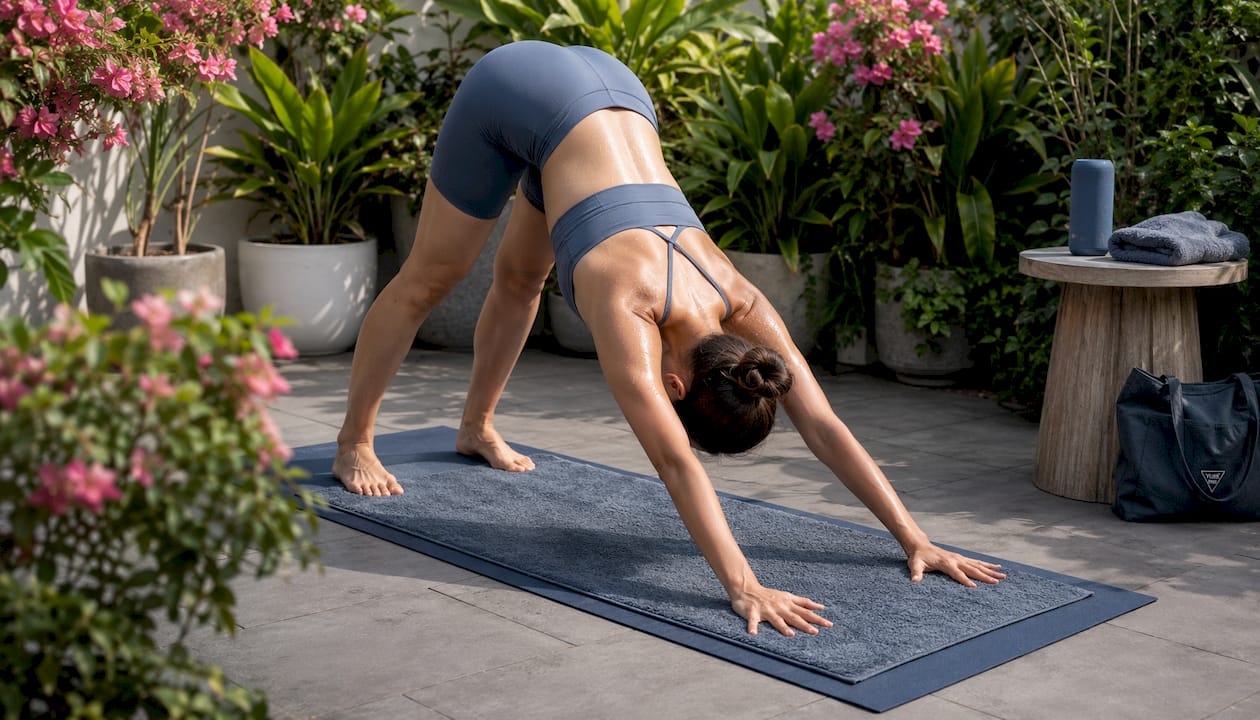
Antimicrobial Yoga Towel: What It Is and Why It Matters
An antimicrobial yoga towel is a microfiber or treated textile accessory that lays over your mat and uses active agents — silver ions, ionic copper, or plant-based inhibitors — to reduce bacterial, fungal, and mildew growth between washes. The payoff is practical: better grip when you’re drenched in sweat, meaningful odor control, and a washable hygiene barrier that protects both you and your mat.
You’ll get the most from one if you:
- Practice hot yoga or sweat heavily through class
- Use shared or rental studio mats regularly
- Travel and need quick-dry gear that stays fresh between uses
Table of Contents
- What is an antimicrobial yoga towel, really? Materials and how the technology works
- Why these towels make a real difference in practice
- How to pick the right antimicrobial yoga towel for your practice
- Washing, drying, and realistic lifespan expectations
- What “antimicrobial” really means — and what it doesn’t
- Key Takeaways
- The case for being selective about antimicrobial claims
- Yuneyoga’s antimicrobial yoga towels for hot yoga and studio use
- Useful sources
What is an antimicrobial yoga towel, really? Materials and how the technology works
The antimicrobial properties in these towels come from biocidal agents embedded in or applied to the fabric — not from the fabric itself. Most yoga towels use a polyester-polyamide microfiber top layer (sometimes described as suede-touch) because it absorbs several times its weight in moisture and dries fast, similar to the HustleFuel Moisture-Wicking Performance Tee which also utilizes moisture-wicking materials to keep you dry. The antimicrobial layer is a separate technology added on top of or during that construction.
Four mechanisms dominate the market:
Silver ions are the most widely used. Positively charged silver ions (Ag+) disrupt microbial cell walls and interfere with respiration. The silver-ion approach works continuously when moisture is present, and reputable integrated versions — such as Polygiene StayFresh, which uses silver chloride added during manufacturing — embed the agent in the fiber rather than painting it on as a removable finish.
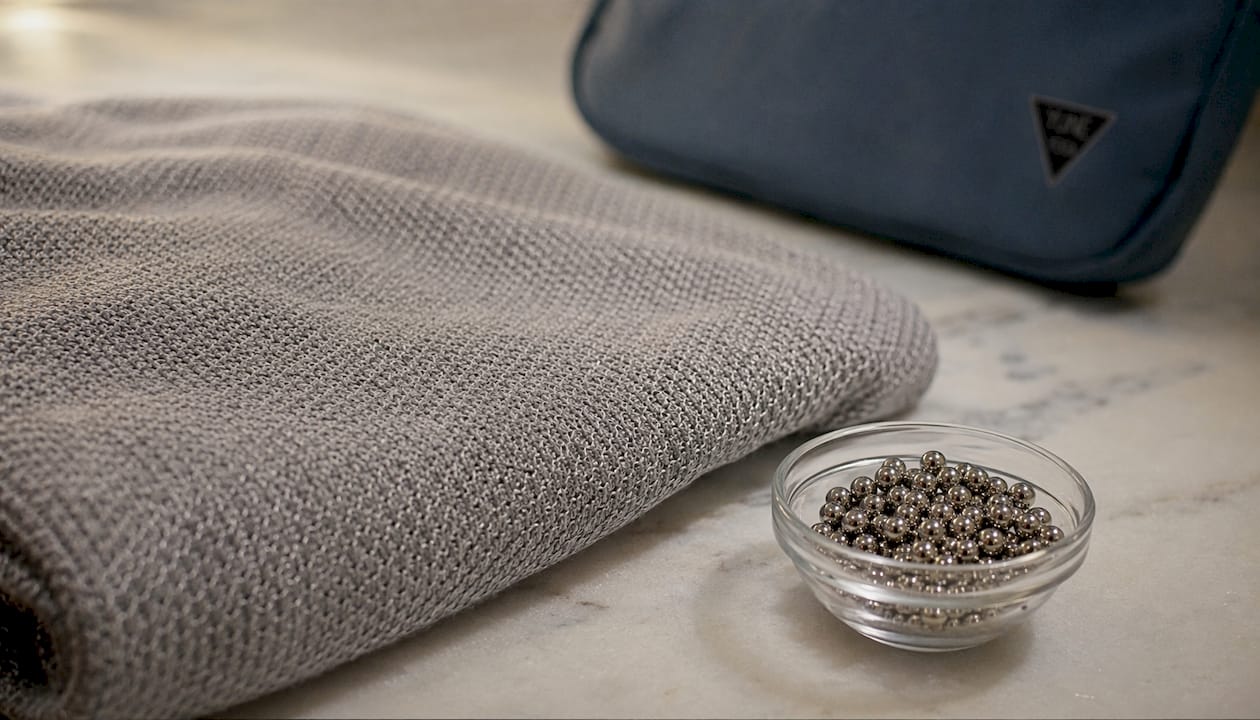
Ionic copper releases ions more slowly than silver and tends to carry lower skin-sensitivity concerns. It’s effective against a broad range of organisms and is increasingly common in performance textiles.
Zinc compounds often appear alongside silver or copper in multi-agent formulations. Combining agents broadens the spectrum of activity (bacteria, fungi, mildew) and tends to improve wash durability compared to single-agent surface coatings.
Plant-based inhibitors (botanical biocides, chitosan derivatives) are the most eco-friendly option on paper. Nano-encapsulation has improved their durability, but historically they’ve had shorter effective lifespans than metal-ion technologies.
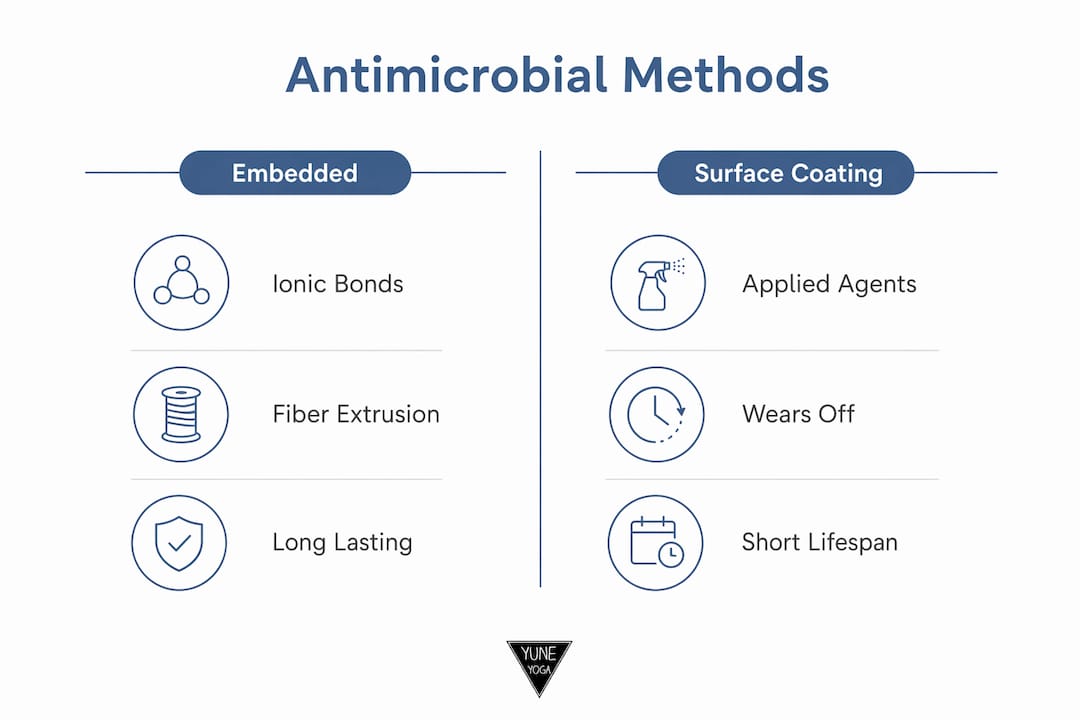
The single most important distinction is surface coating vs. embedded technology. Surface-applied coatings typically lose effectiveness after roughly 20–50 wash cycles. Agents integrated via ionic bonding or during fiber extrusion can maintain protection across the towel’s expected 2–5 year lifespan. That gap is enormous in real-world terms.
| Material / Construction | Antimicrobial Method | Typical Durability | Grip Behavior |
|---|---|---|---|
| Polyester-polyamide microfiber | Silver ions (embedded / ionic bonding) | 2–5 years | Excellent when damp |
| Polyester microfiber | Ionic copper (embedded) | 2–5 years | Good when damp |
| Polyester blend | Multi-agent (silver + zinc, embedded) | 2–5 years | Good to excellent |
| Polyester microfiber | Surface coating (any agent) | 20–50 wash cycles | Good when damp |
| Cotton or cotton blend | Plant-based inhibitor | Shorter; varies by formulation | Moderate; slower to dry |
Why these towels make a real difference in practice
The three core benefits of any yoga towel are grip improvement, mat protection, and a sanitary layer over shared surfaces. Antimicrobial versions extend that last benefit significantly.
- Grip when damp. Microfiber grips better wet than dry, which is exactly the condition hot yoga creates. The antimicrobial treatment doesn’t affect grip; it’s the fabric texture and silicone backing that do the work.
- Odor resistance. By reducing microbial load between washes, antimicrobial towels stay fresher longer. You don’t need to wash after every single class if the towel is lightly used — though you still should wash regularly (more on that below).
- Mat protection. Sweat that soaks into foam or rubber mats degrades the material over time. A towel intercepts that moisture, extending mat lifespan considerably.
- Hygiene barrier for shared mats. Studio rental mats carry bacteria from dozens of users. Laying your own towel over one means you’re sweating onto a washable surface you control.
The benefit that matters most shifts by context. Hot yoga practitioners care most about grip and odor control. Gentle-flow practitioners in a private studio may care more about mat protection. Anyone using shared mats should prioritize the hygiene barrier above everything else.
Pro Tip: When using a towel over a studio rental mat, look for a towel with corner pockets or silicone nubs on the underside. Corner pockets wrap the mat ends and prevent the towel from bunching during transitions; nubs grip the mat surface and stop lateral sliding in standing poses.

How to pick the right antimicrobial yoga towel for your practice
Start with the mechanism claim. A product page that says “antimicrobial” without specifying whether the agent is embedded or surface-applied is giving you almost no useful information. Ask: Is the agent added during fiber extrusion or ionic bonding, or is it a post-production coating? What testing standard was used — AATCC 100, ISO 20743? How many wash cycles before efficacy drops?
Beyond the mechanism, evaluate these criteria:
- Size and fit. Standard yoga towels generally run in sizes suitable to cover most mats adequately. If your mat is 72 inches, get a longer towel — a short towel that doesn’t cover the mat ends is a tripping hazard.
- Grip and backing. Silicone dots or nubs on the underside anchor the towel to the mat. Corner pockets are an alternative. Without one of these, the towel will shift.
- Absorbency and drying time. Polyester-polyamide microfiber absorbs fast and dries quickly. Cotton absorbs well but dries slowly, which creates the damp conditions that accelerate microbial growth.
- Declared durability. Ask for wash-cycle claims in writing, not just “long-lasting.”
- Price vs. value. An embedded-technology towel costs more upfront but lasts 2–5 years. A surface-coated towel at a lower price may need replacing within a year of regular use.
Red flags to watch for: vague “natural antimicrobial” claims with no named agent, “self-cleaning” language (no textile is self-cleaning), no care instructions on the product page, and health-protective marketing that implies the towel replaces cleaning. The best yoga towels are transparent about exactly what they do and don’t do.
Washing, drying, and realistic lifespan expectations
How you wash a towel determines how long its antimicrobial properties last. Hot water, harsh detergents, and fabric softeners can strip surface treatments several times faster than gentle care. That’s not a minor caveat — it’s the difference between 20 washes and 50.
Follow these care steps to protect the treatment:
- Wash in cool or warm water (not hot) on a gentle cycle
- Use a mild, fragrance-free detergent — no bleach, no enzyme-heavy formulas
- Skip fabric softener entirely. It coats microfiber fibers and kills both absorbency and antimicrobial contact
- Air dry or tumble dry on low. High heat degrades both the microfiber and any surface-applied treatment
- Wash after every sweaty class regardless of antimicrobial claims — the treatment reduces microbial load, it doesn’t replace cleaning
For drying and storage tips that keep your towel performing longer, hang it fully open rather than folding it damp.
Replacement timeline: surface-applied coated towels generally need replacing after 20–50 wash cycles of regular use. Embedded-technology towels typically last 2–5 years with proper care. The clearest replacement signals are persistent odor after washing, visible fabric breakdown, and loss of grip when damp.
What “antimicrobial” really means — and what it doesn’t
“Antimicrobial” is broader than “antibacterial.” It covers activity against bacteria, fungi, mold, and mildew — which matters for yoga towels specifically, since fungi and mildew thrive in the damp, warm conditions a sweaty towel creates.
What experts consistently emphasize: “Antimicrobial” on a textile label means reduction of microbial load and odor, not sterilization. Treatments can meaningfully slow microbial growth between washes, but physical dirt and body oils can overwhelm the treatment by shielding microbes from contact with the biocidal agent. Regular mechanical washing isn’t optional — it’s what keeps the treatment working. Look for products that cite AATCC 100 or ISO 20743 testing and carry Oeko-Tex certification for safety. Vague “germ-killing” or “self-cleaning” claims without test data are marketing language, not performance guarantees.
Damp fabric creates a fast-moving problem. Microbial loads can develop within 24 hours in damp towel fibers, and hot yoga conditions accelerate that growth considerably. Antimicrobial treatments slow that curve — they don’t flatten it to zero.
On safety: silver and copper ions at textile concentrations are generally considered safe for skin contact, but environmental concerns around metal ion runoff during washing are worth noting. Plant-based treatments sidestep that concern but often trade off durability. Research on TiO2 and ZnO nanoparticle-modified textiles shows antimicrobial activity lasting up to 30 wash cycles, with effectiveness depending on light intensity and wash frequency — a reminder that no treatment is unconditional.
The practical takeaway: use your antimicrobial towel as a hygiene and grip layer, not as a health shield. It reduces risk; it doesn’t eliminate it.
Key Takeaways
An antimicrobial yoga towel reduces microbial load and controls odor between washes, but only works as intended when you choose a declared embedded mechanism and follow proper care.
| Point | Details |
|---|---|
| Embedded beats coated | Ionic-bonded or fiber-extruded agents last 2–5 years; surface coatings fade after 20–50 wash cycles. |
| Mechanism disclosure matters | Only buy from brands that name the agent (silver ions, ionic copper) and cite a test standard like AATCC 100 or ISO 20743. |
| Washing habits are the variable | Avoid fabric softener, hot water, and harsh detergents — these degrade treatments faster than use does. |
| It’s a hygiene layer, not a health shield | Antimicrobial towels reduce microbial load and odor; they don’t replace washing or sterilize your mat. |
| Yuneyoga’s approach | Yuneyoga offers microfiber yoga towels built for hot yoga grip and hygiene, with transparent material and care disclosures. |
The case for being selective about antimicrobial claims
The antimicrobial textile market has a marketing problem. Brands routinely use “antimicrobial,” “antibacterial,” “self-cleaning,” and “odor-resistant” interchangeably, as if they mean the same thing. They don’t. “Odor-resistant” is the most honest consumer claim — it describes what practitioners actually experience. “Self-cleaning” is fiction. “Antimicrobial” sits in between, and its value depends entirely on whether the mechanism is declared, tested, and durable.
My honest recommendation: treat any antimicrobial yoga towel claim as a starting point for questions, not a conclusion. A brand that can tell you exactly which agent is used, how it’s integrated, what standard was used to test it, and how many washes before efficacy drops — that’s a brand worth trusting. One that says “natural antimicrobial properties” and stops there is selling you a feeling, not a function.
For hot yoga practitioners and studio regulars, a well-made antimicrobial towel is genuinely worth the investment. For a once-a-week gentle flow practitioner with their own mat, a high-quality microfiber towel without antimicrobial claims may serve just as well, washed regularly. The technology is real; the question is whether the specific product delivers it.
Yuneyoga’s antimicrobial yoga towels for hot yoga and studio use
Yuneyoga’s microfiber yoga towels are built for practitioners who need grip and hygiene to hold up through a full hot yoga class. The towels use a polyester-polyamide microfiber construction that grips better as you sweat, with silicone backing to keep the towel anchored to your mat through every transition. Care instructions are straightforward: cool gentle wash, no fabric softener, low-heat dry. For studio regulars and hot yoga practitioners who want a towel that stays fresh between classes and protects their mat investment, browse the full towel collection at yuneyoga.com.
Useful sources
- Microban: Antimicrobial Home Textiles Guide — Industry overview of antimicrobial agents used in textiles, including silver ions, copper, and plant-based inhibitors. Useful for mechanism definitions.
- Polygiene: Antibacterial Towel Technology — Explains how integrated silver-chloride technology (Polygiene StayFresh) is added during manufacturing vs. surface application. Key source for embedded vs. coated distinction.
- MDPI: Long-Lasting Photocatalytic and Antimicrobial Activity of Cotton Towels — Peer-reviewed research on TiO2/ZnO nanoparticle-modified textiles; supports wash-cycle durability data and the role of physical cleaning.
- PMC: Evaluation of Antimicrobial Hand Towels — Field study showing antimicrobial towels do not replace regular washing for contamination control; grounds the expert reality-check section.
- HTS Yoga: Antimicrobial Claims, Trends, and Sourcing Guide — Industry sourcing perspective on marketing claim accuracy, testing standards (AATCC 100, ISO 20743), and Oeko-Tex safety certification.
- Bulbul: Understanding Antibacterial Towels — Consumer-facing guide covering embedded vs. surface-applied technologies and wash-cycle durability ranges.
- International Yoga Conference: What Is a Yoga Towel? — Practical overview of yoga towel sizing, grip systems, and material selection; supports the how-to-choose section.


