
What Is an Antimicrobial Yoga Mat? A Clear Guide
An antimicrobial yoga mat is defined as a mat treated or constructed with materials that resist microbial growth on the mat’s surface, reducing odors and extending product life. The term “antimicrobial” here refers to product protection, not user health protection. Per EPA PRN 2000-1 guidance, mats can market protection from odor-causing microbes but cannot claim to prevent disease transmission. That distinction matters more than most practitioners realize. Whether you practice daily at home or share studio mats, understanding what these mats actually do shapes smarter buying decisions and better hygiene habits.
What is an antimicrobial yoga mat made of?
Antimicrobial yoga mats fall into two broad categories: those made from naturally resistant materials and those built from synthetic materials with added antimicrobial treatments. Each approach works differently, and knowing the difference helps you choose the right mat for your practice.
Natural antimicrobial materials
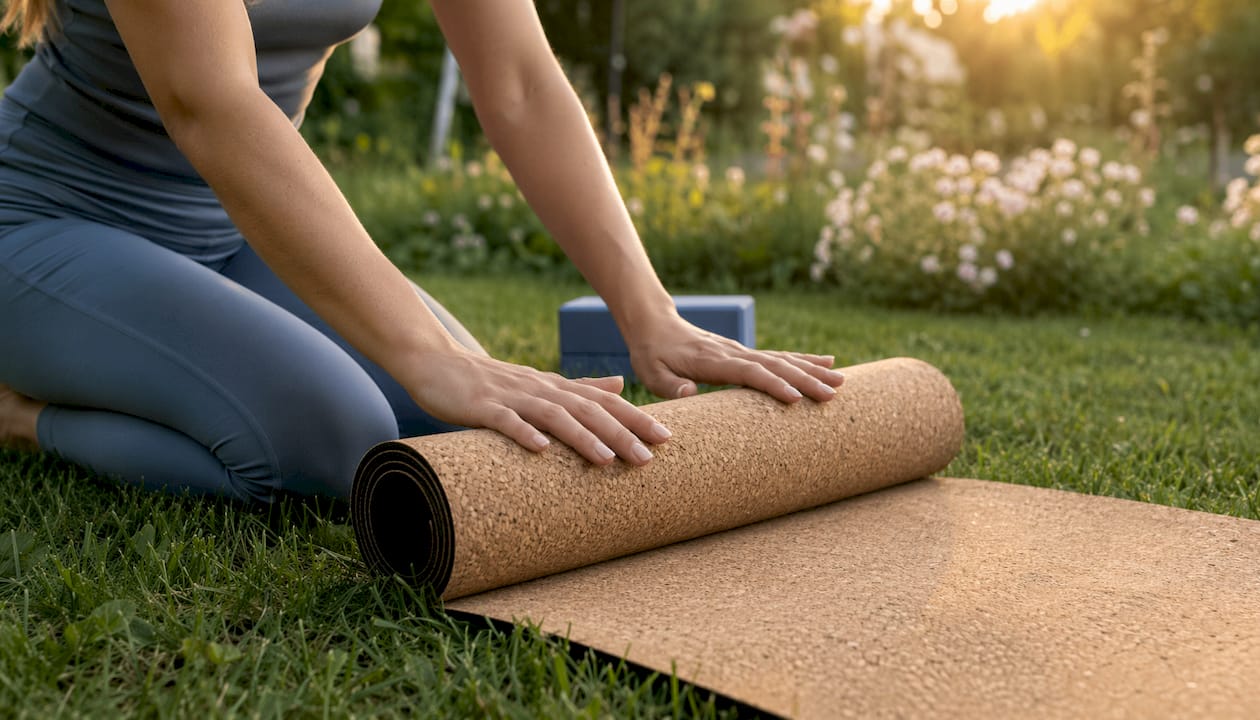
Natural cork is the clearest example of an inherently antimicrobial material. Cork contains suberin, a biopolymer that acts as a natural microbial barrier. Suberin resists moisture absorption and dries quickly, creating an environment where bacteria and fungi struggle to colonize. Cork mats perform especially well in hot yoga, where sweat volume is high and microbial risk increases.
Natural rubber is another material with moderate microbial resistance. Its dense, closed surface limits the moisture pockets where bacteria thrive. Rubber mats do not carry the same chemical barrier as cork, but their texture and density reduce microbial buildup compared to open-cell foam mats.
Synthetic antimicrobial treatments
Thermoplastic elastomer (TPE) mats represent the most common synthetic option. Antibacterial TPE mats incorporate antimicrobial agents within the foam or surface layer to slow bacterial growth, making them a practical choice for shared-use settings like studios and gyms. The agents disrupt bacterial cell functions at the surface level, reducing colonization between cleanings.
The most advanced synthetic technology uses ionic silver. Silver ions encapsulated into mat fibers create a durable antimicrobial barrier against odor-causing pathogens throughout the mat’s lifespan. This approach, used primarily in clinical and high-traffic rehabilitation settings, delivers continuous antimicrobial action rather than a surface coating that degrades over time.
- Cork: Natural suberin barrier, moisture-wicking, quick-drying, best for hot yoga
- Natural rubber: Dense surface limits moisture pockets, moderate microbial resistance
- TPE with antimicrobial agents: Additives slow bacterial growth in the foam or surface layer
- Polyurethane (PU) surface mats: Closed-cell top layer resists moisture absorption
- Ionic silver fiber mats: Long-lasting embedded protection, used in clinical settings
Pro Tip: If you practice hot yoga or sweat heavily, cork is the most practical natural choice. Its suberin content and fast-drying surface do the work passively, without relying on chemical additives.
What are the benefits and limitations of antimicrobial yoga mats?
Antimicrobial mats offer real advantages, but they also carry limitations that marketing language tends to obscure. Knowing both sides protects you from false security.
Benefits worth knowing
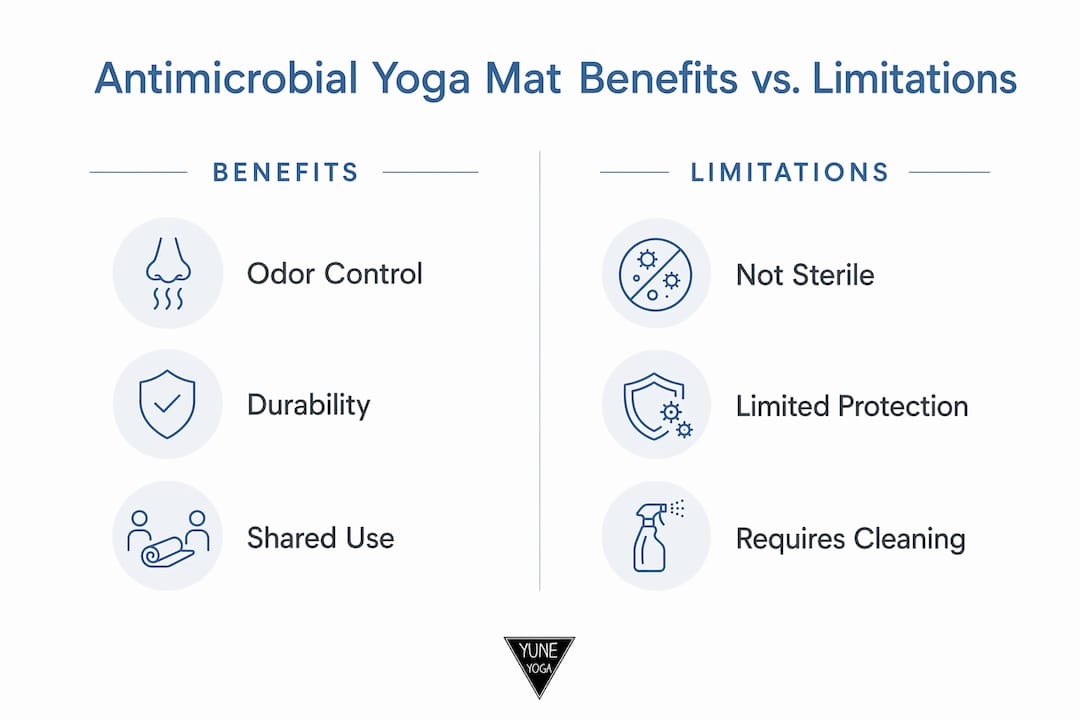
The primary benefit is odor control. Mats used frequently accumulate sweat, skin cells, and moisture. Without microbial resistance, bacteria break down organic matter and produce the familiar sour smell. Antimicrobial properties slow that process, keeping mats fresher between cleanings.
Durability is a secondary benefit. Mold and mildew degrade mat materials over time, especially in foam-based mats. A mat that resists fungal growth holds its structure and grip longer. For practitioners who invest in a quality mat, antimicrobial properties can meaningfully extend usable life.
Shared-use settings benefit most. Studios and gyms where mats rotate between multiple practitioners see the highest microbial load. Antimicrobial mats in high-traffic settings slow bacterial growth between cleanings, reducing the odor and degradation that come with heavy use.
Limitations you need to understand
No mat is immune to contamination. Bacteria like Staphylococcus are commonly transmitted through sweat and thrive in moist, textured surfaces. An antimicrobial mat slows colonization; it does not eliminate it. Practitioners who skip cleaning because their mat is “antimicrobial” are misreading the label.
The EPA distinction is critical here. Antimicrobial claims on yoga mats cover product protection from microbes, not protection of the person using the mat. A mat that resists odor-causing bacteria does not protect you from skin infections or pathogen transmission.
| Feature | Antimicrobial mat | Standard mat |
|---|---|---|
| Odor resistance | Slows odor-causing bacterial growth | No built-in resistance |
| Mold and mildew protection | Resists fungal degradation | Vulnerable without frequent cleaning |
| Pathogen protection for users | Not provided | Not provided |
| Cleaning requirement | Still required after every use | Required after every use |
| Lifespan | Potentially longer with proper care | Shorter in high-use conditions |
Pro Tip: Treat the antimicrobial label as a hygiene assist, not a hygiene replacement. Your cleaning routine still determines how safe and fresh your mat stays.
How do antimicrobial yoga mats work to inhibit microbial growth?
The mechanism depends on whether the mat uses natural materials or synthetic treatments. Both approaches reduce microbial colonization, but through different pathways.
-
Moisture resistance creates an inhospitable surface. Natural materials like cork and dense rubber limit water absorption. Bacteria need moisture to multiply. A surface that dries quickly after use gives microbes less time and fewer resources to establish colonies.
-
Chemical barriers disrupt microbial cell functions. Synthetic antimicrobial additives in TPE and PU mats interfere with bacterial cell membranes or metabolic processes. The additive does not kill bacteria on contact the way a disinfectant does. Instead, it slows their ability to reproduce on the surface.
-
Ionic silver delivers continuous action. Unlike surface coatings that wear away, ionic silver embedded in fibers releases ions steadily over time. Silver ions bind to bacterial proteins and disrupt cell function at a structural level. This makes ionic silver mats the most durable antimicrobial option available.
-
Mat texture affects microbial buildup. Rough, open-cell textures trap sweat and skin cells in microscopic pockets. Smoother, closed-cell surfaces give bacteria fewer places to hide. Antimicrobial mats often combine texture design with chemical or natural resistance to address both factors.
-
Continuous versus temporary protection matters. Surface coatings applied after manufacturing degrade with cleaning and use. Integrated antimicrobial compounds, whether natural suberin or embedded silver ions, maintain their effect throughout the mat’s life. When comparing mats, ask whether the antimicrobial property is built into the material or applied as a finish.
How should you maintain and clean an antimicrobial yoga mat?
Antimicrobial properties reduce microbial growth between cleanings. They do not replace cleaning. A consistent maintenance routine is what actually keeps your mat hygienic.
-
Wipe down after every session. Sweat left on the mat gives bacteria a head start before the antimicrobial properties can slow their growth. A quick wipe with a damp cloth or mat spray immediately after practice removes the bulk of organic material.
-
Use EPA-registered disinfectants when deep cleaning. EPA-registered disinfectants with proper dwell time are the most effective option for bacterial reduction. Dwell time refers to how long the product must stay wet on the surface to work. Wiping it off immediately reduces effectiveness significantly.
-
Understand the limits of natural cleaners. Essential oils and vinegar-based sprays are popular, but they require long contact times to reduce bacteria meaningfully. In a quick post-practice wipe, they are less effective than EPA-registered products. They work better as a light refresh between deeper cleans. Yuneyoga’s guide to homemade mat cleaner recipes covers which natural options are worth using and how to apply them correctly.
-
Dry your mat completely before storing it. Storing a damp mat creates the exact conditions bacteria and fungi need to multiply. Hang the mat flat or roll it loosely in a ventilated space until fully dry. This single habit prevents more microbial growth than any antimicrobial material alone.
-
Match your cleaner to your mat material. Harsh chemical cleaners can degrade natural rubber and break down antimicrobial surface coatings. Check the manufacturer’s care instructions before using any new cleaning product. Yuneyoga’s step-by-step cleaning guide outlines material-specific approaches that protect both hygiene and mat integrity.
Key Takeaways
Antimicrobial yoga mats protect the mat from odor-causing microbes and extend product life, but they require consistent cleaning and proper drying to deliver real hygiene benefits.
| Point | Details |
|---|---|
| Antimicrobial means product protection | EPA guidance limits claims to mat protection, not user disease prevention. |
| Natural cork leads in passive resistance | Suberin in cork resists moisture and bacteria without chemical additives. |
| Ionic silver offers the longest-lasting protection | Embedded silver ions work continuously, unlike surface coatings that degrade. |
| Cleaning is still required every session | Bacteria like Staphylococcus colonize mats regardless of antimicrobial properties. |
| Drying prevents regrowth after cleaning | Storing a damp mat undoes the benefit of cleaning and antimicrobial materials. |
Why I think most practitioners misread the antimicrobial label
The antimicrobial label is one of the most misunderstood claims in yoga gear. Practitioners see it and assume the mat is doing the hygiene work for them. That assumption is wrong, and it leads to real problems.
What the label actually tells you is that the mat resists odor-causing microbes on its own surface. It says nothing about protecting you from skin infections, fungal transmission, or the bacteria your neighbor left behind in a studio class. The EPA is explicit on this point, and the distinction is not a technicality. It changes how you should use and clean the mat entirely.
My honest take is that antimicrobial mats are worth buying for one specific reason: they stay fresher longer between cleanings. If you practice daily and cannot always deep clean immediately after, a cork or ionic silver mat buys you time without the smell. That is a real, practical benefit.
Where practitioners go wrong is treating the antimicrobial property as a substitute for cleaning rather than a supplement to it. I have seen practitioners go weeks without cleaning a mat because it “doesn’t smell.” Odor absence is not the same as microbial absence. Staphylococcus does not announce itself with a smell before it causes a skin issue.
The practitioners who get the most from antimicrobial mats are the ones who still clean consistently. They use the mat’s properties to extend the window between deep cleans, not to skip cleaning altogether. That is the right mental model. Choose a mat with natural materials if eco-conscious practice matters to you. Choose ionic silver if you share your mat or practice in clinical settings. Then clean it anyway.
— Nicholas
Quality yoga mats built for hygienic practice at Yuneyoga
Choosing the right mat is the first step. Knowing how to care for it is the second.

Yuneyoga carries a curated range of yoga mats built from natural rubber, cork, and eco-friendly materials that align with both performance and hygiene goals. Each mat is selected with durability and clean practice in mind. Beyond the mats themselves, the Yuneyoga blog covers everything from the best mat cleaners for daily use to deep-clean routines that protect your mat’s antimicrobial properties over time. If you want a mat that supports a genuinely clean practice, Yuneyoga is a practical place to start.
FAQ
What does antimicrobial mean on a yoga mat?
Antimicrobial on a yoga mat means the mat is treated or made with materials that resist odor-causing bacteria, fungi, and mildew on its surface. Per EPA guidance, this claim covers product protection, not protection against human pathogens or disease transmission.
Are antimicrobial yoga mats worth it?
Antimicrobial mats are worth it if you practice frequently or share your mat, because they reduce odor buildup and extend mat life between cleanings. They do not replace routine cleaning after each session.
How do I clean an antimicrobial yoga mat?
Wipe the mat down after every use and deep clean with an EPA-registered disinfectant, allowing the product to sit for the full recommended dwell time before wiping. Always dry the mat completely before rolling or storing it.
Can bacteria still grow on an antimicrobial yoga mat?
Yes. Bacteria like Staphylococcus can still colonize antimicrobial mats, especially when the surface stays moist. Antimicrobial properties slow microbial growth; they do not eliminate it.
What is the most effective natural antimicrobial mat material?
Cork is the most effective natural antimicrobial mat material. Its suberin content creates a moisture-resistant, quick-drying surface that inhibits bacterial and fungal growth without chemical additives.


