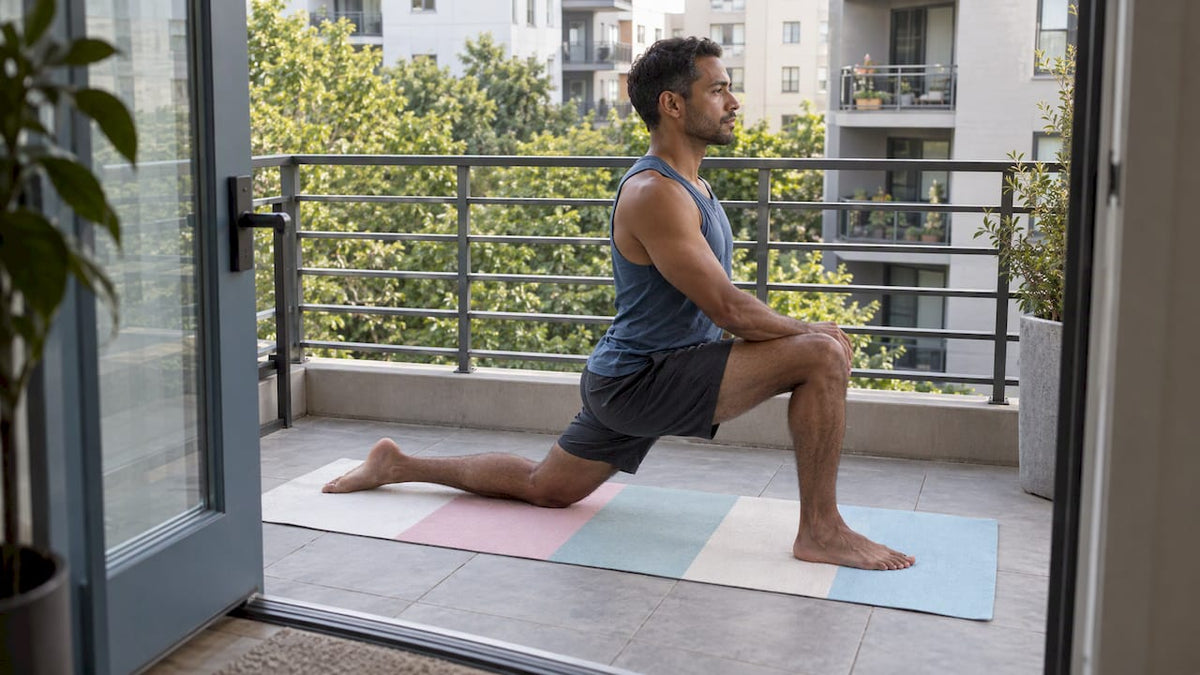
Article: Rubber Yoga Mat Discoloration: Causes, Cleaning, Prevention
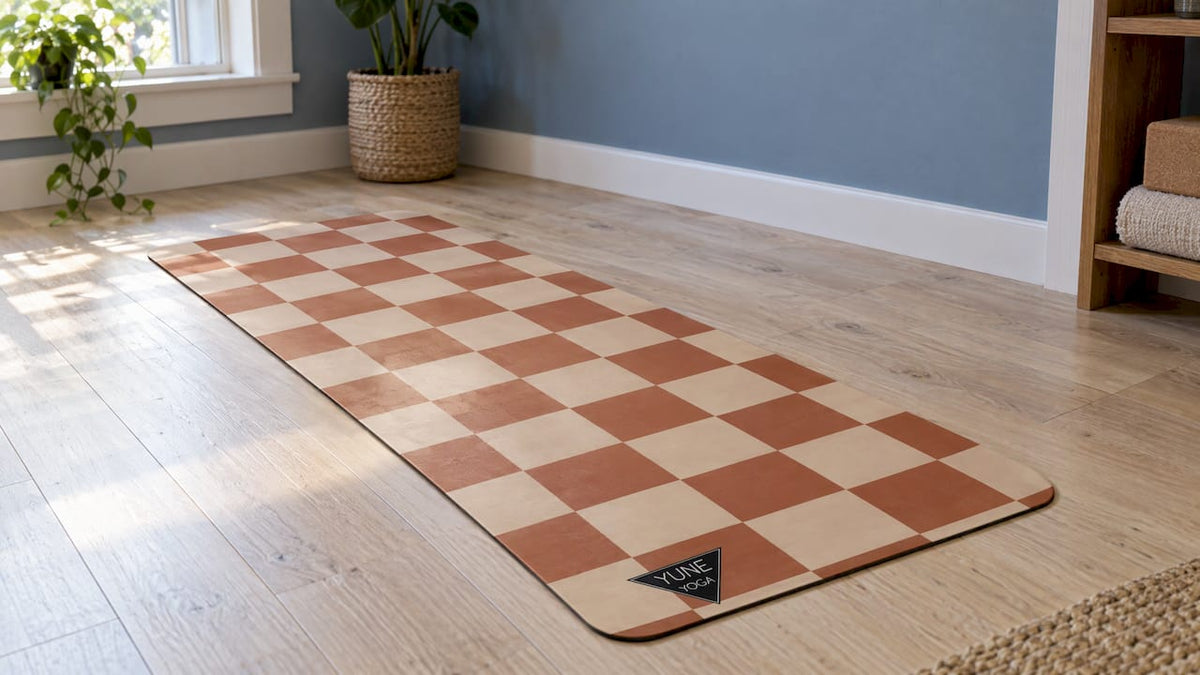
Rubber Yoga Mat Discoloration: Causes, Cleaning, Prevention
A natural rubber yoga mat that turns yellow, darker or blotchy is reacting to light, heat, air and the minerals naturally present in rubber. Most of the time it is a surface change, not a sign that the mat is ruined. Gentle cleaning removes dirt and sweat stains, sunlight and harsh cleaners are what speed the change along, and a few storage habits slow it a great deal. If you are choosing a mat and want one you can care for properly, our natural rubber yoga mats are built for exactly that kind of everyday use.
TL;DR
- Discoloration in natural rubber comes mainly from aging: heat, light, oxygen and the natural minerals and impurities in the rubber itself.
- A color shift on its own is cosmetic. Stickiness, crumbling, cracking or a chalky film are the signs to pay attention to.
- Clean with a few drops of dish soap in warm water, a soft cloth and full air drying. Skip bleach, alcohol and vinegar.
- Roll the mat with the rubber side inside, keep it out of sun, cars and radiators, and never roll it damp.
- Wipe it down every couple of uses so sweat and oils do not sit in the surface.
Table of Contents
- Why natural rubber changes color
- What the different marks usually mean
- Does discoloration mean the mat is damaged?
- How to clean stains and darker patches safely
- What not to put on a rubber mat
- How often to clean
- How to slow discoloration
- When a mat is at the end of its life
- Our view on rubber mats and their color
- Find a mat you will enjoy caring for
- FAQ
- Sources
Why natural rubber changes color
Natural rubber comes from tree sap, and it behaves like an organic material: it responds to its environment. A peer-reviewed review in PubMed Central on discoloration mechanisms of natural rubber explains that heat, light, radiation and mechanical force can break the long molecular chains that make up rubber. The visible result is surface change, including discoloration and a frosted look, and over a long time, changes in how firm or soft the material feels.
The same review points to a second cause. Natural rubber contains inorganic salts and impurities, such as potassium, sodium, calcium, magnesium, aluminum and trace metals, and these contribute to its color. Metal ions can speed up color change as the material ages. Rubber that is stored for a long time can also darken on its own, even with no light on it.
In plain terms, three things are going on in a mat at home:
- Light and heat age the surface. A mat left by a sunny window or in a warm car changes faster than one kept in a closet.
- The material itself ages. Even a mat in good care slowly warms in tone over months and years.
- Everything you add lands on a porous surface. Sweat, body oil, lotion and dirt sit in the texture of a rubber mat and can show up as dark or dull patches.
What the different marks usually mean
Not every color change has the same cause. Matching the mark to the likely reason tells you whether to clean, adjust your storage, or simply carry on practicing.
| What you see | Most likely cause | What to do |
|---|---|---|
| Even yellowing or warmer tone across the mat | Normal aging from light, heat and time | Nothing needed. Improve storage to slow it. |
| Darker patches where hands and feet land | Sweat, skin oil and dirt in the texture | Spot clean with mild soapy water. |
| Lighter or faded band along one edge or the top | Sun hitting the exposed part of a rolled or leaning mat | Roll with the rubber side inside and keep it away from windows. |
| Dull, whitish, frosted look | Surface aging, a change the review above describes | Wipe gently and dry fully. |
| Dark spots that stay after drying | Moisture trapped in a rolled mat, or a residue | Clean, then dry flat and unrolled. |
| Sticky, tacky or crumbling spots | Advanced breakdown or contact with a strong solvent or oil | Stop using strong cleaners and review your care routine. |
The first rows are cosmetic. A mat that looks a little more golden than the day you unrolled it still grips, still cushions and still does its job. The last row is the one to take seriously, because texture changes tell you more than color does.
Does discoloration mean the mat is damaged?
Usually it does not. The research behind the review describes discoloration as one visible sign of environmental aging, so it is closely linked to a mat’s age and its exposure, not to a defect. A mat that has been used for a year and has warmed slightly in tone is behaving as a natural material would.
The practical question is whether the surface still feels right. Run a hand over the mat. If it is still firm, grippy and even, the color is a cosmetic matter. If sections feel hard, brittle, slick or sticky, that is physical aging and worth acting on, mostly by correcting how the mat is stored and cleaned so the rest of it stays in good shape.

How to clean stains and darker patches safely
The goal is to remove sweat, oil and dirt without stripping the surface. Wirecutter’s guide to cleaning a yoga mat quotes a spokesperson from the American Cleaning Institute with a simple method for stubborn marks, and it works well for rubber:
- Mix the solution. Stir two to four drops of dish soap into one cup of warm water and put it in a spray bottle, or dip a cloth into it.
- Apply it to the soiled area. Spray the spot instead of soaking the whole mat.
- Scrub gently. Use a soft cloth and light pressure. A stiff brush roughens the surface.
- Wipe with a damp cloth. Take off the soap so no film is left to attract dirt.
- Air dry completely. Lay the mat flat, then let it dry before you roll it.
That is a spot treatment. For a whole-mat refresh, the same mild solution on a cloth, wiped across both sides, works the same way. Our own step-by-step guide to cleaning a natural rubber yoga mat without ruining it walks through what to wipe with, how to dry it and when a deeper clean makes sense.
Where each step tends to go wrong
- Too much water. Soaking or submerging a rubber mat leaves moisture in the material, which is how dark, damp-looking spots start. Use a damp cloth, not a bath.
- Too much soap. A few drops is the point. Extra soap leaves residue that holds dirt and dulls the surface.
- Rolling too soon. A mat that feels dry on top can still hold moisture below the surface. Give it extra time before rolling.
- Scrubbing hard. Aggressive scrubbing can make a localized patch look different from the rest of the mat. Light, patient passes do more.
If you want a ready-made alternative to a homemade spray, we cover the options in our guide to the best cleaner for yoga mats, and our DIY cleaner recipes for mild mixes that suit rubber.
What not to put on a rubber mat
Most lasting color problems come from cleaning too hard, not from practicing too much. Wirecutter notes that harsh disinfectants such as bleach and alcohol have the potential to degrade a mat over time, and that vinegar’s acidity can too. It also notes that disinfectants can absorb into a porous mat, so anything you use should be safe for skin contact, since your hands and feet will be on it.
In practice, keep these away from natural rubber:
- Bleach. It is the most common cause of a sudden, uneven pale or yellow patch. If it has already happened, our page on what to do after bleach touches a yoga mat explains the next steps and gentler options.
- Rubbing alcohol and strong sanitizers. They dry the surface and can leave it dull.
- Vinegar at full strength. Its acidity is a risk to the material over repeated use.
- Petroleum-based solvents and heavy oils. Strong essential oils and solvent-based products can leave marks and make the surface slippery, which is also a safety problem on the mat.
- Machine washing, hoses and dryers. Heat and soaking are the two things rubber handles least well.
Do you need to disinfect at all? Erica Hartmann, an assistant professor of civil and environmental engineering at Northwestern University, told Wirecutter that microbes are everywhere and a personal mat does not need to be sterile to stay healthy. For a mat only you use, regular gentle cleaning is enough, and that is also the approach most kind to the color.
How often to clean
Wirecutter’s experts recommend wiping a mat down at least every couple of uses. The same guide notes that organisms found on gym equipment, including the fungus behind athlete’s foot and ringworm, the virus behind plantar warts, Staphylococcus aureus and E. coli, can transfer onto yoga mats. A quick wipe keeps sweat and oils from settling into the surface, which also means fewer dark patches later.
A simple rhythm:
- After sweaty sessions: wipe with a barely damp cloth and let the mat air dry unrolled.
- Every couple of uses: wipe both sides with the mild dish soap solution above.
- When the mat looks dull or smells: do a full gentle clean, see our guide to deep cleaning a yoga mat, and dry it flat.
If you take your mat to classes, it also helps to read our notes on studio yoga mat hygiene for shared and personal mats.
How to slow discoloration
Since the research ties color change to heat, light and time, prevention is mostly about where the mat lives.
- Keep it out of direct sun. Do not leave it on a balcony, by a bright window or on a car seat. Light is one of the main drivers of surface aging in rubber.
- Avoid heat. Radiators, heating vents and a closed car in summer all speed up aging. A cool, dry spot is best.
- Roll it with the rubber side inside when you carry or store it. This shields the working surface if light gets to it.
- Dry before you roll. A damp mat rolled up traps moisture against itself, and that is a common route to spots.
- Wipe off sweat and lotion. Oils left sitting are easier to remove today than after a week.
- Do not lean it in a sunny corner. Leaning leaves one strip exposed, which is how uneven fading appears.
- Use a towel for very sweaty practice. A yoga towel takes the sweat, so less of it reaches the rubber. Our yoga clothes and accessories collection includes towels and straps for this.
If you travel, a mat that folds and fits in a bag is easier to keep out of a hot trunk or a sunny hotel windowsill, because you can carry it with you instead of leaving it somewhere warm.
When a mat is at the end of its life
Color alone is not a reason to replace a mat. Consider it when the surface itself has changed: it feels hard or brittle, crumbles in small pieces, cracks along folds, has a persistent tacky patch, or no longer grips as it did. Those are the symptoms of the material aging that the review describes, and a mat in that state no longer supports your practice as well.
Picking a new one is a good moment to choose with care in mind. Choose a surface that suits how you practice, keep it away from the conditions above, and it will keep looking and feeling good for far longer.
Our view on rubber mats and their color
We make and sell natural rubber mats because we like how they feel and how they are made. They are an organic material, and that is exactly why they respond to light, heat and time.
The way to think about color is as a record of how the mat has lived. A mat you roll with the rubber side in, wipe with a few drops of dish soap and dry flat will look better for longer than one left in a sunny hallway. None of that takes special products or much time.
Our advice is the same whichever mat you own: clean gently, dry fully, store cool and out of the sun. Our blog has step-by-step care guides for each of those, and our natural rubber mats, including the checker and stripe patterns, are designed for home practice and for travel.
Nicholas
Find a mat you will enjoy caring for
If your current mat has aged past the point of cleaning, or you want a second one for travel, take a look at our range of natural rubber, eco and foldable yoga mats. The Checker Pattern Brown, Checker Pattern Green and Stripe Pattern Black natural rubber mats are good places to start, and the full selection is on our shop.

FAQ
Why is my natural rubber yoga mat turning yellow?
Yellowing is usually the rubber aging. Light, heat and the natural minerals and impurities in the rubber all contribute to color change, according to a peer-reviewed review of natural rubber discoloration. Keeping the mat out of sun and heat slows it down. If the mat still feels firm and grippy, the color is cosmetic.
Can I get discoloration out of a rubber mat?
Dark patches caused by sweat, oil and dirt often lift with a few drops of dish soap in a cup of warm water, a soft cloth, a damp wipe and full air drying. Aging-related yellowing is part of the material and usually does not reverse. Avoid bleach, which can add uneven pale marks of its own.
Is it safe to clean a rubber mat with vinegar or alcohol?
It is better to avoid both. Wirecutter notes that bleach and alcohol can degrade a mat over time and that vinegar’s acidity can too. Mild dish soap and water do the job for regular cleaning and are kinder to the surface.
Does sunlight discolor a rubber yoga mat?
Yes, light is one of the causes of rubber aging named in the research, and heat adds to it. Store the mat rolled with the rubber side inside, away from windows, radiators and hot cars, and avoid leaving it in sun between sessions.
When should I replace a discolored mat?
Replace it when the texture changes, not just the color. A mat that feels hard, brittle, sticky or crumbly, or that no longer grips, has aged beyond cleaning. A mat that has simply warmed in color but still feels even and grippy can keep going.
Sources
- Discoloration Mechanisms of Natural Rubber and Its Control (PubMed Central)
- How to Clean a Yoga Mat (Wirecutter)