Balcony Yoga Mat: How to Choose One That Grips and Lasts
The best balcony yoga mat is a mat with a true non-slip grip on both sides, enough cushioning for a hard floor, and a material you can wipe, dry in the shade and roll up after every session. A balcony is tougher on a mat than a living room: the floor is rough or slick, the sun is strong and the air is damp at night. A natural rubber or eco-friendly mat with a grippy base handles that well, as long as you treat the space and the mat as a pair. Below you will find how to judge grip, thickness and material, how to prepare the floor, and how to look after the mat so it keeps its feel for years.
TL;DR
- Look for two kinds of grip: the top surface for your hands and feet, and the underside for the floor. A balcony tests the underside most.
- Pick 4 to 5 mm of cushioning for concrete, tile or wood: enough for knees and wrists, still stable under your feet.
- Natural rubber gives excellent traction. Keep it out of long, direct sun between sessions, and avoid it if you have a latex allergy.
- Wipe the mat after use, dry it fully in the shade, then roll it. Drying matters more than cleaning.
- A foldable travel mat is a smart balcony choice if you practice in several spots or carry your gear.
Table of Contents
- What a balcony does to a yoga mat
- Grip: separate the top from the bottom
- Thickness and size for a hard floor
- Materials compared for balcony use
- Sun, heat and moisture: protecting your mat
- Prepare the balcony floor
- Foldable and travel mats on a small balcony
- A quick checklist before you buy
- Our view: pick the mat for the place you practice
- Find your balcony mat
- FAQ
- Sources
What a balcony does to a yoga mat
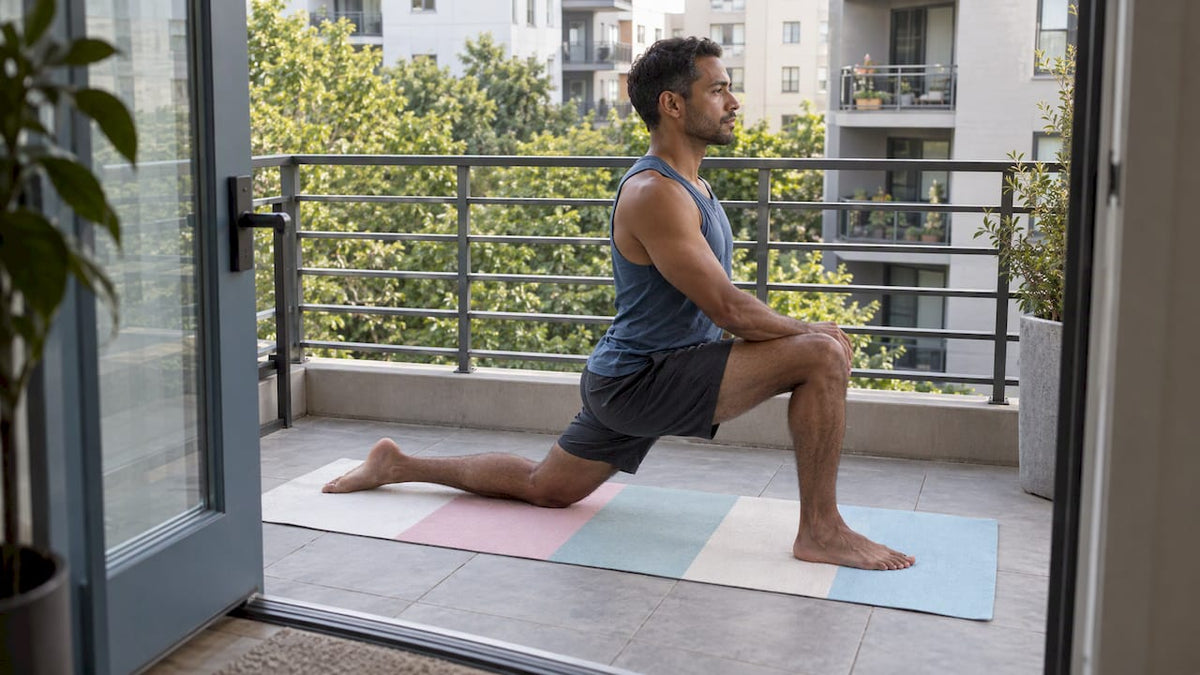
A studio floor is flat, clean and climate-controlled. A balcony is none of those. Concrete and tile can be gritty, decking has gaps and ridges, and a stone floor is cold in the morning and hot by noon. Add wind, morning dew, pollen and the occasional bird visitor, and your mat faces more variables in ten minutes than it would in a week indoors.
That is why Consumer Reports tested 17 mats on four measures: drying time, cushioning, floor grip and hand and foot grip. Its conclusion is useful for you: there is no single best mat, and the right one depends on the floor you practice on and the kind of grip you want. On a balcony, those four measures are exactly the ones that matter.
So start with your floor. Run your hand across it. Smooth glazed tile needs a mat with a tacky, high-friction base. Rough concrete needs more cushioning and a base that will not tear. Wood decking needs a mat that stays flat over the gaps between boards. Once you know the surface, the rest of the choice gets simple.

Grip: separate the top from the bottom
Most people say “my mat slips” without noticing there are two different problems. Surface slip is your hands and feet sliding on the top layer, usually because of sweat or damp. Base slip is the whole mat shifting on the floor. Mats.live describes the same split and suggests testing a mat on the exact surface you will use.
You can diagnose it in ten seconds. Press your hands into the mat and push it forward and sideways. YogicZone explains the logic: if the whole mat moves, the contact between underside and floor is the problem, and you need a non-slip underside, a rubber backing or an underlay. If only your hands slide across the top, you need better surface grip.
On a balcony, base grip usually decides everything. Watch for three signs once you are on the mat:
- Corners that curl up in a breeze or during transitions.
- Bunching when you step or jump back into a pose.
- Sliding under sideways force, such as in a wide lunge or warrior pose.
Natural rubber is a strong answer here. WIRED notes that natural rubber is a sustainable material with good traction, and the Los Angeles Times reports that rubber and cork mats perform better when wet, while PVC and TPE mats offer more moderate traction when dry. Morning dew or a sweaty summer session is just the situation where that matters.
Thickness and size for a hard floor
Standard mats run 3 to 6 mm thick, about 68 to 72 inches long and roughly 24 inches wide, according to the Los Angeles Times. Many practitioners settle on a mid-weight 4 to 5 mm mat, a compromise between comfort and a firm connection to the floor.
On concrete or tile, that middle range is the sweet spot. Under 3 mm, your knees and wrists feel every bit of grit. Over 6 mm, balance poses get wobbly, and a thick mat tends to ride up on an uneven surface. WIRED’s tester makes the same point from the other side: match thickness to what feels best under your feet, knees and wrists, and if the mat will live outdoors or double up for Pilates, choose one that can take the conditions.
If your balcony is narrow, measure before you buy. A mat that hangs over the edge of a tile or a drain slot will bunch and slide. Leave a few inches around the mat so you can step off safely, and keep it clear of the railing and any planters.
Materials compared for balcony use
Material decides how the mat reacts to sun, damp and heat. Here is how the common options compare, drawing on WIRED, the Los Angeles Times and the International Yoga Conference outdoor guide:
| Material | Grip | Balcony strengths | What to know |
|---|---|---|---|
| Natural rubber | Excellent, improves when damp | Sustainable, stable underfoot | Heavier (about 4 to 6 lbs); keep out of prolonged sun; not for latex allergies |
| Cork on a rubber base | Improves slightly damp | Antimicrobial surface, easy to wipe | Pricier and needs a little extra care |
| PVC | Moderate when dry | Very weather-resistant, easy to hose off | Not biodegradable |
| TPE | Moderate | Light (about 2 to 3 lbs), durable | Some soften in strong heat |
| Cotton or jute | Poor on slick floors | Soft feel | Absorbs moisture |
The International Yoga Conference also recommends closed-cell surfaces outdoors. They do not soak up moisture, sweat or soil, which makes them easier to wipe clean. For a deeper look at how each material behaves, our guides on yoga mat materials and choosing a mat for outdoor use go through the trade-offs in more detail.
For most balcony practitioners who care about grip and sustainability, natural rubber is the first material to consider. One safety point: natural rubber is made from latex, so if you have a latex allergy, talk to your doctor or allergist before using one.
Sun, heat and moisture: protecting your mat
Sunlight is the real balcony variable. WIRED’s tester warns that prolonged exposure to heat or sunlight dries out and damages natural rubber mats, and that a mat should never be left baking in a hot car. The sensible habit is simple: practice in the sun if you like, but do not leave the mat lying there afterward.
A practical routine looks like this:
- Practice in the shade or at the cooler ends of the day. Early morning and early evening are kinder to both you and the mat. Hot tile can also burn bare feet by midday.
- Shake off grit. Loose sand and pollen scratch the surface and work into the grip texture.
- Wipe both sides. A damp cloth or a cleaner suited to the material is enough. Spray cleaner onto a towel, never directly onto the mat, as WIRED advises.
- Dry fully in the shade. Still Stride suggests drying in the shade rather than in hot sun before storing, and WIRED says to dry completely before rolling to prevent mildew.
- Roll and store indoors. Keep it somewhere cool and dry, away from windows and radiators.
Drying is the step people skip. A mat rolled up while damp traps moisture in a dark spiral, which is exactly where mildew starts. If your balcony is humid or shaded all day, give the mat extra time hanging over a chair or railing indoors before you roll it.
If you wear sunscreen for outdoor practice, it can leave a slick residue on the mat. We cover how to deal with sunscreen on a yoga mat, and our five-step cleaning guide walks through a full wash.
Prepare the balcony floor
A ten-minute setup makes any mat perform better. Sweep the floor, because a single pebble under a rubber mat leaves a dent and throws off your balance. Wipe away any damp patches, and check that the area is level, so you are not tilting toward a drain.
If the floor is very slick or very rough, add a layer underneath. Still Stride suggests a thin blanket, picnic rug, tarp or towel under the mat to keep the underside cleaner and drier and to add cushioning, as long as the layer lies flat and does not slide. A rubber-style anti-slip underlay, the kind sold for rugs, works on the same principle: it fixes base slip at the source. Whatever you choose, lay it flat and test it with the push test above before you move into standing poses.
It also helps to make the corner feel like a place you want to be. Clear the clutter, keep your water and towel within reach, and pick a sequence that suits the space. If you like to build a session around a theme, this guide to yoga poses by sign can give you a starting point for the day’s practice.
Foldable and travel mats on a small balcony
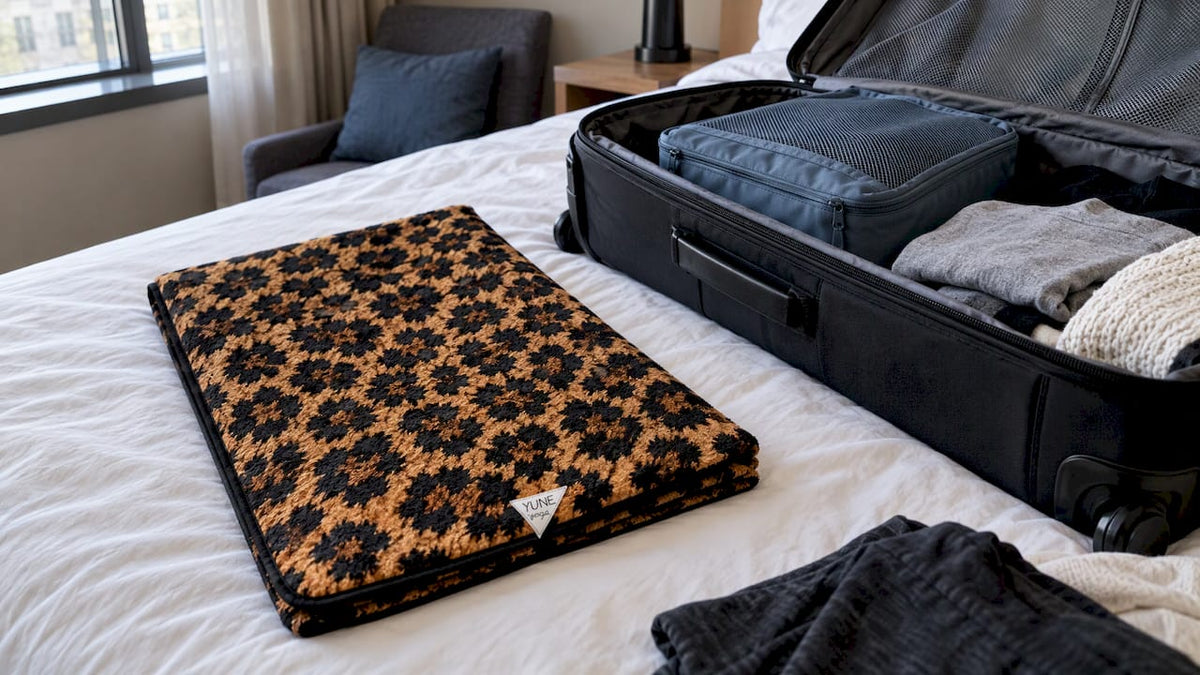
Small balconies and shared roof terraces change how you store the mat. A full-size mat that lives in a bedroom corner is a chore to carry out every time. A foldable travel mat solves this: it packs flat, slides into a cupboard or bag, and goes with you when you travel. Lighter materials also help if you carry the mat up stairs, and the International Yoga Conference puts TPE at roughly 2 to 3 lbs against 4 to 6 lbs for natural rubber.
For eco-conscious practitioners, the choice is between rubber, cork and recycled or lower-impact materials. WIRED points out that PVC is affordable and grippy but not biodegradable, while natural rubber is the more sustainable option. The International Yoga Conference highlights cork with a natural rubber base as one of the most practical outdoor combinations, because the cork surface handles dirt without holding odors and its grip improves when slightly damp.
Our Boulder Trekk Travel Yoga Mat and Basalt Trekk Travel Yoga Mat are foldable travel mats built for practice at home or on the road, which suits a balcony that doubles as a weekend or holiday spot. Folded mats should be stored loosely and fully dry, like any other.

A quick checklist before you buy
Use this list to compare any two mats:
- Floor match: Does the underside grip your balcony surface when you push it forward and sideways?
- Cushioning: Is it 4 to 5 mm, or thicker if your joints need it on concrete?
- Material: Is it closed-cell or otherwise wipeable, and does it suit your sun exposure?
- Weight and fold: Can you carry and store it easily?
- Care: Can you wipe it and dry it in minutes?
- Allergies: If you have a latex allergy, have you checked the material first?
If a mat passes these, it will serve you well outdoors. For a broader comparison, our article on the best yoga mat material for your practice goes deeper.
Our view: pick the mat for the place you practice
Most balcony problems come from asking one mat to do every job. A mat that feels perfect on a wooden studio floor can slide on glazed tile, and a mat that handles a sweaty class can suffer when it is left in direct sun. That is why we think about the place first.
At Yune Yoga we focus on natural rubber, eco-friendly and foldable travel mats, along with yoga towels and straps made from durable, sustainable materials. We design for home and travel use, so a balcony is a natural fit: a grippy mat for the floor, a towel for sweat, and a strap for stretching in a tight space.
Our advice is to choose a mat that grips the surface you actually have, give it a shaded, dry place to rest, and treat the care routine as part of the practice. Do that and a good mat will keep its feel session after session.
Nicholas
Find your balcony mat
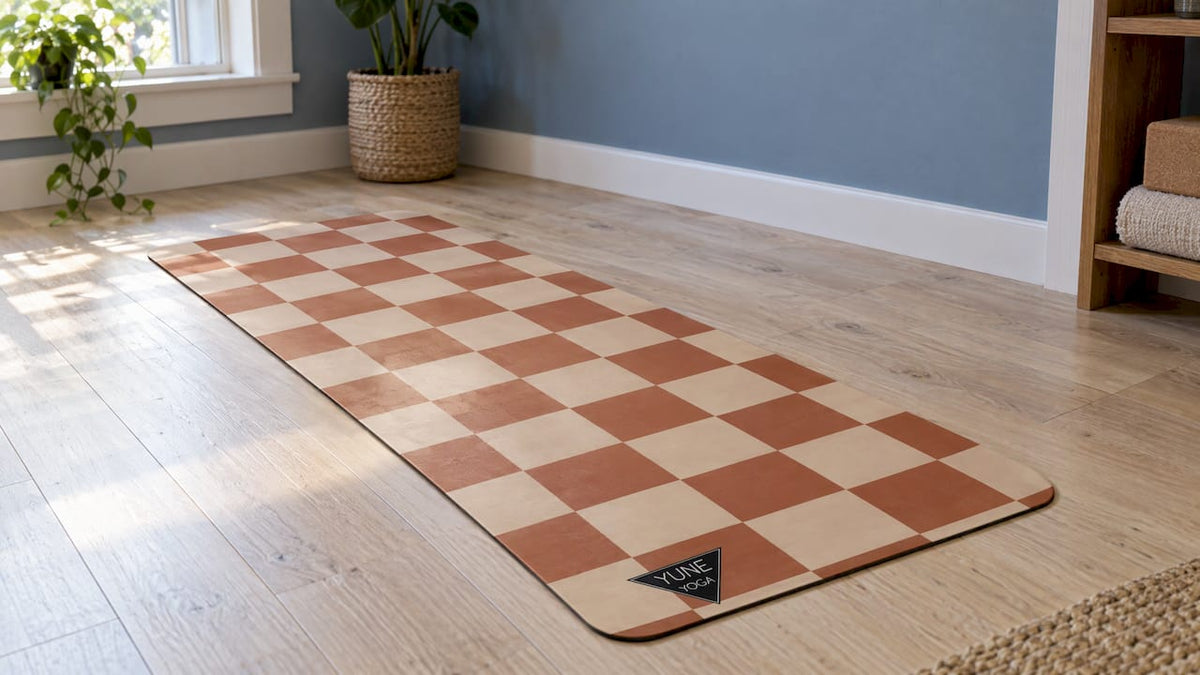
If you are ready to choose, start with our natural rubber and eco-friendly mats. The Malibu Yoga Mat is a non-slip, cushioned mat with a coastal-inspired design, and our full range of yoga mats, including foldable and custom options, lets you match the mat to your space.

A yoga towel and strap from our accessories collection round out an outdoor kit: the towel helps on warm days, and the strap makes stretching easier when space is tight.
FAQ
Can I leave my yoga mat on the balcony?
It is best not to. Prolonged heat and sunlight dry out and damage natural rubber, according to WIRED’s tester, and damp air encourages mildew. Bring the mat inside after each session, let it dry fully in the shade, then roll it and store it somewhere cool and dry.
What thickness is best for a balcony yoga mat?
A 4 to 5 mm mat suits most people on concrete, tile or decking. It cushions knees and wrists while keeping you steady in standing poses. The Los Angeles Times notes that many practitioners choose this mid-weight range as a balance between comfort and floor connection.
How do I stop my yoga mat from sliding on tile?
First work out where the slip comes from. If the whole mat moves when you push it, you need a grippier underside, a rubber backing or an anti-slip underlay. If only your hands slide, you need better surface grip, or a yoga towel if you sweat. Always keep the layer under the mat flat.
Is a foldable mat good enough for yoga on a balcony?
Yes. A foldable travel mat packs small, is easy to store in a tight home and goes with you on trips. Check that it is wide and long enough for your height, that the underside grips your floor, and that you dry it fully before folding.
Sources
- Best Yoga Mats, Consumer Reports
- Yoga Mats, Props, and WIRED-Tested Yoga Gear, WIRED
- Yoga Mat Guide: Choosing the Right Thickness, Grip, and More, Los Angeles Times
- Outdoor Yoga Mat: How to Choose the Right One, International Yoga Conference
- Practicing yoga outdoors with your mat, Still Stride
- Best Yoga Mats for Hot Yoga and Sweaty Hands, Mats.live
- Yoga Mat Keeps Slipping? 7 Causes And Practical Solutions, YogicZone