
Article: How to choose hot yoga mats for grip, comfort, and durability

How to choose hot yoga mats for grip, comfort, and durability
Key Takeaways
A good hot-yoga mat is one that stays dependable in your class, feels comfortable under your joints, and is practical to clean and carry. Focus on how it performs when damp, not just how it feels in a shop.
- Choose a surface that feels stable as sweat builds.
- Balance cushioning with a steady connection to the floor.
- Compare materials and textures, then check their care needs.
- Consider mat size and weight alongside comfort.
- Use a towel, clean the mat after class, and replace it when wear affects grip.
What makes a mat suitable for hot yoga
Heat and sweat can change how a mat feels beneath your hands and feet, so a dry-surface test only tells part of the story. The right choice depends on your movement, the studio floor, and how much cushioning feels comfortable. Rather than looking for one universal best option, pay attention to the conditions you actually practice in.
How heat and sweat affect traction
As a class warms up, perspiration can collect on the surface and make some mats feel slick. A mat’s grip may depend on its material and finish, and it can feel different once damp than it did at home. If possible, look for practical care and use guidance before buying rather than assuming every surface handles moisture the same way. A separate glass sauna door guide deals with heat in a different setting; for a mat, the useful question is simply how its surface feels during your own practice.
Why stability matters in standing poses
Standing poses make small shifts in traction easy to notice. If your feet slide or the mat bunches beneath you, you may spend more attention correcting your position than moving through the sequence. Consider whether the mat stays flat and feels secure under both hands and feet, especially during transitions.
Balancing cushioning with floor connection
Extra cushioning can feel welcome under knees and wrists, but a very soft or thick mat may feel less steady when you balance. A thin surface can offer a closer connection to the floor, though it may not suit everyone’s joints. Think about the poses you do most often and seek a comfortable, steady feel rather than choosing thickness by itself.
How studio floors and class styles affect your choice
A mat used on a smooth studio floor may feel different from one used on a slightly textured surface at home. Flowing sequences, long holds, and classes with frequent standing poses can also make different qualities more noticeable. Try to judge a mat in conditions similar to your usual class, and remember that room heat and humidity are separate from mat performance.
Compare mat materials and surface textures
Material affects feel, weight, care, and how a mat behaves when damp. Labels can help narrow the field, but they do not replace checking the surface and manufacturer’s instructions. A useful comparison looks at the entire mat, including its top layer, base, and texture.
Natural rubber for grip and stability
Natural rubber mats are often chosen for their substantial feel and traction, but grip varies by construction and finish. Check product details for care instructions and any material sensitivities that matter to you. If lower-impact materials are part of your priorities, you can also compare the terminology used in eco-friendly building materials; the relevant certifications and standards differ, so verify claims specifically for the mat.
PVC and other synthetic materials for durability
Synthetic mats come in different constructions, and there is no single feel or performance profile that applies to all of them. Consider how the surface responds to pressure, whether the mat is easy to wipe down, and what the maker recommends for cleaning. Durability is about how the actual mat holds up to your routine, not just the material name on a label.
Cork and other natural surfaces for sweaty practice
Cork and other natural surfaces can feel distinct underfoot, so try to understand whether the specific product is intended for damp practice and how it should be maintained. Natural materials are not automatically interchangeable, and their care needs can vary. Check what the surface is paired with underneath, since that construction affects the overall feel and portability.
Textured finishes versus smooth surfaces
Texture is a personal preference as well as a practical detail. Some people like a pronounced pattern beneath their palms; others prefer a smoother contact. Compare a few surface types in person if you can, and consider whether a towel will sit flat on top. For example, descriptions of combo mat construction can help you understand how a mat-and-top-layer setup differs from a single-surface mat, without assuming every layered design feels alike.
Choose the right thickness, size, and weight
A mat has to fit your body and your routine, not merely the dimensions of a product listing. Thickness affects cushioning and floor connection, while length, width, and weight determine how comfortably you can move and transport it. These details are easier to assess together than in isolation.
Match cushioning to your joints and practice
If your knees or wrists appreciate extra padding, try a thicker mat in poses where those areas bear weight. Then test a balance pose to see whether the added softness still feels secure. Guidance on yoga mat thickness can help you compare common trade-offs, but your own comfort and stability are the deciding factors.
Check length and width for unrestricted movement
Lie down and stretch out if you can, then check whether your hands and feet stay on the mat during familiar poses. A narrower mat may be easier to carry, but can feel limiting if you move widely from side to side. Confirm the listed dimensions rather than relying on a product photo, where scale can be difficult to judge.
Consider portability if you commute to class
Carrying a mat regularly changes what feels convenient. Weight, how easily it rolls or folds, and whether it fits in your bag can matter as much as the mat’s surface. Yune Yoga offers foldable travel mats for people who value a packable option; consider whether that kind of portability suits your usual commute and practice spaces.
Weigh comfort against storage and transport
A larger, more cushioned mat may be comfortable in a dedicated practice space but awkward to take on a bus or store in a small room. Before deciding, think through where the mat will live between classes and how often you will carry it. A quick comparison can make those everyday trade-offs clearer.
| Choice | What it may suit | What to check |
|---|---|---|
| Thinner mat | Easier packing and a closer floor feel | Whether it provides enough comfort for your joints |
| Thicker mat | More cushioning under pressure points | Whether balance poses still feel stable |
| Longer or wider mat | More room to move | Whether its size is practical to carry and store |
| Lighter or foldable mat | Regular commuting or travel | Whether the surface and feel suit your practice |
No single row is right for everyone. Use the table as a shortlist, then compare the options against the poses you do and the way you get to class.
Evaluate grip and sweat management
Grip is not a simple yes-or-no feature: the feel can change during a session, and your own perspiration and movement matter. Some practitioners prefer a towel on top of the mat, while others want to practice directly on the mat’s surface. Try to consider the whole setup, including how you will wash and dry it.
Look for traction that holds up when damp
Product descriptions may use terms such as non-slip or moisture-friendly, but it is useful to check what the maker says about damp conditions specifically. If you can test a sample, place your hands and feet on it and notice whether the grip feels consistent without forcing pressure. A surface that feels good dry may not feel the same after a few rounds of practice.
Decide whether a towel-compatible surface suits you
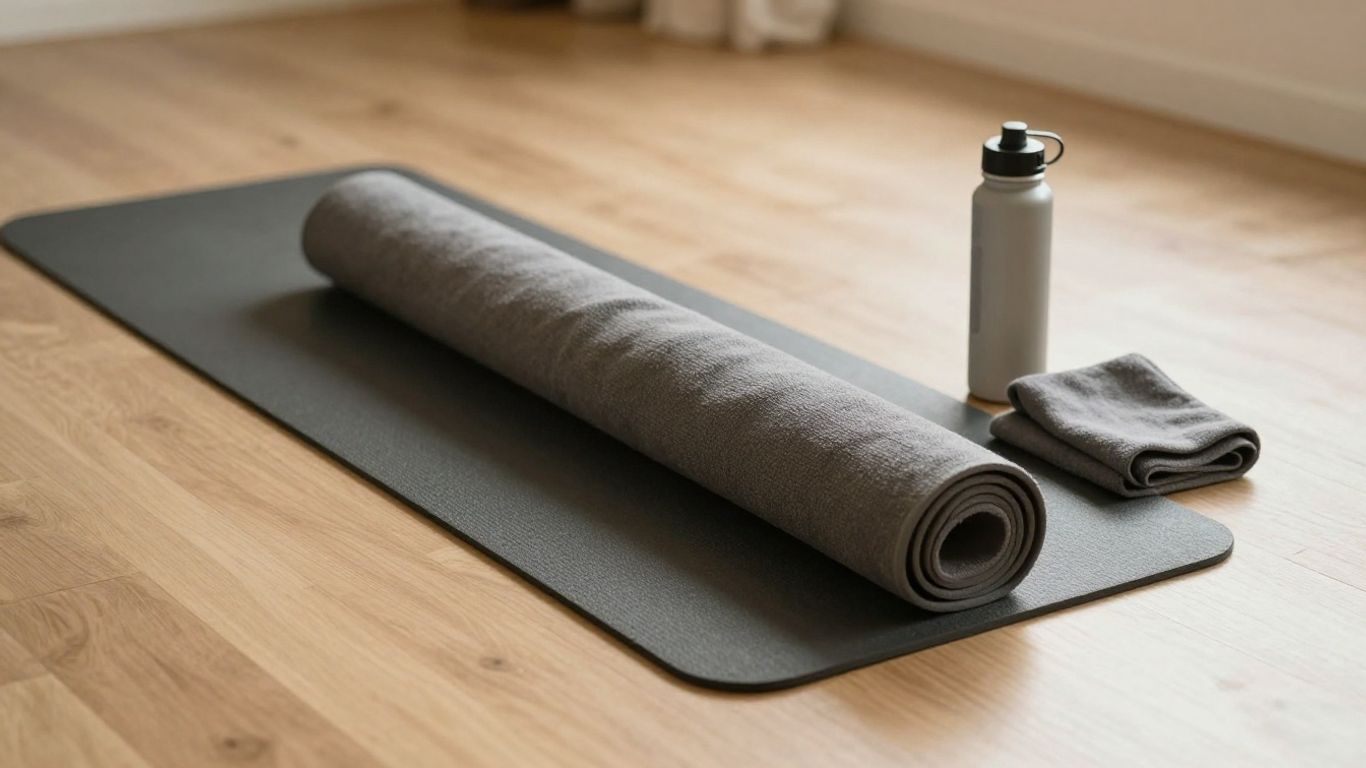
A yoga towel can provide a removable layer to manage sweat, but it should lie securely and feel comfortable during movement. Yune Yoga offers absorbent yoga towels, which may suit practitioners who prefer a separate towel as part of their setup. Product guidance about yoga mat towels can also help you compare size, material, and care considerations before choosing one.
Understand how grip can change during a session
At the start of class, your hands may be dry; later, the surface may feel different. Notice whether you tend to perspire enough to affect your footing and whether a towel changes the feel in a helpful way. Keep expectations realistic: no surface can account for every person, room, or sequence.
Test stability for transitions and balance poses
Try the movements that make you most aware of slipping: stepping between poses, shifting weight into your hands, and holding a standing balance. A short test can reveal whether the mat slides on the floor or whether your hands move on its surface. If a towel is part of your routine, test the whole setup rather than the mat alone.
Keep your mat clean and extend its lifespan
Sweat, skin oils, and dust accumulate with use, so basic care is part of choosing a mat. Cleaning instructions vary by material, and a method that suits one surface may not suit another. Read the manufacturer’s guidance before reaching for a strong cleaner or soaking the mat.
Follow care instructions for the material
Check the label or product instructions for recommended cleaning products and drying methods. Some mats need only a gentle wipe, while others have specific restrictions. When in doubt, avoid harsh chemicals and test any permitted cleaner on a small area first.
Remove sweat and residue after class
A prompt wipe-down helps remove surface residue before it settles. Use a clean cloth and the method recommended for your particular mat; do not assume that a household spray is suitable. If you use a towel, wash it as directed so it is ready for the next session.
Dry and store the mat to prevent odor
Give the mat time to dry fully before rolling or packing it away. Storing a damp mat in a closed bag can trap moisture and lead to unpleasant smells. Once dry, keep it in a clean place away from conditions that the manufacturer says may damage the material.
Recognize when wear affects safety or grip
Look for peeling, cracks, worn patches, or places where the surface has become noticeably slick. A mat that no longer lies flat or feels secure may be due for replacement, even if it still looks usable at a glance. Let function, rather than appearance alone, guide that decision.
Match a mat to your practice and budget
The best purchase is usually the one that fits your real schedule and priorities. A frequent hot-yoga student may value dependable traction and easy cleaning, while someone trying a first class may want a simple setup. Compare total cost over time, including any towel or replacement you expect to need.
Prioritize features for frequent hot yoga classes
For regular classes, consider how the mat feels when damp, how manageable it is to clean, and whether it holds up to repeated use. The Yune Yoga Hoth 6mm blue yoga mat is described as having non-slip grip and supportive cushioning; check its details against your own needs rather than treating any listed feature as a guarantee for every practice. A hot-yoga mat comparison can provide another way to organize the factors you want to weigh.
Choose a setup for occasional or beginner practice
If you are new to heated classes or go only now and then, start with a setup you can care for easily and carry without fuss. You might use a mat you already own with a towel, then decide after a few sessions which part of the setup you want to change. This gives you a chance to learn what feels slippery, uncomfortable, or inconvenient in your own routine.
Compare mat-only and mat-and-towel options
A mat alone can mean one less item to pack, while adding a towel gives you a separate layer to wash and replace. Think about how much you sweat, whether you prefer a softer top feel, and how you want to manage laundry after class. A short list of practical checks can keep the choice grounded:
- Test the mat or towel setup in movements you commonly practice.
- Check whether the towel stays in place during transitions.
- Compare cleaning instructions for each item.
- Include the cost of accessories in your budget.
After comparing those points, decide which setup fits your habits—not just the one with the longest feature list. The right choice should feel manageable before, during, and after class.
Check warranty, sustainability claims, and replacement costs
Read warranty terms and material claims closely, and ask what is covered rather than assuming every type of wear qualifies. Estimate how often you might replace the mat or towel based on your use and care. If you are researching other kinds of purchases too, separate guides to account-based marketing, gold-market analysis, and Dubai property due diligence address unrelated decisions; none is evidence about yoga mats, so keep this comparison focused on the product’s own details.
Conclusion
Choosing among hot yoga mats comes down to the way a surface feels when damp, the cushioning and space your practice calls for, and the effort involved in carrying and caring for it. Compare materials in context, test your preferred setup if possible, and let your own classes—not a label alone—show you which trade-offs work.
Frequently Asked Questions
What should I look for in a hot yoga mat?
Look for a surface that feels stable during your practice, including when damp, and consider cushioning, size, weight, and care instructions. Your preferred balance will depend on your movements and comfort.
Is a thicker mat better for hot yoga?
Not necessarily. Extra thickness may feel more comfortable under joints, while a thinner mat can feel steadier for balance. Try both if possible and consider the poses you practice most.
Do I need a towel for hot yoga?
Not everyone does, but a towel can provide a separate layer to manage sweat. If you use one, check that it lies securely and follow its washing instructions.
Are natural materials always grippier?
No. Grip varies with a mat’s specific material, construction, finish, and how it feels when damp. Product details and an in-person test are more useful than the material label alone.
How often should I clean my yoga mat?
Wipe it after use when appropriate for its material, and follow the manufacturer’s directions. Let it dry fully before storing it to help avoid trapped moisture and odor.
How can I tell if my mat is too small?
If your hands or feet regularly extend beyond its edges during familiar poses, or you have to limit your movement to stay on it, consider checking a longer or wider size.
When should I replace a yoga mat?
Consider replacing it when damage or worn areas affect its grip, stability, or ability to lie flat. Follow any care and replacement guidance from the maker.

