

Big yoga mat buying guide: how to choose the right size, thickness, and material
Key Takeaways
A larger yoga mat can create room to move, but it also takes up more floor and is harder to carry. Start with your body and practice space, then weigh cushioning, grip, materials, and storage.
- Choose extra length for more room beyond your head and feet; choose extra width when your arms or transitions reach beyond a standard mat.
- Measure the practice area, including space for movement around the mat, before ordering.
- Consider thickness alongside stability, grip, joint comfort, and the floor beneath you.
- Compare materials by their feel, care needs, and durability, rather than by one feature alone.
- Check packed size and weight if you plan to carry an oversized mat between home, studio, or travel.
What counts as a big yoga mat
There is no single cutoff that makes a mat “big.” The term usually describes a mat with more length, more width, or both, compared with a common studio-sized mat. The best way to judge the difference is to consider what extra space would change in your own practice.
Common width and length options
Many standard mats are roughly 68 inches long and 24 inches wide, though dimensions vary. Larger options may add length, width, or both, and a few formats are closer to a broad floor mat than a personal mat. Treat size labels as a starting point; the listed measurements matter more than the name.
| Mat format | Typical use | Main trade-off |
|---|---|---|
| Standard | General studio practice | Compact, but may feel short or narrow |
| Extra-long | More space beyond head and feet | Longer to roll and carry |
| Extra-wide | More room for arms and lateral movement | Takes up more floor width |
| Oversized | A broad practice area at home | Larger storage and transport needs |
These categories overlap, so compare the actual dimensions rather than assuming every extra-large mat has the same proportions. For a more detailed way to think about sizing, see this yoga mat size guide.
Extra-long mats versus extra-wide mats
Extra length is useful if your feet or head regularly extend beyond the mat in resting poses, or if you simply prefer more room at either end. Extra width helps when your arms reach outward in poses such as Warrior II, or when you like to transition without stepping off the surface. Some mats add both, but the bigger footprint may not be necessary if only one dimension feels limiting.
When an oversized mat is worth considering
A bigger surface can be welcome for home practice, especially if you move around a lot or want to avoid placing hands and feet on a bare floor during transitions. It can also suit a taller practitioner who finds a standard length restrictive. A broad mat may be less appealing if you share a small studio floor or carry your gear every day; the extra room is only useful if the mat fits the way you practice.
How to choose the right mat dimensions
The right dimensions depend on your reach, the movements you make, and the room where you practice. A mat should give you enough space to move without becoming an awkward object to store or transport. Before you shop, picture a few familiar poses rather than choosing by a size label alone.
Match the mat to your height and reach
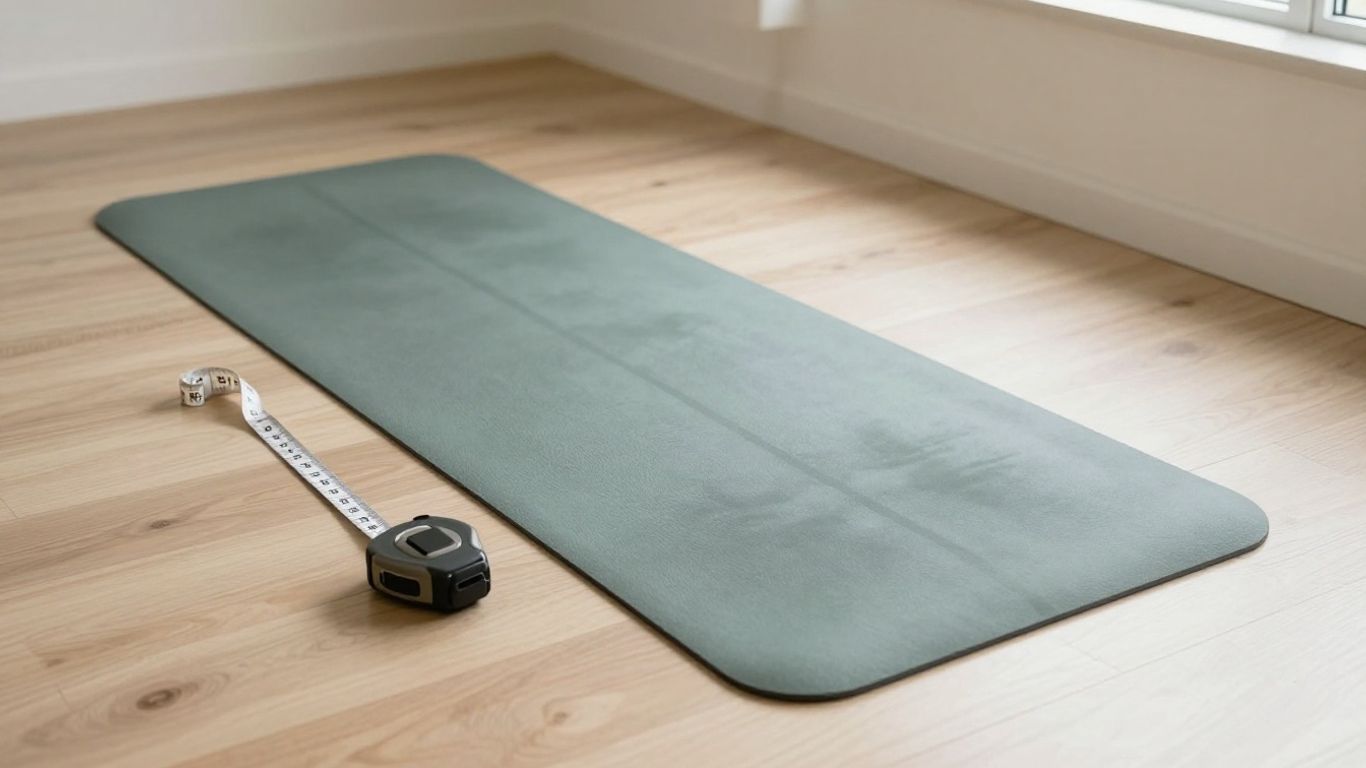
For length, lie down on the mat and check whether there is comfortable space beyond your head and feet. For width, consider how far your arms extend in wide poses and whether you often step sideways during a flow. A few extra inches may solve the problem; you may not need a very wide mat. For a broader discussion of dimensions and body fit, this mat sizing guide offers another useful reference.
Leave room for poses and transitions
The mat should accommodate the way you actually move, not only a still standing pose. Try mentally tracing your hands and feet through a familiar sequence: do you frequently land beside the mat, or is the surface already enough? A larger mat can reduce those interruptions, but it is worth separating a genuine movement need from the appeal of having more floor covered.
Measure your practice space before buying
Use painter’s tape or a few household objects to mark the proposed footprint on the floor. Then leave some clear space around it for stepping on and off, and for moving without bumping into furniture. A short check like this can prevent a mat that dominates the room. Before placing an order, a simple measuring routine helps:
- Measure the clear floor area, not just the room’s overall dimensions.
- Mark the mat’s length and width on the floor.
- Try a wide pose and a transition inside the marked area.
- Check where the rolled mat could be stored afterward.
If the marked outline feels cramped, consider a smaller size or a different orientation. A similar habit of checking the full decision before committing appears in this Dubai property buying guide, though the questions here are simply about floor space and fit.
Which thickness and surface feel to choose
A large mat still needs to feel steady underfoot. Extra area does not automatically mean extra cushioning, and thickness alone cannot tell you how a surface will grip or feel. Think about the style of practice, the floor, and the positions where you most want support.
Balance cushioning with stability
Thicker mats can feel softer under knees and wrists, while very cushioned surfaces may feel less steady in balancing poses. Thinner mats usually offer a closer connection to a firm floor, but may feel less forgiving during kneeling or seated work. Try to balance those preferences instead of choosing the thickest option by default; this yoga mat thickness guide can help frame the trade-offs.
Compare grip for dry and sweaty practices
Surface feel matters most when your hands or feet begin to slide. Texture, material, and the amount of moisture in your practice can all affect how secure a mat feels, so look for a surface suited to your usual conditions. If you sweat heavily, an absorbent towel is a separate accessory option; the mat itself should still be evaluated for its grip and care instructions. General packing choices can also vary, much like selecting sauna bathrobes for home or travel, but the surface needs of a mat are specific to movement and floor contact.
Consider joint comfort and floor type
A hard tile floor may make cushioning feel more noticeable than a carpeted surface. If your knees are sensitive, test a few kneeling positions or consider whether a folded towel can provide targeted padding without making the whole mat unstable. Readers comparing padding and steadiness can also consult this cushioning and stability guide. Price is one factor, but a gold market analysis is a reminder that value discussions depend on their own criteria; for a mat, weigh the feel and practical fit you will use regularly.
Big yoga mat materials and construction
A mat’s material affects its texture, flexibility, weight, and cleaning needs. The same material can also feel different depending on its surface finish and density. Decide first what matters most to you—grip, easy carrying, particular material preferences, or long-term wear—then compare specific mats on those points.
Compare natural rubber, PVC, and TPE
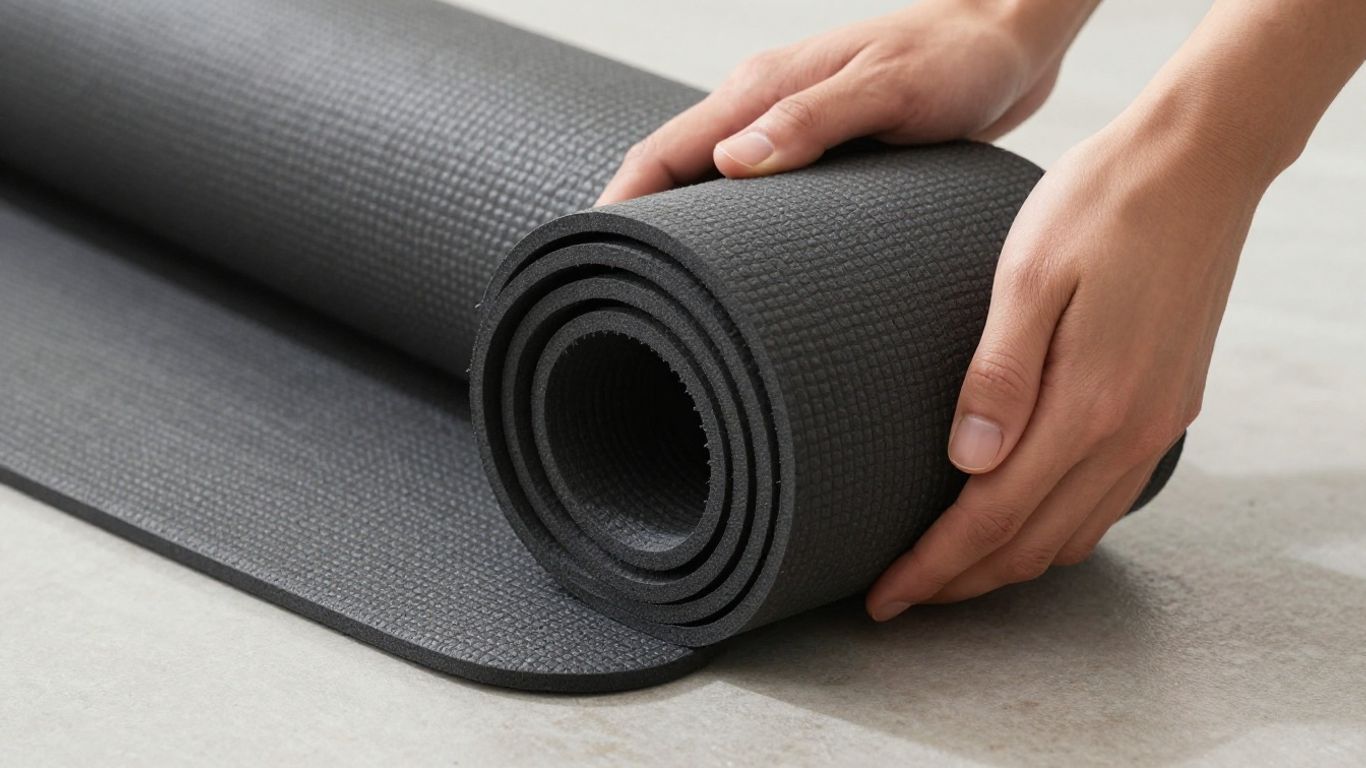
Natural rubber, PVC, and TPE are common material categories, but the label alone does not tell you exactly how a mat will feel or perform. Check the product details for any stated material sensitivities, care guidance, and construction information. If material sourcing is part of your decision, this overview of eco-friendly building materials offers a broader comparison of how material choices are considered in another setting.
Check texture, density, and edge finish
Run a hand across the surface, if you can, and look for a texture that feels comfortable rather than distracting. Density can affect how a mat compresses under pressure, while neat edges and consistent construction are practical details worth inspecting. When shopping online, close-up images and specific product descriptions can help, though they are not a substitute for trying a surface in person when that is possible.
Weigh material preferences against durability
A material that suits your preferences should also work with your routine. Consider how often you will carry the mat, how it will be cleaned, and whether you can let it dry fully before storage. A broad consumer comparison sometimes draws on the idea of matching a plan to a defined audience, as in an account-based marketing strategy; for a mat, the useful question is simply which materials fit your own use and care habits. Make the choice based on the combination of feel, maintenance, and expected use rather than a single label.
How to handle storage and portability
An oversized mat can be comfortable at home and inconvenient on the move. A larger roll may take more room in a closet, car, or studio locker, and its weight can make a short walk feel longer. Think through the full routine: carrying it, setting it down, cleaning it, and putting it away.
Check the mat’s weight and packed size
Look for the listed weight and rolled dimensions, if available, and compare them with the way you travel. A mat that fits beside your home storage area may still be awkward on public transit or during a walk to class. Extra width often increases the bulk even when the mat is not especially thick, so consider the packed form as carefully as the open surface.
Choose a carrying strap or storage solution
A strap or dedicated storage spot can make a large roll easier to manage, but first check that the mat can be secured without being bent or crushed. Yune Yoga offers foldable travel mats designed to be thin, light, and easy to pack, which may suit people who prioritize portability over an oversized home surface. Yune Yoga also offers durable yoga straps as part of its accessories, while absorbent yoga towels can be useful as a separate practice accessory. Compare large home-practice mats as another way to consider how an expanded surface fits a home setup.
Plan for home, studio, and travel use
A mat intended mostly for home can be chosen around room dimensions and comfort, while one carried to class needs to fit your transport routine. Yune Yoga offers absorbent yoga towels for a portable practice setup, and the brand also offers durable yoga straps. Yune Yoga’s foldable travel mats are described as thin, light, and easy to pack, a different priority from choosing the broadest possible practice area. If you switch between settings, decide which one matters most and make sure the compromise is realistic.
How to clean and maintain an oversized mat
A larger surface can take a little more time to clean and dry, so care is part of the ownership decision. Materials vary, and a method that suits one mat may not suit another. Start with the care label rather than assuming a general cleaning routine applies to every surface.
Follow the manufacturer’s care instructions
Check the product instructions for approved cleaners, water use, and any limits on soaking or scrubbing. Use a soft cloth when the guidance allows it, and avoid strong products unless the manufacturer says they are suitable. It is tempting to use the same quick routine each time, but material-specific directions are the safer reference.
Dry the mat fully before rolling it up
After cleaning, leave the mat open until both sides are dry. A larger mat may need more room and time to air out, especially if the surface is textured or the practice space is humid. Rolling it while damp can trap moisture, so check the underside as well before putting it away.
Store it flat or rolled without creasing
If you roll the mat, keep the roll even and avoid sharp bends that can leave permanent creases. A flat storage spot can work when there is enough room, while a loose roll is often more practical in a smaller home. Keep it away from excessive heat and direct sun if the care instructions advise against them, and make sure the storage area is dry.
Conclusion
The best big yoga mat is the one that gives you useful space without creating more trouble than it solves. Measure your floor, think through the poses that need extra room, and compare cushioning, grip, material, and packed size together. A little planning makes it easier to choose a mat that fits both your practice and your everyday routine.
Frequently Asked Questions
How much bigger is a big yoga mat than a standard mat?
There is no universal definition. Some larger mats add length, some add width, and some expand both, so compare the listed measurements with the space you need.
Is an extra-long mat better than an extra-wide one?
It depends on what feels limiting. Choose extra length if your head or feet reach the edges, and extra width if your arms or side-to-side movements need more room.
How do I know what mat length I need?
Lie down on a mat or mark a possible size on the floor, then check for comfortable space beyond your head and feet. Consider the poses you practice most often, too.
Does a thicker yoga mat feel less stable?
It can, particularly in balance poses, but feel varies with material and construction. Compare the cushioning you want with how firmly your feet connect to the floor.
What width should I choose for a yoga mat?
Choose a width that accommodates your arms and transitions without crowding your practice space. Measuring a sample footprint at home can make the decision clearer.
Are oversized yoga mats difficult to carry?
They can be bulkier and heavier than standard mats, depending on their dimensions and construction. Check the packed measurements and weight if you will carry yours regularly.
How should I store a large yoga mat?
Follow the care instructions, let the mat dry completely, and store it flat or in an even, loose roll. Avoid folding it sharply or storing it while damp.

