

How to choose the best yoga mat for grip
Key Takeaways
A grippy mat should feel steady in the poses you actually practice, not just look promising on a product page. Think about moisture, texture, cushioning, and how you’ll carry and care for it.
- Match the surface to how much you sweat and how dynamically you move.
- Test traction with the poses and hand conditions you encounter in practice.
- Balance grip with enough cushioning and stability for your joints and standing poses.
- Compare materials and finishes, then check how each mat should be cleaned and stored.
- Reassess grip as the mat wears; a towel can help manage sweat during practice.
What makes a yoga mat grippy
A yoga mat feels grippy when your hands and feet stay in place without making every transition feel sticky. That sensation comes from the surface, the material beneath it, and how those two respond to moisture. There isn’t one texture that suits every practice, so it helps to notice what makes you feel stable—and what gets in the way.
Surface texture and traction
A textured surface can give your palms and soles more to hold onto, while a smoother finish may feel comfortable when you shift between poses. Texture is not a guarantee of traction, though: small raised patterns and deeply grooved surfaces can feel very different under pressure. Try pressing your hand down and gently shifting it, rather than judging a mat by sight alone. The useful test is whether it feels secure without distracting you.
Material differences, from rubber to PVC
Materials affect both the feel of a mat and the way its surface behaves. Rubber, PVC, TPE, and cork each have different textures and care needs, and the names alone don’t tell you how grippy a particular finish will feel. For instance, the DY66 6mm yoga mat is described as having a textured, non-slip surface and supportive cushioning. Compare those stated features with your own priorities rather than assuming one material always wins.
How grip changes with moisture
Sweat can change how a surface feels, sometimes making a mat that seems secure at the start of class feel less dependable later. If your practice tends to get warm or vigorous, try to assess traction with slightly damp hands as well as dry ones. A towel can absorb moisture and provide another layer between you and the mat, but it also changes the surface you’re practicing on. Grip under real conditions matters more than a dry-hand test alone.
The trade-off between grip and ease of movement
A highly adhesive-feeling surface may steady your hands, but it can also make transitions feel less fluid. A mat that lets you glide too easily, on the other hand, may require more effort to hold positions. Try a few movements at different speeds and notice whether your palms stay put without catching uncomfortably. The best yoga mat for grip is the one that supports control while still letting you move naturally.
Match mat grip to your yoga practice
The right level of traction depends on what happens during your practice, not just the style name on a class schedule. A steady standing sequence, a warm flow, and a quiet floor-based session place different demands on a mat. Think about the poses you return to most often and the conditions where you usually practice.
Grip needs for hot yoga
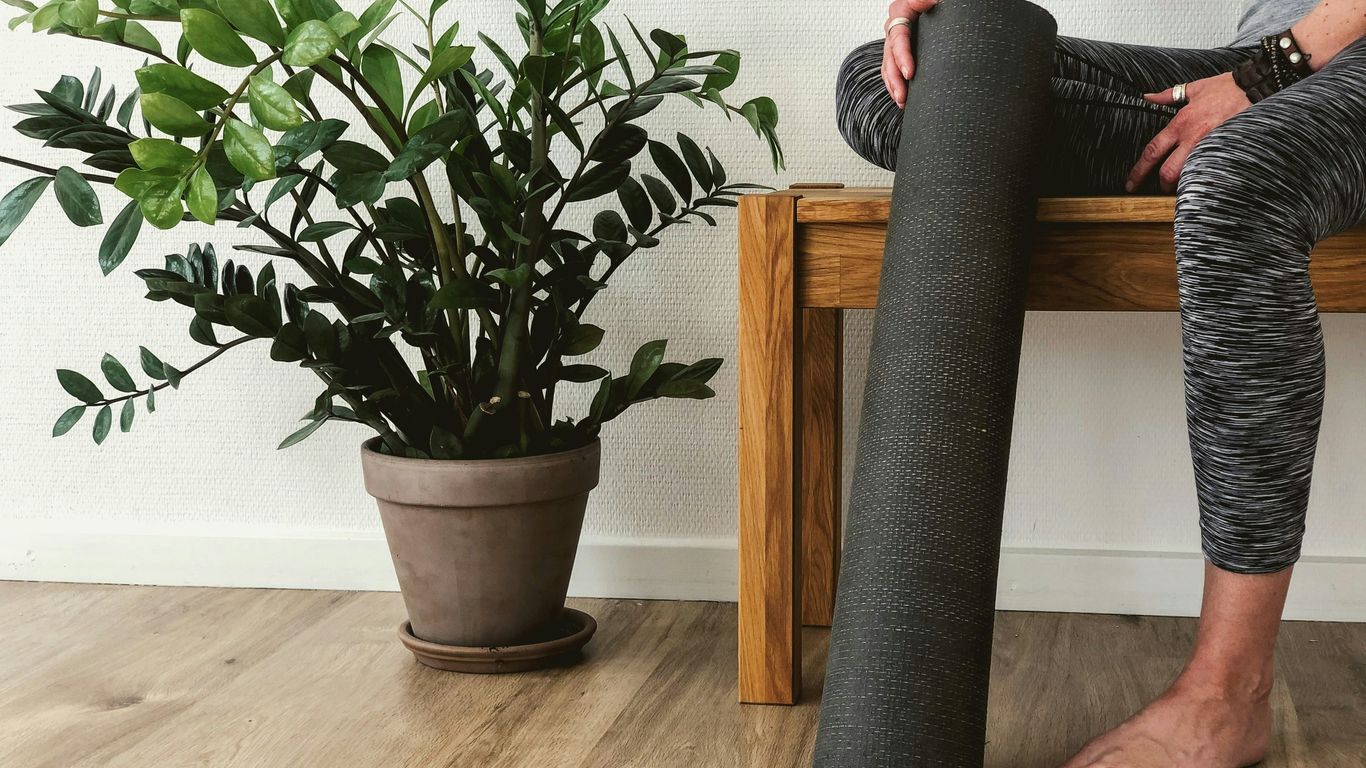
Heat and perspiration can make traction less predictable, so pay attention to how a mat behaves when your hands are damp. If you regularly practice in warm conditions, try a towel over the surface and check whether the combination stays in place. The Bear Creek Juniper 6mm yoga mat is described as having sweat-responsive non-slip grip; that specific feature may be relevant if sweat is part of your practice. Even so, testing the surface yourself is the clearest way to know how it feels.
Stability for flowing and standing sequences
In flowing sequences, your hands and feet need to stay planted through changes in direction, while standing poses ask for a stable base. A mat that feels too soft or slippery can make those transitions distracting. Try holding a familiar lunge or downward-facing dog and notice whether your feet drift or your hands need constant adjustment. A dependable surface should let you focus on the movement rather than repeatedly resetting your stance.
Cushioning and traction for restorative practice
Restorative practice may involve more seated or reclined poses, so cushioning can matter as much as a tacky feel. Extra softness can be pleasant under pressure points, though a very yielding surface may feel less stable when you stand. If you spend much of a session on the floor, consider where support is most useful and whether your mat stays comfortable over time. Grip still matters when changing positions, even if speed is not the point.
Choosing a mat for home or studio use
Where you practice affects the practical side of choosing a mat. A mat that stays at home can be heavier or wider than one you carry to class, and a shared studio space may make easy cleaning a priority. Before you travel to a class, it can be sensible to confirm the studio’s schedule and current opening hours, especially around holidays. For a home-and-studio option, the Yune Yoga Rock Mat is described as having 6mm cushioning and a textured, non-slip surface.
Compare materials and surface finishes
Material labels offer a starting point, but the surface finish is what your hands and feet actually meet. Two mats made from the same broad material can still feel different, so consider product details alongside an in-person test. The table below is a quick way to organize the questions worth asking before you buy.
Natural rubber and polyurethane
Natural rubber and polyurethane are often discussed as mat materials, but the name of a material does not settle whether a surface will feel right for you. Look for specific information about texture, moisture response, and care instead of relying on a general label. If you have sensitivities or other material preferences, check the product’s stated composition before making a choice. Then test how the finish feels when your palms press and shift against it.
TPE and PVC
TPE and PVC mats can vary in surface pattern, density, and feel, so treat each mat as its own option. A listed thickness gives some information about cushioning, but it cannot tell you whether the surface will grip your hands. For example, the XE54 6mm mat is described as having a textured surface, cushioned support, and a moisture-resistant finish. Those are concrete details to compare with the conditions in which you practice.
Cork and other textured surfaces
Cork and other textured finishes may appeal if you prefer a surface you can feel beneath your hands. Texture can help you judge where your palm is placed, but it is worth checking whether the pattern feels comfortable against your skin and whether it affects transitions. If possible, press down with both a flat palm and your fingertips. A short test can reveal more than a photograph or material name.
Coatings that improve traction
Some mats use a surface finish or coating to change how traction feels. Ask whether the finish requires a break-in period or a particular cleaning method, and avoid assuming that a coating will stay unchanged indefinitely. Compare the manufacturer’s care directions with your routine before you buy. These points matter because the most appealing surface on day one is only useful if it remains practical to maintain.
A compact comparison can help separate the things a product label tells you from the things you still need to test:
| Material or finish | What to notice | Useful question |
|---|---|---|
| Natural rubber | Surface feel and stated care needs | Does it feel secure under a damp palm? |
| Polyurethane finish | Smoothness and traction in transitions | Can you shift without sticking? |
| TPE | Texture, cushioning, and stated composition | Does the surface suit your usual poses? |
| PVC | Pattern, firmness, and cleaning directions | Does the grip stay comfortable under pressure? |
Use the table as a prompt, not a ranking. The material name narrows the questions; your practice and a hands-on test provide the answers.
Choose the right thickness and texture
Thickness, texture, and portability work together: a mat can feel supportive in one setting and cumbersome in another. More cushioning may feel welcome on a hard floor, while a firmer base can feel steadier for balancing. Consider where the mat will live and how often you will carry it before settling on a surface that feels good in a brief test.
Balancing cushioning with stability
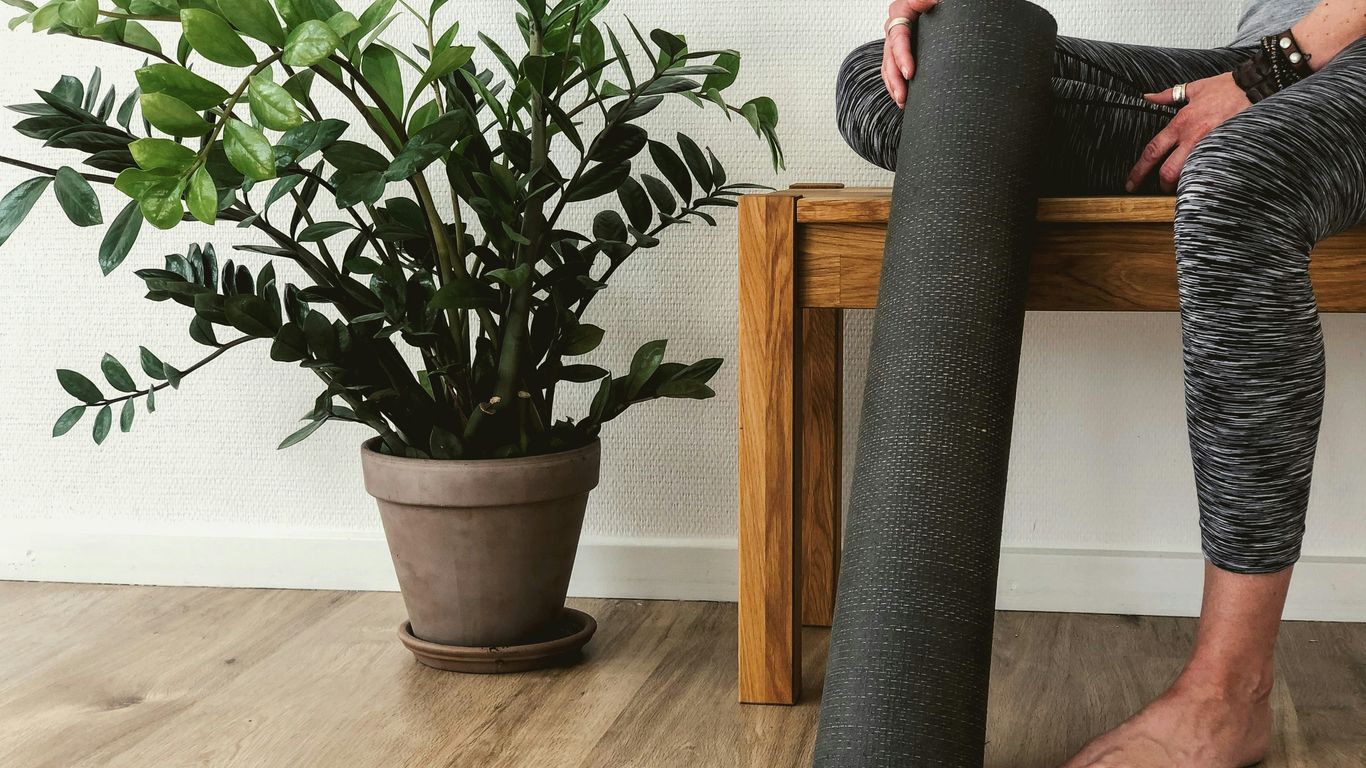
Cushioning can make kneeling and seated poses more comfortable, but a very soft mat may feel less stable when you stand or balance. Instead of chasing a particular thickness, pay attention to whether your joints feel supported and whether your feet can press firmly into the floor. Test both a kneeling pose and a standing pose if you can. The right balance is personal, and it may depend on the floor where you practice.
Raised texture versus smooth surfaces
Raised texture gives you something distinct to feel beneath your palms, while a smooth surface may make some transitions easier. Neither is automatically grippier for everyone. If the surface has a pronounced pattern, check that it does not feel uncomfortable under your knees or feet; if it is smooth, see how it responds to damp hands. The feel of the surface in motion is more useful than its appearance alone.
Mat weight, portability, and storage
Weight matters when your practice takes you to a studio, a park, or somewhere you have to walk with your gear. A lighter mat is easier to carry, while a thicker one may take up more space when rolled or stored. If portability is a priority, think through the whole routine: where you’ll keep it, how you’ll transport it, and whether you have room to let it dry after cleaning. A practical mat is one you will actually want to bring along.
Checking dimensions for your practice
Length and width affect how much room you have to stretch out, especially if you move broadly or practice in a compact space. Check the measurements against your height and the area where you usually practice. In a studio, also consider whether a wider mat will fit comfortably beside other people. Dimensions may seem like a small detail, but they can shape how relaxed or cramped a session feels.
Test a mat before you buy
A brief hands-on test can answer questions that a product description cannot. Use familiar movements, try more than one hand condition, and take a moment to notice whether the mat shifts beneath you. If you are comparing options online, focused yoga mat search terms can help you find details such as surface texture, thickness, and cleaning guidance; still, look for product information rather than relying on a search phrase alone.
Try familiar poses on the surface
Start with poses you know well, since your body can tell you when something feels unusually slippery or sticky. Move between a standing pose, a lunge, and a hands-down position, then pause and notice whether you are making small corrections to stay in place. A few minutes is enough to spot obvious discomfort, though it cannot predict every long-term change. Try to imagine how the mat will feel in the class or room where you usually practice.
Check traction with dry and damp hands
If you can, compare the surface with dry hands and slightly damp hands. Do not soak the mat; a small amount of moisture is enough to notice whether the feel changes. Pay attention to whether your palm slides, catches, or stays comfortable under pressure. That simple comparison gives you a more useful picture than trying a single pose with perfectly dry hands.
Look for slipping at the hands and feet
Check hands and feet separately, because one may feel secure while the other drifts. Try a downward-facing dog, then a standing lunge or a simple balance, and observe the contact points rather than just the overall impression. A few signs can guide your decision:
- Your palms stay planted without repeatedly resetting.
- Your feet hold their position through a gentle weight shift.
- You can transition without the surface catching uncomfortably.
- The mat itself stays put on the floor beneath you.
If one of these feels unreliable, try another surface or reassess what kind of texture you prefer. A useful test is not about finding a perfect score; it is about noticing whether the mat makes your regular practice easier to settle into.
Review return policies and warranties
Even a careful in-store test cannot tell you everything about a mat after weeks of use. Read the return terms and warranty information before purchasing, and check whether the mat must be unused or kept in its original packaging. Online listings can also vary in the details they provide, so a mat comparison guide may help you identify what to check across thickness, grip, and care. Save the product information in case you need to refer to it later.
Keep your mat grippy over time
A mat’s feel can change as it collects sweat, dust, and residue, or as its surface wears. Regular care does not need to be complicated, but it should follow the directions for the specific material and finish. A gentle routine is usually a better place to start than aggressive scrubbing or improvised cleaners.
Clean residue without damaging the surface
Check the care instructions before choosing a cleaner, because a method that works on one finish may not suit another. Wipe away sweat and residue regularly, and use a soft cloth rather than an abrasive brush unless the manufacturer says otherwise. For general household fabrics, a laundry stain guide can explain why stain treatment depends on the material; a yoga mat still needs its own care directions. Avoid applying laundry products to a mat unless its instructions specifically allow them.
Dry and store the mat properly
Let the surface dry fully before rolling or folding it away, so moisture is not trapped in storage. Keep the mat out of prolonged direct heat or sunlight if its care instructions advise against exposure. Store it where the surface will not be crushed or scraped by other equipment. A simple habit—wipe, dry, then put away—helps keep cleanup from becoming a chore.
Manage sweat during practice
If sweat makes your mat feel less secure, keep a towel nearby and use it when needed. A mat towel can absorb moisture at the surface, but check that it lies flat and does not shift during movement. You might also choose to pause and dry your hands between sequences. Small adjustments can make a warm practice feel more manageable without changing the mat itself.
Recognize when wear affects traction
Over time, a mat may become smooth in the places where your hands and feet land most often. Look for uneven wear, persistent slickness after cleaning, or a surface that no longer feels steady in familiar poses. If your grip changes, retest the mat rather than assuming your technique is the only factor. Replacing it when its surface no longer suits your practice can be a practical choice.
Conclusion
Choosing a grippy yoga mat comes down to how its surface feels in your own practice: steady under your hands and feet, comfortable through transitions, and manageable to clean and carry. Compare materials and thickness, test with dry and slightly damp hands, and keep your usual conditions in mind. The best choice is the one that helps you move with confidence without making the mat itself the focus.
Frequently Asked Questions
What makes a yoga mat grippy?
Grip depends on the surface texture, material, and how the mat responds to moisture. A hands-on test in familiar poses is the best way to see whether it feels secure to you.
Is a textured yoga mat always less slippery?
Not necessarily. Texture can feel different from one surface to another, and a pattern that feels secure to one person may feel distracting to someone else.
Do I need a different mat for hot yoga?
Not always, but sweat can change how a mat feels. Test the surface with damp hands and consider whether a towel would make practice more comfortable.
How thick should a grippy yoga mat be?
Choose a thickness that cushions your joints without making standing poses feel unstable. Your practice, comfort, and the floor beneath the mat all matter.
How can I test a yoga mat before buying it?
Try familiar standing and hands-down poses, then check whether your hands and feet stay in place. If possible, compare how the surface feels with dry and slightly damp hands.
How often should I clean my yoga mat?
That depends on how often you practice and how much sweat or residue collects. Follow the care directions for your mat and wipe it down when it needs attention.
When should I replace a yoga mat?
Consider replacing it when the surface has worn smooth, remains slippery after cleaning, or no longer feels stable in poses you know well.

