6–8 mm Mats: Why Density Beats Padding for Yin Yoga
For Yin yoga, choose a dense mat around 6 to 8 mm thick, or pair a thinner 4 mm mat with a folded blanket under bony joints. Skip the tackiest, grippiest surfaces built for hot Vinyasa flows. What actually matters for long, still holds is stable cushioning, not maximum grip or maximum padding. The details on materials, stability, and smart layering follow below.
TL;DR:
- Mats between 6 and 8 mm thick provide the best balance of support and stability, with density being more important than softness for joint protection.
- Natural rubber mats offer superior support and rebound but may have a mild latex smell and are heavier, while TPE and wool provide lighter, odor-free, and temperature-regulating options.
- Traction is less critical in Yin yoga, but a mat with moderate texture and a closed-cell surface helps prevent slipping during long holds.
- Layering props can substitute for a thicker mat initially, but consistent stacking indicates the need for a dedicated 6 to 8 mm dense mat.
- Regular cleaning and proper storage extend a dense rubber mat’s lifespan, with replacement needed when surface compression, smell, or tears appear.
Table of Contents
- What Thickness Is Best for a Yin Yoga Mat?
- Rubber, TPE, Wool, and Foam: Which Material Fits Yin Best?
- Do You Still Need Grip on a Yin Yoga Mat?
- Can You Just Layer Props Instead of Buying a New Mat?
- The 8-Question Checklist for Buying a Yin Yoga Mat
- How to Clean and Store a Thick Yin Yoga Mat
- Who’s Behind This Guide
- Why Density Beats Padding in Yin Practice
- Where to Start Shopping for a Yin Yoga Mat
- Sources
What Thickness Is Best for a Yin Yoga Mat?
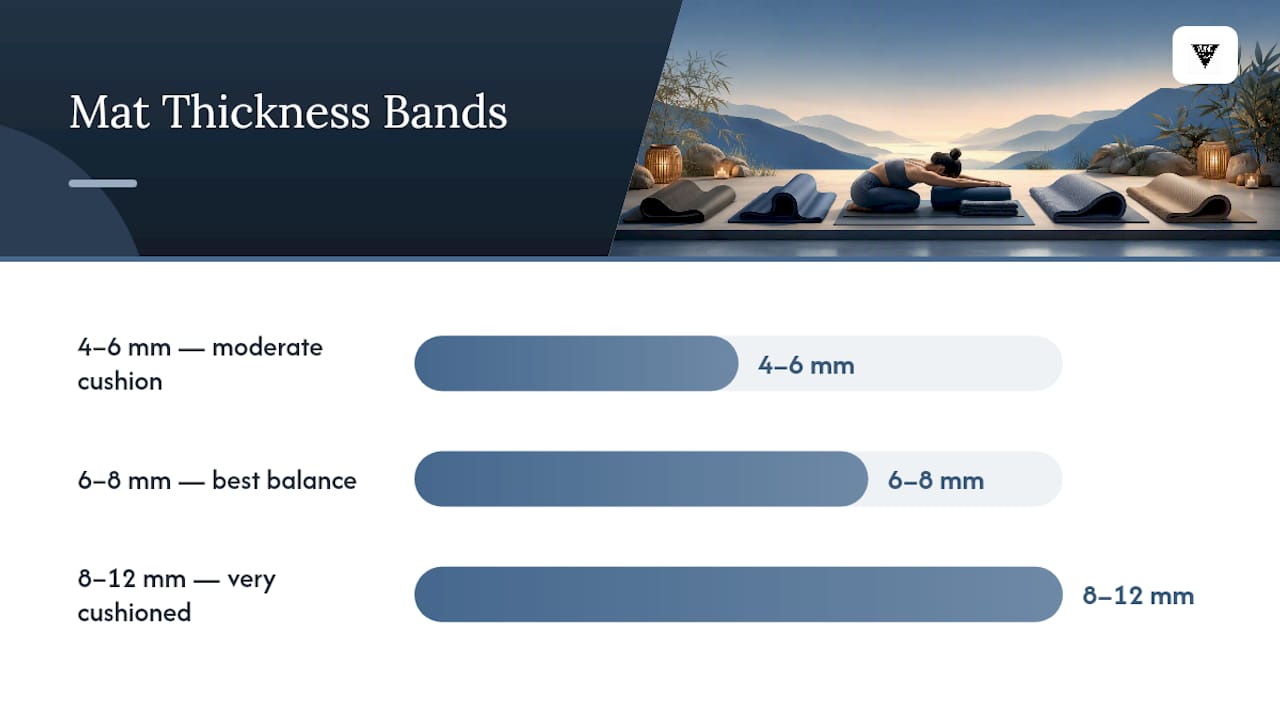
Thickness bands break down into three practical zones, and where you land depends on how long you hold poses and how sensitive your joints already are.
A 4 to 6 mm mat counts as moderate cushioning. It works fine for a mixed practice that includes some Vinyasa or Hatha, but during a five-minute Dragon Pose or Saddle, your sit bones and ankles will likely feel the floor. A 6 to 8 mm mat is the sweet spot most Yin teachers and gear testers land on, and it shows up repeatedly in independent reviews. OutdoorGearLab’s testing points to 6mm and up for restorative and Yin work specifically, while cautioning that mats climbing toward 12 mm can start to feel spongy and unstable underfoot. Anything from 8 to 12 mm delivers serious cushion but can wobble under your knees when you shift weight into a seated twist, which defeats the point of a pose meant to hold you still for minutes at a time.
Here’s the part most buying guides skip: thickness and density are not the same thing, and density usually wins.
Statistic Callout: Buyer guide research consistently lands on 5 to 8 mm as the practical range for Yin, with 6 to 8 mm cited most often as ideal. That range balances joint protection against the instability that creeps in once foam gets too soft or too tall.
A dense 6 mm rubber mat can outperform a soft 10 mm foam mat for one simple reason: soft foam compresses unevenly under a bony knee or ankle, so you sink into a divot instead of resting on a supportive surface. Yoga Journal’s testing coverage backs this up, noting that density and support tend to matter more for joint protection than raw softness. Think of it like a mattress: a cheap 12-inch foam mattress sags in the middle, while a dense 8-inch hybrid holds its shape and supports your spine better.
Who benefits most from thicker or denser mats:
- Beginners, because floor pressure is often the biggest distraction pulling attention away from the breath during a first few Yin classes
- Anyone with knee, hip, or sacrum sensitivity, since those pressure points bear direct weight in poses like Frog or Saddle
- Older practitioners, whose joints often need more buffer against a hard floor
- People practicing on tile, concrete, or hardwood rather than carpet
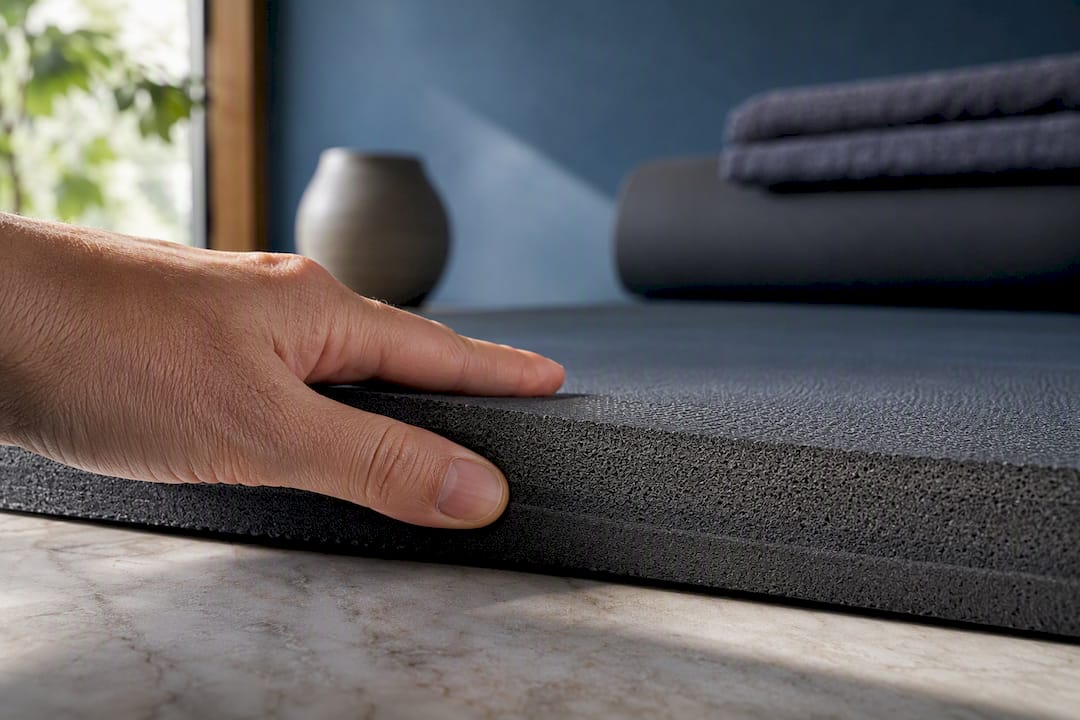
For quick conversions: 4 mm is roughly 0.16 inches, 6 mm is about 0.24 inches, and 8 mm lands near 0.31 inches. In a store, press your knuckles into the mat the way your knee would press in Cat Pulling Its Tail. If your knuckles hit the floor through the foam, size up or add a layer.
Rubber, TPE, Wool, and Foam: Which Material Fits Yin Best?
Material shapes how a mat feels during a five-minute hold far more than it does during a fast-paced flow, and choosing mats made from natural materials can enhance comfort and sustainability, since you’re not sliding around but sitting still and noticing every texture.
Dense natural rubber gives you supportive rebound and genuine stability, which is exactly what long holds reward. It’s heavier than synthetic foam, often 5 to 8 pounds for a standard mat, but that weight translates into a mat that doesn’t shift under you. OutdoorGearLab’s reviews consistently favor dense rubber mats like the styles found in rubber mat collections built for eco-conscious practice for stability and long-term durability. The tradeoff: natural rubber carries a faint latex smell out of the box that fades with airing out, and it’s not ideal for anyone with a latex allergy.
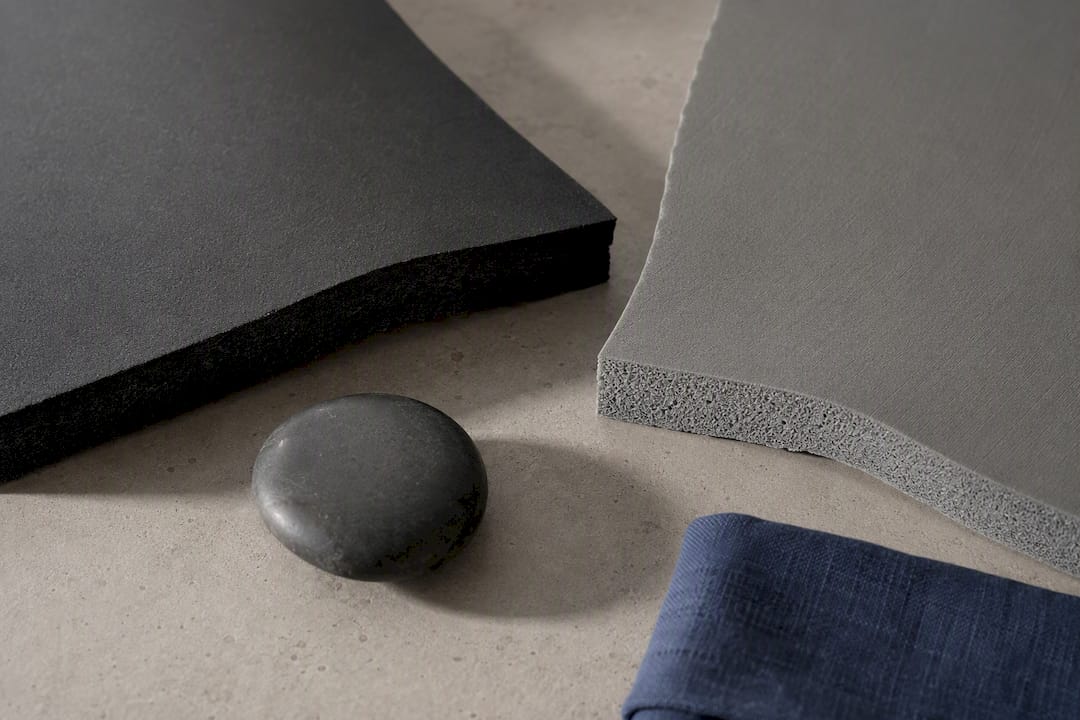
TPE (thermoplastic elastomer) and other high-density synthetics split the difference. They’re lighter than rubber, largely odor-free, and many versions are recyclable at end of life. TPE won’t match rubber’s grip in a sweaty flow class, but for seated and reclined Yin poses, that’s rarely the deciding factor.
Wool and organic cotton tops bring something different entirely: a soft, temperature-regulating surface that feels closer to a rug than a workout mat. Wool breathes and adjusts to your body heat, which many practitioners genuinely prefer for meditative holds, and it works best layered over a denser base mat rather than as a standalone surface.
Soft foam (often NBR) feels plush in the showroom, but it’s the material most likely to betray you mid-pose. NBR compresses fast and unevenly, so a seated forward fold can turn into a wobble the moment you lean past center.
- Dense natural rubber: best stability and rebound, heavier, mild initial odor
- TPE and synthetic blends: lighter, low odor, often recyclable
- Wool or cotton tops: tactile and breathable, best layered over support
- Soft foam (NBR): plush but prone to sinking and instability
Pro Tip: Check the product page for OEKO-TEX or GOTS certification before buying. These labels confirm the material was tested for harmful substances, which matters if you’re sensitive to off-gassing smells or want to keep synthetic dyes and phthalates off your skin during a 90-minute practice.
Yuneyoga’s material breakdown covers how each option ages over months of use, which matters more for Yin mats than fast-flow mats since you’re putting sustained pressure on the same spots week after week.
Do You Still Need Grip on a Yin Yoga Mat?
Grip matters less in Yin than in a sweaty Vinyasa class, but “less” doesn’t mean “none.” You still shift position between poses, plant a hand to push up from the floor, or adjust a bolster mid-hold, and a mat with zero traction turns those small movements into small hazards.
The real distinction is between closed-cell and open-cell surfaces. Closed-cell foam resists moisture absorption, so it stays slicker when your palms sweat even slightly, while open-cell foam grips better wet but breaks down faster and needs more frequent cleaning. Since Yin sessions run cooler and less sweaty than power yoga, closed-cell surfaces with moderate texture usually perform fine without becoming a slip risk.
To test slip risk before you buy, try this at home or in a shop: place your palm flat on the mat and push forward like you’re starting a low lunge. A mat with adequate traction resists that push; one with too little grip will slide a noticeable inch or two.
If your mat turns out too slick once you’re using it:
- Lay a rug or yoga-specific non-slip underlay beneath the mat to stop it sliding on hardwood or tile
- Use a thin, tacky towel over the surface for extra bite during warmer sessions
- Double-mat by stacking a grippier mat underneath your cushioned one
Yuneyoga’s guide to choosing a non-slip yoga mat walks through texture types in more depth if traction becomes a recurring issue in your space.
Can You Just Layer Props Instead of Buying a New Mat?
You can, and for a while, you probably should. Layering props is one of the most cost-effective ways to test how much cushioning you actually need before committing to a dedicated Yin mat.
- Folded cotton blanket plus a 4 mm mat roughly equals an 8 mm mat under your knees. Fold a standard cotton blanket into quarters and place it under sensitive joints in poses like Thread the Needle.
- A bolster under the knees in Reclining Butterfly takes pressure off the lower back and lets the hips open without strain.
- A block under the sacrum in Supported Bridge replaces the need for a thicker mat entirely, since the support comes from the prop rather than the floor.
- A rolled towel under the ankles in Saddle Pose protects the top of the foot from hard flooring without changing your base mat at all.
Layering works well until it doesn’t. Once you’re stacking three or four props just to get through a single class comfortably, or your props keep sliding apart mid-hold, that’s the signal to invest in a dedicated 6 to 8 mm mat instead. Experts commonly recommend props as the first move before buying, precisely because they let you calibrate your real cushioning needs with gear you likely already own.
Pro Tip: If you travel with your practice, skip the extra blanket. A single 6 mm dense mat that folds down small beats carrying a mat plus three props through airport security.
The 8-Question Checklist for Buying a Yin Yoga Mat
Run through these before you add anything to your cart:
- Thickness and density: Does it land in the 6 to 8 mm range, and does pressing your knuckles into it reveal firm support rather than a mushy sink?
- Material and certification: Is it OEKO-TEX or GOTS certified, and does the listing mention expected smell or a break-in period?
- Size: Are the length and width enough for your height, especially if you’re over 5’10" and need an extra-long option?
- Weight and portability: Does the mat’s weight match how often you’ll be transporting it versus leaving it at home?
- Care instructions: Does the brand specify whether it’s machine washable, wipeable, or hand-wash only?
- Return policy and warranty: Is there a trial period or warranty that covers premature compression or peeling?
- Budget tier: Does the price match what that tier typically delivers, since a $25 mat and a $90 mat rarely perform the same after six months?
- Long-term resilience: Does the seller mention how the mat holds up to repeated compression under sustained holds, not just single-session comfort?
Yuneyoga’s rundown on essential features of a quality mat expands on warranty and return terms if you want to compare policies side by side before buying.
How to Clean and Store a Thick Yin Yoga Mat
Care depends heavily on material, and thicker mats need a bit more attention since moisture and dust settle deeper into the surface.
- Natural rubber: Wipe with a damp cloth and a few drops of mild soap; avoid direct sun for long periods, which dries out rubber over time.
- TPE and synthetic foam: Machine washable on gentle if the label allows it, or wipe down weekly with a diluted vinegar solution.
- Wool or cotton tops: Spot clean and air out after each use; avoid soaking, which can mat the fibers.
- All materials: Store rolled loosely rather than folded, in a cool, dry space away from direct heat, which prevents flattening and mildew buildup.
Expect a dense rubber mat to last three to five years with regular use, TPE mats slightly less, and cotton-topped mats to need retopping or replacement sooner depending on wash frequency. Replace your mat when you notice permanent compression lines, a surface that’s gone slick where it used to have texture, a smell that won’t air out, or visible tears near the edges.
Who’s Behind This Guide
This guide comes from Nicholas, whose writing on the Yune Yoga blog focuses on the practical, gear-side questions Yin practitioners actually ask before buying. Yune Yoga’s own catalog centers on natural rubber and eco-conscious mats, which shaped a lot of the material comparisons above, since testing rebound and density firsthand across product lines is part of how the site’s recommendations get made.
If you’re still unsure which thickness or material fits your practice, the most reliable test is a short trial: unroll a candidate mat, hold Frog Pose or Saddle for two full minutes, and notice whether your knees ask you to shift. That two-minute test tells you more than any spec sheet.
For more detail on how materials age and perform, Yuneyoga’s guide to yoga mat materials and its breakdown of stickiness and grip both go deeper into the mechanics behind the recommendations here.
Why Density Beats Padding in Yin Practice
Most buying advice treats “thicker is better” as gospel, and that’s where it goes wrong. A 12 mm mat sounds like the safe, comfortable choice, but if the foam is soft and uneven, it can leave you less stable than a firm 6 mm mat that actually holds your weight where you put it.
The conventional wisdom skips the fact that Yin poses are static. You’re not moving through a pressure point and off it in a breath, you’re parked there for three to five minutes. That’s exactly when uneven compression shows up as discomfort, not stability.
If there’s one thing worth prioritizing first, it’s testing before buying, whether that means pressing your knuckles into a showroom mat or layering a blanket under your knees at home for a week before deciding you need something more permanent. Density solves problems padding alone never will.
— Nicholas
Where to Start Shopping for a Yin Yoga Mat
If the checklist above left you with a clear picture of what you need, Yune Yoga’s catalog is built around exactly that: dense natural rubber mats in the 6 to 8 mm range for practitioners who want stability under long holds, plus lighter, foldable travel styles for anyone who needs to pack a mat between studio and home. 
The eco-conscious rubber options are the ones to look at first if joint support and durability top your checklist, while the foldable travel mats fit anyone splitting practice between a home studio and a yoga retreat. Every mat ships with the material and care details spelled out on the product page, so you’re not guessing at thickness or composition the way you might browsing a general fitness retailer.
Browse the curated Yin yoga mat selection to compare thickness, material, and weight side by side, and check the return policy on the product page before you buy if you want a trial period to test your pick against the two-minute Frog Pose check above.
Sources
- Best yoga mats guide — Yoga Journal
- The Best Yoga Mats — OutdoorGearLab
- Best yoga mat for Yin Yoga — Lisa Johnson Fitness