Avoid Mold: Non Toxic Yoga Mats for Humid Climates
For most humid-climate practice, a cork top bonded to a natural rubber base wins on grip, mold resistance, and lifespan. If you’re a heavy sweater who soaks a mat in twenty minutes, a microfiber-bonded rubber top is the better call. Either way, the rule that saves your mat: never roll it up damp. Always air-dry flat before storing it.
TL;DR:
- Cork mats with bonded rubber tops become more grip-friendly when wet and resist mold, lasting 3 to 5 years with proper care in humid climates.
- Natural rubber surfaces provide dependable traction even when sweaty, but require regular cleaning to prevent bacteria buildup and are sensitive to UV and heat.
- Microfiber-bonded tops wick moisture quickly, making them ideal for heavy sweaters, but delamination risks increase with frequent exposure to heat and humidity.
- To maintain grip and hygiene, always air-dry mats flat in shaded areas, clean with appropriate materials, and avoid storing damp mats rolled up.
- Choosing a mat with documented wet coefficient of friction above 0.6 and certifications like OEKO-TEX or REACH significantly reduces mold and chemical exposure risks.
Table of Contents
- What Yoga Mat Material Works Best in Humid Climates?
- How Does Grip Actually Work Once a Mat Gets Wet?
- Why Humid Climates Raise Your Mold Risk (and What Stops It)
- What Mat Thickness Works for Hot and Humid Practice?
- Your Class-Day Routine for Staying Grippy and Mold-Free
- How to Choose a Yoga Mat for Humid Climate Use
- Why Most Mat Reviews Get Humidity Wrong
- Shop Yune Yoga’s Humidity-Ready Mat Collection
- Sources
What Yoga Mat Material Works Best in Humid Climates?
Humidity changes the rules of grip. A mat that feels perfectly sticky in a 65-degree studio can turn into a slip hazard the moment sweat and ambient moisture combine, and the material under your palms decides whether that happens.
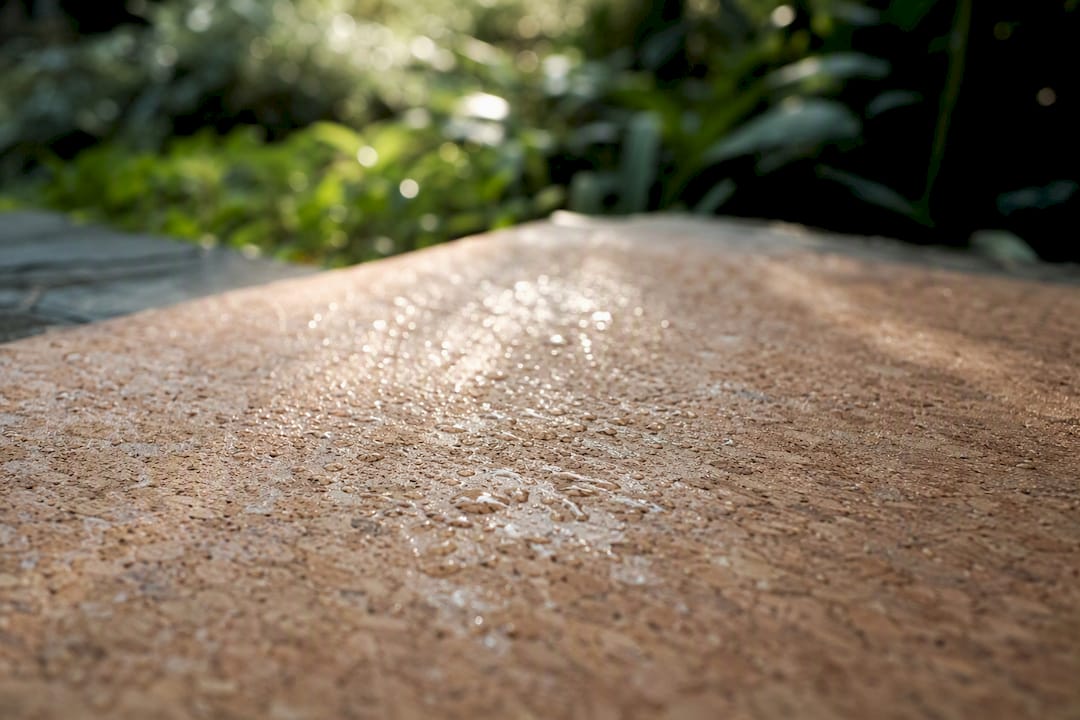
Cork behaves almost backwards from what you’d expect: it gets grippier when wet. The surface has a natural texture that activates with moisture, so the more you sweat, the more traction you get. Cork also carries a natural resistance to bacteria and mold growth, which matters enormously once you’re practicing somewhere with year-round humidity. Most cork mats pair a cork top with a rubber base, and that combination typically lasts 3 to 5 years with proper care, longer if you’re not doing hot yoga daily.
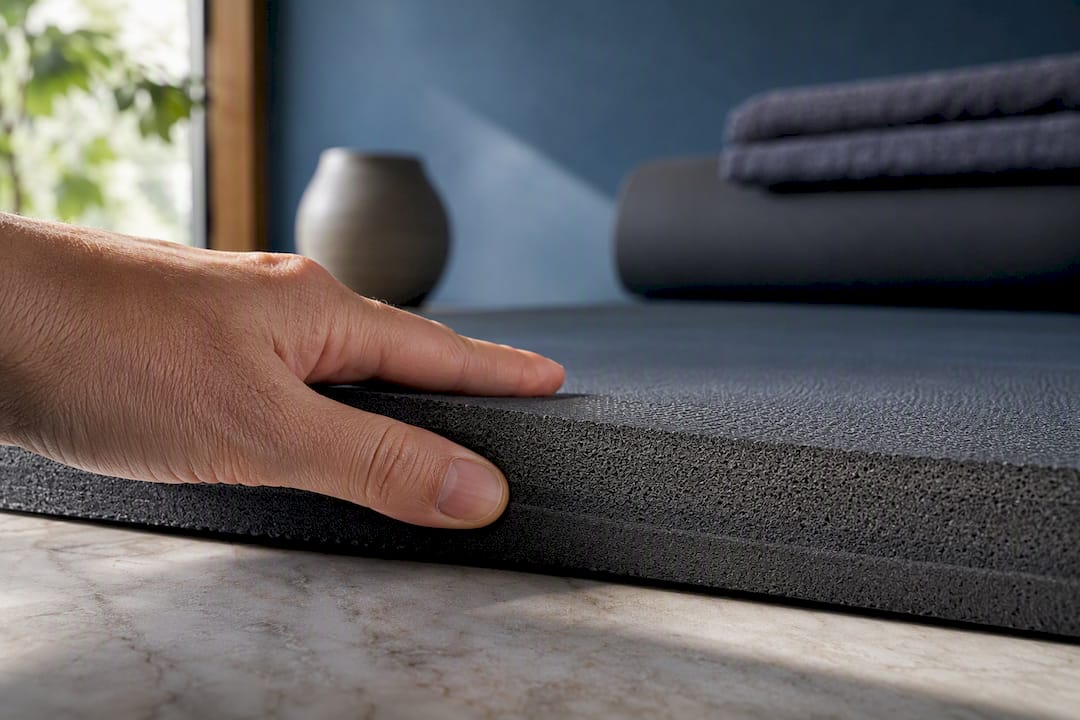
Natural rubber is the other strong performer, and for a different reason. Its open-cell structure grips well both dry and wet, giving you dependable traction even as a session gets sweaty. The tradeoff is that open cells can trap moisture and bacteria if you don’t clean the mat regularly, and rubber has a distinct smell some people find off-putting during the first few weeks. Rubber also softens under prolonged UV exposure and high heat, so a mat left in a car trunk in July degrades faster than one stored indoors.

Microfiber-bonded tops solve the heavy-sweat problem differently. A microfiber layer bonded over a rubber or foam base wicks moisture away almost instantly, which is why testing at Yoga Journal consistently favors these surfaces for people who sweat heavily during hot yoga. The catch is durability: cheaper bonding processes can delaminate, meaning the microfiber layer starts peeling from the base after repeated hot, wet cycles. Buy from a brand that’s transparent about its bonding process, and check what a sweat-resistant mat actually needs to do before assuming any “sweat-resistant” label is meaningful.
What you want to avoid: closed-cell synthetics like standard PVC, TPE, or PU-only surfaces. Closed-cell foam doesn’t absorb moisture, so sweat and humidity sit on top of the mat instead of being drawn in or gripped by texture. That’s exactly why these mats turn into ice rinks the moment you start sweating. PVC in particular raises a second concern: it’s a plastic that can off-gas volatile organic compounds, especially when new or when stored in a hot car or closed bag.
That’s where certifications earn their keep. Two are worth checking on a product page:
- OEKO-TEX certification means the material has been tested for harmful substances against a defined limit list, which is relevant if you’re worried about what’s touching your skin during a two-hour hot session.
- REACH compliance confirms the manufacturer has registered and assessed chemical substances against European Union safety regulations, a reasonable proxy for avoiding the worst offgassing materials even outside the EU.
Neither certification guarantees a mat will grip well when wet. They guarantee the material itself isn’t a health liability, which is a different but equally important question for anyone practicing daily in a heated room.
By the Numbers: ASTM G154-23 is the accelerated weathering standard labs use to simulate months of UV and humidity exposure in days, the same kind of testing that predicts how fast rubber or cork will degrade in a genuinely humid climate versus a dry one.
How Does Grip Actually Work Once a Mat Gets Wet?
Grip in humid conditions comes down to one measurable property: wet coefficient of friction, or wet COF. It’s the ratio of resistance to sliding when a surface is wet, and it’s the single most useful number you can ask a manufacturer for if you want an honest answer instead of a marketing claim.
A dry COF above 0.6 feels stable under most conditions. Once sweat or ambient moisture enters the picture, you want that number holding above roughly 0.6 to 0.8 wet, according to lab-style testing referenced by Matelier Lab, which found open-cell rubber and cork hybrids scoring meaningfully higher in wet-friction tests than PVC or TPE surfaces. Below that range, a mat that felt fine in the store starts sliding under a downward dog the moment your palms sweat.
Three things drive wet COF, and they’re not the same thing:
- Surface chemistry determines whether a material actively grips moisture (cork’s wet activation, microfiber’s wicking) or simply sits on top of it (closed-cell foam).
- Texture adds mechanical grip through raised patterns or embossing, which helps even materials with mediocre chemistry perform better wet.
- Compound density affects how much the surface compresses under pressure, since a mat that flexes slightly around your hand creates more contact area and more grip.
Flooring matters more than most people realize. A cork mat on a wood studio floor behaves differently than the same mat on polished concrete or a rubber gym floor, because the floor’s own texture and give factor into how much the mat can shift underneath you. If you’ve ever felt betrayed by a mat that gripped perfectly at home and slid at a new studio, the floor is often the missing variable, not the mat.
You don’t need a lab to get a rough read on wet grip. Matelier Lab’s testing notes that simple checks correlate reasonably well with actual COF results:
- Mist the surface lightly with a saline solution (or just water with a pinch of salt, mimicking sweat’s slight salinity).
- Press two fingers flat against the wet spot and try to slide them sideways with moderate pressure.
- Compare how much resistance you feel against a dry section of the same mat.
A mat that resists sliding almost as much wet as dry is a good sign. One that turns slick the moment moisture hits deserves skepticism, no matter what the packaging claims.
Pro Tip: Do the fingertip test at the store or right after your mat arrives, not three weeks into a heat wave when you’re already mid-flow and realizing the surface has turned against you.
If a brand can’t produce a wet COF figure or any lab reference, that’s not automatically disqualifying, but it does mean you’re relying on reviews and your own testing instead of a documented number. Slippery mat troubleshooting covers what to do when a mat that used to grip fine starts betraying you mid-session, which is often a maintenance issue rather than a material failure.
Why Humid Climates Raise Your Mold Risk (and What Stops It)
Mold needs three things: moisture, warmth, and time. A yoga mat rolled up while still damp, then stored in a bag or closet, delivers all three at once, and humid climates just accelerate the clock.
The material underneath your practice determines how much danger you’re actually in. Open-cell rubber and cork both have microscopic pores that can trap moisture deep in the material, not just on the surface, which is exactly why surface wiping alone doesn’t always solve odor or mildew problems. Closed-cell synthetics don’t trap moisture the same way internally, but they trap it on top as a slick film, which just relocates the problem rather than solving it.
Here’s a hygiene program that actually holds up in a genuinely humid climate:
- Wipe down after every sweaty session with a mat-specific cleaner or a mix of water and a few drops of tea tree oil, which has natural antifungal properties without the harshness of bleach or ammonia.
- Deep clean weekly if you’re practicing hot yoga three or more times a week, using a gentle soap solution and a soft cloth, never a washing machine unless the manufacturer explicitly says the mat is machine-washable.
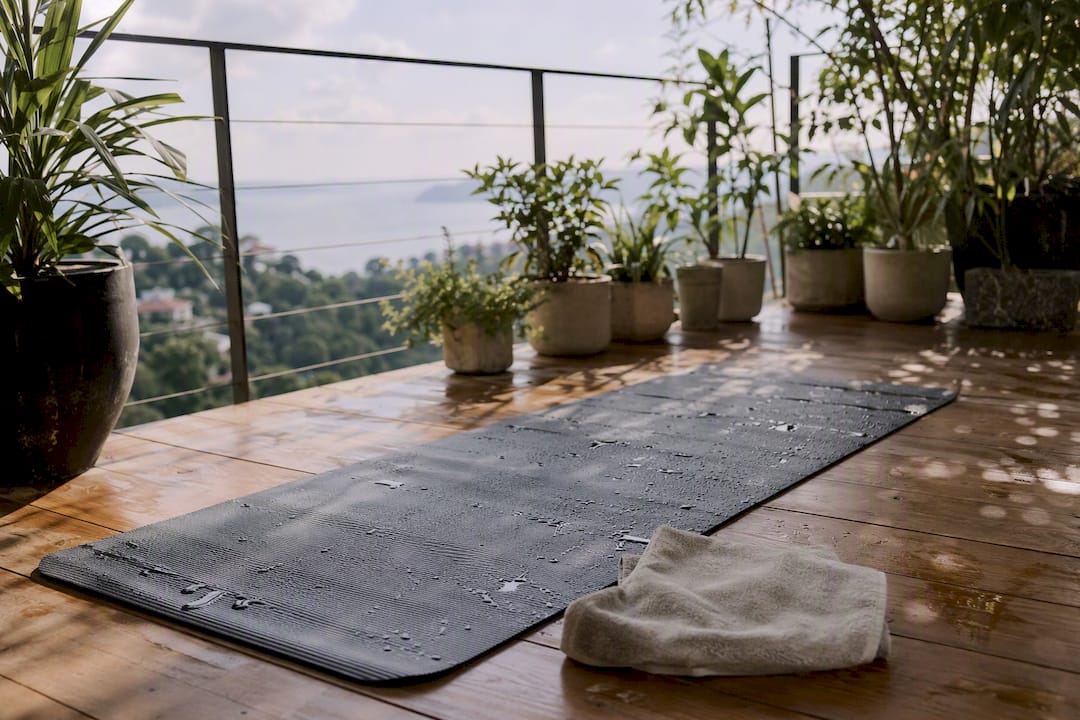
- Air-dry flat, not rolled, in a shaded, ventilated spot for at least a few hours before any storage. Direct sun speeds up rubber degradation, and a closet with no airflow just restarts the moisture-trap problem.
- Never store a mat rolled while even slightly damp. This single habit causes more mold complaints than any material choice.
- Retire a mat showing black speckling, a persistent musty smell after cleaning, or a tacky-then-slick surface texture change, since those are signs mold or bacteria have gotten past what cleaning can reach.
Pro Tip: Keep a second, smaller travel towel just for wiping your mat mid-cleaning, separate from the towel you use on your body. Cross-contamination between a sweaty body towel and your mat-cleaning towel undoes half the point of cleaning at all.
Cork’s natural antimicrobial characteristics give it a real edge here. Independent practitioner experience backs this up: cork resists microbial growth better than most alternatives even under repeated sweat exposure, though it still needs the same wipe-down and drying discipline as anything else. The practical tradeoff worth knowing: cork resists microbes but still needs surface wiping and careful storage, while microfiber tops need more frequent washing and carry a real delamination risk if you skip drying steps. Neither is maintenance-free. Both are manageable if you actually follow through on the drying step every single time.
What Mat Thickness Works for Hot and Humid Practice?
Thinner than you’d think. A range of 4 to 5 millimeters tends to be the sweet spot for hot or humid practice, balancing enough cushion for joints against the stability you need when a surface gets slick with sweat.
Testing-based roundups from Garage Gym Reviews back this up directly: thicker mats increase wobble during transitions, especially in poses that shift weight quickly like chaturanga to downward dog. A 6mm or 8mm mat that feels luxurious for a slow restorative class can actually work against you the moment a vinyasa flow speeds up and your palms are already damp.
That said, thickness isn’t one-size-fits-all:
- Go thicker (6mm+) if you’re practicing on concrete floors or have sensitive knees and wrists, and you’re willing to trade some transition stability for cushion.
- Go thinner (2 to 3mm) for travel, where a foldable mat that fits in a bag matters more than plush comfort, provided the material itself still grips well wet.
- Stay in the 4 to 5mm range for the vast majority of regular hot or humid practice, since it’s the thickness where grip, ground feel, and joint protection meet in the middle.
Thickness and material interact more than most buying guides admit. A thick mat made from closed-cell foam is still going to feel unstable and slippery under sweat, no matter how cushioned it feels underfoot. A thin cork-topped mat, by contrast, can feel completely stable even at 3mm because the surface itself is doing the grip work, not the foam depth. Don’t assume more padding equals more safety; in humid, sweaty conditions, it’s often the opposite.
Your Class-Day Routine for Staying Grippy and Mold-Free
Good gear only gets you halfway. What you do before, during, and after class determines whether that cork or rubber mat actually performs the way it’s supposed to.
Before class, give your mat a few minutes of prep if it’s been sitting unused. Cork and rubber mats sometimes benefit from a light wipe-down with a damp cloth before a hot session, which helps activate the surface texture rather than starting bone-dry. If you’re using a microfiber-topped mat, a quick spray of water across the surface before class actually improves grip rather than hurting it, since the fiber needs some moisture to start wicking properly.
During class, keep a dedicated sweat towel within reach, and use a quick-dab technique rather than a full wipe. Dragging a towel across a cork or rubber surface mid-flow can actually smear sweat around and temporarily reduce traction; a light dab in high-sweat zones like where your hands land keeps grip consistent without disrupting the surface.
- Dab, don’t drag, when sweat pools during a hold.
- Focus dabbing on hand and foot contact points, not the whole mat surface.
- If you’re using a separate yoga towel layered over the mat, check that the towel itself has enough grip rather than assuming any towel will do.
Pro Tip: A towel with poor grip on top of a great mat still gives you a bad practice. If you’re layering a towel for hygiene reasons, test the towel’s own wet traction the same way you’d test a mat.
After class, clean per the material’s actual instructions rather than defaulting to whatever spray is sitting in your gym bag. Rubber and cork generally want mild soap and water, never harsh alcohol-based cleaners that can dry out and crack the surface over time. Once cleaned, lay the mat flat in a shaded, ventilated spot and let it fully dry, which usually takes a few hours depending on ambient humidity. Only roll it once it’s genuinely dry to the touch on both sides, not just the top. If you’re consistently short on drying time between back-to-back classes, a second rotating mat solves the problem better than rushing a damp one back into your bag.
How to Choose a Yoga Mat for Humid Climate Use
Buying the right mat comes down to matching material to your actual sweat level, then verifying the manufacturer backs up their claims with something more concrete than adjectives.
Start with an honest read of how much you sweat. Someone who does a light Saturday flow in a moderately humid apartment has very different needs than someone doing five hot yoga classes a week in a room set to 105 degrees. The heavier your sweat output, the more you should lean toward microfiber-bonded tops or well-textured rubber over cork, since cork’s wet activation has limits once a mat is genuinely saturated rather than just damp.
Check the product page for these specifics before buying:
- Explicit wet-grip language or a published COF figure, not just “non-slip” as an unsupported adjective.
- Clear cleaning instructions, ideally specific to the exact material, not a generic “wipe clean” line that applies to nothing in particular.
- A real certification reference like OEKO-TEX or REACH, rather than a vague “eco-friendly” claim with no standard behind it.
- A stated return policy or warranty, since a mat that fails to perform as advertised should be returnable without a fight.
- A specific material breakdown, including what the base and top layer are actually made from, not just a marketing name for the product line.
Red flags worth walking away from: any mat marketed as “antimicrobial” with no named ingredient or mechanism behind that claim, and any “eco” language with no certification or material specifics attached. Those are the two most common ways marketing outpaces substance in this category.
| Criteria | Why it matters | What to look for |
|---|---|---|
| Wet grip evidence | Predicts real performance once you sweat | Published wet COF or detailed reviewer testing |
| Material transparency | Confirms what’s actually touching your skin | Named top and base materials, not just a product name |
| Certification | Screens out harmful chemical exposure | OEKO-TEX, REACH compliance |
| Cleaning instructions | Determines mold and odor risk over time | Material-specific steps, not generic “wipe clean” |
| Return policy | Protects you if grip claims don’t hold up | Clear window and conditions stated upfront |
Run any mat you’re considering through that scorecard before checkout. It takes about two minutes and catches most of the products relying on vague language instead of real specifications.
Why Most Mat Reviews Get Humidity Wrong
Most advice about hot yoga mats treats humidity as a side note to heat, when it’s really the dominant variable. A room can be hot and dry, hot and humid, or just humid without much heat at all, and each combination stresses a mat differently. The advice that works for a dry-heat studio in Arizona can actively fail someone practicing in a naturally humid coastal city, because the underlying moisture load on the mat is completely different even if the thermostat reads the same number.
I’d also push back on how casually “antimicrobial” gets used in this category. It’s become a marketing word with almost no floor under it. Cork earns antimicrobial credit because its natural cellular structure genuinely resists microbial growth, something backed by independent practitioner experience across years of humid-climate use. A synthetic mat sprayed with an antimicrobial coating during manufacturing is a different claim entirely, and one that often wears off with regular washing. If a listing says “antimicrobial” and can’t tell you why, treat it as decoration, not a feature.
For Yuneyoga’s own recommendation: cork-topped, natural rubber-based mats are the default answer for the vast majority of humid-climate practitioners, and microfiber-bonded rubber earns its place specifically for people whose sweat output outpaces what cork can wet-activate around. . Read the deeper material breakdown in Understanding Different Yoga Mat Materials if you want the fuller technical picture before deciding.
— Nicholas
Shop Yune Yoga’s Humidity-Ready Mat Collection
Most mat brands optimize for how a product photographs, not how it performs in a hot room after forty minutes of sweat. Yuneyoga takes the opposite approach: the natural rubber and cork mats in the current lineup are built around the exact materials this article just walked through, wet-activated cork grip and open-cell rubber traction, paired with clear care instructions instead of vague “eco-friendly” language.

If you sweat heavily and need a hot yoga mat that won’t turn into a hazard mid-flow, the cork-topped and natural rubber options are worth a look, and each product page lays out the material breakdown and cleaning steps so you’re not guessing after checkout. Pair a mat with one of the best options built specifically for hot yoga conditions if you want a shortlist narrowed down further before you commit. Browse the full mat collection to compare cork and rubber options side by side, and reach out to customer support if you need help matching a mat to your specific climate and sweat level before you buy.
Sources
The wet-grip and durability claims in this guide lean on published standards and testing rather than marketing copy. The ISO 89162 standard governs friction measurement relevant to sports surfaces, and manufacturers who reference it are giving you a lab-verifiable number instead of an adjective. The ISO 83801 standard covers mechanical testing under varying conditions, useful context for understanding how humidity and temperature cycling affect material performance over a mat’s lifespan. ASTM G154-23 is the accelerated weathering protocol labs use to simulate months of UV and humidity exposure in compressed timeframes, relevant to predicting rubber and cork degradation.
For hands-on testing perspective, Yoga Journal’s hot yoga mat reviews, Garage Gym Reviews’ testing roundup, and Matelier Lab’s climate-tested grip analysis all back the material and thickness recommendations covered here. If a product page cites a wet COF figure, cross-check it against these sources before trusting the number at face value.
- 5 Very Best Hot Yoga Mats of 2026 - Yoga Journal
- Best hot yoga mats (Garage Gym Reviews)
- Climate-Tested Yoga Mats: Performance-Verified Grip | Matelier Lab