Yoga Mat Stickiness: What It Means and Why It Matters
What is yoga mat stickiness, and why does it affect your safety?
Yoga mat stickiness is the surface friction and traction between your skin and the mat that keeps you from slipping during practice. Without it, a Downward Dog becomes a slide, and a Warrior II turns into a balancing act for the wrong reasons. Grip and traction are what allow you to hold alignment, load weight confidently, and move between poses without bracing for a fall.
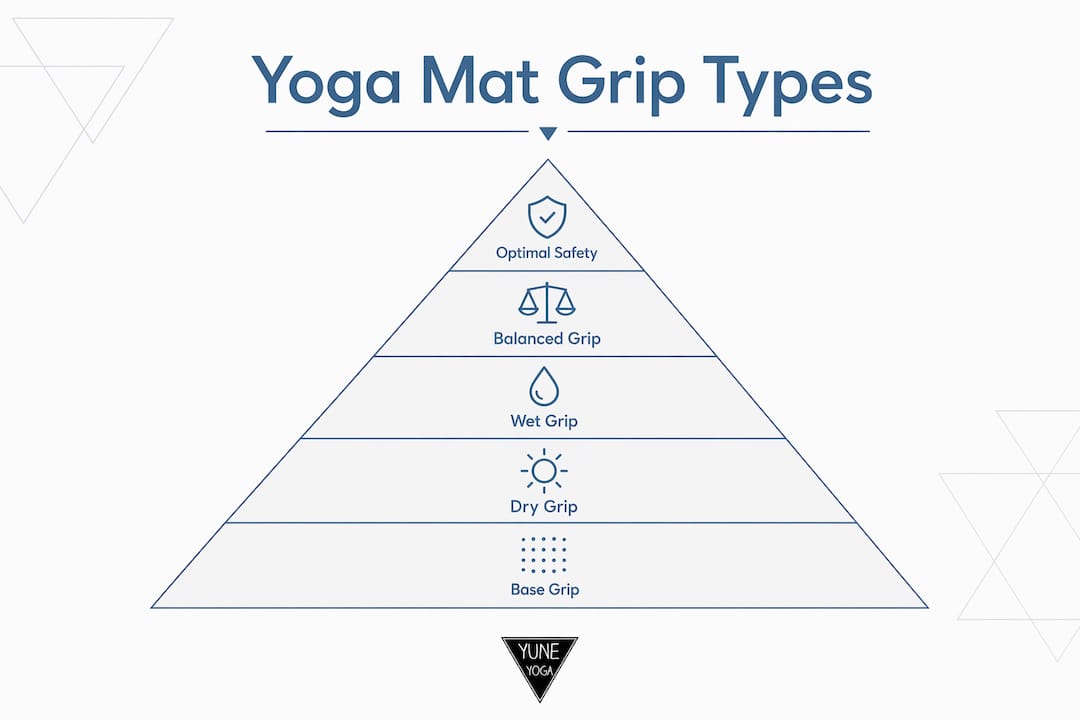
There are actually three distinct grip types that work together:
- Dry grip: traction when your hands and feet are mostly dry, typical at the start of a session or in a cool studio
- Wet grip: traction after sweat or humidity appears, the condition where most mats fail first
- Base grip: the friction between the underside of your mat and the floor, which prevents the whole mat from creeping forward on tile or hardwood
Most practitioners only think about the top surface. But a mat can feel perfectly grippy underfoot while still sliding across a polished studio floor, because surface grip and base grip solve two completely different problems. Stickiness, in the truest sense, is all three working at once.
What causes a yoga mat to lose its grip over time?
Grip loss rarely happens all at once. It creeps in, and the culprit is usually something you can fix.
- Residue buildup: Body oils, sweat salts, and cleaning product surfactants accumulate on the surface and create a slick film. This is the most common cause of a mat that felt great when new but now feels like a slip-and-slide. Residue from these sources reduces grip and can make the surface feel paradoxically sticky to the touch while offering almost no traction under load.
- Cleaning product overuse: Too much soap leaves a surfactant layer that repels friction. The mat feels clean but performs worse than before you washed it.
- UV and heat exposure: Storing a mat near a sunny window or in a hot car degrades the surface material over time, especially for natural rubber, which can oxidize and lose its characteristic tackiness.
- Humidity and sweat film: Sweat can actually increase friction slightly by hydrating the skin, but once it pools into a continuous film, it acts like a lubricant. That is the “hydroplaning” effect, and it is why wet grip and dry grip are not the same performance trait.
- Silkiness vs. stickiness confusion: A mat that feels smooth and pleasant to the touch is not necessarily grippy. Some practitioners mistake a soft, silky surface for a high-quality one, when in practice it may offer very little traction under load.
One underappreciated point: a mat that feels sticky to the touch but slips during use often has a residue problem, not a material failure. Accumulated sweat salts and oils are frequently mistaken for wear when the real fix is a proper cleaning routine.
How does grip level affect your practice and injury risk?
Grip is not just a comfort feature. It directly shapes how confidently you move, how accurately you hold alignment, and how likely you are to get hurt.
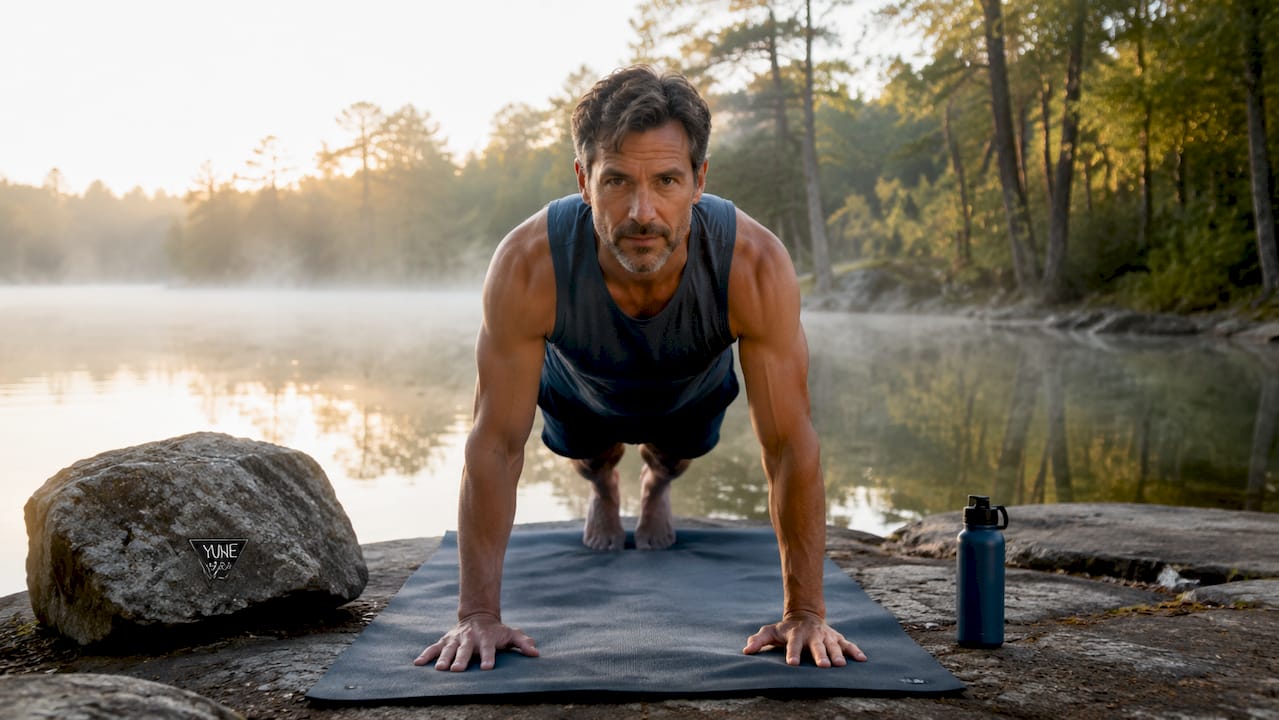
- Too little grip: Hands slide forward in Plank, feet drift in Warrior poses, and you spend mental energy bracing instead of breathing. Over time, preventing slips on an unreliable surface puts strain on wrists, ankles, and knees as the body compensates.
- Too much grip: Overly tacky surfaces can catch during transitions, making pivots and flowing sequences feel jerky or forced. For Vinyasa practitioners who need smooth weight shifts, a mat that grabs too hard in one spot can actually disrupt movement.
- Sweat mismatch: A mat that grips well in a cool Hatha class may turn dangerous in a heated Power Yoga session. The grip profile needs to match your actual sweat conditions, not just the first five minutes of class.
- Base grip and floor type: If the whole mat creeps forward during Sun Salutations, the issue is base grip, not surface traction. Natural rubber mats typically outperform lighter foam types in mat-to-floor stability, especially on tile and laminate.
- Confidence and alignment: Feeling secure underfoot is not psychological. When grip is reliable, you can focus on form. When it is not, every pose becomes a negotiation with the floor.
The safest setup combines solid surface grip with a stable base, matched to your sweat level and floor type. Treating them as one problem is where most practitioners go wrong.
How to clean and maintain your mat’s grip effectively
A sticky-feeling mat after cleaning is almost always a residue problem, and the fix is simpler than most people expect.
Basic cleaning routine:
- Mix a small amount of gentle dish soap or a purpose-made mat cleaner with warm water. Less soap than you think you need.
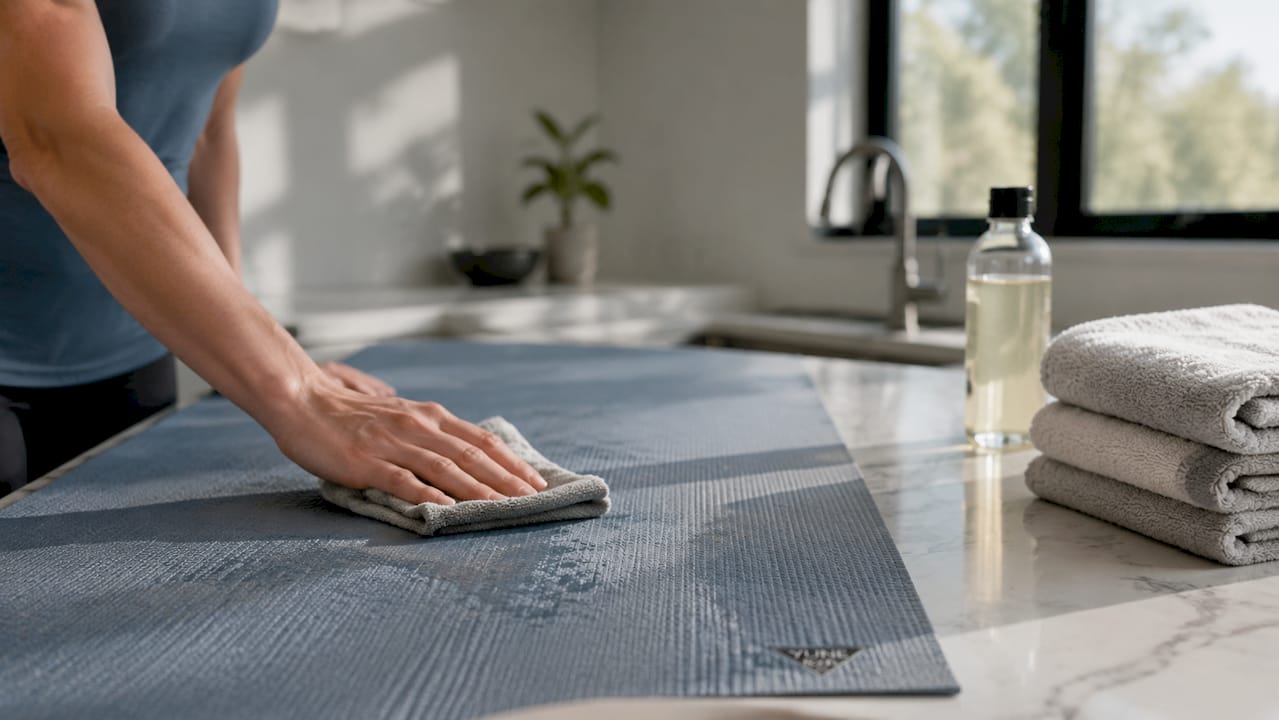
- Dampen a soft cloth or sponge and wipe the surface in circular motions, paying attention to high-contact zones like the hand and foot placement areas.
- Rinse the cloth thoroughly and wipe the mat again to remove any soap film.
- Lay the mat flat or hang it to air dry completely before rolling it up.
Minimal soap and warm water are the standard recommendation because excess surfactant is exactly what creates the slick film that kills grip. Avoid harsh cleaners, bleach, and anything oil-based.
Storage and drying:
- Rolling a damp mat traps moisture, accelerates microbial growth, and degrades the surface material faster than almost any other habit.
- Store your mat away from direct sunlight and heat sources, especially if it is natural rubber.
- For hot yoga or sweaty sessions, use a yoga towel laid over the mat surface to absorb sweat before it pools.
Pro Tip: If your mat feels sticky to the touch but slips under load, do a No-Residue Reset: wipe the surface with a cloth dampened in plain warm water only, no soap, then let it dry fully. This removes surfactant buildup without adding more. Many practitioners find grip improves noticeably after one or two of these wipe-downs.
How different mat materials affect grip and traction
Material is a starting point, not the whole answer. The top layer construction, texture, and moisture behavior matter just as much as what the mat is made of. That said, each material has a typical grip profile worth knowing before you buy.
| Material | Dry grip | Wet grip | Base grip | Best for | Care notes |
|---|---|---|---|---|---|
| PVC | Medium–High | Low–Medium | Medium | General studio practice, beginners | Wipe clean; avoid surfactant residue |
| TPE | Medium | Low–Medium | Medium | Travel, light practice | Can dent; avoid harsh cleaners |
| Natural rubber | Medium–High | Medium | High | Stability-focused practice | Keep out of sun; can oxidize |
| PU top + rubber base | High | High | High | Hot yoga, sweaty palms | Needs correct cleaning and full drying |
| Cork top + rubber base | Medium | Medium–High | Medium–High | Warm or hot practice, eco-conscious practitioners | Keep clean; avoid oil film buildup |
PVC was the original “sticky mat” material, and it still delivers reliable dry grip for most studio conditions. Natural rubber offers the best base grip of any common material, which is why it tends to feel the most grounded during standing poses and balances. PU-coated mats are engineered specifically for wet conditions, with a top layer designed to manage sweat film rather than just repel it.
Matching mat type to sweat level is the single most practical piece of advice for anyone choosing a new mat. Low-sweat practitioners in cool rooms do well with PVC or natural rubber. High-sweat practitioners in heated classes need a moisture-managed surface, typically PU or cork, or a towel system on top of a grippy base.
Thickness and density also play a role. Thicker mats offer more cushioning but can reduce stability because you sink slightly into the surface under load. Denser mats, even thinner ones, tend to feel more controlled during weight-bearing poses. For practitioners who prioritize grip and balance over joint cushioning, a denser, thinner mat often performs better than a plush one.
The best mat for your practice is not the one labeled “stickiest.” It is the one built for the exact grip problem you are actually trying to solve, whether that is dry tack, wet stability, or a floor that your mat refuses to stay on. For a deeper look at how materials compare across grip types, Yuneyoga’s yoga mat materials guide breaks down the tradeoffs in practical terms.
If you want to deepen your overall practice alongside your gear choices, pairing the right mat with mindful movement habits makes a real difference in how grounded and focused you feel on the mat.
Key Takeaways
Yoga mat stickiness is a combination of dry grip, wet grip, and base grip, and matching all three to your sweat level and floor type is what keeps practice safe and stable.
| Point | Details |
|---|---|
| Three grip types matter | Dry grip, wet grip, and base grip each solve a different slipping problem. |
| Residue is the top grip killer | Body oils, sweat salts, and excess soap film reduce traction more often than material wear. |
| Clean with minimal soap | Warm water and a small amount of gentle soap prevent the surfactant buildup that kills grip. |
| Match material to sweat level | PU or cork suits heavy sweaters; PVC and natural rubber work well for dry or moderate conditions. |
| Dry fully before storing | Rolling a damp mat accelerates surface degradation and microbial growth. |
Find a mat that actually grips
Yuneyoga carries a curated range of yoga mats built for real practice conditions, from natural rubber options with exceptional base grip to eco-friendly mats designed for sweaty sessions. If you have been dealing with a mat that slips, creeps, or loses traction mid-class, the right surface makes an immediate difference. Browse the full collection at Yuneyoga and find a mat matched to how you actually practice.